











EDITOR’S NOTE: Here’s an installment from Tillamook County’s State Representative Cyrus Javadi’s Substack blog, “A Point of Personal Privilege.” Oregon legislator and local dentist. Representing District 32, a focus on practical policies and community well-being. This space offers insights on state issues, reflections on leadership, and stories from the Oregon coast, fostering thoughtful dialogue. Posted on Substack, 12/2/25
Before We Buried It Under Ninety Years of Fixes
By State Representative Cyrus Javadi
Health insurance wasn’t always this weird or broken.
To understand why, let’s go for a trip in the wayback machine.
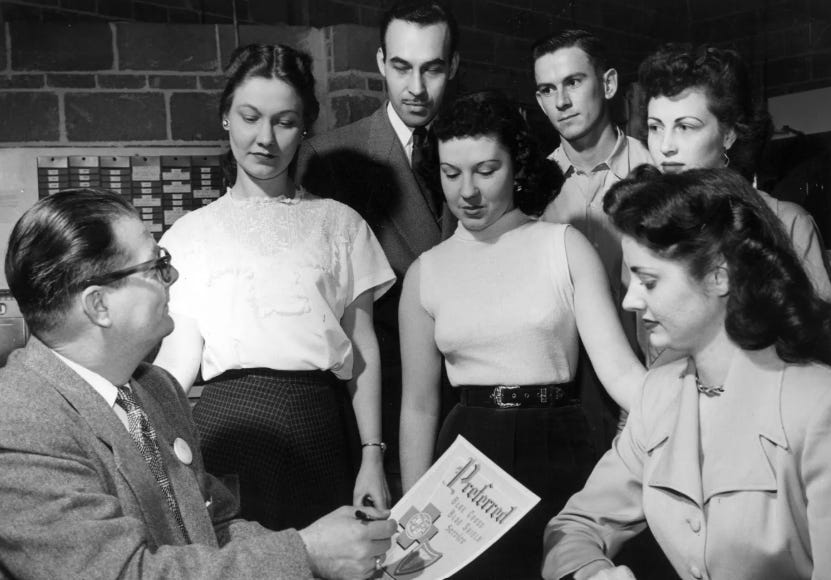
In 1929, a group of Dallas schoolteachers made a deal with Baylor Hospital that was simple, clean, and almost too good to believe from where we sit today. They paid fifty cents a month. In return, Baylor guaranteed up to twenty one days of hospital care if life went sideways.¹
That was the whole system. Two quarters. One promise.
And because this was the era before six-figure drug regimens and insurance portals that lock you out if you breathe on them wrong, that fifty-cent deal made perfect sense. Medicine was basic. Hospital stays were short. Most people didn’t expect to live long enough to develop three chronic diseases and a vitamin regimen that could fill a carry-on bag.
And here’s the key. Insurance didn’t cover routine stuff. It covered disasters. It was a parachute, not a subscription plan.
Nice, right? So, what happened?
America went to war, and everything changed.
The Wartime Shortcut That Became the Whole System
World War II brought wage freezes. Employers couldn’t raise pay. They still needed workers. So they got creative.
They started offering health benefits instead of raises. And in 1943, the National War Labor Board said those benefits didn’t count as wages.² The IRS said they weren’t taxable income.³
And just like that, employer-sponsored insurance took off.
Not because Congress passed a visionary plan. Not because a commission studied the world’s best systems. Not because anyone thought this was the optimal design.
It happened because of a wartime workaround. A temporary fix that calcified into a permanent foundation.
And once that foundation was in place, everything else had to be built on top of it.
The Patch That Helped Millions, But Didn’t Fix the Base
By the 1960s, seventy percent of Americans had employer-based insurance⁴, but that employer-based system had a huge hole—it didn’t cover older Americans. And, it didn’t cover many low-income families.
In other words, it didn’t cover people who weren’t attached to the workforce.
So in 1965, Congress created Medicare and Medicaid.⁵ Millions of people suddenly had protection they’d never had before.
It was a historic achievement.
It was also another patch. A necessary patch. A morally important patch. But still a patch on a foundation nobody had reinforced.
And the cracks kept widening.
Medicine Upgraded Itself. Insurance Didn’t.
Now, this is where the old model hit the wall.
Because while insurance technology stayed stuck in the Depression era, medical technology did not.
Today we treat cancers that once killed. We manage chronic illnesses for decades. We use machines that can detect trouble the size of a blueberry. We prescribe drugs that cost more than used cars. We spend nearly 4.9 trillion dollars a year on healthcare. And sixty percent of American adults are managing at least one chronic condition.⁶
This is not the world the Baylor teachers lived in.
We rebuilt the entire medical engine. But, we did not rebuild the insurance frame that holds it. Instead, we just kept tightening the bolts and hoping the vibrations stopped.
They did not.
When Insurance Stopped Being Insurance
Still reading? Good, because here’s where the wheels really come off.
Insurance was designed for unpredictable risk. Sudden illness. Accidents. Catastrophe.
All the bad stuff.
Yet, over time, it became the default payment method for everything. Routine checkups. Screenings. Prescriptions. Therapy. Long-term disease management. All predictable. All important. All 100 percent guaranteed to happen.
No other insurance product works this way. If your auto insurance covered tire rotations and wiper fluid, no one would know what anything costs, and the whole system would spiral.
That’s what happened in healthcare.
Insurance stopped being a parachute and became a credit card. And when insurance becomes a credit card, the math goes from tough to impossible.
The Individual Market Meltdown
If you weren’t in employer coverage, Medicare, or Medicaid, you were stuck in the individual market. And pre-ACA, that market had the stability of a plastic lawn chair in an Oregon windstorm.
About a third of applicants were denied, upcharged, or told their preexisting conditions wouldn’t be covered.⁷ Nearly fifty million Americans had no insurance at all.⁸
The ACA fixed a lot of that. Guaranteed coverage. Essential benefits. Controls on how much insurers could charge older people.⁹ All necessary reforms. All expensive reforms.
So, to help make it affordable, Congress added subsidies.
And those subsidies have been holding the market together ever since.
If they expire in 2025, premiums will jump. For many families, they could double, triple, and quadruple.¹⁰
The Demographic Turn That Tightens the Screws
Insurance only works when lots of people pay in and fewer draw heavily out. Today the opposite is happening.
More people are aging into Medicare. More people are living longer with chronic disease. More people are on Medicaid. Fewer people are in employer plans. And commercial insurance (the only payer that reliably covers the full cost of care) is shrinking.
Medicaid often pays sixty to seventy cents on the dollar. Medicare pays eighty five to ninety. Commercial plans routinely pay the full dollar twenty to keep hospitals open.¹¹
And here in Oregon, where we’ve achieved an incredible ninety seven percent coverage rate,¹² the mix matters. Roughly a third of Oregonians are on the Oregon Health Plan, and a large share are on Medicare.¹³ Which leaves a smaller commercial pool carrying more of the load.
If you want to know why premiums go up, this is why.
It is not ideology. It is not messaging. It is reality.
Why It Feels Like Turbulence
Families feel squeezed. Hospitals feel stretched. Providers feel exhausted. Insurers feel cornered.
Everyone thinks someone else caused the mess. But the truth is more boring and more honest.
We are flying a modern medical jet on an insurance airframe designed in the 1930s. We patched it in the 1940s. Expanded it in the 1960s. Updated it in the 2010s. And then expected it to glide smoothly through 2025.
Where We Go From Here
There’s no magic lever. No single fix. No villain whose removal makes the system behave.
Next week, we’ll talk about the cost of delivering care. The part of the story that explains why none of this gets cheaper simply because politics change.
But for now, here’s the short version you can take into your next conversation:
Health insurance was designed to protect people from disaster. Over ninety years, we kept asking it to do more without rebuilding its foundation. And now we’re shocked that the structure creaks.
The creaking isn’t the warning.
The real warning is what happens if we don’t rebuild it.
FOOTNOTES
1. Baylor Plan (1929) – Dallas teachers prepaid 50¢ per month for 21 days of hospital care, forming the foundation of Blue Cross.
2. WWII National War Labor Board Decision (1943) – Employer health benefits excluded from wage controls.
3. IRS Tax Exclusion for Employer Health Benefits – Employer-sponsored health insurance made tax-free compensation.
4. Employer Coverage Growth by 1960 – Private insurance enrollment rose to ~70% by 1960.
5. Creation of Medicare & Medicaid (1965) – Social Security Amendments of 1965.
6. Chronic Disease Burden – 60% of U.S. adults have at least one chronic condition.
7. Pre-ACA Individual Market Denials – About 36% of applicants denied or upcharged.
8. Uninsured Population (2010) – ~48.6 million uninsured.
9. ACA Essential Health Benefits, Rating Rules – Overview of ACA protections and rating limits.
10. Subsidy Cliff Impact in 2026 – KY and national estimates: premium payments could double or more.
11. Payer Mix Reimbursement Rates – Medicaid pays 60–70% of cost; Medicare 85–90%; commercial 120–150%.
12. Oregon’s 97% Coverage Rate – Oregon Health Insurance Survey.
13. Oregon Coverage Distribution – OHA: employer 46–48%, Medicaid ~32%, Medicare 13–16%, individual ~5%.
Stay in the Conversation
If you want straight talk on healthcare, math, and the things that actually affect your family, hit the subscribe button. It’s free, it’s independent, and it keeps this conversation grounded in reality instead of rhetoric.
