Tillamook County Pioneer

News & People of Tillamook County. Every Day.

Menu
  • Home
  • Feature
    • Breaking News
    • Arts
    • Astrology
    • Business
    • Community
    • Employment
    • Event Stories
    • From the Pioneer
    • Government
    • Letters to the Editor
    • Non Profit News
    • Obituary
    • Public Safety
    • Podcast Interview Articles
    • Pioneer Pulse Podcast: Politics, Palette, and Planet – the Playlist
  • Guest Column
    • Perspectives
    • Don Backman Photos
    • Ardent Gourmet
    • Kitchen Maven
    • I’ve been thinking
    • Jim Heffernan
    • The Littoral Life
    • Neal Lemery
    • View From Here
    • Virginia Carrell Prowell
    • Words of Wisdom
    • Chuck McLaughlin – 1928 to 2025
  • Weather
  • Post Submission
  • Things to do
    • Calendar
    • Tillamook County Parks
    • Tillamook County Hikes
    • Whale Watching
    • Tillamook County Library
    • SOS Community Calendar
  • About
    • Contribute
    • Advertise
    • Subscribe
    • Opt-out preferences
  • Search...
Menu

NEWS UPDATE FROM STATE REPRESENTATIVE DAVID GOMBERG: New Year News

Posted on December 29, 2025 by Editor

By Representative David Gomberg, House District 10

12/29/2025

Dear Friends and Neighbors,

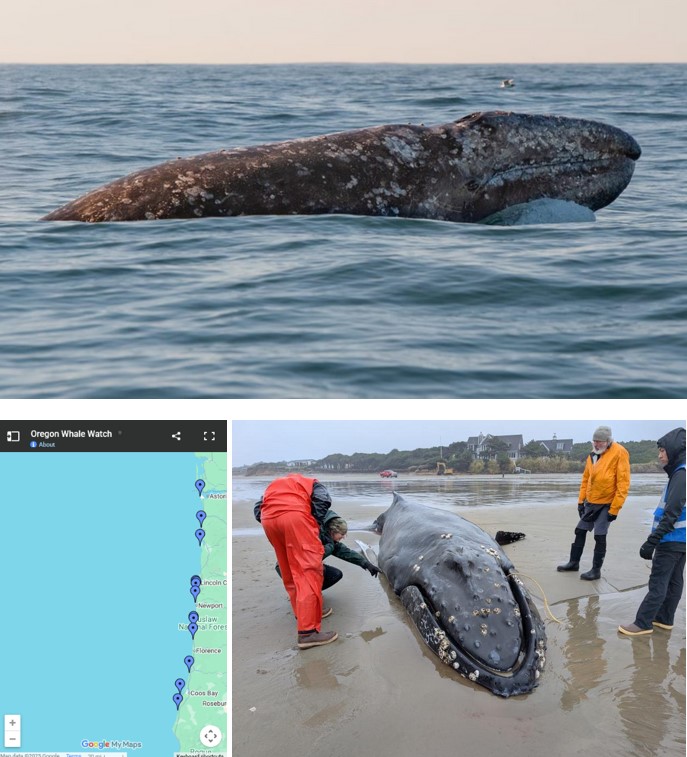
It is New Year Week, and the great gray whale migration is back on the Oregon coast.

The massive migration of eastern North Pacific gray whales — the longest mammalian migration in the world — sees thousands of whales traveling roughly 12,000 miles from their Arctic feeding grounds to breeding grounds in Baja, Mexico. That migration will once again pass Oregon this month. Oregon whale watchers will celebrate the peak of the migration right now when the Oregon Parks and Recreation Department hosts Winter Whale Watch Week at parks up and down the coastline.

Oregon State Parks celebrates the migration twice per year during Whale Watch Weeks in late December and late March. The program places volunteers at 14 whale watching sites in the winter and spring. Volunteers help visitors see and learn about migrating and resident gray whales.

Check out this map for a list of designated locations volunteers will staff during each of our official Whale Watch Weeks. Even if it isn’t Whale Watch Week, these are great locations to be on the lookout for gray whales and other marine mammals!

See OregonLive and Willamette Week for more information.

Whale migrations, of course, coincide with the start of the commercial crab fishing season, and you can see the lights on the horizon over the ocean at night.

After at least four humpback whales were entangled this year in commercial Dungeness crab fishing gear, conservation groups are petitioning the Oregon Fish and Wildlife Commission to adopt measures to reduce the amount of fishing gear during whale feeding and migration seasons.

Filed by the Center for Biological Diversity, Oceana, Natural Resources Defense Council, and the American Cetacean Society, the petition asks officials to open a pathway for fishers to use pop-up fishing gear, which eliminates untended buoy lines. The gear has been tested in the California Dungeness crab fishery, and conservation groups say it is reliable, profitable, and safe for whales and other marine animals.

The petition, filed earlier this month, comes weeks after a young entangled humpback whale was found stranded on a beach north of Yachats. Veterinarians euthanized the whale after unsuccessful attempts to free it on November 17.

State law requires the commission to respond to the petition in writing within 90 days and either deny it or begin rulemaking proceedings. Read more in the Capital Chronicle.

When your legislature approves new laws, they often take effect 90 days after being signed by the Governor. Some take effect immediately if they include a so-called “emergency” clause (which I have argued is used much too often). Most new laws, however, roll out on January 1st the following year.

Nearly 300 laws approved by Oregon lawmakers in this year’s legislative session will take effect at the beginning of 2026. Those laws range widely in scope and subject area, impacting regulations on housing production, labor standards, business practices, and health care. Some will help keep more money in Oregonians’ pockets, strengthen protections for Oregon consumers, tenants, and workers, and expand access to medical care.

One change that Oregonians will not see in January is a higher gas tax or other transportation taxes and fees. That’s because the group attempting to halt a scheduled increase to Oregon’s transportation taxes said earlier this month that it had submitted more than enough signatures to suspend the increases until voters have the final say on the tax hikes next November.

Oregonian photo.

Here are a few highlights of bills becoming law next week:

Affordability / Cost of Living

  • Utility rate increases will be tied to performance, requiring power companies to meet standards like cost control, emissions reduction, and protections for low-income customers before raising rates. (SB 688)
  • The Fan Fairness and Transparency Act bans ticket-buying bots, blocks the resale of bot-purchased tickets, and prohibits deceptive look-alike websites that mislead consumers. (HB 3167 – Gomberg sponsored.)
  • Online sellers will be required to include mandatory fees in advertised prices, ending surprise “convenience” or “service” charges while still requiring disclosure of taxes and shipping costs. (SB 430 – Gomberg sponsored.)

Consumer/Privacy Protection

  • The Telemarketing Modernization Act expands “telephone solicitation” to include texts, bans calls after 7 p.m., and limits solicitations to three per day. (HB 3865 – Gomberg sponsored.)
  • Prospective tenants will have new protections by requiring landlords to return deposits if serious habitability issues—like leaks, inadequate heat, unsafe water, or broken locks—are found before signing a rental agreement. (HB 3521)
  • Strengthening laws against non-consensual intimate image distribution, expanding the definition to include AI-generated deepfakes and creating felony-level penalties for repeated offenses. (HB 2299)

Worker Protections

  • Developers and contractors will be held accountable for unpaid wages, letting workers—including subcontractors—sue for wages, benefits, and penalties, while requiring payroll transparency to prevent wage theft. (SB 426)
  • Increased penalties for repeat workplace violence, making assaults more serious when committed against workers on the job, strengthening protections, and promoting safer workplaces across Oregon. (SB 170)

Improving Access to Health Care

  • Medical debt will no longer appear on credit reports, barring providers and reporting agencies from listing unpaid medical bills. (SB 605 – Gomberg sponsored.)
  • State-regulated health plans—including individual, family, small business, OEBB, and PEBB plans— will be required to cover perimenopause, menopause, and post menopause treatments such as hormone therapy and osteoporosis care. (HB 3064)
  • Health insurance plans will be required to cover breast reconstruction using a patient’s own tissue on the same or better terms as implant-based reconstruction. (SB 1137)
  • Federally recognized tribes in Oregon will be allowed to report cases of certain diseases or outbreaks in tribal communities to the Oregon Health Authority. Tribal health center administrators said the law will provide them with the infrastructure to access key health care datasets and investigate outbreaks. (SB 841)

If you’d like to learn more about legislation passed in the 2025 session, you can view a more comprehensive list here.

As Oregonians age and retire, they earn less. With families grown and homes now full of stuff, they also spend less. That means they pay less income tax. And of course, we have no sales tax. But we do have a property tax and that often burdens fixed income retirees. I occasionally hear from folks who have worked hard all their lives and ask why they haven’t earned a tax break.

Living in a county where one person in three is over age 65, it is hard to imagine how we would pay for police, fire, roads, or schools if we gave so many folks tax reductions. But I’m not unsympathetic. That’s why I have been a strong advocate for the state’s property tax deferral program which allows senior or disabled homeowners in Oregon to borrow money from the state to pay their property taxes.

To participate, you must file a free application with the county assessor by April 15 or file late from April 16 to December 1 and pay a fee. To qualify, you must meet all these requirements as of April 15, 2025:

  1. 62 years old or older or disabled and receiving, or are eligible to receive, federal Social Security Disability benefits.
  2. Own the property and have a recorded deed in your name.
  3. Have both owned and lived on the property for at least the last five full years.
  4. If you haven’t lived in and owned your home for the last five years, you may still qualify for the program. See the application form.


If you qualify for the program, the Oregon Department of Revenue will pay your property taxes each year. A lien will be placed on your property and the state will become a security interest holder. When your home is sold or transferred to your heirs, the loan must be repaid with accrued interest of 6 percent annually.

I’ve heard from some folks that they don’t like that the loan must be repaid, worry that they are eroding their family’s inheritance, and certainly don’t like the interest. I understand that! But my priority is keeping people in their homes as long as they choose to reside there. This program provides an option.


For additional information and to apply for the program, see the deferral application booklet.

You have heard me say it before. If you are confused, it may be because you are paying attention.

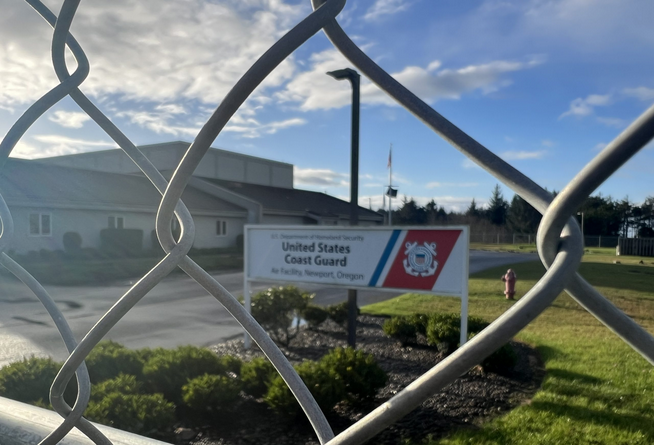
Case in point: There are now two lawsuits against the federal government, both aiming to stop DHS from building a new immigration detention facility in Lincoln County.


Last Monday, I wrote that our Oregon Department of Justice had amended its lawsuit, arguing that there was credible evidence of plans to build an ICE detention facility here and that those plans also were in conflict with state and federal law. Oregon is now asking the federal courts to block any attempts by the U.S. Immigration and Customs Enforcement to build Oregon’s only detention center in Newport until it goes through a series of federal, state and local environmental and siting processes to determine any impact.

Although a judge has ordered the Coast Guard to return its rescue helicopter to Newport, the property has been mostly cleared out to make room for a possible detention center. (Quinton Smith/Lincoln Chronicle)

Later Monday, we learned that the City of Newport is also suing the Trump administration. The lawsuit filed in U.S. District Court in Eugene asks the court to block federal officials from creating the state’s only detention center in a dangerous tsunami zone that would also damage the city’s tourist-based economy.

The lawsuit also says the U.S. Department of Homeland Security, U.S. Immigration and Customs Enforcement and the U.S. Coast Guard have not complied with federal environmental laws or Oregon’s Coastal Zone Management program in planning such a major undertaking. Read more here.

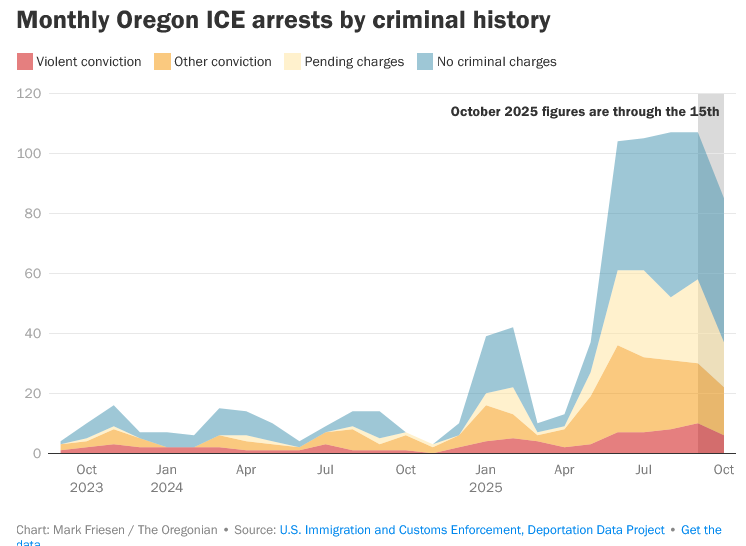
While most of my mail is adamantly opposed to a local ICE prison, I do hear from people concerned that undocumented immigrants are committing crimes and should be arrested and deported. To be clear, if someone, anyone, commits a crime against people or property, I believe they should be held accountable. However, new federal data shows most immigrants arrested in Oregon aren’t violent criminals.


A large share of people arrested by immigration agents in Oregon this year have no criminal record and most of those with convictions faced prosecution for nonviolent crime. The data, released by U.S. Immigration and Customs Enforcement and published this week by the Deportation Data Project, shows 294 of 644 people arrested in Oregon during the Trump administration crackdown had no criminal convictions or pending criminal charges and that their arrests have accelerated in recent months.

The data shows only about a third of the people arrested in Oregon from January 20 through mid-October had been convicted of a crime. And less than 10 percent of those arrested had been convicted of a violent crime.

These reports contradict the oft-repeated claims of President Trump and federal enforcement authorities who say their dragnet is targeting “the worst of the worst” immigrants with violent criminal histories.

The data also shows that arrests in Oregon jumped recently, with 192 of the 644 arrests coming since September.


Masked, armed agents have made most of the recent arrests in public spaces – inside businesses, on roadways, and near schools, mostly without judicial warrants. They have mistakenly arrested U.S. citizens, including children, and have used random license plate checks to detain people, in some cases unlawfully.

It’s about to cost you more to try your luck — and skill — at hunting, fishing and collecting shellfish in Oregon’s wildlands and waters.

More than 75 recreational and commercial fees will increase over the next four years. The new prices began December 1st, the first chance to buy hunting, fishing or shellfish licenses, permits and tags for the 2026 calendar year. Changes are detailed in HB 2342.

  • An annual hunting license will go from $34.50 to $39 for 2026, a 13% increase from the previous year. It will then climb in 2028 to $42 and in 2030 to $45. That’s a total of a 30% increase over the four-year stretch.
  • An annual fishing license will go from $44 to $50 in 2026, a 14% increase. Then in 2028, it’ll rise to $53 and in 2030 to $56. In all, that’s a 27% increase.
  • Annual shellfish licenses for people who want to go crabbing or dig for clams will jump from $10 to $13 in 2026, then to $14 in 2028 and $15 in 2030. In all, that’s a 50% increase.

The last time the state raised fees was six years ago. All of the above prices were approved by the Oregon Legislature earlier this year and apply to Oregon residents. Non-resident fees will increase at roughly proportional rates, with annual licenses costing about three to five times what residents pay.

More than 40 people wrote to the Legislature or testified in-person in favor, outweighing opponents by nearly three to one. More than a dozen hunting, fishing, and conservation groups said they approved of the higher fees.

The Oregon Hunters Association, with more than 12,000 members, said the department plays an important role in fighting “extremely impactful” problems plaguing wildlife. “While hunters and anglers are not thrilled about paying more, obviously as anybody would understand, we do take this as our responsibility,” they told legislators. Historically hunters and anglers have funded 40% to 50% of the agency budget.

Last year, there were about 330,000 hunters in Oregon, including more than 150,000 people who had tags to hunt deer and more than 120,000 with tags to hunt elk.


Most of this report came from this story in the Oregonian.

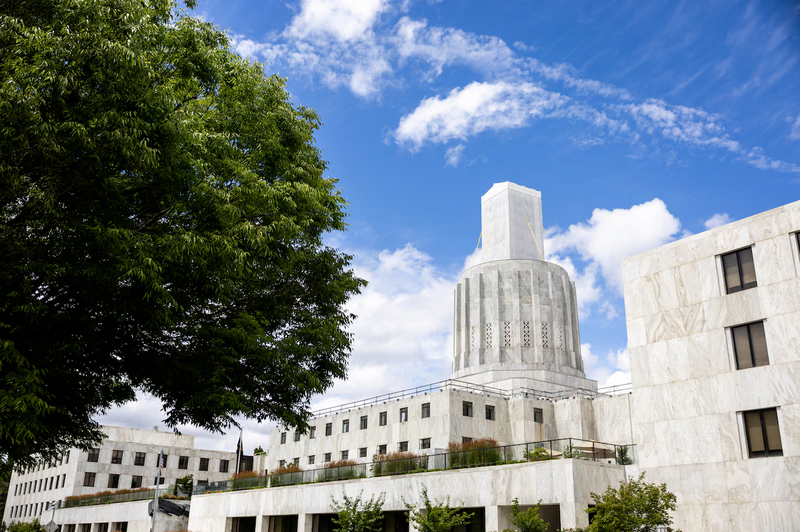
After years of renovations with most of the building closed, your Capitol is now open again. If you are inclined to look up in the new year, this is what you can once again see there.

The changing calendar provides timeframes for legal changes, and somewhat more arbitrary opportunities for reflection and resolutions. With the new year looming, we can look back over the past 12 months, consider our progress and promises, and contemplate what we can do better in the coming months.

Sunday’s Oregonian Editorial took a hard look at the challenges we have faced, the divisions we suffer, and a litany of successes and, less than successes. Oregon, they say, is at a crossroad, with our path to recovery on the line. “How our region’s leaders respond to the turmoil of 2025 will determine which direction we take.”

Every day, I respond to feedback from the people I represent in Salem. Certainly, we don’t all agree on the best path forward. But I continue to recognize and appreciate how very much we have in common. We all want a successful future for our kids and grandkids, safe, livable and resilient communities, to protect and preserve our environment, good jobs, a strong economy, and a secure retirement as we age.

Today, I resolve that I will continue to do my best for all of you in Salem, to listen, to seek meaningful compromise, and to be as I am able, a fierce advocate for our special part of Oregon.

My wish for the coming months is that we build a new year together that we can be proud of.

email: Rep.DavidGomberg@oregonlegislature.gov

phone: 503-986-1410

address: 900 Court St NE, H-480, Salem, OR, 97301

website: http://www.oregonlegislature.gov/gomberg

Slide Slide Slide Slide Slide Slide Slide Slide Subscribe Contribute

Ads

Featured Video

Tillamook Weather

Tides

Tillamook County Pioneer Podcast Series

Tillamook Church Search

Cloverdale Baptist Church
Nestucca Valley Presbyterian
Tillamook Ecumenical Service

Archives

  • Home
  • EULA Privacy Policy
  • Contact
  • Opt-out preferences
  • Search...
Share on facebook
Facebook
Share on pinterest
Pinterest
Share on twitter
Twitter
Share on linkedin
Linkedin
Catherine

Recent Posts

  • GORDON'S WEEKLY WEATHER UPDATE 12/29/25: Mother Nature gives us a break, King Tides return

    December 29, 2025
  • United Paws’ Cats of the Week: Meet Ivy and Foxy

    December 29, 2025
  • OP/ED: A Better New Year?

    December 29, 2025
©2025 Tillamook County Pioneer | Theme by SuperbThemes

Manage Cookie Consent
To provide the best experiences, we use technologies like cookies to store and/or access device information. Consenting to these technologies will allow us to process data such as browsing behavior or unique IDs on this site. Not consenting or withdrawing consent, may adversely affect certain features and functions.
Functional Always active
The technical storage or access is strictly necessary for the legitimate purpose of enabling the use of a specific service explicitly requested by the subscriber or user, or for the sole purpose of carrying out the transmission of a communication over an electronic communications network.
Preferences
The technical storage or access is necessary for the legitimate purpose of storing preferences that are not requested by the subscriber or user.
Statistics
The technical storage or access that is used exclusively for statistical purposes. The technical storage or access that is used exclusively for anonymous statistical purposes. Without a subpoena, voluntary compliance on the part of your Internet Service Provider, or additional records from a third party, information stored or retrieved for this purpose alone cannot usually be used to identify you.
Marketing
The technical storage or access is required to create user profiles to send advertising, or to track the user on a website or across several websites for similar marketing purposes.
  • Manage options
  • Manage services
  • Manage {vendor_count} vendors
  • Read more about these purposes
View preferences
  • {title}
  • {title}
  • {title}