











By Roland Hughes
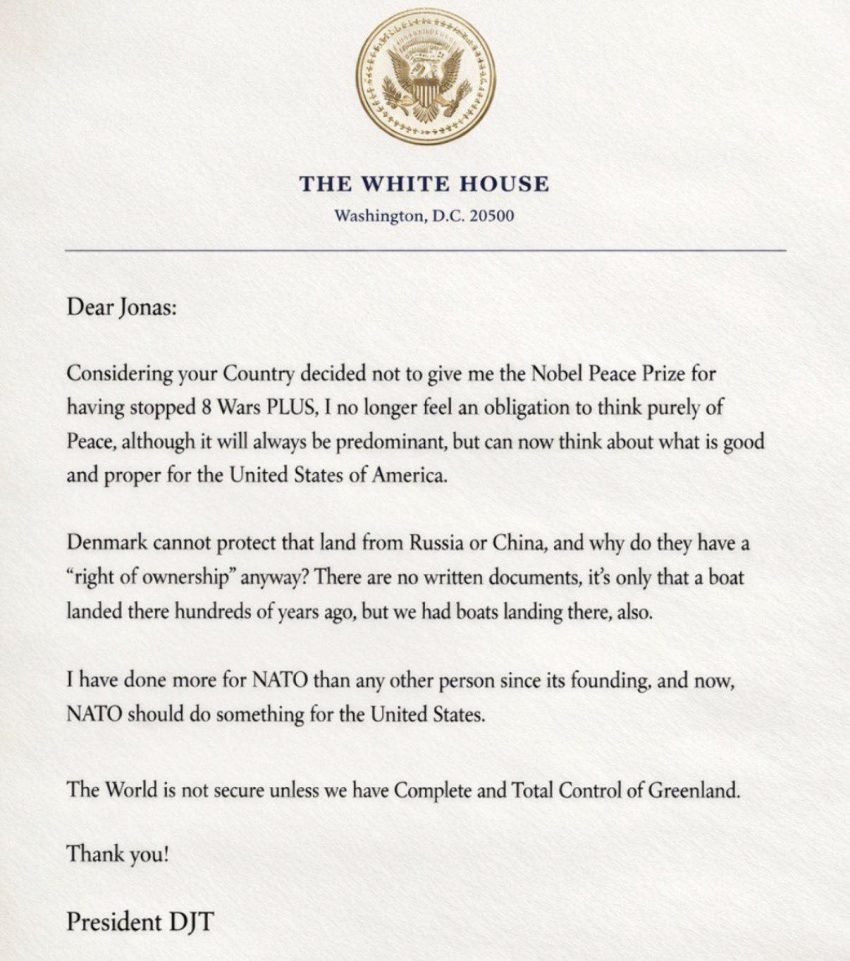
I’m genuinely troubled by recent reporting around U.S. communications regarding Greenland.
Not because foreign policy is beyond debate—it isn’t—but because a few basic lines that have long anchored American leadership are being treated as optional.
Greenland isn’t an abstract asset or a bargaining chip. It’s an autonomous territory within Denmark, with its own elected government. Danish and Greenlandic leaders have been clear—repeatedly—that it is not for sale and not subject to acquisition by another country. That isn’t rhetoric. It’s a settled political reality.
And Denmark isn’t an adversary. It’s a NATO ally—and a long-standing one. Treating an ally like leverage, through tariffs, pressure, or public threats over territory, cuts against the entire logic of collective defense. You don’t build security by strong-arming your friends. You weaken the trust that security depends on.
Yes, Arctic security matters. Competition with Russia and China is real, and serious people acknowledge that. But pushing for “control” of allied territory through pressure or unilateral demands doesn’t make the world safer. It does the opposite. It undermines the very alliances that have helped prevent great-power competition from tipping into open conflict for decades.
What gives me particular pause is this: the justifications offered are not tied to a new or changed strategic threat. The United States already has long-standing defense access in Greenland under the 1951 agreement with Denmark. Moving from existing security arrangements to demands for “complete and total control” is not a strategic necessity—it’s an escalation, and one that deserves scrutiny.
Some people, understandably alarmed, have asked whether this is grounds for invoking the 25th Amendment. It isn’t. The 25th Amendment exists to address presidential incapacity—medical or physical inability to discharge the duties of office—not reckless, coercive, or even dangerous policy choices. Stretching it beyond that purpose only weakens the constitutional guardrails it is designed to protect.
That doesn’t mean citizens are powerless. Quite the opposite.
This is exactly where constitutional accountability is supposed to live: in public challenge, congressional oversight, lawful dissent, and sustained civic pressure.
Representatives are meant to hear from their constituents. Congress is meant to assert its role.
Voters are meant to speak—clearly, persistently, and without confusion about what the Constitution does and does not allow.
Normalizing coercion toward allies isn’t strength. It erodes trust, damages credibility, and risks real harm over goals that don’t survive careful scrutiny. History shows that when Americans stay engaged—when they challenge power without abandoning principle—the country corrects course.
So the question isn’t whether security matters.
It’s whether we’re willing to compromise alliances, norms, and constitutional clarity in the name of it.
What are we doing here?
