







By Butch Freedman
“Call me Ishmael.” (Or Butch, same, same.)
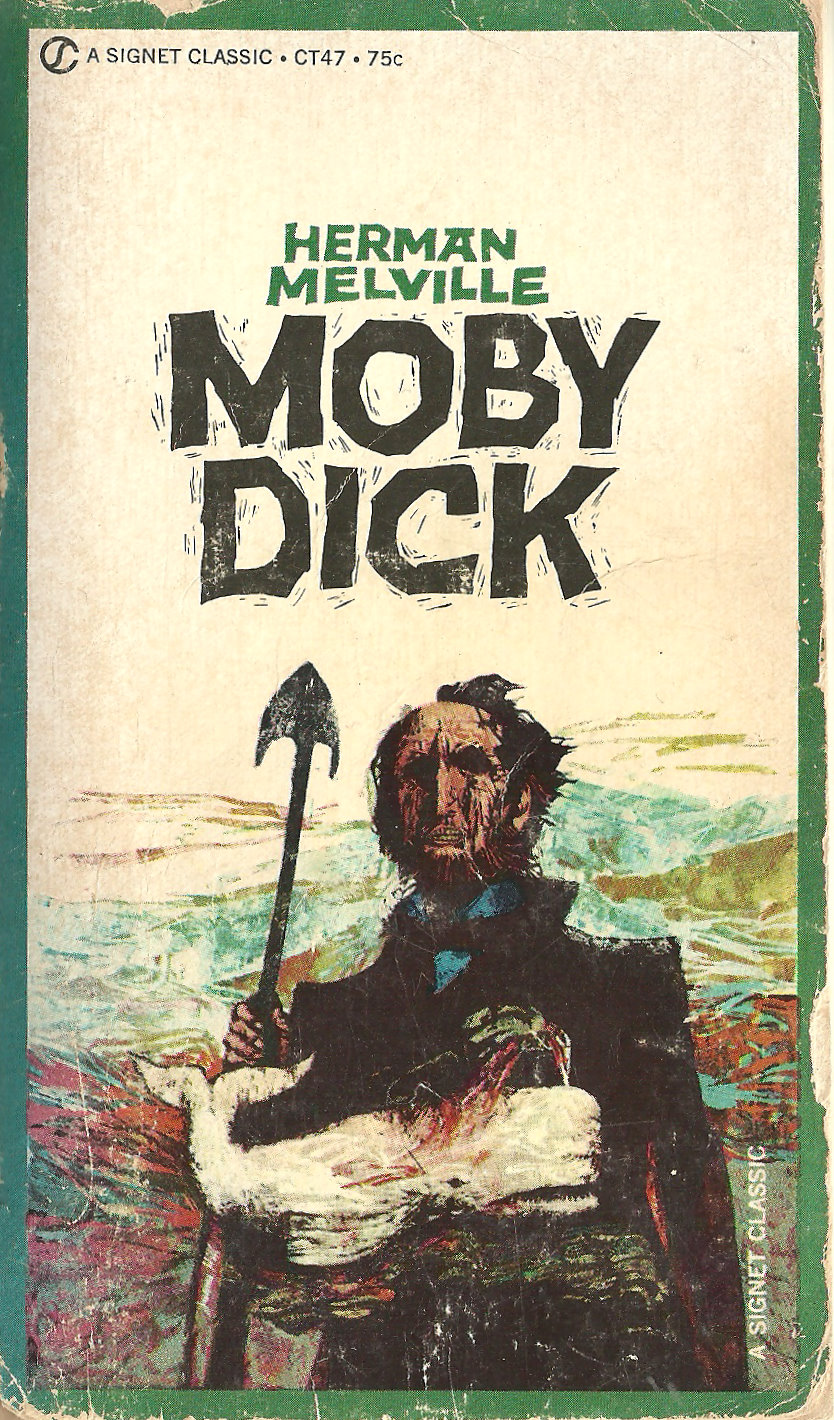
I’ve always been fascinated with the great work of American literature by Herman Melville, perhaps the first great American novel. “Moby Dick” is not an easy read, and I seriously doubt many book clubs would dare take it on. (Maybe I’ll propose it to mine.) When I taught it to my senior honors section at Jesuit H.S., the boys had a ritual burning of their paperback copies when we finished. I was not offended. (Though I generally frown on book burnings.) And at least some of the students told me they appreciated the experience and even learned some critical reading skills that would benefit them in college. Hope that worked out for them.
A number of chapters in “Moby Dick” are solely concerned with the mechanics of the whaling industry in the 1800’s, an important part of New England’s economy, but mostly irrelevant in today’s world. If you want to take on reading Moby Dick, you could consider skipping those chapters, though they are often intriguing—and wonderfully grisly. The heart of the novel though is about Captain Ahab’s obsession with catching and killing the great white whale—Moby Dick. Ahab had lost his leg to the great whale in an earlier confrontation and ever since was out for retribution and revenge. Ahab could not rest until his perceived enemy was destroyed, no matter the cost, no matter the harm inflicted on his shipmates. Are we starting to see the relevance?
Of course, Ahab was a deep thinker, unlike our current mad captain. And pondered his actions and his own demons. “God help thee, old man, thy thoughts have created a creature in thee; and he whose intense thinking thus makes him a Prometheus; a vulture feeds upon that heart forever; the vulture the very creature he creates.” Instead Trump is only able to think of profit or self-aggrandizement, never, I’m certain, of spiritual or existential matters. But both he and Ahab are certifiably insane. Trump, someone has written, is in his “sundown period.” He blathers on, unaware of his own confusion and inanity; his increasing dementia on view for the whole world. Ahab, on the other hand, tries to retain his hold on sanity, on righteousness. He knows that his own madness dooms him. “Vengeance on a dumb brute that simply smote thee from blindest instinct! Madness! To be enraged with a dumb thing … seems blasphemous.” Trump, on the other hand, strikes out at his enemies with blind rage, no self-awareness or sense of morality, only delusion—stoked or ignored by his death-bed attendants.
The other over-arching theme (besides mad revenge) in “Moby Dick” is the idea of free-will versus pre-determination. Is everything we do pre-determined by god or some other force in the universe, or do people have the ability to choose their own path? The question isn’t answered in the novel, as it can never be, but Ahab seems compelled to follow his destiny to the inevitable end, damn anything or anybody who complains or gets in the way. Again—a familiar theme in every morning’s headline. We now are all shipmates on the Pequod, watching helplessly as Ahab leads us to our doom. But hold on, maybe I’m extending the metaphor too far. I do believe in free-will. As a people, as shipmates, we can rise up and stop the mad captain. We must. I’m not ready to go down with this ship. Mutiny is called for. I am Ishmael.
