








 By Neal Lemery
The recent events in Minneapolis have pushed my buttons, knocked me to the ground emotionally, and left me dazed, stunned.
When I was a kid, I remember the news informing me that little girls in Sunday school were blown up by a bomb, a bomb planted by people who hated the girls, who they didn’t know, and killed them because of the color of their skin. Bombing a church and killing kids didn’t make any sense to me.
And the events in Minneapolis make no sense to me, and reawaken in me that sense of unfocused anger and rage of killing and violence, and a hatred I have never understood. My brain began to dwell on that old senseless tragedy. I had thought that over time, my rage with no place to go over a church bombing in Alabama had passed, that I was healed, that I was “over it” and I could move on. And certainly there were other horrors and atrocities during my life that I have heard about, and sometimes experienced, and, despite that continuing experience of atrocity and cruelty and senselessness, that I could sort all that out, make some sense of it, and move on. Yet, the news from Minneapolis has stirred me up again, unsettled me, and left me adrift on a turbulent, storm-tossed sea. Am I destined now to relive my angst over a national horror story from 1963?
I escaped to the garden, taking my pruning shears and tackling my project of giving order to the grape arbor. I needed solace and quiet, and, frankly, I was hoping to avoid needing to face our latest national crisis and moral dilemmas. Winter is a time to cut back the bare vines from last summer’s growth and last fall’s grape harvest, so that the vines are invigorated and can once again burst forth in their lush and fertile growth of the spring. It was an escape, a distraction from the news, and the replaying of videos of shootings, killing, and officials telling falsehoods, and jumping to conclusions without doing their homework. They claim to be truth seekers, who seem to have abandoned their duties for the sake of taking the lead on social media.
Yet, I couldn’t really escape. Even as I cut vines and brought order to the arbor’s tangled mess, my angst from 1963 and the disturbing scenes from Minneapolis kept replaying in my head. I hoped that this space in the cold of winter, keeping my hands busy with horticulture, would help me find truth and peace, and some answers. Yet, those wounds in the social fabric, and my aspiration to find the truth and justice in the news from Minneapolis, remained fresh and bloody.
When I was a kid, seeking truth was a daily experience, a given value and activity of everyday life. My family were farmers, doctors, engineers, and committed parents and community members. We valued truth, because truth was an essential component, a cherished value in everything we did, and everything we believed. Being inquisitive and seeking the answer to the ever-present question of “why” was a constant element of our lives. Once you determined the truth, then the answer, the solution, the direction forward came easily from that inquiry, and you could be confident your work had purpose and value. We could differ about what was true, but we were committed to the process of seeking truth, be it inconvenient, uncomfortable, disturbing, or reassuring. Truth was never seen as right or wrong, but as a logical conclusion of a fact gathering and analytical process. Valuing truth was a “core value” and an integral component of being a good person, a person of morality and ethics.
I was raised to see these values as not just personal, or within my family, but as national values, as the foundation of a national morality and ethic, as something innately American, to be cherished, honored, and nurtured. Those values were an inheritance for the next generation.
My profession was in law, where the search for the truth was at the heart of who I was, what I did, how I contributed to the community. I experienced the law as a tool to seek the truth and, once you knew the truth, then justice followed, because you knew what was right, and what was decent and moral. “First, do no harm” is a basic tenet and practice of the legal profession. Lawyers argue and debate, and challenge evidence and legal theories. The conflict is a testing process, challenging ideas and propositions, believing that in that conflict, that contest of facts and hypotheses, with the belief that out of that discussion, the truth will emerge and the right answer will prevail.
“Do the right thing” guides legislators, juries, lawyers and judges. That mindset frees the inquisitive mind to look for the truth and to travel the road to a just result.
I’ve always seen those principles, that ethical and moral framework, be a fundamental aspect of community life. Those ideas are at work in all aspects of our community, and often simply taken for granted, yet always at work in the background as people go about their daily life and building a better community.
The events in Minneapolis have rocked that boat for me, with a flood of unsettled, sometimes conflicting information often obscuring the truth, and trying to manipulate our attitudes on how we go about seeking understanding and our reactions on how we should respond. There’s a lot of propaganda, a lot of maneuvering, and a lot of people trying to use our fears and uncertainties to accomplish their own political agendas. Searching for the truth is being given lip service, but not seen as a moral compass or value in our often heated debate. The propositions of valuing truth seeking and doing no harm, and doing the right thing are being trashed, something to toss in a dumpster and light on fire.
I’m not convinced most people buy into those attitudes and practice, currently popular, yet that is a perilous attitude to take in this age where anyone can be a publisher of public thought and comment. This is often done with little consequence for what we might express as our truth. If we are a democracy, or more correctly, as a republic where each citizen has a duty to act responsibly for the common good, valuing truth and informed discussion is more than simply an ideal somehow buried in the language of the Constitution and our system of law and justice. Each of us has duties, as citizens, to foster healthy debate and respect for other viewpoints. Each of us needs to take the lead on enhancing our core values as a society and as a republican government. “We the people” is more than a cliché.
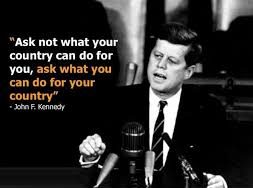
John Kennedy implored us to “ask not what your country can do for you – ask what you can do for your country.”
I’ve pruned my grapes now. They are ready for spring, for a new season, the possibilities of a new harvest. My pruners are stashed away. Yet, my gardening is not done. I need to tend to my own job as citizen, as a gardener of my country’s garden. In the midst of this bleak national winter, a winter of our discontent, I must be a seeker of truth and justice, a member of a society which aspires to decency, respect, and the values of a strong, inclusive republic, and a place where Truth is valued and cherished.

Books: NEW book – Recharging Ourselves, Building Community: Rural Voices for Hope and Change; Finding My Muse on Main Street, Homegrown Tomatoes, and Mentoring Boys to Men
1/25/2026
