


By Lynnee Jacks
We’re living in times of chaos; surviving on limited funds and fighting ever-shorter attention spans. It’s not our fault; it’s the state of the world. And as is the case everywhere, we are doing our damned best.
I was inspired this week by neighbors who, more than most, are dedicated to putting some good into the world in the face of a thousand reasons not to. It’s a collaborative spirit that challenges me to look at the wonders happening in our own backyards.
Take a walk with me on the Salmonberry Trail.
My cottage sits just above a river bend in Wheeler, Oregon—home to about 400 people, one restaurant, one coffee shop, and a liquor store. My grandparents live one town up the river. Five minutes past their house is another town with a gas station and a grocery store. Eight miles south is Rockaway Beach, a town of 1,500 that, on any given summer day, sees its numbers nearly double with visitors.
We understand why.
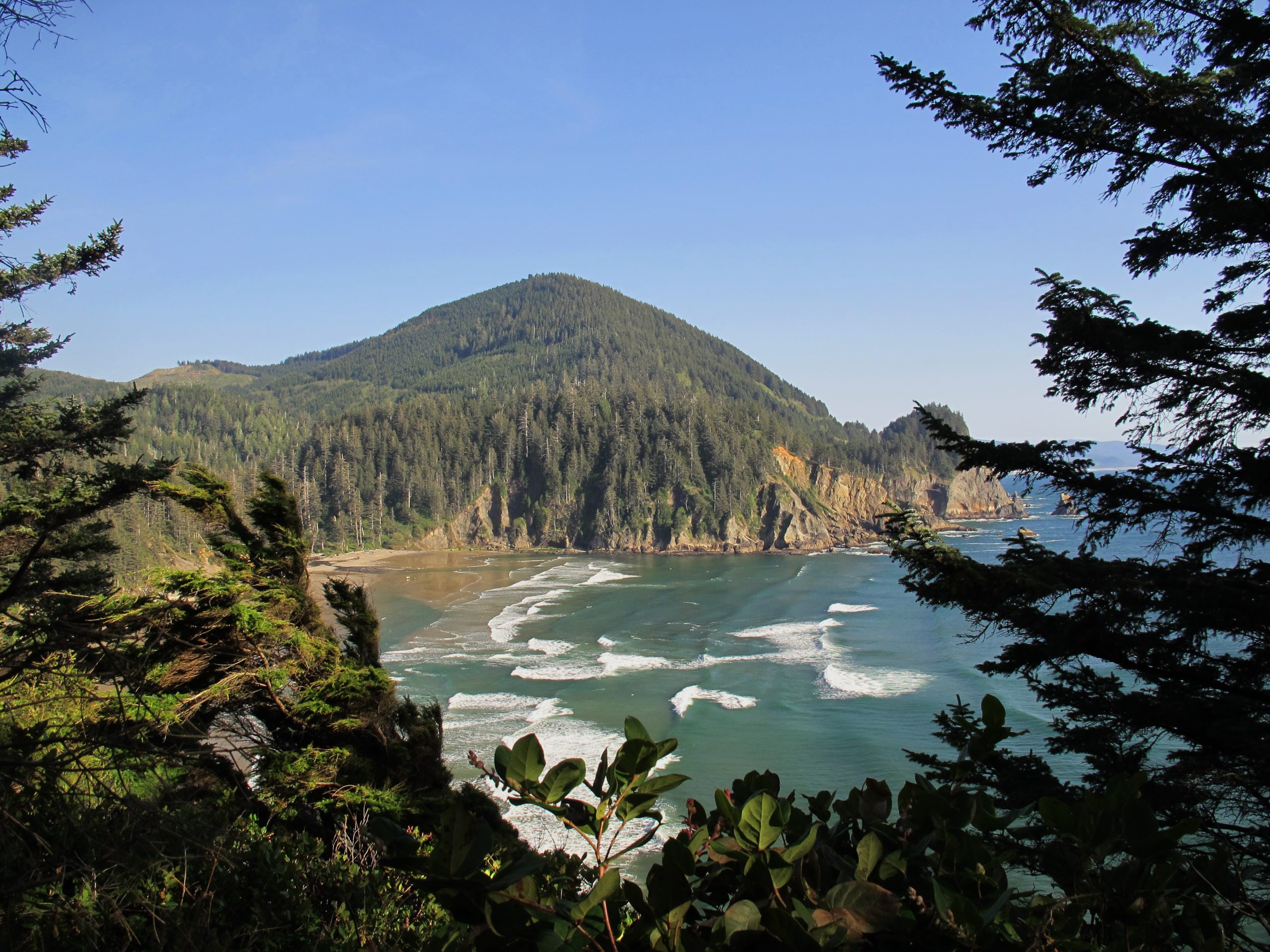
The stretch of map between Wheeler and Rockaway Beach, and again from Rockaway to Garibaldi, holds arguably some of the most beautiful rivers and coastline in the country. I’ve driven this stretch more times than I can count, and faster than I’d like to admit. I promised I’d never let myself take that view for granted, but it happens. When the only way to see a place is through a car window, eventually, you stop looking as closely.

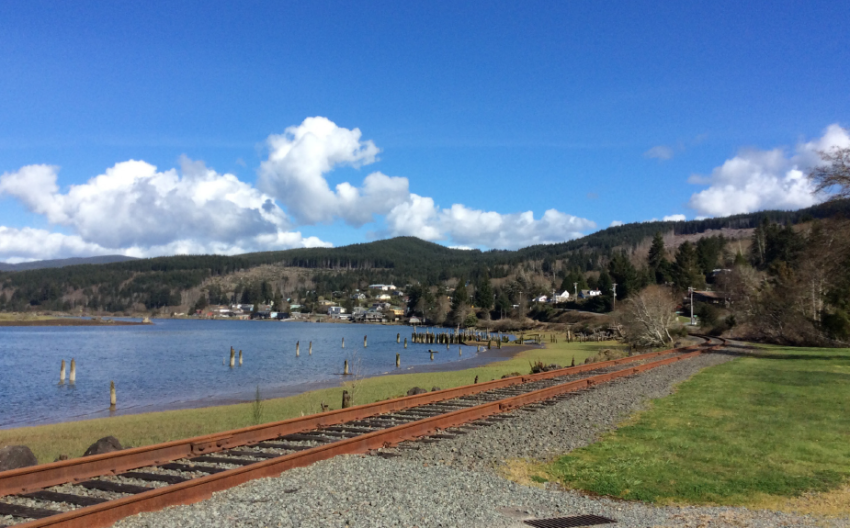
Sometimes, while I cook dinner, a tuft of smoke fills my window-frame. I hear the horn of the passenger train carrying tourists from one town to the next—the only ones, I suppose, with a better view than the cars. These tracks are a parallel line to Highway 101, snaking down the tidal zone all the way to the sea.
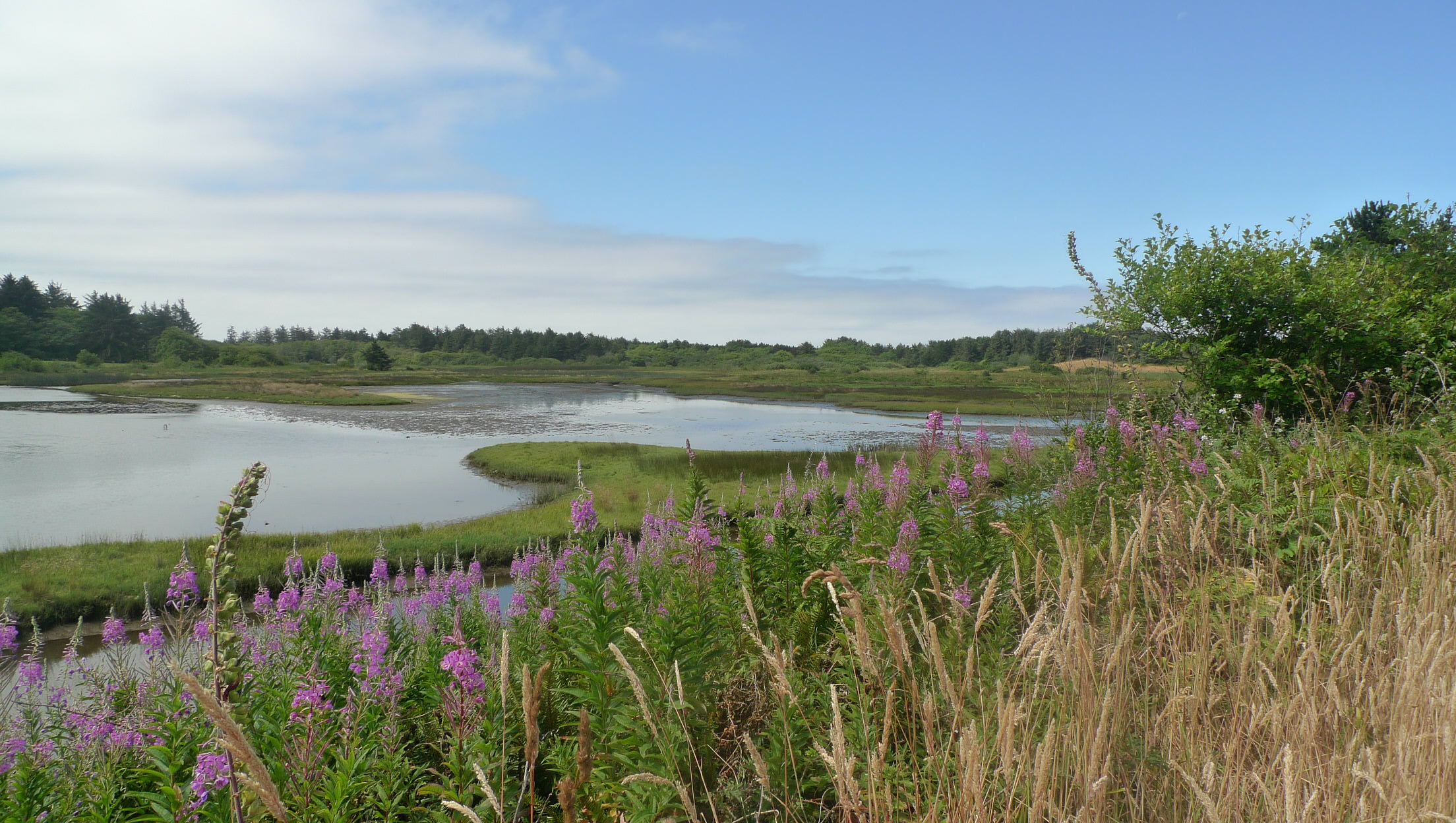
On my evening walks, I try to follow those tracks. Stepped down from the road and tucked into the greenery, my corner of the coast opens into a secret world of nesting birds, stoic herons, and the occasional curious seal popping its head up to greet the lone visitor ambling over the old ties. It’s not necessarily safe, or even legal. There are bridges with slats and all kinds of tripping hazards that demand a careful eye; it’s no place for running or biking. But it makes for good, slow walking.

When I first moved here, I heard whispers of a visionary project: a rail-trail connecting Portland to the Coast. While the full 85-mile dream is still on a far-off horizon, a critical, tangible piece runs right through our backyards. Within a few years, these tracks could become 26 miles of accessible trail connecting Wheeler to Rockaway, Garibaldi, and Tillamook.
The tourism expert in me jumped at the concept immediately: a trail like this utilizes existing infrastructure to solve a major transportation issue. Some of our most beautiful coastline is currently lost to the most dangerous sections of Highway 101, which sees fatal accidents year after year. How long have our communities asked for a safe way to walk (or bike) from here to there?

Rail-trail projects have a long history of success in Oregon. Look at the Row River Trail outside Cottage Grove, where an abandoned corridor was converted into a 15-mile paved path that now anchors a National Scenic Bikeway. Today, visitor spending tied to that trail totals over $1.3 million annually. The numbers are clear: for every dollar invested in these projects, nearly double is returned to the local economy.
But having worked closely with our North Coast communities, I know this trail would do something for us that doesn’t show up on a spreadsheet. I’ve seen the way people respond when we roll out “Mobi-mats” on our beaches—how wheelchair users and the elderly cry joyful tears when they get out on the sand for the first time in years.
That is the joy of access.

The Salmonberry Trail would open up the accessibility of our region exponentially. It starts as a safe path for children walking to school in Rockaway. In five years, it’s a bike path between towns. In ten, it’s interconnected with the world-renowned Oregon Coast Trail. Practically, that also means spreading out the tourism impact—moving parking and traffic to new trailheads with signage that teaches visitors how to be good stewards of the land we love.
Of course, as with any infrastructure project, there are mountains to be moved. Support is strong, crews of volunteers are eager to serve, and funding is within reach – but there are complexities to the process. Having worked in this space, I am no stranger to holding tension.

Implementing the trail in a feasible way would require shortening the route of the Oregon Coast Scenic Railroad. As a Wheeler resident, I’ve watched the train offload hundreds of people who overwhelm our small shops for an hour before disappearing. With my sustainable tourism hat on, I would challenge the North Coast to consider that a trail would bring longer-lasting, more sustainable funding, and visitor traffic that is spread out with consistent traffic, year after year, extending into shoulder seasons.
Any of these changes would cause cascading effects for port funding and old ways of being. But change is inevitable. It is only a matter of how long we hold onto what is no longer serving us.
As locals, we find our own ways of falling in love with this place season after season. Many of us park at the beach and walk for hours on end in one direction, only ocean expanses ahead. Others of us know more inland trails by heart, and have secret viewpoints or mushroom patches and some of us still, are dedicated to finding the most remote logging road in the hills to simply exhale away from it all. Our secret tracks and trails that loop around in our backyards, but they never take us far. It’s a pattern I see time and time again in rural places: when we are under-resourced, it is difficult to think beyond what is right in front of us.
But this year, I think it’s time we invest in something better.
I believe we are arriving at a time, collectively, that we are willing to live in and look beyond tension. Maybe it’s because it is spring, and I am watching the salmonberries bloom, alongside the skunk cabbage and the trillium. Maybe this long-awaited time of year will remind us all that everything is always changing.

The Salmonberry Trail Foundation has a vision for 85 miles to Portland. But I have a vision for the 12 miles that lets my grandpa safely walk to his favorite bird-watching spot. I see a trail where my neighbor can bike to work, and where one day, I might push a stroller with my own children.
This is not a far off, intangible thing. It’s the kind of in-your-own-backyard good thing that makes a real difference in the quality of life of our neighbors. The world is heavy, now more than ever. And while we can’t control much of any of what goes on out there, we do have a say over this: a trail that connects us; a trail that brings safe access to our communities, and to the diversity and beauty of the coastline that means everything to all of us.
It’s as simple, and as difficult, as that.
Written in partnership with the Salmonberry Trail Foundation.
This article is part of a paid partnership with the Salmonberry Trail Foundation. All views expressed are my own and do not reflect the official positions of any Oregon Coast tourism organizations.
About the Author:
 Lynnee Jacks is a writer & communications consultant specializing in rural tourism development. With a Master’s in regional development and deep ties to the Oregon Coast, her work focuses on connecting place, purpose, and personal narrative.
