


EDITOR’S NOTE: This Q&A is based on an interview by Shaena Peterson with Cyrus Javadi, State Representative, Fri., June 26, 2026. Listen to the full interview at link below*.
Q: Cyrus, you’re a state legislator, dentist, health care committee vice chair. How do those roles benefit coastal communities?
As a dentist, I hear firsthand from my patients how expensive medical care and medications are, that people are losing their insurance, wait times are long. In the legislature, those real-life experiences inform my work on those problems, as well as on how to keep rural hospitals open, how to get medical providers into our communities. Our challenges are different from urban areas; if a hospital here closes it’s an hour drive or more to find care.
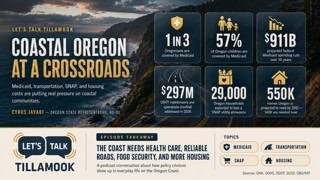
Q: Congress cut a trillion dollars from Medicaid, which covers one in three Oregonians, mostly children. What is Oregon doing to respond?
Because on the coast we don’t have big employers who provide insurance, our hospitals and doctors rely on Medicaid and Medicare for seventy percent of their revenue and on people paying out of pocket. Hospitals already work on razor-thin margins; they’re losing more money every year, can’t afford supplies or labor and eventually may need to close. Doctors already are reimbursed by Medicaid for less than the cost to provide a
service. Cuts to Medicaid can be disastrous for rural healthcare.
Q: You voted for a transportation funding bill that failed on the ballot. What happens next?
Rural communities depend on our roads. If they’re closed by a landslide or washout, people can’t get transportation for emergencies, or to get to work or school. Bad roads are dangerous and cost lives; bridges wash out. The legislation on the ballot would have cost each driver about $2.50 a month. My research told me there was no existing money that could be redirected to transportation. Compared to missing days of work or being unable to buy food because of a washout, the gas tax increase appeared to be a good tradeoff.
But voters didn’t want another tax. Add to that the war in Iran and the steep increase in gas prices it has caused, as well as increases in health care costs, people losing Oregon Health Plan coverage because of the trillion-dollar federal cuts to Medicaid, a gas tax increase had no chance. But the problems with roads and bridges won’t go away, will only get worse, and must be dealt with.
Q: What other issues do you see facing us based on federal actions? What can we do?
The economic impact of the Trump administration’s policies is the biggest problem. Less disposable income, more expensive housing and food, fewer grants. Cuts to SNAP: more than half our children are on SNAP and Medicaid, so both healthcare and food security are affected. Farmers pay more for fertilizer because of the war which affects food supply.
What can we do? People can vote for leaders who will grow the economy, provide health care, fix the roads and provide affordable housing. And they can go to work, create jobs, support our neighbors, grow the coastal economy and meet our community’s needs.
*Listen to full intereview here: Let’s Talk Tillamook | Podcast on Spotify
 Let’s Talk Tillamook is an independent community project led by experienced broadcasters and journalists dedicated to providing accurate, factual information and thoughtful conversations for the people of Tillamook County and the Oregon Coast.
