By Representative David Gomberg, House District 10
7/27/2026
Dear Friends and Neighbors,
For those of you reading this Monday report on Monday, please take a moment to provide feedback to the Public Utility Commission (PUC) on a proposed 8.6% increase request from PacifiCorp (Pacific Power). You can fill out a simple form here. You can watch or participate in Monday night’s PUC hearing by zoom or phone at 503-378-6600 or 800-522-2404.
Electricity providers are regulated monopolies. That means you have no choice but to use their services, and the state approves what they charge you. The PUC is a three-person governor-appointed group charged with regulating the rates of privately owned electric and gas utilities in Oregon.
In this case, Pacific Power has proposed increasing the amount of money it collects from Oregon customers by $170 million, about an 8.6% increase overall. Actual bill impacts will vary from customer to customer.
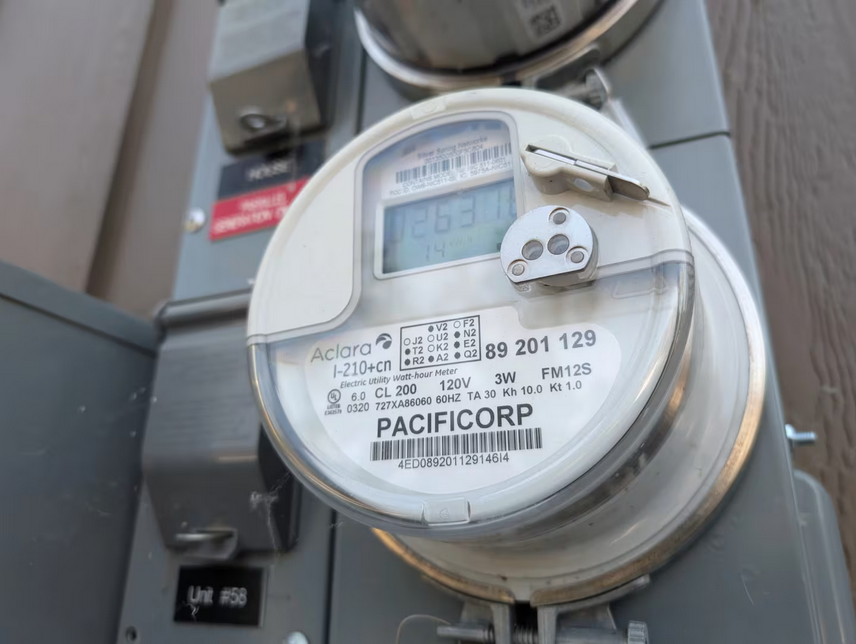 Pacific Power said the increase is needed because of higher insurance costs from wildfire risks. That’s on top of other increasing maintenance costs. However, Pacific Power’s parent company, PacifiCorp, faces an estimated $2.7 billion in wildfire lawsuit liabilities stemming from catastrophic fires across Oregon and California. Those financial pressures are being passed down, at least in part, to ratepayers.
The company is currently embroiled in a lawsuit over its role in the 2020 Labor Day Fires in Oregon. The Oregon Supreme Court is currently deciding if a jury’s verdict against the company will be allowed to go forward or should be thrown out on a procedural error.
PacifiCorp is an investor owner utility (IOU). While most of our district is served by other companies or PUDs, I myself am a Pacific Power customer and live in the 2020 fire zone. My own position on this is pretty straightforward. If a jury determines that a company has caused harm, awards should first be paid by the investors (owners) of that company and not by the ratepayers (customers). Said another way, if a family loses their home to a fire caused by the power company, I don’t want the family paying higher rates while corporate owners still make a profit.
This marks the fourth consecutive year of rising electricity prices, totaling a staggering 54% cumulative increase since 2022. What began with a sharp 21% rise in 2022 was followed by a 12.9% jump in 2024 and another 9.8% hike in 2025. Each increase compounds the financial strain for households already stretched thin by inflation, record-high consumer debt, and rising costs across nearly every sector.
In response, the legislature has taken several steps to ensure that increased power demands caused by data centers are paid by data center owners (House Bill 3546, the POWER Act), and that the PUC better consider the impact on ratepayers when increases are proposed (House Bill 3179, the FAIR Energy Act).
The Public Utility Commission denied a request earlier this year to increase PacifiCorp’s rates outside the normal timeline. The Commission said Pacific Power’s financial situation wasn’t bad enough to warrant that rate increase.
If Pacific Power’s rate increase is ultimately approved, it would take effect next April.
Finally, let me add that my concerns here are directed at the folks proposing these increases and not at the good people working locally to keep power on in bad weather, help families pay bills in tough times, or mitigate the risk of future fires.
The hearing is Monday, July 27 at 6 pm. Again, you can comment here. Learn more about utility rates here.
| Here is a related story and another opportunity to comment.
The Oregon Department of State Lands is proposing for the first time to charge multinational telecommunications and tech companies for using the seafloor off the state’s Pacific Coast for fiber-optic cables used to transmit internet data and international calls.
Readers may remember back in 2021, when Facebook brought cables ashore in a portion of Tillamook County that I represented before House district lines were redrawn. Everything that could go wrong did go wrong. The drill bit broke and the drilling contractor left drilling equipment, including 1,100 feet of pipe and 6,500 gallons of drilling lubricant, abandoned under the pristine beach.
I wrote and passed House Bill 2603 which required telecommunications companies to file specific plans with the state for the removal of drilling equipment and the cables themselves when they are no longer in use and make them put a financial guarantee in place to ensure the proper cleanup and removal work gets done.
Now, Oregon could join its West Coast neighbors in California and Washington in requiring companies also pay compensation fees based in part on the amount of cable extending along the states’ near-coast seabed. That could bring in more than $1 million per new cable laid.
Application fees would help the agency cover the costs of technical reviews, surveys, inspections, public outreach and other coordination and administrative work while the compensation fees would flow to the Common School Fund and Oregon’s public K-12 schools. |
|
| Ten of the 16 undersea fiber-optic cables permitted off of Oregon’s Coast are in areas in Tillamook County, pictured here. (Photo by Mia Maldonado / Oregon Capital Chronicle) |
| The public can submit comments about the proposed fee and rules changes through August 3. The State Land Board, made up of Gov. Tina Kotek, Secretary of State Tobias Read and State Treasurer Elizabeth Steiner, will vote on the rules at one of its monthly meetings before the end of the year.
Visit the DSL website for all rulemaking materials, including a draft of the proposed rules, all related materials from the rulemaking advisory committee, and the online comment form. Comments may be submitted in writing by online form, emailed to dsl.rules@dsl.oregon.gov, or mailed to DSL (Attn: Rules Coordinator) at 775 Summer Street NE, Suite 100, Salem, OR 97301.
Again, the comment deadline is Monday, August 3, 2026, at 5 p.m. |
|
| Several weeks ago, I wrote about IP 28, a petition to gather signatures and place on your November ballot a broad prohibition on hunting, fishing, and agriculture—all in the name of preventing animal abuse.
Oregon’s Legislative Revenue Office provided an estimate of the economic costs for the proposal. It could cost the state many millions of dollars and thousands of jobs. More specifically, they detailed direct impacts to economic output of $121 million to fishing, hunting and trapping with 1,217 jobs lost and a $83 million reduction in labor income in 2027.
A further impact would be to slaughtering operations of $312 million in economic output, 396 jobs and $25 million in labor income, again for 2027. And there would be another direct impact from changes to animal production and aquaculture of $85 million in output, 688 jobs and $21 million in labor income.
Other impacts include raising animals, meat and fish processing and extermination services. That could be a loss of more than $3 billion in economic output, 14,000 jobs lost and $390 million in labor income lost in 2027.
Readers know I have no tolerance for animal abuse or unnecessary testing on animals. But I also said IP 28 went too far and actually reduced penalties on the most egregious forms of animal neglect and cruelty. |
|
| Backers submitted over 142,000 signatures, but only 104,262 were verified as valid out of the 117,173 needed. |
|
| Proponents collected more than 140,000 signatures with 117,173 required to qualify for the ballot. But following the standard review by the Secretary of State, it was determined that many signatures were either duplicates or non-qualified voters. A second more thorough review was conducted. According to an analysis by elections officials, the petition contained 104,262 signatures—well short of the required number.
The petition’s failure means Oregon voters won’t consider any statewide measures in the November general election. |
|
| Surveillance pricing is the practice where companies use algorithms and personal data—such as browsing history, location, device type, and purchase behavior—to charge individual consumers different prices for the exact same goods or services. Dynamic pricing is a bit different. Dynamic pricing is a strategy where businesses change prices in real time based on demand, competitor actions, and inventory levels.
Think of surveillance pricing being focused on you and dynamic pricing being the same for everyone.
Imagine that you walk into a grocery store on a Friday afternoon and discover that, with a flick of a computer switch, all the prices on things you need for the weekend have gone up. Imagine you check out a product online and when you come back the next day, your price is higher, but if you try a friend’s computer, the price is lower. What if your cost for a ride-share, travel, food or a new TV were based on individual information collected in your browser, phone, or car computer?
Imagine a family member has died, and attending their funeral is very important to you. Somehow—you don’t know how—the airlines know this about you, so when you go to buy a ticket their prices force you to pay more for the same flight than other people.
Oregon Consumer Justice (OCJ) defines surveillance pricing as “The practice of setting individualized prices for goods and services based on personal data a company has collected or purchased about a consumer, including their app usage, browsing activity, location, demographic profile, and data obtained from third-party brokers.”
These types of practices are most common in online transactions, where there is no obvious “sticker price” for consumers to see what a product is usually sold for, or what prices other customers are being offered.
Online sellers have been documented offering different prices to different individuals, based on harvested data such as their location, browsing patterns, and even their mouse movements on a webpage. They use this harvested data to predict the customer’s “pain point” or the maximum amount that an individual consumer is willing to pay for a specific product, then upcharging (increasing the price for) those they see as willing to pay more for a certain product or service. |
|
| Digital price tags save stores time and money to adjust prices, but also allow them to easily make changes based on the time of day or day of the week. |
|
| Besides online transactions, concerns have also been raised about the potential for their use in brick-and-mortar grocery stores, as many have started rolling out digital price tags that can be changed electronically. Consumer advocates have warned that the use of these tags may allow stores to change prices on products and gouge customers.
Surveillance pricing can also be used to grant discounts or offer specialized coupons to customers. We’re all used to AAA and AARP discounts. But now, customers who use some grocery store apps or keep a phone number on file at the hardware store are offered specialized coupons based on what they have bought in the past, or what the company believes they might be inclined to purchase if offered a discount.
Consumer Watchdog found the following examples of surveillance price gouging:
Orbitz: Orbitz learned that Mac users spend more money to stay at hotels and charged them more than non-Mac users.
Staples: Staples.com charged people more for the same stapler if they knew a person had fewer options, such as living far from a competitor.
Target: Target charged people more when they were in a Target parking lot versus when they were in another location. Target determined people who are already in their parking lot were willing to pay more. For example, a TV on the Target app was priced at $499.99, but once the person entered the company’s parking lot the price went up $100, to $599.99. The corporation was ultimately forced to pay $5 million in civil penalties and stop its geofence price switching.
The Princeton Review: The test prep company charged customers more money when found they lived in zip codes that contained a higher number of Asians.
Rideshare: People have reported being charged different Uber fares when using a corporate credit card over a personal credit card. In 2016, a data scientist at Uber said the company knew that people were more willing to pay a higher fare when their phone batteries were low. Uber has denied that it charges rides based on that. Uber and Lyft made statements that put into question whether it does indeed use surveillance pricing. Both companies said they calculate fares based on “trip purposes.”
Earlier this year, Maryland became the first state to ban surveillance pricing for grocery stores and food delivery services, elevating a nationwide conversation on the topic. Maryland’s law specifically prohibits companies from using personalized data to set higher prices for consumers, meaning that companies would still be allowed to use surveillance pricing to offer discounts to individuals.
I’m working with legislative colleagues to monitor the developing situation and identify changes we may want to propose for Oregon. Watch the presentation from OCJ at the February 13 legislative hearing. |
|
| Let’s close this week with some illuminating news.
Pronounced “Ha – SEE – Ta” by most, “HECK – ah – Ta” by others, yet everyone agrees Heceta Head is one of the most beautiful lighthouses in the world.
After nearly five months of darkness due to mechanical repairs, the Heceta Head lighthouse south of Yachats is again shining its light for locals, visitors, and ships at sea.
What is normally the brightest among Oregon’s coastal lighthouses turned its powerful light back on Thursday following repairs and replacement to the complex gears that help rotate its antique lamp works.
Specialists from Welch’s Machine Works in Eugene finished work this week on the huge carriage wheels that allow the lighthouse’s 10-foot-tall lens to rotate. The old wheels, which lasted 13 years, were replaced with bronze versions. Repairs also included resurfacing the metal base upon which the wheels traveled. The cost of the project was $35,000. |
|
| The light in the Heceta Head lighthouse was turned on again Thursday after repairs to gears that rotate its 10-foot-tall lens. (Lincoln Chronicle file photo) |
|
| The lighthouse stands 205 feet above the Pacific Ocean and is located just off U.S. Highway 101 between Yachats and Florence. Its lighting mechanism—known as a first-order Fresnel lens, designed by a French physicist and ordered in 1893 from a British company—was first lit on March 30, 1894.
The light, housed atop the 56-foot-tall lighthouse tower, shines a beam so powerful it can be seen 21 nautical miles out to sea.
Just a few feet away is one of the last remaining lightkeeper’s cottages on the Pacific Coast. The Heceta Lighthouse B&B, in the Lightkeeper’s Home, is perched on a cliff with a magnificent view of the Pacific Ocean and the beach below. Paths from the Lightkeeper’s Home lead both to the beach and to the lighthouse.
There are six rooms, a wine and cheese social from 4-5pm in the Pacific Ocean-facing West Parlor, and a remarkable seven course breakfast. Several times each year they offer public events. |
|
| A seven course breakfast? I’m feeling hungry already.
|
|