


Why a federal decision could change fishing on the Columbia River for years to come.
 EDITOR’S NOTE: Here’s an installment from Tillamook County’s State Representative Cyrus Javadi’s Substack blog, “A Point of Personal Privilege” Oregon legislator and local dentist. Representing District 32, a focus on practical policies and community well-being. This space offers insights on state issues, reflections on leadership, and stories from the Oregon coast, fostering thoughtful dialogue. Posted on Substack, 7/8/26
By State Representative Cyrus Javadi
Let’s talk about fish.
Not interested? Fair enough. But stick with me, even if your closest relationship with salmon may be ordering one at a restaurant.
Because this is not really a newsletter about fish. It is about how a bargain was struck between the US Government, the tribes, the fisherman, and all of us who live in coastal communities
And right now, that bargain is beginning to come apart.
The Bonneville Power Administration, better known as BPA, is ending its share of funding for the Select Area Fisheries Enhancement program, or SAFE, effective September 30, 2026. Without replacement funding, the program that raises and releases millions of hatchery salmon in the lower Columbia could begin to unravel.
Never heard of BPA or SAFE? You are not alone. Like most things in the legislature, I did not know much about either one until there was a problem.
So give me ten more minutes while you finish that coffee, and by the end of this newsletter you will know enough about salmon, dams, hatcheries, treaties, and federal power policy to sound remarkably informed around the office today.
You may even become the person who says, “Actually, the Northwest Power Act of 1980 requires the region to protect, mitigate, and enhance fish and wildlife affected by the federal hydropower system.”
Your coworkers will either be impressed or stop inviting you to lunch. Either way, you will have learned something.
Salmon Are Extraordinary
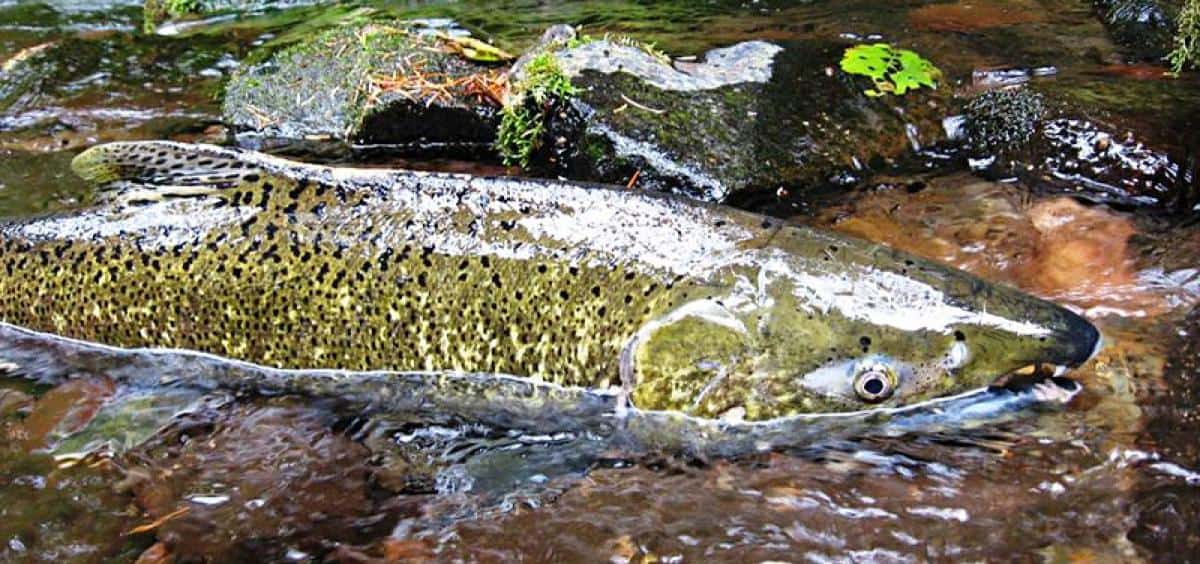
It should come as no surprise that Salmon are extraordinary. They are also very strange.
They begin life in freshwater streams like the kind we have all over Tillamook, Clatsop, and Columbia counties.
Now once these little guys and gals hatch and grow a little, they head downstream toward the Pacific Ocean. Those fish that survive this epic journey through the man-made gauntlet created by dams, reservoirs, turbines, altered water flows, warmer temperatures, predators, and the many other hazards between a stream and the sea spend years in the Pacific growing larger while trying not to become lunch.
Then, for reasons written somewhere deep inside their biology, they turn around and go home. Not just to Oregon. Not just to the Columbia River. Many return toward the same tributary, creek, or stretch of water where their lives began.
And once salmon make it home, they spawn. Then they die.
That is the crazy miracle.
It sounds like an aquatic version of American Ninja Warrior. Except the contestant must complete the course twice, no one awards prize money, and the salmon dies after the final event.
For contrast, I have walked out of Costco in Warrenton and forgotten where I parked an hour earlier.
So that is the salmon’s plan, and it’s important: Swim. Grow. Return. Spawn. Die. Then the next generation does it all over again.
The Last 200 years
Over the last 200 years, the number of salmon leaving and returning to the Columbia River has fallen.
Dramatically.
When Robert Gray crossed the Columbia River bar in 1792, somewhere between 10 million and 16 million salmon and steelhead may have returned to the Columbia Basin each year.
Today, the number is closer to 1 million to 2 million. Still a lot of fish, obviously. But not nearly enough fish to support everything we were asking them to do.
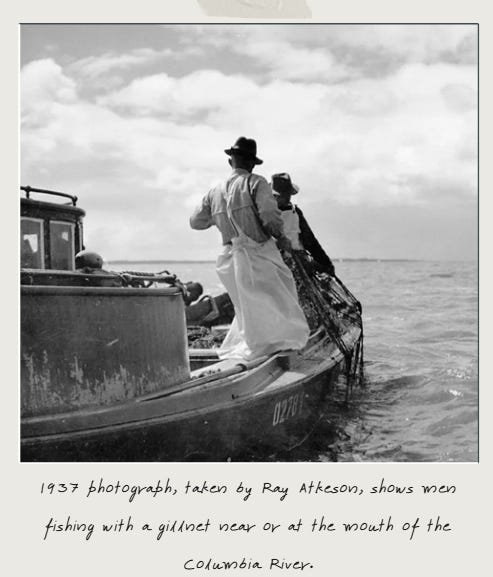
We wanted salmon populations to recover, sure. And we also wanted tribes to be able to exercise fishing rights guaranteed by treaty, and we wanted commercial fishermen to keep fishing, and we wanted recreational fishermen to keep fishing, and we wanted processors, charter boats, restaurants, bait shops, sporting-goods stores, and entire river communities to keep making a living.
This presented something of a math problem. If the number of fish kept falling, there were really only two choices.
Catch fewer fish. Or create more fish.
Now, the first option sounds simple. Just shut down fishing. Except it was not simple.
For one thing, the federal government had signed treaties with Northwest tribes guaranteeing the right to fish. The government could not build dams, damage salmon runs, and then announce one random Friday that everyone was simply done fishing.
That would be quite a deal for the government, but treaties do not work that way. And even apart from treaty rights, shutting down fishing would have meant shutting down jobs, businesses, traditions, and a way of life that had existed along the Columbia River for generations.
So simply ending fishing was neither realistic nor right. That left the other option—create more fish.
And this was the basic idea behind hatcheries. Adult salmon were collected. Their eggs were fertilized. The young fish were raised under human care and then released into the river system by the millions.
After that, nature took over.
These hatchery fish could then be caught by tribal, commercial, and recreational fishermen without putting quite as much pressure on the wild salmon trying to reach their natural spawning grounds.
Was this a perfect solution? Of course not. If it were perfect, we would not still be arguing about salmon.
Hatchery fish compete with wild fish. They stray into natural spawning areas. They cost money to raise. And fishing for hatchery salmon can still result in wild salmon being caught by accident.
Despite all of that, hatcheries did something important. They produced fish people could catch. In other words, they helped keep one enormous problem from becoming several enormous problems at the same time.
But hatcheries created a new problem—who is going to pay for all of these new fish? It turns out, giving life to 7 million salmon each year doesn’t come cheap. And if the dams helped create the problem, Congress decided the power system should help pay for the solution.
Meet the BPA
By 1980, Congress had reached one of those rare moments of sweeping ambition when it looked at a giant regional problem and decided to solve all of it at once. The official name was the Pacific Northwest Electric Power Planning and Conservation Act—sensibly shortened that to the Northwest Power Act.
The law was supposed to make sure the Northwest had enough electricity. Not just enough electricity, but electricity that was adequate, efficient, economical, and reliable. It was supposed to involve tribes, utilities, state agencies, local governments, power customers, fishermen, environmental groups, and the public. And it was supposed to protect, mitigate, and enhance fish and wildlife harmed by the Columbia River hydropower system.
It was an ambitious little piece of legislation. But the important point is that the law was never only about saving endangered fish. In fact, many of today’s endangered-species listings came years later.
The law itself said salmon and other migratory fish were important to the “social and economic well-being” of the Pacific Northwest.
That wording matters.
Congress was not merely worried about fish as biological objects swimming around in water. It was worried about what fish meant to people. Think treaty rights, commercial fishing, recreational fishing, food, jobs, culture, and communities.
The law was meant to protect the fish and preserve the human benefits that depended on the fish.
It was trying to do both. Yes, the dams would remain, which mean the electricity would keep flowing. But fish and wildlife were no longer supposed to be treated as an afterthought.
And Congress was fairly specific about who should pay: Bonneville Power Administration.
The law directed BPA to use money to protect, mitigate, and enhance fish and wildlife harmed by Columbia River hydropower.
That money ultimately comes from the sale of federal electricity. So the basic arrangement was not terribly complicated. The dams produce electricity. BPA sells the electricity. Power customers benefit from the dams. And some of the money is used to offset the harm the dams caused.
Don’t be tempted to think of this as charity. It is not a grant BPA hands out because it is feeling generous. It is mitigation. And over the following years, that legal bargain produced a large collection of fish and wildlife programs to accomplish that goal.
One of those programs was SAFE.
So What Is SAFE?
Select Area Fisheries Enhancement began in the 1990s as an attempt to make the hatchery bargain work better and to offer a solution for BPA to use to meet its Congressional mandate to protect, mitigate and enhance the fishery.
One of the problems that came because of the hatcheries was that hatchery fish and wild fish often traveled through the same parts of the Columbia River at the same time. Meaning that fishermen who might be trying to catch abundant hatchery salmon, might also be catching the vulnerable wild salmon who did not receive the memo.
So SAFE created a more selective fishery—or areas off the main stem of the Columbia where the wild salmon are more likely to be.
To do this, young hatchery salmon were released from places like Youngs Bay, Tongue Point, Blind Slough, and Deep River near the mouth of the Columbia.
Remember the salmon’s ability to find its way home? SAFE used that to their advantage.
After spending years in the Pacific, many of the surviving fish returned to those same bays and side channels. Fishermen could then target the hatchery salmon there instead of chasing them in the main stem of the Columbia, where they were more likely to encounter wild fish heading upriver.
Think of the Columbia River as Interstate 5 for salmon.
Wild and hatchery fish are all traveling on the same highway. SAFE gives the hatchery fish their own exit ramp.
Not every fish takes the correct exit. Salmon remain stubbornly unwilling to follow government instructions with complete precision.
But enough do that the program has supported productive commercial and recreational fisheries while reducing the effect of fishing on weak wild runs. BPA itself has described SAFE’s purpose as providing harvest opportunities while minimizing harm to naturally produced salmon and steelhead protected by the Endangered Species Act.
SAFE was never supposed to restore the Columbia River to 1792.
It was supposed to do something more practical—produce fish people could catch, move some of that fishing away from vulnerable wild runs, support treaty, commercial, and recreational fisheries, and help the federal power system meet the mitigation duties Congress gave it in 1980.
For more than 30 years, BPA helped fund that arrangement.
Then, in 2026, it decided to stop.
Why Is the Funding Stopping?
With barely three months’ notice, it announced that its funding would end on September 30, 2026.
Why?
Because BPA argues that SAFE has not demonstrated enough benefit to weak or endangered wild fish. In BPA’s view, the program mostly produces hatchery salmon for people to catch. And BPA now says money intended for fish mitigation should be spent rebuilding wild fish above Bonneville Dam, not supporting fisheries below it.
That is not a frivolous argument.
Hatchery fish are not wild fish. Producing more fish for harvest is not the same thing as restoring a naturally spawning salmon run. And there is a legitimate debate over how much hatchery production helps or harms long-term recovery.
But the Northwest Power Act did not say the only people who mattered were biologists counting wild fish above Bonneville Dam. It said salmon mattered to the social and economic well-being of the region.
Again, SAFE was designed to protect weak wild runs by moving fishing into select areas while still producing fish for tribal, commercial, and recreational harvest. In fact, BPA’s own recent environmental review described the program as mitigation for the federal hydropower system and said its purposes included greater protection for weak, naturally produced salmon and steelhead.
So BPA’s new position appears to be this: Protecting fish is mitigation. Protecting fisheries is not.
That is a very convenient distinction if your goal is to stop writing the check. And let us talk about the size of that check. BPA has contributed roughly $1.6 million per year to SAFE. The sudden withdrawal leaves a total estimated gap of about $2.4 million among Oregon, Washington, and Clatsop County.
Now, $1.6 million is real money. I would be delighted to find it beneath the cushions of my couch. But for BPA, an agency with roughly $4.37 billion in annual revenue, it is about 0.037 percent.
That is not a rounding error. It is the lint stuck to the rounding error.
BPA is not withdrawing because SAFE threatens its financial survival. It is withdrawing because the agency has decided the program is no longer its responsibility.
And that is the heart of the disagreement.
What Can Be Done?
Well, that is the hard part.
There is no bill sitting in the Oregon Legislature that I can vote on. There is no ballot measure. There is no committee hearing where the public gets three minutes at the microphone.
This decision belongs to BPA.
BPA controls the money. BPA decides which fish programs qualify as mitigation. And BPA has decided that SAFE no longer does.
So the question now is not whether SAFE works exactly as intended or whether the program could be improved. Of course it could.
The question is whether enough people can persuade BPA to change its mind before the funding stops.
That means pressure from Oregon and Washington. It means pressure from tribes, fishermen, local governments, members of Congress, state legislators, businesses, and the communities that will live with the consequences long after the people making this decision have moved on to something else.
And it means the public needs to know what is happening.
That is the reason I wrote about this issue this week.
Because decisions like this are much easier to make when almost no one knows the program exists. SAFE is a small line in a very large budget. The fishermen, processors, charter operators, restaurants, and communities that depend on it are easier to overlook when they are reduced to numbers on a spreadsheet.
But if BPA does not change course, those numbers become real.
The effect will not be immediate. Salmon released in previous years will still return. Boats will still leave the dock. Restaurants will still serve fish. For a while, everything may look normal.
Then the missing fish begin to show up.
Not as dead salmon floating in the river. As salmon that were never raised and therefore never return.
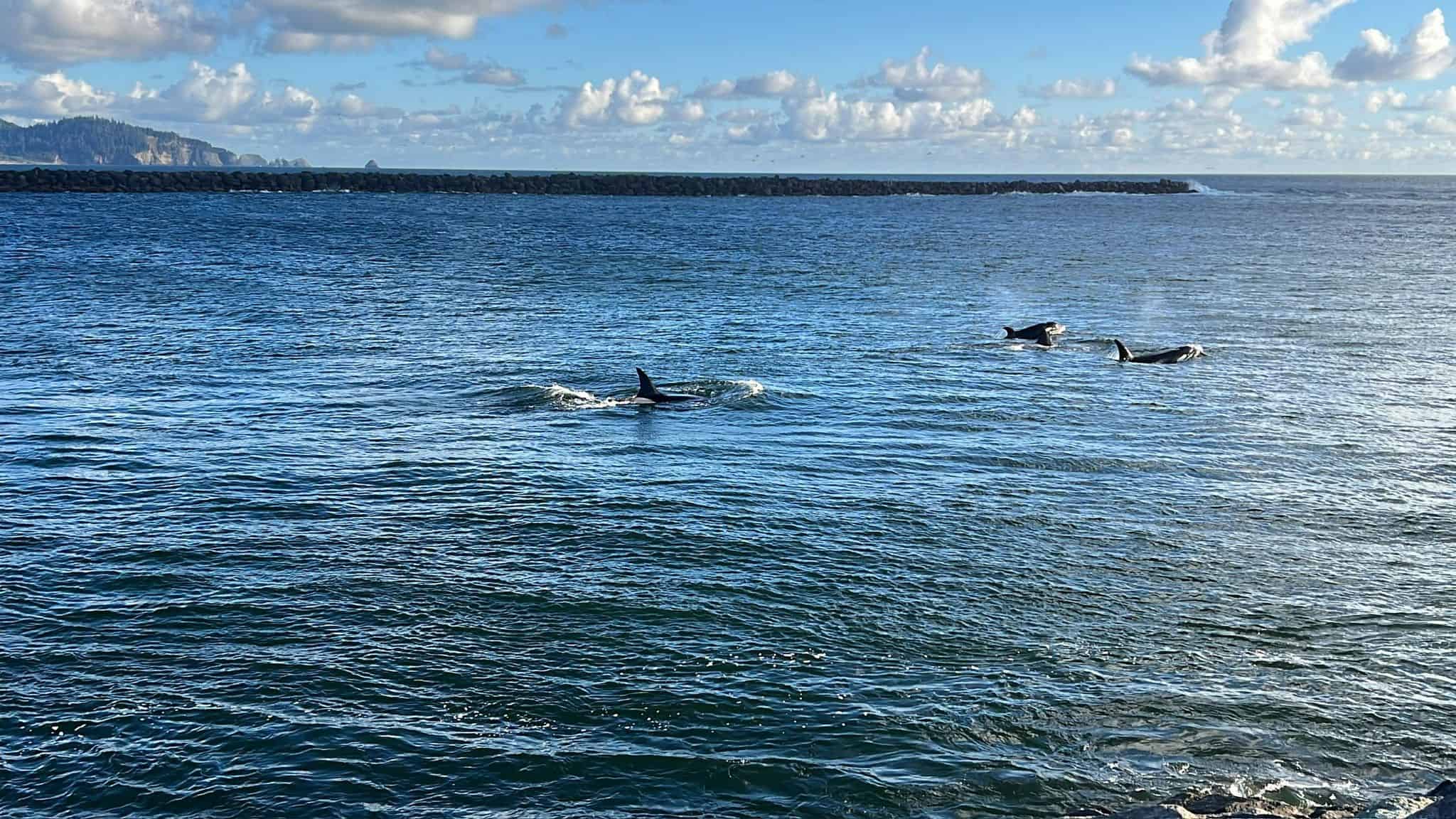
There will be fewer fish to catch, less reliable seasons, and less work for the businesses built around them. Fishing pressure may shift back toward places where hatchery fish and vulnerable wild fish are more mixed. And there will be fewer salmon in the ocean and river for predators, including endangered Southern Resident killer whales.
That is the strange thing about this decision. BPA can stop paying in September. The full consequences may not appear for years.
By then, restarting the program will not bring those missing fish back.
So now we make the case. We call. We write. We lobby. We ask our federal delegation, state leaders, local governments, tribes, fishermen, businesses, and anyone else with influence to push BPA to reconsider.
Because the decision may belong to BPA. But BPA should not get to make it quietly.
And now you are ready to head to work, or school, the bar, or your knitting club and impress your coworkers and friends with everything you know about salmon, hatcheries, dams, and federal power policy.
Whether they asked or not.
An ODFW fact sheet is urging people to contact BPA and ask that SAFE Program funding be reinstated. It lists BPA’s phone number – 800-622-4519 – and email addresses for four decision makers there:
Robin Furrer, Acting Administrator and CEO: rrfurrer@bpa.gov
Suzanne Cooper, Deputy Administrator and COO: sbcooper@bpa.gov
Benjamin Zelinsky, Acting Executive Vice President: Environment, Fish and Wildlife: bdzelinsky@bpa.gov
Jason Sweet, Executive Manager, Fish and Wildlife Program: jcsweet@bpa.gov
If you made it this far, you should probably Subscribe here for more.
Each week, I take one issue affecting the North Coast, figure out what is actually going on, and try to explain it without making you regret opening the email.
Sometimes it is about fish. Sometimes it is about taxes, housing, healthcare, or whatever new mess government has created for us to sort out.
