









EDITOR’S NOTE: This is an issue that we’ve been watching closely for several years because AI (artificial intelligence) impacts what we do here in a myriad of ways — the written word, images and more. We’ve been mindful and thoughtful about our approach and use of AI – which has been very limited. Recently we’ve been seeing an extreme “backlash” to the use of AI images particularly (boycotting businesses that use AI graphics) and questioning original writings that sound “too good” so it must be AI. We’ve shared several of Kiandre’s commentaries that have received some attention on social media. She experienced just that reaction to her business flyer. Here’s Part 1 of her very well-researched article about AI …
By Kiandre O’Neaque Clark
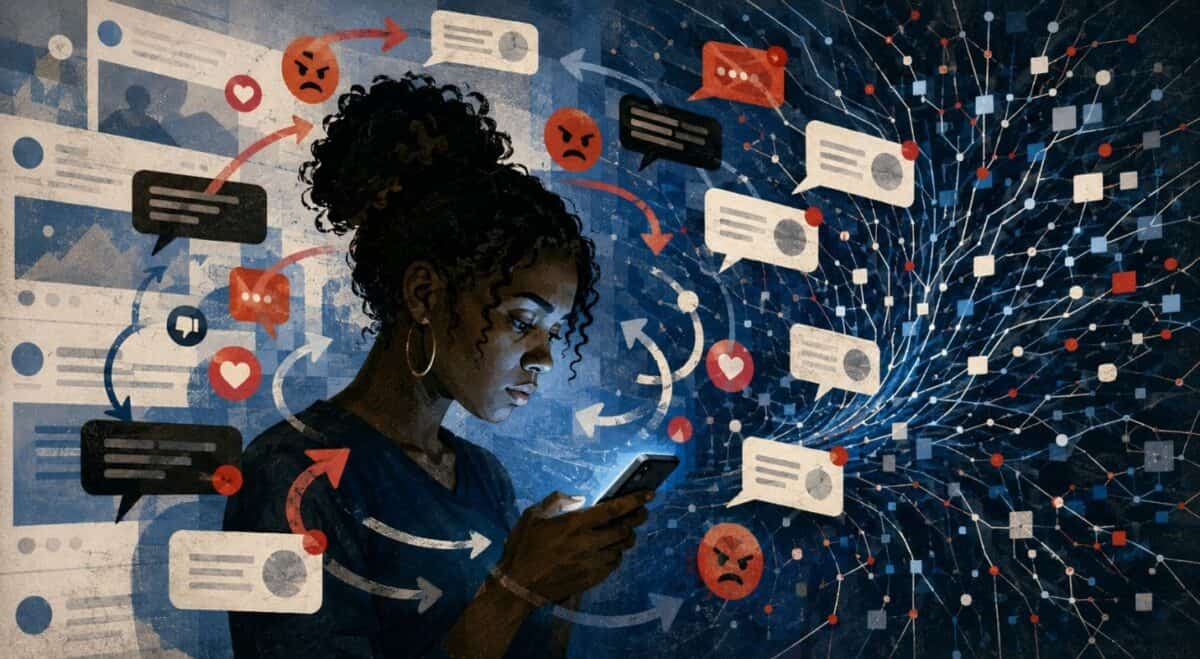
Artificial intelligence is no longer some futuristic concept waiting to arrive at our doorstep cause, baby, it is already in the house going through the fridge and drinkin juice straight out the jug. It helps banks detect fraud, doctors interpret medical images, security systems search recorded footage, phones improve photographs, and social media platforms decide exactly what will keep us scrolling when we know good and well we should have gone to bed an hour ago. Some of these uses are enormously helpful, while others raise serious concerns about privacy, creativity, employment, misinformation, energy consumption, and environmental harm. We absolutely need to discuss those concerns, but we cannot have a meaningful conversation if every use of AI is treated as equally harmful and every person who uses it is immediately placed on trial in the court of Facebook.
What interests me most is how quickly a complicated issue becomes an opportunity to sort people into the good pile and the bad pile. Instead of examining how a particular AI tool was used, people begin making conclusions about another person’s intelligence, creativity, honesty, work ethic, or concern for the environment. A flyer is no longer just a flyer. It becomes evidence that the person who made it is lazy, deceptive, uncreative, environmentally irresponsible, and apparently one Canva graphic away from personally boiling the ocean. Once that judgment receives likes, approving comments, and attention from other people, the conversation moves even further away from the technology itself. It becomes a socially rewarding opportunity to condemn somebody.
I am a person in recovery and a student of addiction, psychology, social behavior, conflict, and communication. I also use social media, own a smartphone, Meta AI sunglasses, drive a hybrid vehicle, live multigenerationally, operate a business, go to school remotely, buy more food than I need, and use artificial intelligence. I am not standing outside these systems pretending I have achieved some kind of perfect ethical purity. I am participating in many of the same systems I want to examine, which means the questions in this article apply to me too. I am less interested in declaring AI entirely good or entirely evil than I am in understanding why people become so certain that their relationship with technology is reasonable while somebody else’s relationship with it represents a moral failure.
We Already Understand Complicated Systems

Human beings have extracted oil from the Earth for generations, despite well-established environmental damage, pollution, political conflict, and climate consequences. Most of us still drive cars, ride buses, fly in airplanes, order deliveries, and purchase goods transported by trucks. However, we do not ordinarily enter the comments beneath every photograph of a new car and accuse its owner of personally destroying the planet. We understand that people participate in systems they did not individually create and cannot individually dismantle. We can advocate for cleaner transportation, better infrastructure, and responsible environmental policies without publicly harassing every person who drives to work.
Food waste offers another uncomfortable example. The world produces enough food to nourish everyone, yet hunger continues because of poverty, conflict, unequal access, distribution failures, and enormous amounts of waste. The United Nations Environment Program reports that more than one billion tons of food were wasted in 2022, amounting to more than one billion wasted meals every day, while hundreds of millions of people experienced hunger. Households and food-service businesses contributed substantially to that waste. Still, we generally do not patrol restaurants, inspect strangers’ plates, photograph their leftovers, and threaten to destroy their reputations because they left half a sandwich behind. We recognize that humiliating one diner will not repair the global food system.
Why, then, have some people decided that attacking an individual artist, volunteer, nonprofit organization, fire department, or small business over a flyer is meaningful environmental activism? If our concern about AI begins and ends with humiliating another person online, the environment may not be receiving much benefit from our performance. Publicly scolding someone can make us feel righteous without requiring us to surrender a convenience, change a habit, study a complicated system, or build a practical solution. It preserves our identity as a person who cares while assigning the entire cost of that identity to somebody else.
That is ego preservation wearing a reusable tote bag.
I am not arguing that hypocrisy makes environmental concerns invalid. If moral perfection were the admission price, nobody could advocate for anything. We are all entangled in systems we want to improve, and participating in an imperfect system does not remove our right to question it. However, there is a meaningful difference between saying, “AI has environmental costs, so we need greater transparency, cleaner energy, efficient systems, reasonable limits, and thoughtful regulation,” and saying, “I saw a flyer I dislike, so this business owner is a terrible person.” One position attempts to reduce harm. The other identifies a target.
My Technology Is Necessary. Yours Is the Problem.
Artificial intelligence does carry real environmental and ethical costs. Data centers require electricity, water, physical infrastructure, and other natural resources. The International Energy Agency projects that global electricity consumption by data centers will more than double by 2030, with AI contributing significantly to that growth. We should also be discussing copyright, bias, misinformation, privacy, labor displacement, surveillance, and the concentration of technological power in a small number of companies. Pretending those concerns do not exist would be dishonest.
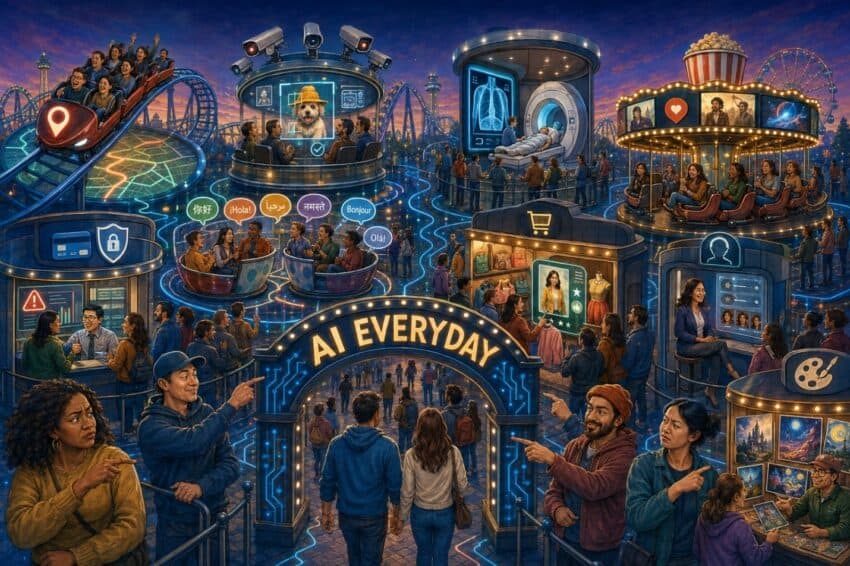
What is equally dishonest is acting as though generative AI exists in an isolated environmental chamber while the rest of our digital lives float harmlessly above the Earth. Data centers also support search engines, email, streaming, cloud storage, online banking, social media, navigation, shopping, video calls, and business software. Artificial intelligence is already embedded in fraud detection, translation, accessibility tools, agriculture, transportation, weather forecasting, medical imaging, security systems, and countless features operating inside the phones and applications we use every day. AI is not only a cartoon Sasquatch on somebody’s business flyer or a student asking a chatbot to write an essay. It is woven into modern life, often in ways that remain invisible because the technology has become familiar.
I recently met a man who owns a security company and installs camera systems in people’s homes. Some systems use AI to search recorded footage through ordinary descriptions. Instead of manually watching several hours of video, someone can search for “small dog wearing a yellow hat,” and the system can locate each time a small dog in a yellow hat appeared on the property. That technology could help identify a trespasser, find a missing pet, document a theft, or locate an important moment buried in hours of footage. We should still ask questions about privacy, surveillance, data storage, and potential misuse, but pretending this is morally identical to every other AI application prevents us from having the more intelligent conversation about where the technology helps, where it harms, and what safeguards each use requires.
Most of us draw a moral circle around the technology we use and place somebody else’s technology outside it. My smartphone is necessary. My cloud storage is practical. My automated photo enhancement does not count because I barely noticed it. My search engine, security camera, navigation system, spell-checker, Canva tools, and social media algorithm simply help me function. But your generative AI image reveals something rotten about your character.
Now, be so for real. That is not a consistent ethical framework. That is the human mind performing one of its oldest tricks.
Note on AI use: I used generative AI as a collaborative editorial tool while developing this article. It assisted me with organizing ideas, identifying possible sources, testing counterarguments, restructuring sections, and refining language through multiple rounds of revision. The central argument, lived experiences, community observations, examples, perspective, humor, voice, and final editorial decisions are my own. I personally reviewed the finished article, evaluated its claims and sources, and accept responsibility for everything published here. Irregardless of how sophisticated the tool becomes, it cannot decide what I believe or speak from a life it has not lived.
Sources and Further Reading
- World Health Organization. “Teens, Screens and Mental Health.” September 25, 2024.
- U.S. Department of Health and Human Services, Office of the Surgeon General. “Social Media and Youth Mental Health: The U.S. Surgeon General’s Advisory.” 2023.
- Lindström, B., Bellander, M., Schultner, D. T., Chang, A., Tobler, P. N., and Amodio, D. M. “A Computational Reward Learning Account of Social Media Engagement.” Nature Communications, 2021.
- Wadsley, M., Covey, J., and Ihssen, N. “The Predictive Utility of Reward-Based Motives Underlying Excessive and Problematic Social Networking Site Use.” Psychological Reports, 2022.
- International Energy Agency. “Energy Demand from AI.” 2025.
- United Nations Environment Programme. “World Squanders Over 1 Billion Meals a Day.” March 27, 2024.
