


A healthy environment creates a healthy community. Here are ways you can get involved this season:
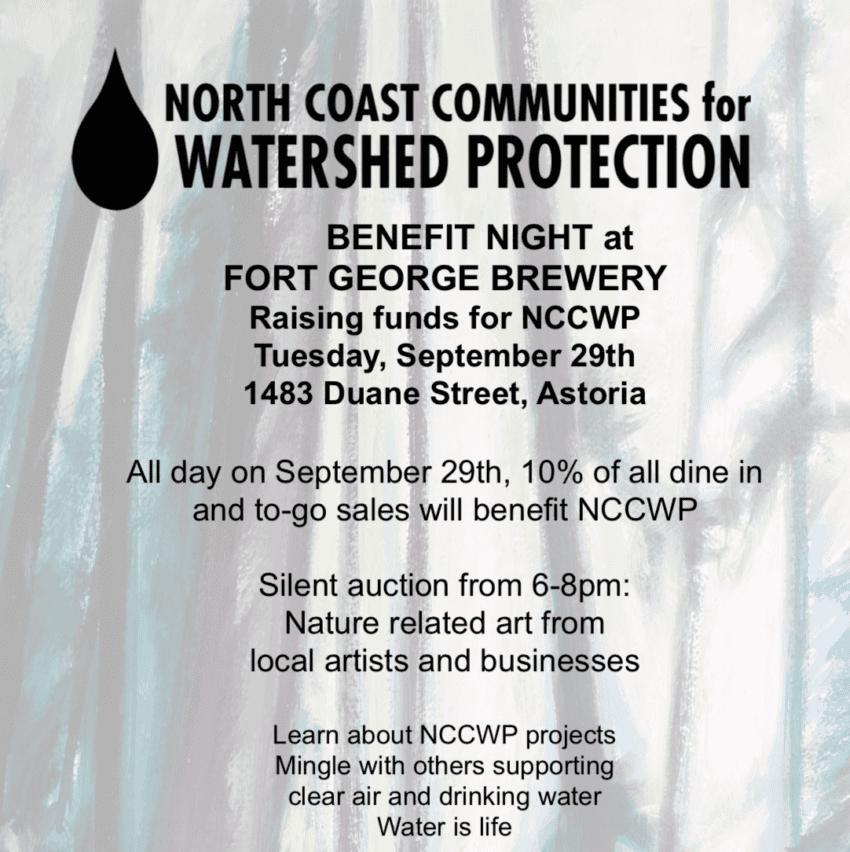
Mark your calendar! Fundraising Event at Fort George Brewery on Sept. 29!
Please join NCCWP at Fort George Brewery for an evening of art and fundraising. Fort George has generously pledged 10% of sales for the day to NCCWP (including any takeout and merchandise sales!)
From 6 to 8 p.m. on that night, we will hold a silent auction of locally made, nature-inspired art and a basket of products from local businesses. All proceeds benefit NCCWP.
Fort George Brewery, 1483 Duane St., Astoria. 11 a.m. to 10 p.m., all ages welcome.
Note: The regular monthly meeting in Rockaway Beach is cancelled that evening, hope you can join us in Astoria!
Community Meetings
All are welcome at our monthly meetings in Rockaway Beach and Astoria. Come learn, hear stories, join discussions, give input, plan and meet others working to ensure clean air and drinking water.
*Please note these schedule changes for September.*
In Astoria: The September meeting will be held on Wednesday, Sept. 23, at 4 p.m. In October we will resume meeting on the third Wednesday of the month. Meetings are at Kala, 1017 W. Marine Drive, Astoria.
In Rockaway Beach: The Rockaway meeting for September is cancelled so that we can attend the fundraiser for NCCWP at Fort George Brewing. In October we will resume meeting on the last Tuesday of each month at St. Mary by the Sea Parish Hall, 275 S. Pacific Street, Rockaway Beach, at 6 p.m.
More Events
Tuesday, September 22: NCCWP’s Richard Felley, Nancy Webster, and Pam Birmingham will be live on KMUN radio to discuss how clearcutting damages our air and water. 9:30 a.m. on The Conklin Files, hosted by Ellis Conklin, KMUN 91.9 FM.
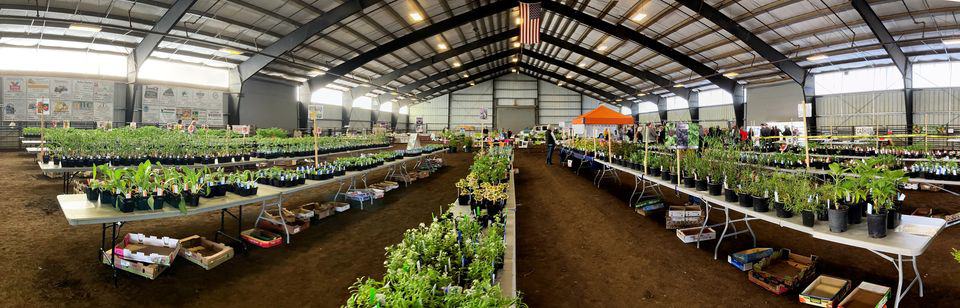
Saturday, September 26: NCCWP will have a booth at the Clatskanie Farmers Market, 60 Lillith Street, Clatskanie from 10 a.m. until 3 p.m. This is the Harvest Market festival and offers something for everyone.
Saturday, October 10: Meet with students from the University of Oregon Department of Landscape Architecture. For the third year, Rockaway Beach will be the basis of a project that looks at the future of coastal towns facing climate change and other challenges. What will Rockaway Beach look like in 100 years? Meet the students and their professors, ask questions, and bring your local perspective. 11a.m., location TBA.
Sunday, October 11: NCCWP will have a booth at the Astoria Farmers Market. Please stop by and say hello. Also if you would like to volunteer to help, please contact Pam at pam.nccwp@gmail.com.
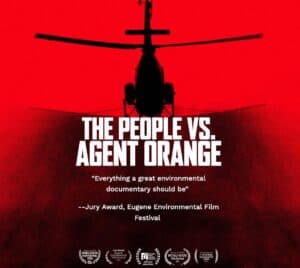 Mid-October – date TBA: The film “The People VS Agent Orange” will be showing at the Clatskanie Food Hub, 80 Art Steele St., Clatskanie, co-sponsored by the Wild Salmon Center. The film will be followed by a Q&A with author/activist Carol Van Strum and Susan Swift. Free. Doors at 6 p.m., film at 6:30 p.m. Food and drinks will be available for purchase.
Call to Action: Poisoning Mountain Beavers on 246 Acres Near Wheeler, OR
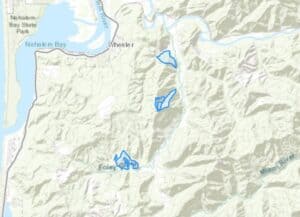 Stimson Lumber plans to apply Rozol (active ingredient chlorophacinone) in pellet form to 246.8 acres of recently-logged land near Wheeler. Rozol is a rodenticide used to kill rats, mice, prairie dogs, and in this case, mountain beavers. Rozol is an anticoagulant, meaning it prevents blood clotting and causes internal bleeding and death. If ingested, it is highly toxic to humans.
This step is taken after clearcutting and before planting a new tree crop. The intention is to prevent mountain beavers from damaging the saplings. (Note that their other sources of food have all been removed during the harvest. Their preferred food is ferns.)
Bright blue indicates the application areas. Light blue indicates waterways, including Foley Creek. (Source: ODF)
The mountain beaver, Aplodontia rufa, sometimes called a boomer, is not a true beaver. Rather than dams, it builds networks of tunnels. The mountain beaver plays an important role in the ecosystem. Its tunnels transport the mycorrhizae — that is, the crucial symbiosis between fungus and the roots of plants — throughout the forest. Mycorrhizae play important roles in plant nutrition, soil biology, and soil chemistry.
A study released by the National Institute of Health found that Rozol persists in the bodies of dead animals and remains a “secondary hazard” for two weeks or longer. Cougars, mink, and great horned owls are among the animals that feed on mountain beavers.
Rozol is harmful to birds, bees, butterflies, and also dogs and cats.
The planned application includes multiple sites that are within 100 feet of streams and wetlands, including Foley Creek, which flows into the Nehalem River.
This application may begin as soon as 9/24/26 and will end by 12/31/26.
Let ODF and the landowner know you oppose spreading toxic pellets on public and private forest lands.
Oregon Department of Forestry – Tillamook County Forester Erick Finnell
Landowner – Stimson Lumber
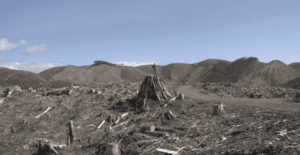 Pacific Rivers board member Kate Crump back in 2016 at Jetty Creek Watershed, Rockaway Beach’s drinking water source. Photo by Shane Anderson.
Spray Updates – Davis Ridge
Despite our best efforts, clearcutting on Davis Ridge near Astoria is ongoing. At the beginning of September, residents were told that pesticide spraying would likely start there September 14. That was a complete surprise with a very fast timeline. We mobilized and spoke out, with emails, phone calls, and — after having to fight for a spot on the speaking schedule — through testimony before the Board of Forestry. A Davis Ridge resident gave powerful testimony which was posted on Instagram and went viral. On Friday, September 11 we received the news that ODF had decided to “re-evaluate” the spraying, meaning it won’t happen this year. Thank you everyone — your voice does make a difference!
More info about Davis Ridge in the Capital Chronicle: “State Forestry Officials Face Backlash”.
And if you’re on Instagram, follow the.davis.ridge.project where you can see Rebecca Neilson’s powerful testimony before the Board of Forestry against pesticide spraying.
Pesticide Spraying Bordering Rockaway Beach and Nedonna Beach
The Upper Heit and Tower pesticide spray operations have been completed. These were backpack sprays of glyphosate, sulfometuron methyl and metsulfuron methyl, and imazapyr on 99.8 acres east of and uphill from Nedonna Beach and Rockaway Beach.
With logging and spraying above our town and in our watershed, we are on alert for landslides, sediment in streams, altered storm runoff patterns, and toxins in our drinking water. If you see evidence of any of these, please document it and let us know!
This spray area included McMillan Creek, for which the City of Rockaway Beach has a registered municipal water right. This is important as a potential future water source and fish habitat.
We are concerned about pesticides entering our drinking water, and also about the safety of workers engaged in spraying these chemicals. These pesticide applicators appear to have very limited PPE protection, such as no Chemical PPE suits, and no respiratory or eye protection. Often they are immigrants with limited communications and worker protections. Some of these chemicals can cause serious health issues. Contact your local state and private industry foresters and leaders and let them know that you oppose pesticides where you live and near the water that you drink.
Tillamook Office of Oregon Department of Forestry: (503) 842-2545
ODF Forester: Mark Main, mark.r.main@oregon.gov
Notifier for Nuveen (L&C Tree Farms): David Dougherty (503) 440-3204
ODF State Forester: kacey.kc@odf.oregon.gov
Office of Governor Tina Kotek:
Chandra.Alene.Ferrari@oregon.gov and geoff.huntington@oregon.gov
Rockaway Beach’s Beavers: Clear Lake
Clear Lake neighbor Art LaFrance has prepared an extensive document detailing the reasons why the City of Rockaway Beach should not be removing beaver dams. He writes: “We should be creating, not destroying, wetlands, a consensus reached only after over half the wetlands in the United States have been lost. The result has been loss of habitat for animals, including fish, birds, mammals, and humans; loss of drainage and purification of water systems, impacting agriculture and urban areas; desertification of once rich lands; global warming; and uncontrolled proliferation of wildfires.”
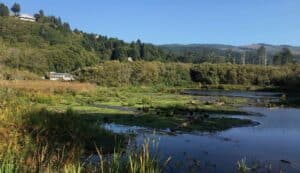 Clear Lake in Rockaway Beach this autumn, with the water levels at an unprecedented low.
“The dam has been torn down, the lake is largely gone, the beavers have packed their bags, the tinder box is in the mail. All of this can be reversed.”
–Arthur LaFrance
A message from Ernie Niemi regarding the climate crisis
Some powerful tools for fighting the climate-and-nature crisis have just now become available in the US.
I and the small team I am working with believe any individual Oregonian or group–family, friends, neighbors, colleagues, whomever–will benefit from watching two videos from the UK, where activists are calling for a wartime-scale response to the climate and nature crisis. One shows the 12-minute opening statement for an “Emergency Briefing” nine world-class scientists and economists presented to Members of Parliament and other leaders last November. The second highlights the key points from the presentations and shows how they impact ordinary folks. It lasts 50 minutes. We need local leaders of groups and organizations everywhere to consider hosting a screening event among like-minds. The screenings are only available for in-person events. Trailer here: https://www.nebriefing.org/the-film. For more information contact Ernie Niemi (ernie.niemi@nreconomics.com).
McCoy Marsh Reconnection Project
The Lower Nehalem Community Trust is finalizing a project to reconnect nine acres of wetland north of Wheeler to natural tidal influence for the first time in nearly a century.
https://www.nehalemtrust.org/lands/mccoy-marsh-tidal-reconnection/
Comment on National Wetland Destruction by Oct. 9
The EPA has opened a public comment period on a new set of rules that would slash protections for wetlands nationwide. Jon Devine, director of freshwater ecosystems at the Natural Resources Defense Council says, “The proposal would virtually eliminate protection for freshwater wetlands.”
Comment here:
More info here: https://www.pbs.org/newshour/politics/epa-seeks-more-public-comments-as-it-struggles-to-devise-water-rule-that-limits-scope-on-wetlands
Glyphosate in the News
In Oregon the private and state forest managers are spraying a cocktail of chemicals with glyphosate. An investigation by the Center for Investigative Reporting has revealed that glyphosate is being sprayed in California forests at record levels by timber companies and the U.S. Forest Service:
 Thank You!
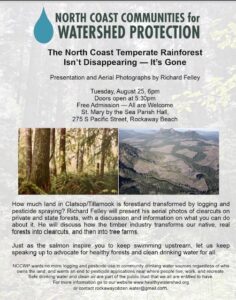
Thank you to everyone who came out in Rockaway Beach for Richard Felley’s slide presentation “The North Coast Temperate Forest Isn’t Disappearing — It’s Gone.” Attendance was about 50 people, including ten volunteers. Several people expressed interest in presenting the slides in more locations so we are working on a few more events in the future. Contact annemarie.nccwp@gmail.com if you want to bring this presentation to your community.
Thank you to the brave hikers who came out in the rain to tour wetlands in Nedonna on September 13. We continue to reach out to individuals and organizations to work together to protect these wetlands. Recently we met with the Tillamook County Pioneer Museum to form a coalition of interest.
The Nedonna Beach neighborhood is surrounded on three sides by wetlands. These wetlands are intact remnants of what the coast was like before widespread development. Within these areas are a saltwater marsh, spruce and willow wetlands, dunes, and a tidal estuary. Two fish-bearing streams, Jetty Creek and McMillan Creek, flow through the estuary and into the Nehalem River just before it empties into the Pacific. All these wetlands are critical and connected.
Most of the drinking water for the city of Rockaway comes from this area. Jetty Creek is the main source of drinking water for the city, and the city’s backup drinking water is drawn from the aquifer that sits below the neighborhood.
A lower portion of Jetty Creek is in the process of being purchased by the City of Rockaway Beach. This is good news but not a long-term guarantee that the watershed will be properly managed.
Our dream is to find a way to protect all of these sensitive lands forever!

And thank you to Carl Whiting for creating and refurbishing his amazing NCCWP animal signage! They always attract attention when they make an appearance.
Ways to Get Involved- Volunteers Needed
-
Help hang posters for upcoming events! Contact Rhonda in Astoria or Anne Marie in Rockaway Beach if you can help hang flyers for spray notices, the aerial photography presentation, and/or the fundraiser at Fort George Brewery.
-
Help with monitoring ongoing logging and pesticide applications in the North Coast drinking watersheds.
-
Join our community meetings to help plan and strategize
-
Help with grant writing
About us
 NCCWP wants no more logging and pesticide use in community water sources regardless of who owns the land, and wants an end to pesticide applications near where people live, work, and recreate. Safe drinking water and clean air are part of the public trust that we all are entitled to have. Please help North Coast Communities for Watershed Protection safeguard and restore our drinking watersheds.
www.healthywatershed.org | www.facebook.com/NCCWATERSHEDPROTECTION
For more information or to unsubscribe, contact rockawaycitizen.water@gmail.com
Please consider making a tax-deductible donation to NCCWP. You can donate by check or online via debit or credit card by visiting: https://healthywatershed.org/donate/.
