




This season, do yourself, your family, and the Coast Guard a favor. Practice safe storm-watching. Pay attention to your children and pets. Smaller bodies succumb to the cold faster than larger adults. They are also more likely to be swept away completely in high surf. If you drink on or near the water, do so responsibly, and never drink alone near the sea.
Here are some other helpful hints to help you survive the rough tides of winter.
1) If someone is swept in, do not go in after them. Call 911 and keep them in sight. Hypothermia sets in fast, sapping your strength, and rescuing two people is more complicated and more dangerous than rescuing one. If you are not a trained lifeguard, the best thing you can do is stay on shore.
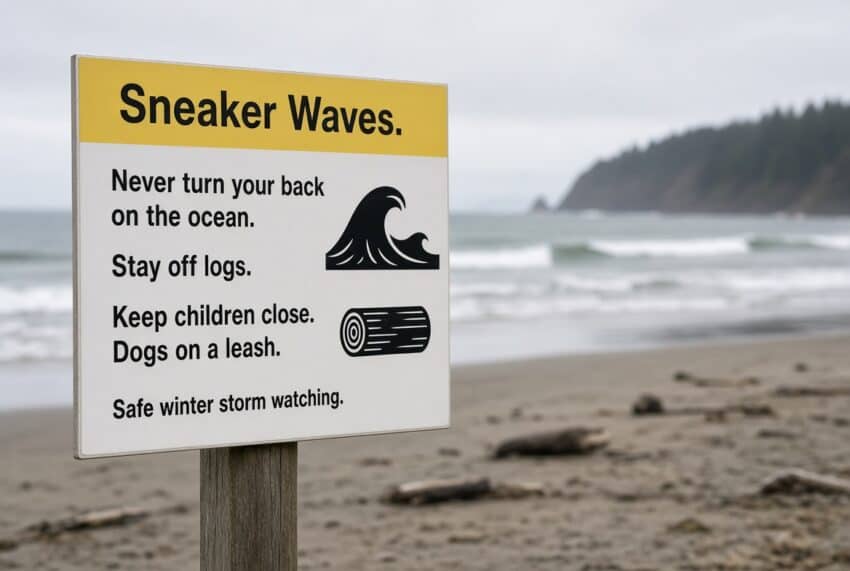
2) Pay attention to your surroundings. Sneaker waves arrive without warning. Never turn your back on the ocean. A sneaker wave can run 150 feet into dry sand. If the sand is wet, a wave can still hit you.
3) Cold will kill you. Pacific Northwest water stays cold all year. Sector Columbia River has said coastal inlets often sit in the low 50s even when the air is warm, and cold-water shock can hit in minutes. The first minute is a gasp and a loss of control of your breathing. Within a few minutes the arms and legs stop working well enough to swim. Hypothermia, a core temperature under 95 degrees, comes after that. A life jacket is what keeps a person up through the first stage.
4) A floating log can also kill you. A waterlogged drift log can weigh tons, and a few inches of water can lift it. Surf rolls them up the beach and back down. Do not sit, stand, or walk on a log in the wet sand. Stay above the high-tide line. Jetties and coastal rocks are off limits in this surf. A wave can wash over a jetty and take a person with it. An incoming tide also cuts rocks off from the headland.
Practice safe storm-watching
The Coast Guard Northwest District, which covers this coast, logged 1,295 search-and-rescue cases in 2025. It counts 327 lives saved and 1,823 lives assisted. That is boats and beaches together, not a Tillamook tally. Station Tillamook Bay does not publish its own year.
If you are in a boat, wear a life jacket. Nationally, drowning is 76 percent of boating deaths. In 2023 the Coast Guard recorded 564 recreational boating deaths, three-quarters of them drownings, and 87 percent of those people were not wearing a life jacket. A fast launch is not the same as a save.
Check the bar before you cross. Under federal law, a closed or restricted bar cannot be crossed without Captain of the Port authorization. Bar status is on VHF-FM channels 16 and 22A. File a float plan with someone on shore, with the route, the boat, the number of people, and the time you expect to be back. Carry a VHF radio on you, not just in the cabin. Distress calls go to channel 16 or 911. Station Tillamook Bay is 206-815-6708. Check the National Weather Service coastal waters forecast before you leave the dock.
