










What we are missing about how children learn
By Michelle Jenck, M.Ed.
Reading candidate bios in Oregon’s voters’ pamphlet, it’s refreshing to see that many promise to fix our failing education system. Given Oregon’s dismal educational outcomes, this attention is reassuring; however, I’m not convinced either major political party fully understands what needs to be fixed.
We have spent decades trying to improve education through pendulum swings between standards, testing, accountability, and curriculum changes, and a more recent focus on meeting the social-emotional needs of students.
At the risk of over-generalizing, progressives tend to emphasize equity, inclusion, and meeting children where they are. Conservatives tend to emphasize academic standards, accountability, and the expectation that children will rise to meet them. There is value in both approaches. Yet, both seem to overlook an important reality. We have organized education around what children are expected to know, without fully considering how children actually gain the capacity for learning in the first place.
Kindergarten-readiness goals involve the ability to sit still, pay attention, manage emotions, and follow directions in service of learning the three Rs. Ask any teacher today and they will tell you that is not where our kids are, developmentally, at age 5. This shouldn’t come as a surprise.
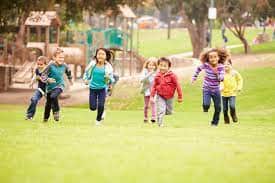
A child’s brain develops through experiences involving movement, play, relationships, and responsive interactions. Together, these experiences contribute to the development of a child’s nervous system and help build the necessary infrastructure for learning. In particular, information coming through the eyes, ears and sense of touch must be organized in the brain for it to make sense and be used for learning.
What children spend their time doing as infants and toddlers determines, in large part, how their sensory and nervous systems develop. As a result, more kids are entering preschool and Kindergarten with sensory processing, attention, emotional regulation, or motor coordination delays. And then we ask them to sit still and focus for hours every day. In light of this, it should not be all that surprising that changing K-12 policies, standards and curriculum are not moving the dial on education outcomes.
During the first three years of life, approximately 80% of the structure and function of the human brain develops. In basic terms, we are what we do and what we eat. The brain’s early architecture is shaped by what young children do with their brains and bodies, what they consume nutritionally, and how safe they feel the world is around them. Early bonding and movement experiences help organize the systems supporting learning readiness. Nutrition provides the 3D filament to build the infrastructure.
Programs like Early Head Start, home visiting, and early intervention help families support this development. Nobel Prize-winning economist James Heckman demonstrated the substantial economic and social returns associated with investing in early childhood. This isn’t new science.
Programs and policies alone won’t solve our education dilemma. We need to become a society that understands how early experiences shape the developing brain. We must have mainstream awareness of how early movement, nutrition and safety shape learning outcomes. This understanding should influence how we parent, care for children and families and design childcare and early education environments.
Current models ask teachers to compensate for a wide range of unmet developmental needs while simultaneously seeking to hold them accountable for long-term academic outcomes. This is a recipe for disaster.
If we want true education reform, we should be vetting candidates not only on how they intend to improve reading and math scores, but also how they plan to support children’s development long before those scores are measured. Preparing children to learn starts at the beginning of life.
Michelle Jenck, M.Ed – Health & Kinesiology; Master’s Certificate, Behavioral Economics; Social architect and founder of the Physical Intelligence (PQ) Initiative
Follow more of Michelle’s work on Substack at The Tao te Mitchy, or her websites PQ Initiative, and Divergent Ideas.
Subscribe here for more.
