


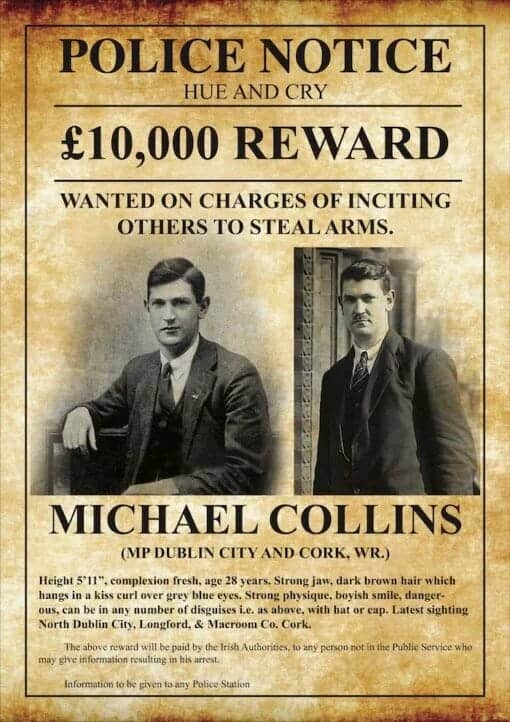
“Let us not waste our energies brooding over what more we might have got. Let us look upon what it is we have got.” – Michael Collins, Irish soldier and politician
By Marc C. Johnson
Michael Collins, the Irish revolutionary leader and commander of the Free State army during the tragedy of Irish civil war in the early 1920’s, is one of my favorite characters of 20th Century history.
I couldn’t visit Cork without spending a couple of nights in the hotel where Collins spent the last nights of his short life.
It’s this long obsession I have with old, historic hotels. The Michael Collins connection was a double bonus.
A bit of background.
Collins often stymied the British occupation of Ireland before and after the Easter Rising in 1916 then was dispatched, over his objections, to negotiate a treaty with the enemy. Collins objected to the assignment saying he was primarily a military man, not a diplomat. But Collins went to London and negotiated – with four others – a historic treaty, which he knew, virtually assured his death sentence since many of his own comrades refused to accept a compromise agreement with the British.
The modern Irish story is extremely complicated, and I’m only an amatuer student of most of the events, but safe to say the decades of “troubles” that followed the treaty Collins helped to fashion explain a good deal about modern Ireland.
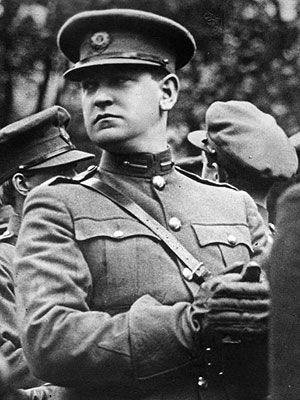 |
Collins as military commander
History has consequences.
And in the long sweep of history you would be hard pressed to find two more intelligent, crafty and over the top interesting characters than Collins and Winston Churchill, then the British Colonial Secretary, who did much of the heavy lifting on the Anglo-Irish Treaty of 1921.
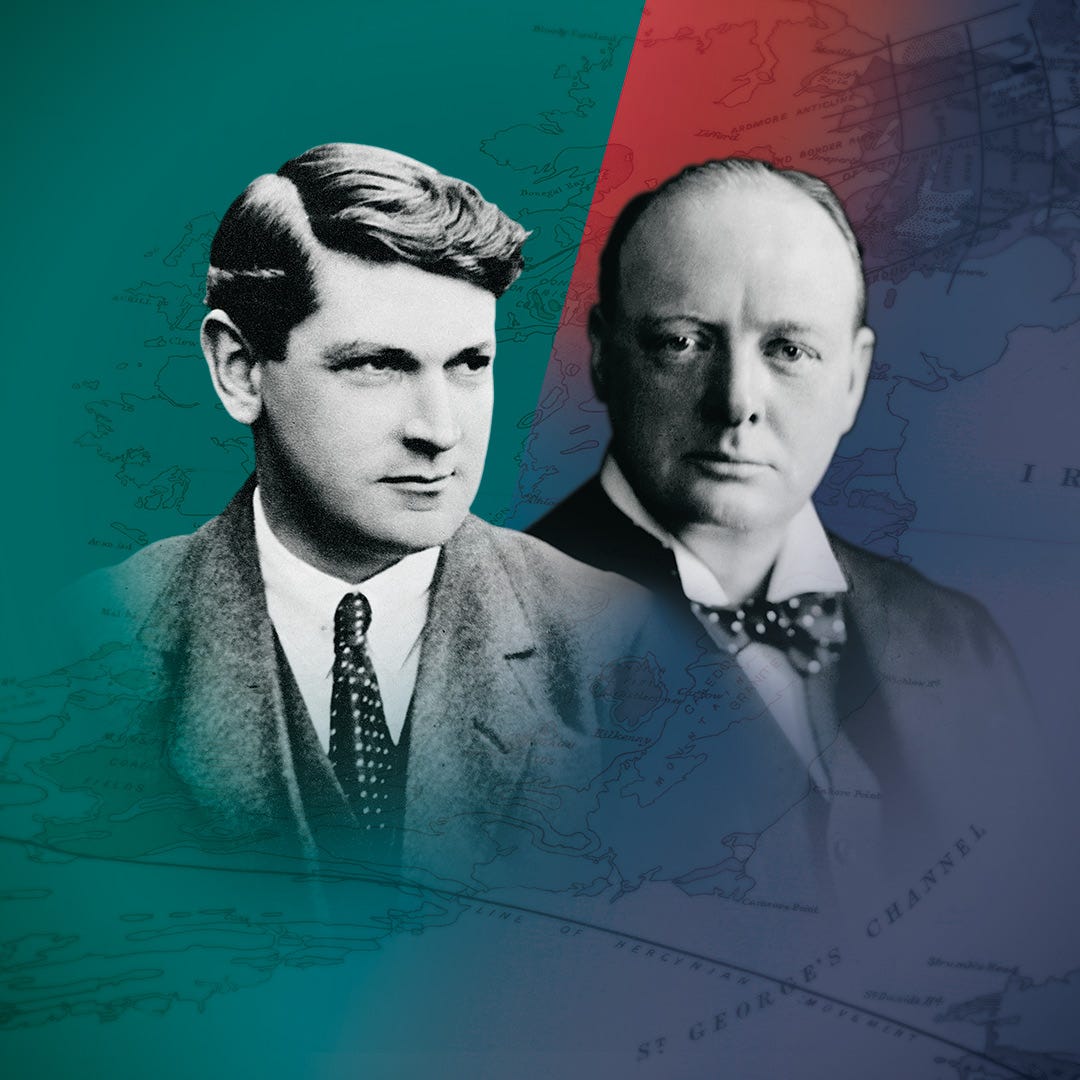 |
Collins and Churchill
The treaty brought something like peace with the British, but also spawned the Irish civil war. Churchill quoted Collins at their last meeting as saying:
“I shall not last long; my life is forfeit, but I shall do my best. After I am gone it will be easier for others.”
Churchill, the indispensable man of the later war against fascism, described Collins this way:
He was an Irish patriot, true and fearless … When in future times the Irish Free State is not only prosperous and happy, but an active and annealing force … regard will be paid by widening circles to his life and to his death …
Collins was but 31 years old when he was shot and killed by Irish forces unwilling to accept the work he had done to create some measure of independence for Ireland and bring about peace.
Collins was a Cork man, born and died in County Cork. He spent the last two nights of his life in the grand Imperial Hotel in Cork where he is well remembered.
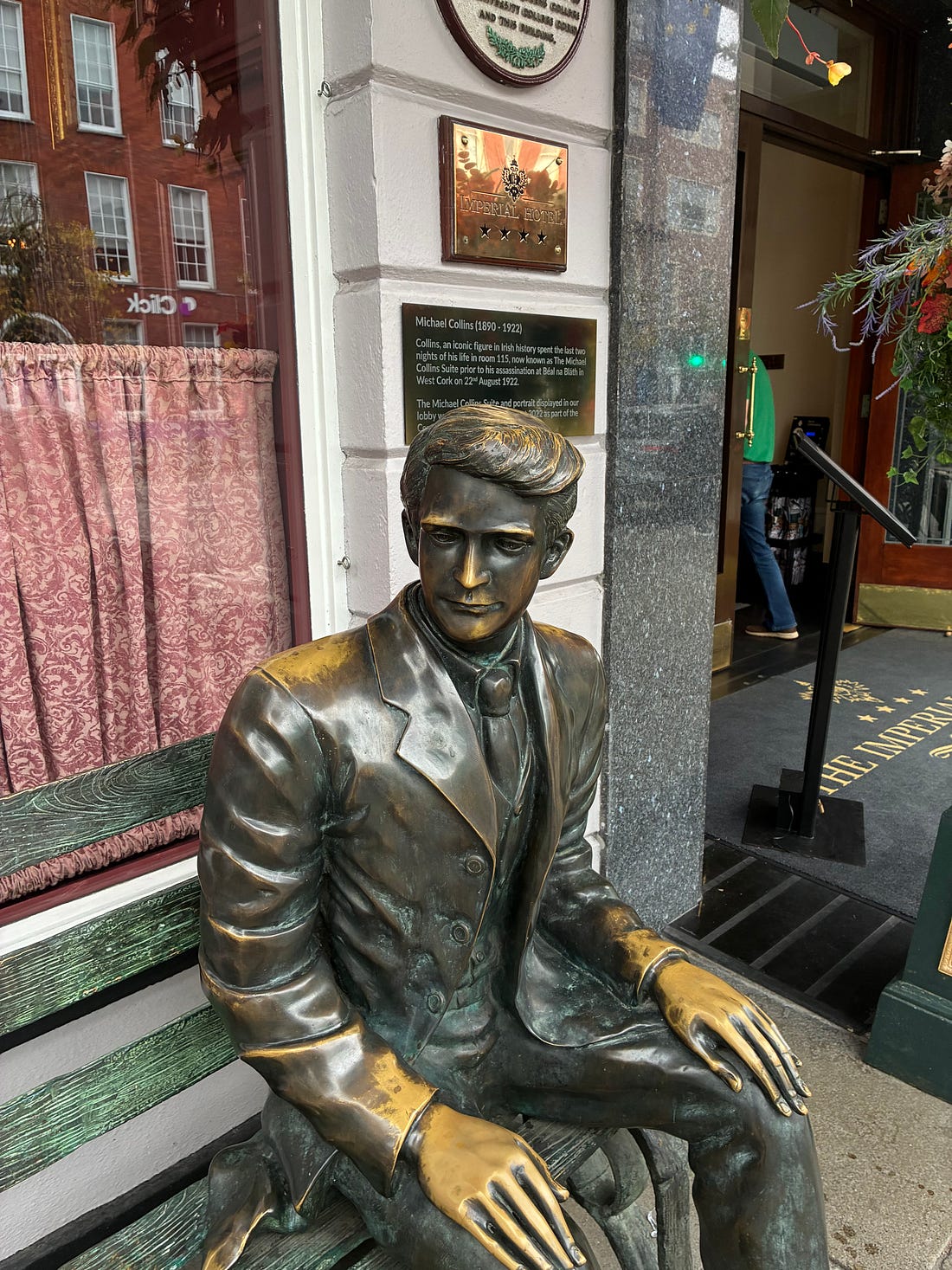 |
Michael Collins perpetually sits in front of the Imperial Hotel and endures the smokers who join him on his bench
Thanks for following along.
Get your voting plan in order. It is hard for me to think of a more consequential midterm election than the one taking place in a bit over three weeks.
Cheers. Onward.
