










By Leanna Coy, FNP-BC
When I first began having menopause symptoms and I couldn’t get my healthcare provider to prescribe hormones for relief, I turned to supplements to relieve the hot flashes and night sweats. Did the supplements help? Sort of. I had mild improvement in some symptoms and no improvement in others. Did I use the wrong brand, or was there something else going on?
This month, the American College of Obstetricians and Gynecologists (ACOG) updated its recommendations for the first-line treatments for menopause symptoms for the first time in 12 years. Hormones topped the list of recommended treatment options, but supplements did not. Research doesn’t show enough evidence that supplements are effective for treating hot flashes or other menopausal symptoms. Yet the market is flooded with menopause supplements.
Why women reach for supplements
Perimenopause symptoms begin early, up to 10 years before a woman enters menopause. For many women, that means symptoms begin in their early to mid-40s. The symptoms are common. Up to 60%-80% of women report symptoms such as hot flashes, night sweats, sleep problems, and depressive symptoms. That creates a huge market for manufacturers to create products that tout symptom relief.
In 2025, the menopause care supplement market was valued at $12.8 billion. As menopause care gets more attention, that market is expected to grow to $13.4 billion this year. Promoted by social media influencers – some health providers, others not – those supplements are easy for the average person to find in the grocery aisles and online. But the science just doesn’t back the use of supplements for menopause related symptoms.
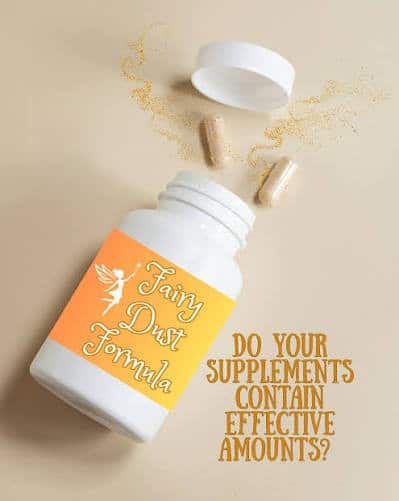
“Fairy dusting” and how to read a label
Fairy dusting is the industry term for when the supplement manufacturer adds a small but ineffective amount of a popular or expensive ingredient. Enough to list on the label, but not enough to have any real impact. For example, Ritual’s Perimenopause Health. The label lists evening primrose oil 250 mg. But clinical trials for evening primrose used 1,000 to 2,000 mg a day. The kicker is that at the higher doses, research shows the benefits for hot flashes are low.
Sometimes a company hides its use of fairy dusting by listing ingredients as a “proprietary blend.” This term lets them avoid listing the amount of each component individually. The brand can list the popular or expensive ingredients but include only a small, ineffective amount. You, none the wiser, get duped.
Where does that leave menopause supplements?
You don’t need to exclude all menopause supplements. Here’s what the evidence shows:
- Black Cohosh: Used for vasomotor symptoms (hot flashes). Not recommended because it shows no significant benefit compared with placebo. There are also rare reports of injury to the liver.
- Melatonin (low dose): Used for sleep onset. Modest recommendation. It helps you fall asleep about 7 minutes faster. This is not a menopause specific medication.
- Magnesium glycinate: Used to improve sleep quality. Modest recommendation. There is a small effect on insomnia, with less evidence for older adults. It does not improve hot flashes.
- Creatine (3-5 g per day): For muscle strength and mass. Recommended for adding lean mass and strength when used with resistance training.
- Protein (1-1.2 g per kg per day): Used to slow muscle loss. Recommended for modestly increasing muscle and strength gains from resistance training.
- Psyllium fiber (10 g per day): Used to improve cholesterol and blood sugar. Strongly recommended because evidence shows it lowers LDL by about 13 mg/dl.
“Natural” isn’t always better
When you go to the store and look at the wall of supplements, you assume they’re all safe. Supplement manufacturers know this and often use buzzwords to make you believe their product is healthier. All-natural, plant-based, non-GMO, and organic are just a few of the terms used to target you. The problem is the Food and Drug Administration doesn’t approve supplements before they are sold. This means a company can create and sell a supplement without having it tested for safety or accuracy.
Your supplement may not be organic or plant-based. The only way to know whether your supplement contains what is claimed on the bottle is to test it. Look for supplements with a USP or NSF seal on the bottle. These labels show a third party verified the product.
Should you throw out all of your supplements? No, but you should take a closer look at the supplements you are taking. Read the labels looking for signs of fairy dusting. Avoid products where proprietary blends are the biggest ingredient. Look for verified products. Check the label for dosing and talk with your healthcare provider to see if the dose is too small to be useful.
