

EDITOR’S NOTE: Here’s an installment from Tillamook County’s State Representative Cyrus Javadi’s Substack blog, “A Point of Personal Privilege.” Oregon legislator and local dentist, representing District 32, a focus on practical policies and community well-being. This space offers insights on state issues, reflections on leadership, and stories from the Oregon coast, fostering thoughtful dialogue. Posted on Substack, 1/22/26
How “What’s Wrong With Oregon?” Misses the Point Entirely
By State Representative Cyrus Javadi
Every budget crisis eventually produces the same question.
Why does Oregon have so many people on Medicaid and food assistance?
It sounds like a diagnosis. And usually, it comes bundled with an assumption—that Oregon must be poorer, less industrious, or more dependent than other states.
I understand that instinct. I grew up hearing that public assistance was the opposite of self-reliance. That government help dulled ambition, discouraged work, and trained people to expect less of themselves.
But that story doesn’t match the people who actually use these programs.
Many are working long hours for low wages. They’re raising kids, managing disabilities, recovering from abuse, taking a chance on a small business that didn’t pan out, or trying to get a second credential so they can earn more. They’re not taking vacations. They’re not buying new cars. They’re trying to keep the lights on. Some are kids who are simply hungry.
Here’s the part that often gets missed.
Oregon doesn’t have higher enrollment because we have more need. Our poverty rate is actually slightly lower than the national average. We have higher enrollment because we’re better at helping eligible people actually get the help they qualify for.
That distinction matters. And right now, it matters more than ever.
Here’s why.
What Changed in Washington (And Why It Matters)
For the last several months, lawmakers like me have been wrestling with how to respond to changes imposed by Congress under H.R. 1, better known as the Big Beautiful Bill.
If you don’t live inside federal budgeting, here’s the short version. Washington didn’t just cut funding. It also changed the rules.
Semantics you say? Hardly. Those changes are going to cost Oregon tax payers billions of dollars.
The federal government is now asking states to do more work, with tighter requirements, with less help paying for it. Medicaid, SNAP, and related programs still exist. Eligibility still has to be verified. Benefits still have to be delivered. But states are now responsible for more of the administrative cost, more frequent eligibility checks, more reporting, more technology upgrades, and steeper penalties if we get something wrong.
This isn’t theoretical. These are mandates with timelines and consequences.
And they land hardest in states that actually run these programs well.
Where Ideals Meet Math
Last week, the legislature was called back to Salem for committee updates. On the menu was more discussion about programs that are up for cuts.
I sat in the Joint Ways and Means Committee on Human Services — the committee that decides how Oregon pays for Medicaid, food assistance, foster care, disability services, and mental health.
Every dollar spent benefits someone who needs help. And, so any cuts, are expected to be painful. It’s tempting to say “Well, just don’t cut any of those services.”
But, there’s a problem with that instinct.
Oregon must balance its budget. We don’t get to run deficits. Every new federal requirement has to be paid for with state dollars, or something else has to give.
Here’s what the agencies told us. Not only do we need to find services to cut, we also need to spend more than we originally planned. Why? Because the costs of implementing the federal requirements must be paid for by Oregon tax payers.
And, Oregon has made commitments to people who qualify for assistance.
The Department of Human Services is asking the Legislature for $91.5 million more in state General Fund money just to keep current services running.
Not to expand programs. Not to add benefits. Just to cover higher caseloads, higher costs per person, and new administrative demands.
More than 80 percent of that request is driven by caseload growth and cost per case. More seniors needing help at home. More adults with disabilities requiring in-home services. More foster kids needing residential mental health care.
These are people already in the system. You can’t pause their care because it was politically expedient for the Republican controlled Congress to offer tax cuts for the wealthy.
Compliance is Becoming More Expensive
At the same time, DHS is being hit with new federal requirements around eligibility accuracy and reporting. A single error rate violation can trigger millions of dollars in penalties.
And by millions, I mean $250 million dollars per year (not exactly loose money you find in the couch cushions).
To avoid that, the state has to hire more staff, retrain workers, and modernize eligibility systems that were already stretched thin. All of that costs money up front, before a single benefit is paid.
This is the part that rarely shows up in political talking points.
We’re spending more not because we’re expanding generosity, but because compliance itself is becoming more expensive.
More costs More
Not to be outdone, the Oregon Health Authority presented a different picture on paper.
It reported $141 million in General Fund “savings,” largely because Medicaid enrollment dropped after pandemic protections ended and because the state reduced quality incentive payments to insurers.
That sounds like good news. But buried in that report was the warning label.
Healthcare costs didn’t actually drop. In fact, OHA negotiated 2026 payment rate increases of more than 10 percent (far above what the budget assumed). Those higher rates roll forward into 2027, creating new pressure late in the biennium.
In other words, today’s savings create tomorrow’s hole.
Layer H.R. 1 on top of that. More frequent eligibility testing. More reporting. More oversight. More IT work. Federal guidance that still isn’t finished. Mandatory compliance anyway.
“What’s Wrong With Oregon?” Actually, We Are Doing Things Right
During the hearing, one legislator on the committee voiced a frustration I’ve heard before—usually from people wearing red hats.
“What is wrong with Oregon? Why do we have so many people on these programs?”
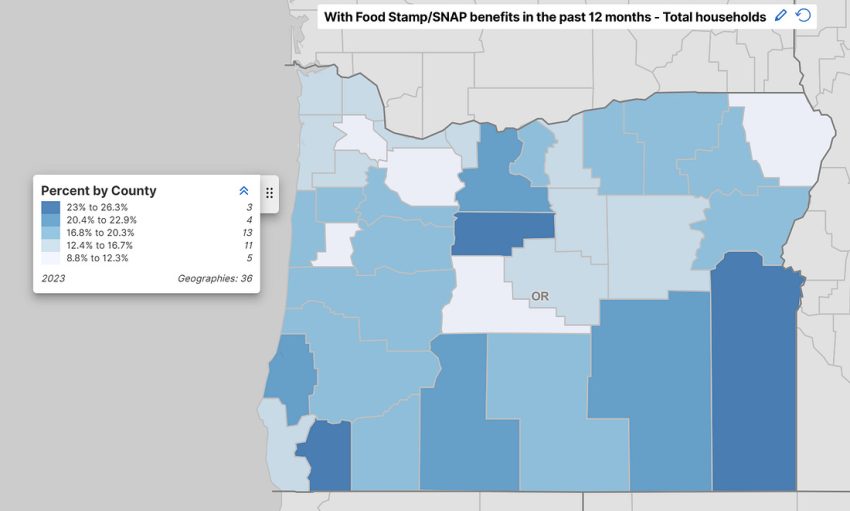
You see, it’s true. Oregon does have far more people enrolled in Medicaid and SNAP than many other states. Roughly one in three Oregonians is on Medicaid at some point during the year. About 18 percent of households use food assistance.
In many states, those numbers are lower than Oregon (i.e. less people enrolled in Medicaid and SNAP). So, they must have less poor right?
Wrong.
And here’s why.
What the Numbers Don’t Say
Because that question assumes Oregon must be poorer. Or less industrious. Or that something fundamental about our economy is broken.
None of that is true.
Oregon’s poverty rate is actually lower than the national average. Workforce participation looks similar to other states. People here work, raise families, care for parents, and contribute to their communities in all the familiar ways.
The difference isn’t need.
The difference is access.
What High Enrollment Really Means
Oregon is better at helping eligible people actually receive the benefits they qualify for.
When a working parent qualifies for Medicaid, Oregon is more likely to enroll them instead of losing the paperwork.
When a family qualifies for SNAP, Oregon is more likely to connect them instead of letting a missed notice knock them out.
When someone’s income fluctuates (as it does for hourly and seasonal workers) Oregon is more likely to keep them covered rather than forcing constant churn.
Lower enrollment in other states doesn’t automatically mean less need. Often, it means more people quietly going without.
A missed letter. A portal that doesn’t load. A deadline that passes while someone is working two jobs.
Coverage disappears. The statistics look cleaner. The reality gets messier.
The Question Behind the Question
So when someone asks, “Why does Oregon have so many people on Medicaid or SNAP?” what they’re really asking (especially in a year like this) is whether we should stop being good at this.
That’s the choice hiding inside the question.
Because when the federal government cuts funding, it isn’t saying these services aren’t needed. It’s saying the states should pay more if they want to keep them whole.
The Uncomfortable Tradeoff
That puts legislators in an uncomfortable spot.
We have to balance the budget. We have to meet new federal mandates. We have to avoid penalties. We have to modernize systems that were already strained. And we’re trying, at the same time, to minimize harm to real people who depend on these programs to stay afloat.
That’s why comments framed as “what’s wrong with Oregon” fall flat.
They miss the reality that many of the people affected are working parents, caregivers, seniors, and people with disabilities. People doing their best in an economy where wages, rent, childcare, and healthcare don’t line up neatly.
The Choice in Front of Us
Oregon has never been perfect. But we’ve been better than most at saying, “If you qualify, we’ll help you.”
And Oregon has to decide how to step up, and how to carry more of the load without dropping the people underneath it. That’s the real tension in these budget hearings.
Not ideology. Not generosity versus discipline.
It’s whether a state can stay humane when the math tightens and when politics start crowding out judgment.
And whether we still believe that being good at helping eligible people is a failure or something worth protecting.
As for me, I think it’s worth protecting.
If this kind of honesty matters to you, stay with me.
I don’t write these pieces to score points or hand you a villain of the week. I write them because Oregon deserves straight talk when the numbers get tight and the consequences get real.