

By Butch Freedman
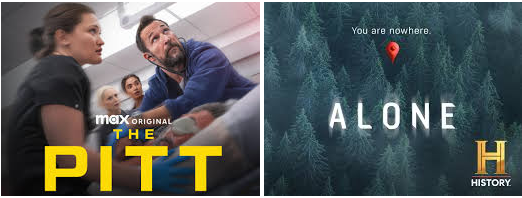
I watch too much TV. And I’m not ashamed of it. Some medical professionals claim that watching too many hours of television is bad for your brain, that the gray-matter stops functioning as the screen takes control. I don’t entirely dispute that. Clearly there are some programs that are simply mindless wastes of time and some that are merely sensational or unnecessarily graphic. On the other hand, I contend that there are some very fine television shows these days, ones that are elevated above the mundane, that engender both thoughtfulness and entertainment. “The Pitt” is one of those shows, grisly but real, and one that brings the viewer into realities that they may not have been aware of. It’s educational, without trying to be.
As the title of the show references the one-hour HBO drama is set in the emergency room of a fictional Pittsburgh hospital. Each episode covers one hour of one hectic day; and the entire season covers a full 15-hour day and all the trauma and heartbreak that engenders. Noah Wyle is the doctor in charge and the star of the show, but there are many other actors who are featured each week. Though a work of fiction, the drama feels both real and meaningful, touching on many of today’s political, financial, and ethical issues. Which is not to say that any of these issues are portrayed in a one-sided manner — much the opposite is true. There are no easy answers, the characters demonstrate, only shades of black and white, and the regular folks who are trying to navigate a difficult and fraught world, as we all do. I won’t go further in my descriptions. I don’t want to give any plot lines away. I’m only suggesting that, whatever your thoughts about the usefulness or harm of today’s television world, this show is worth your time. Check it out—please do.
The other show that has me addicted is one that is less well-known than “The Pitt” but equally worthy of a watch. It’s been on for 12 seasons now, on a number of different outlets. It’s titled simply “Alone,” which tells you pretty much everything about the series. Yes, it’s a reality show, but unlike almost any other reality series, this one is truly real. Here’s how it works: ten contestants are placed into a remote wilderness area (the latest contest takes place in the Arctic Circle) and they are left there—alone—to see who can remain the longest and survive only by their own wits and survival skills. What sets it apart from other shows like “Survivor” or “The Amazing Race” is that the participants are truly and completely alone. There are no camera crews with them doing the recording, the directing, or the producing. No one there to give them directions or to help out when things go south, which they often do. How do they manage to record this true aloneness? Each contestant is provided with his or her own cameras, and they then do all their own filming. Of course, the final versions seen on TV are edited down from all the footage they provide.
To be clear these are not your everyday people. Each contestant is an experienced outdoor enthusiast and survivalist. They are chosen on the basis of videos they submit, that demonstrate their prowess. Once set out on their lonely piece of the wilderness, they must then proceed to the business of survival—i.e. erecting some sort of shelter against the usually harsh terrain, finding food, and building a fire. They are not allowed to bring either food or shelter with them, though they are permitted to bring 10 survival items, such as an axe or saw, a tarp, a flint for starting fires (no matches allowed), a bow and ten arrows for hunting (no firearms) and fish hooks. Some contestants last only a few days, despite all their training and preparation. Sometimes they have accidents or run-ins with marauding animals. Their only connection with the outside world is with a two-way radio, that they can only use when they are ready to “tap out” when they can last no longer. The eventual winners over the years of the series have lasted an average of over 75 days alone.
I’m not a big outdoor person myself. I have trouble setting up a pup tent, but still I’m fascinated watching the struggles of these trained survivalists and seeing what separates the ones who tap out early or mid-range with the ones who go the distance. Some claim that the competition is basically a starvation contest—who can find or kill enough food to outlast the competition. Some contestants will purposely gain 30 or 40 pounds before they begin as a hedge against starvation. But even that fat soon melts away.
What I think truly determines lasting power is the mental strength of the contestants. In the end, it’s not who can find the most food, but who can stand to be alone with only their own thoughts for that length of time. And the winners are also the ones who truly enjoy the experience of being alone in nature, instead of battling against it. Every winner (and I’ve watched most of the seasons) seems to have a quality of serenity that allows them to smile in the face of hardship and focus instead on the world around them. The winners wake up every day eager to get on with the challenge, the losers often wake up weary and full of complaints.
The show is instructive for even those of us who will never attempt such a feat. Not to get overly philosophical here, but in a sense we are all truly alone, each of us looking out on the world only behind our own set of eyes. “Alone” has shown me the extreme end of that human condition. Yes, TV can provide insight as well as entertainment. Some days it can even make you laugh or cry. That’s worth a watch.