Tillamook County Pioneer

News & People of Tillamook County. Every Day.

Menu
  • Home
  • Feature
    • Breaking News
    • Arts
    • Astrology
    • Business
    • Community
    • Employment
    • Event Stories
    • From the Pioneer
    • Government
    • Letters to the Editor
    • Non Profit News
    • Obituary
    • Public Safety
    • Podcast Interview Articles
    • Pioneer Pulse Podcast: Politics, Palette, and Planet – the Playlist
  • Guest Column
    • Perspectives
    • Don Backman Photos
    • Ardent Gourmet
    • Kitchen Maven
    • I’ve been thinking
    • Jim Heffernan
    • The Littoral Life
    • Neal Lemery
    • View From Here
    • Virginia Carrell Prowell
    • Words of Wisdom
    • Chuck McLaughlin – 1928 to 2025
  • Weather
  • Post Submission
  • Things to do
    • Calendar
    • Tillamook County Parks
    • Tillamook County Hikes
    • Whale Watching
    • Tillamook County Library
    • SOS Community Calendar
  • About
    • Contribute
    • Advertise
    • Subscribe
    • Opt-out preferences
  • Search...
Menu

NEWS UPDATE FROM DAVID GOMBERG: A Deep Dive on the Coastal Economy

Posted on March 23, 2026 by Editor

By Representative David Gomberg, House District 10

Dear Neighbors and Friends,

I have just finished a review of a report titled Lincoln County Oregon Economic Status in Middle 2020’s. The study was sponsored by the Lincoln County Board of Commissioners and prepared by a consultant for the Economic Development Alliance of Lincoln County (EDALC).

If you pay attention to economic details as I do, there are few surprises here but plenty of details. And those details matter if you own a business, manage a non-profit, are raising kids, or want to maintain the quality of life that brought you here.

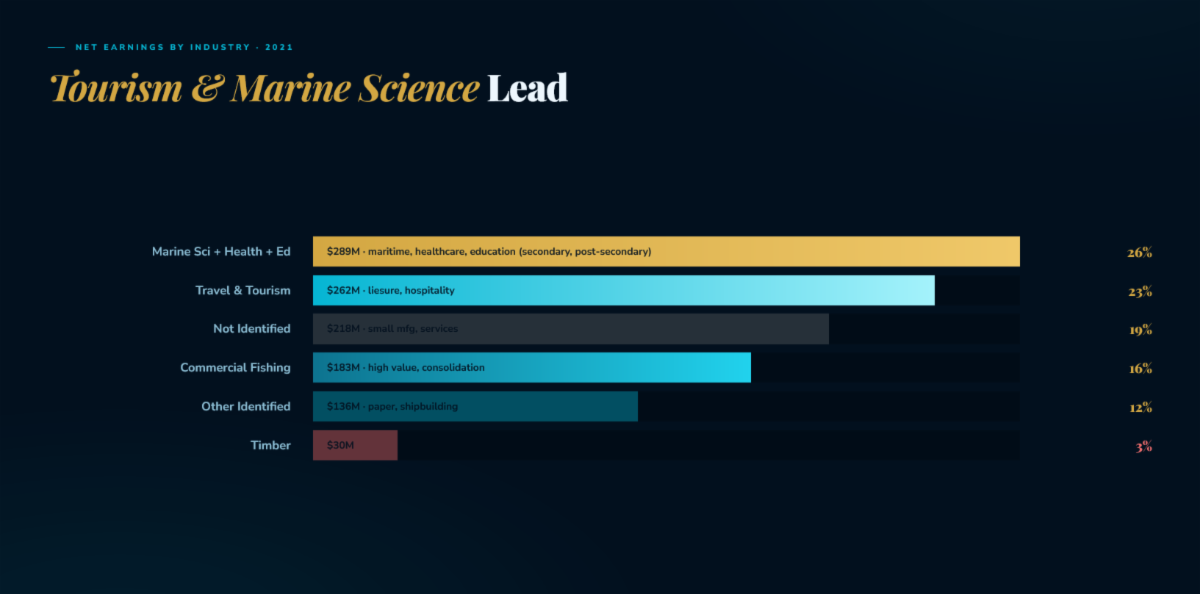
Traditional natural resource sectors like forestry and agriculture are declining. Fishing is solid. Tourism is our largest employer. And the population is aging. No surprises.

Good paying jobs in science and research are surging. Employers can’t find employees or housing. Older residents drive the year-round service economy. And new sectors like the “Blue Economy” provide a wealth of opportunity. Those are some of the details.

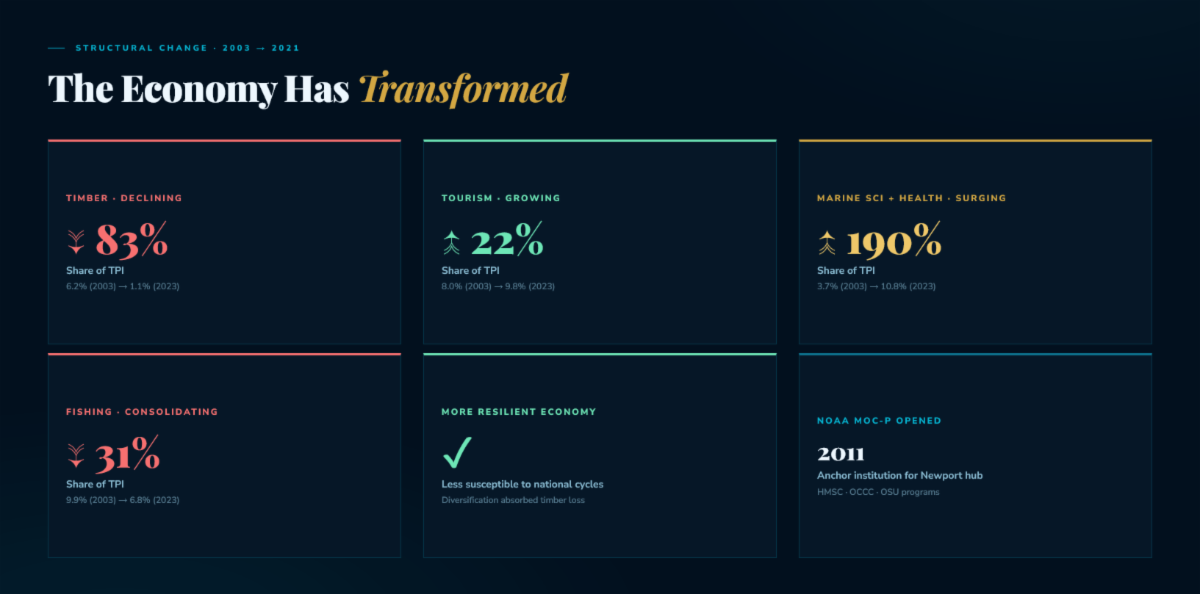
Lincoln County and other coastal counties have in the last two decades undergone significant economic transitions. Traditional resource-based industries like commercial fishing and wood products have declined in relative importance. Trade and service jobs associated with businesses serving tourism and retirees have increased. Agriculture in coastal counties has remained fairly constant largely because of the influence of the dairy industry in Tillamook County.

There has been an increase of “other” industries in coastal counties, which replaced the relative importance of natural resource industries. The data indicates that Lincoln County’s economy is more diversified and healthier than 15 years ago. The decreased reliance on extractive industries that involve activities that locate and remove non-renewable raw materials has made Lincoln County’s economy less susceptible to national business cycle downturns.

Some reasons natural resource-based industries have declined are: (a) Decreasing availability of natural resource areas for harvests due to new demands for using open spaces for recreation. (b) Increasing management attention for ecosystem conservation and harvest sustainability. And (c) Increasing use of technology and processing centralization which has reduced labor requirements.

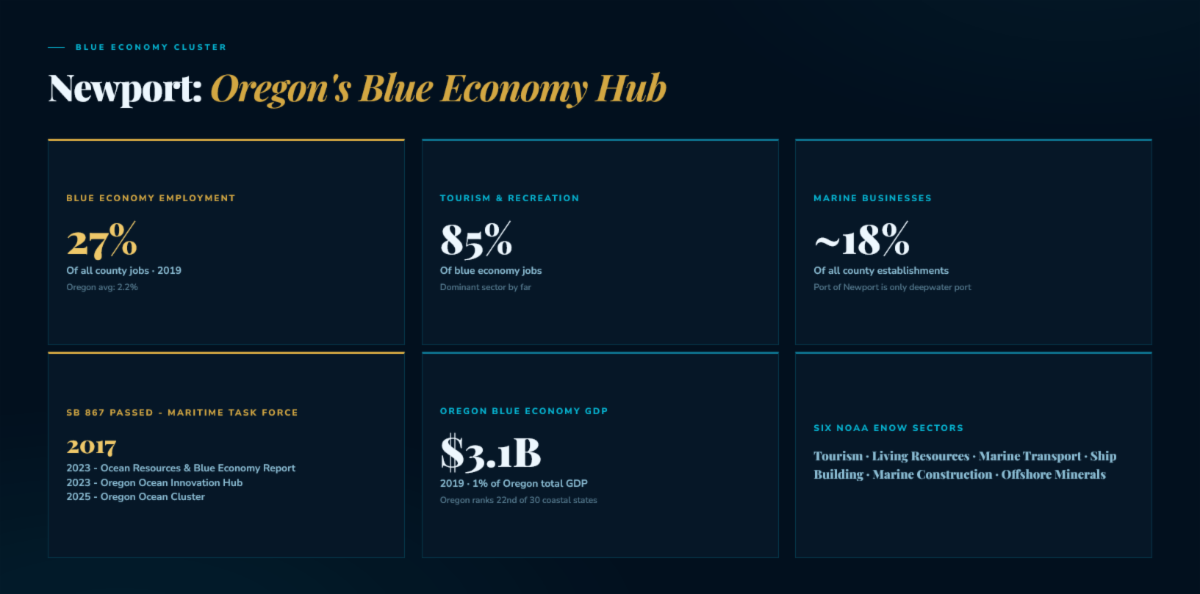
One newly identified industry cluster relevant to Lincoln County is the “Blue Economy”, sometimes called the “Ocean Economy.” This cluster is a geographic concentration of marine, maritime, and freshwater focused businesses, supported by universities and governments, that collaborate to foster innovation and sustainable economic growth. It can include marine construction, marine transportation, ship/boat building, and to some degree tourism and recreation.

The economic development cluster approach is to take advantage of new market opportunities for new businesses and organizations and assist existing dependent operations to adapt. The Blue Economy generated 27 percent of Lincoln County’s employment in 2019. In regard to statewide trends, the marine transportation and tourism/recreation sectors have both experienced significant increases in group employment between 2005 and 2019.

The Economic Development Alliance of Lincoln County (EDALC) has taken a lead in participating in a statewide effort to establish several Blue Economy hubs along the Oregon Coast. The Newport area is one of the hubs. The focus on ocean related businesses turns away from unsustainable past strategies and launched assistance programs for the industries of the future.

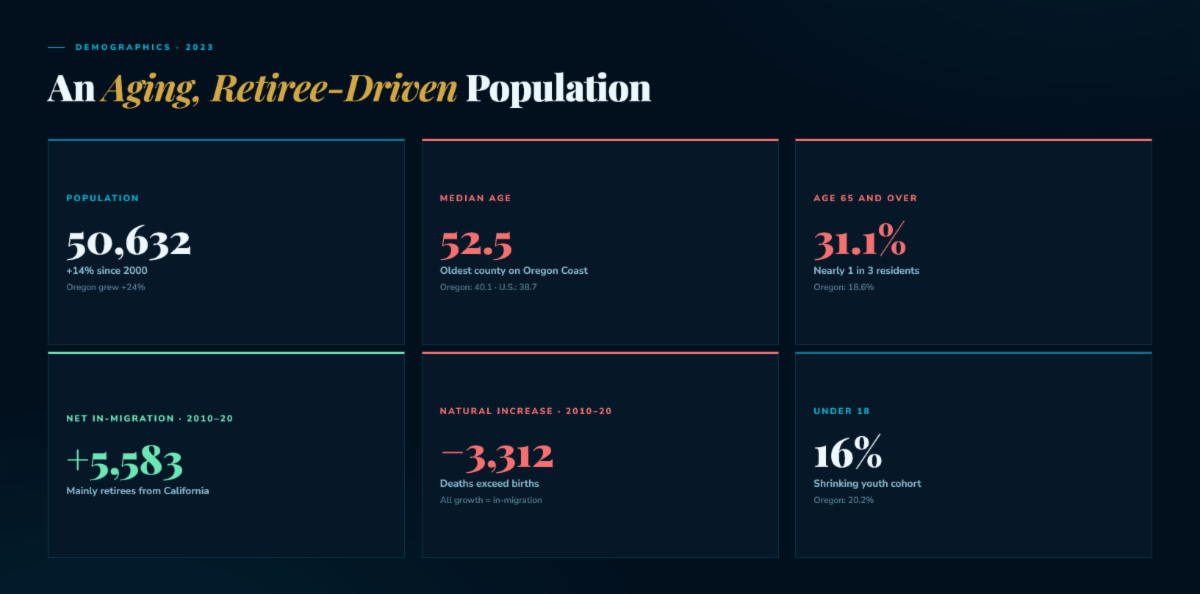
From 2000 through 2023, the population of Oregon has been growing faster than the population of the United States. There has been overall growth in coastal counties, but at a slower pace than Oregon. Lincoln County during the period grew 16 percent and Oregon grew 24 percent.

Generally, coastal counties have an overall out-migration of young adults who leave the region to find education and employment opportunities. However, this trend is offset by in-migration patterns. The national population is “aging” into middle and older age groups and many are moving to the coast.

Looking at demographics, Lincoln County and the Coast’s population continues accelerating away from young families raising children and moving toward retirement aged population who have either stayed-in or relocated to the region to enjoy the environment and quality of life.

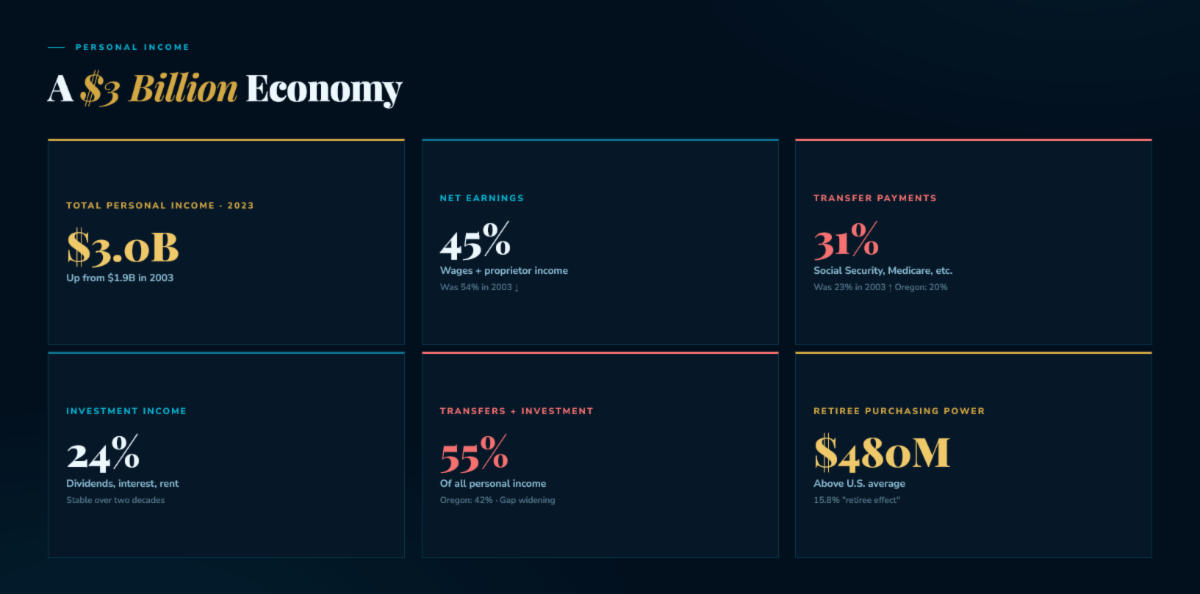
The changing demographic of coastal areas has led to a shift in income and employment opportunities. As the population of coastal counties has continued to age in the last two decades, income from transfer payments has risen. This population’s purchasing power coupled with travel tourism spending has increased proportional employment in the year-round trade and services industries.

Transfer payments are income for which no current services are performed. They fall into two large categories:

  • Income maintenance such as Supplemental Nutrition Assistance Program (SNAP) formerly known as the food stamp program, worker’s compensation, unemployment insurance payments, veterans benefits, Bureau of Indian Affairs benefits, and payments to nonprofit organizations that serve individuals.
  • Deferred or “retirement” income including Social Security, pensions, IRA income, and investments.

The in-migration and the growth of income from retirement programs represents a major and increasing source of purchasing power in many coastal areas.

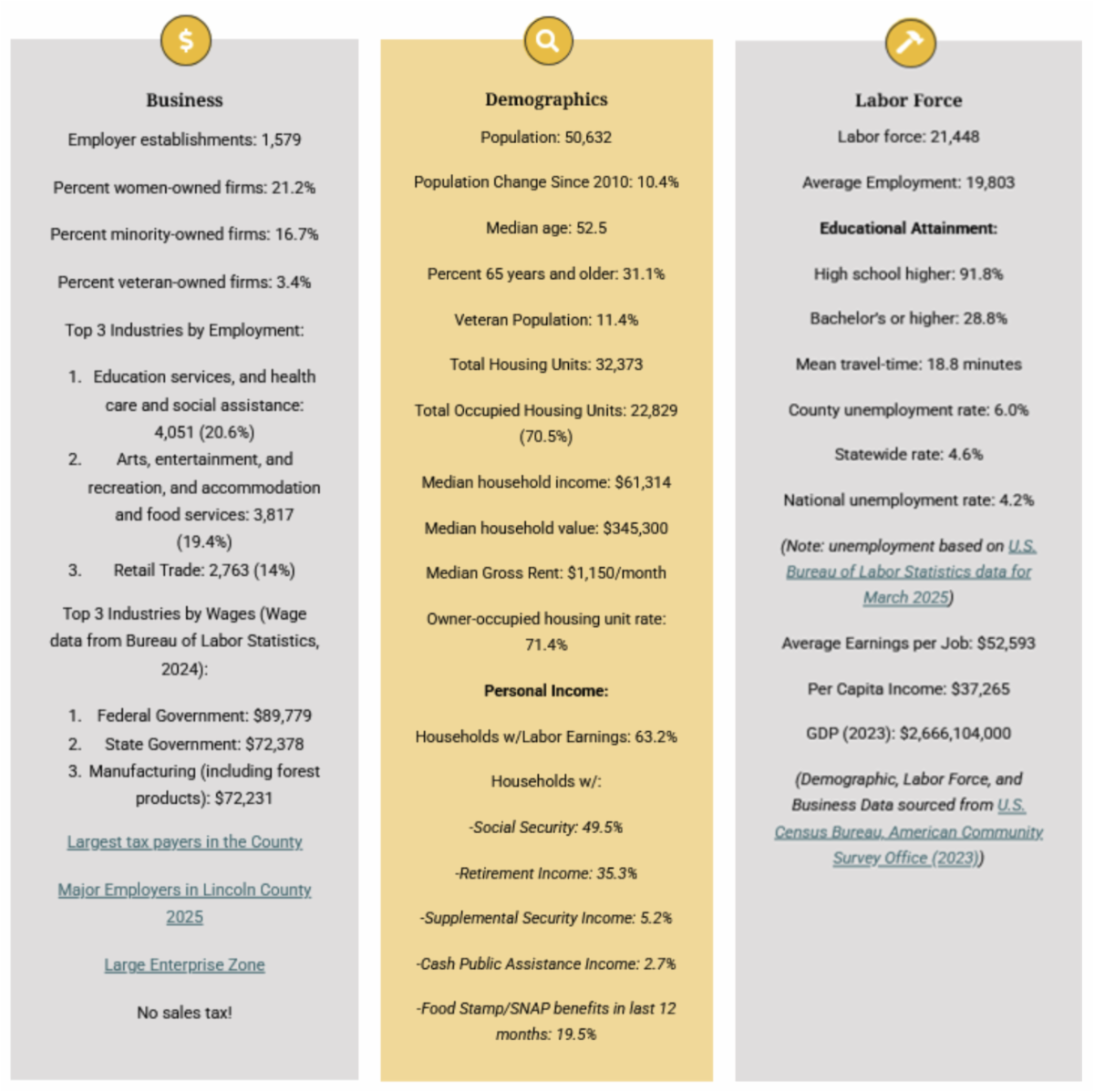
Most economists do not recognize “retirement” as an industry. But with a third of our population over age 65, the impact on health care, recreation and entertainment, the arts, and the service sector cannot be understated.


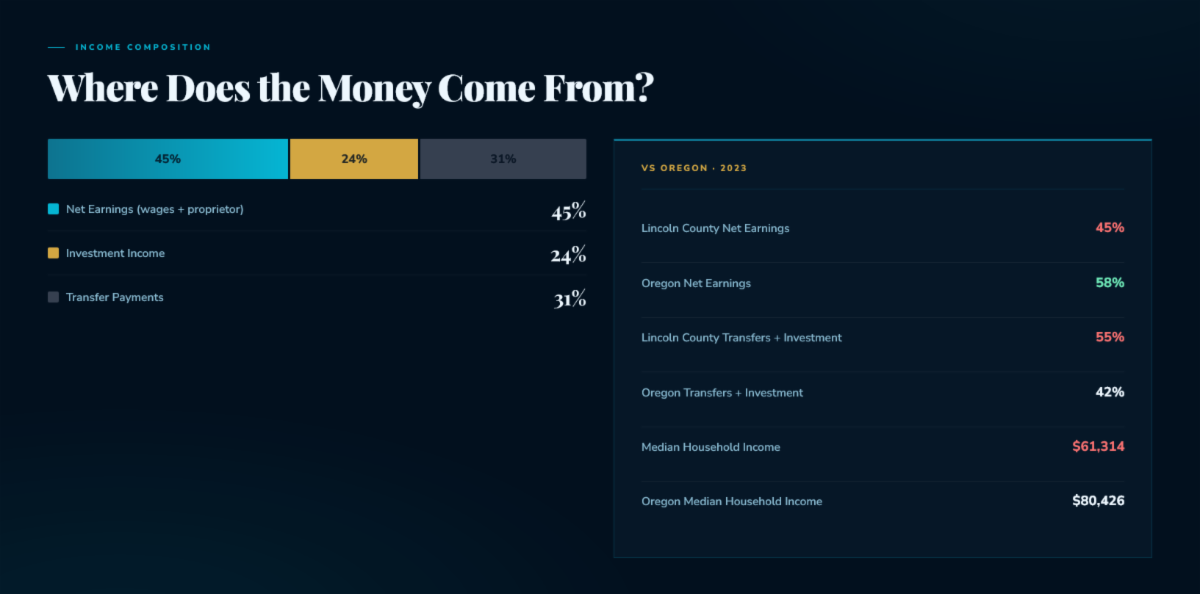
There has been continued absolute and proportional growth of transfer payments and the continued decline of proportional net earnings. In the last two decades, Lincoln County transfer payments increased from 23 percent of total personal income to 31 percent. Net earnings proportions decreased from 54 percent to 45 percent. Investment income was steady at 24 percent. So taken together, investment income and transfer payments make up 55 percent of the total personal income in Lincoln County in 2023. This share is compared to 54 percent for the Coast and 42 percent for Oregon.

Retiree age reliance on these income sources shows the importance of this spending on the local economy.

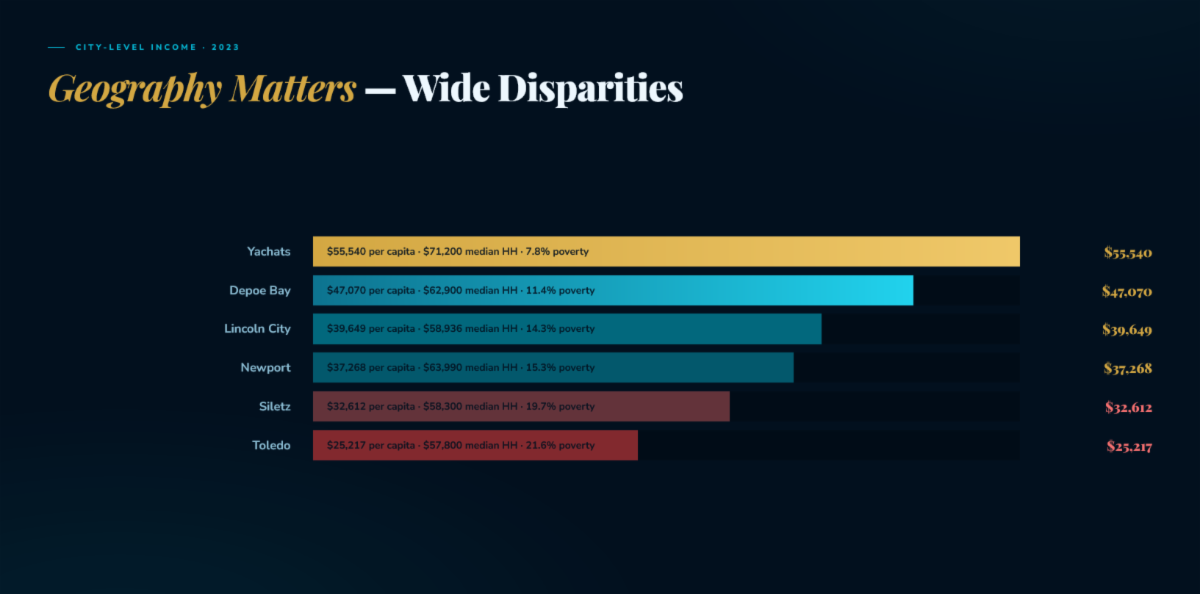
Wealth, when defined by total personal income, has increased in Lincoln County and the Coast because both population and per capita income have increased in recent years. However, household incomes are lower than the rest of Oregon. There are more people working in lower wage jobs. In addition, there are more part-time jobs in Lincoln County and the Coast than statewide. As a result, the poverty rate in Lincoln County and the Coast is higher than the rest of Oregon.
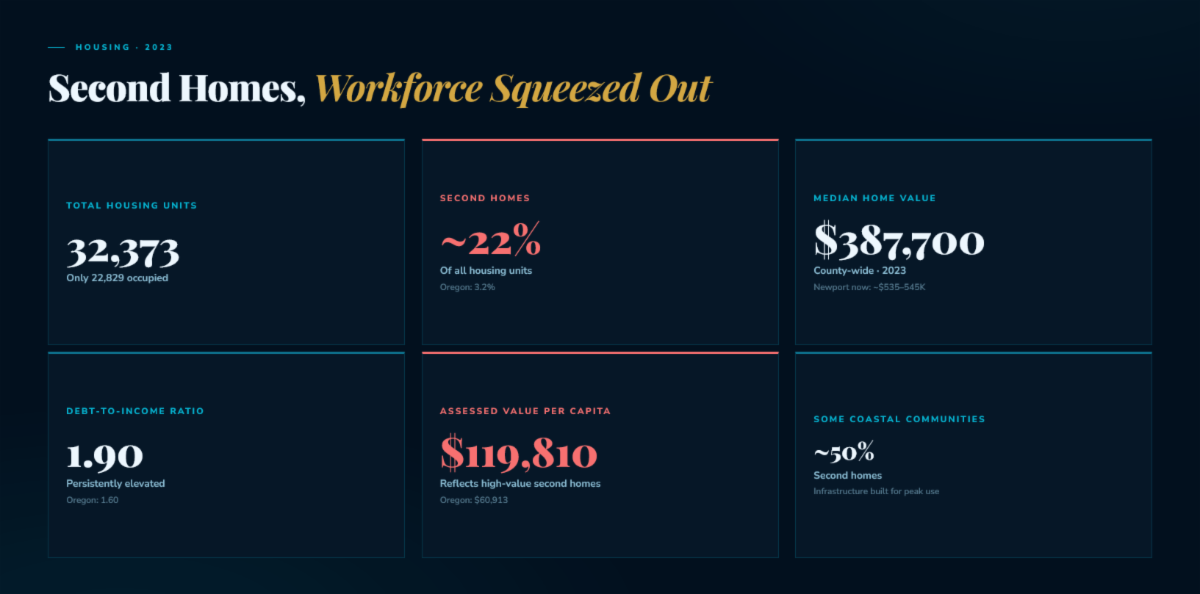
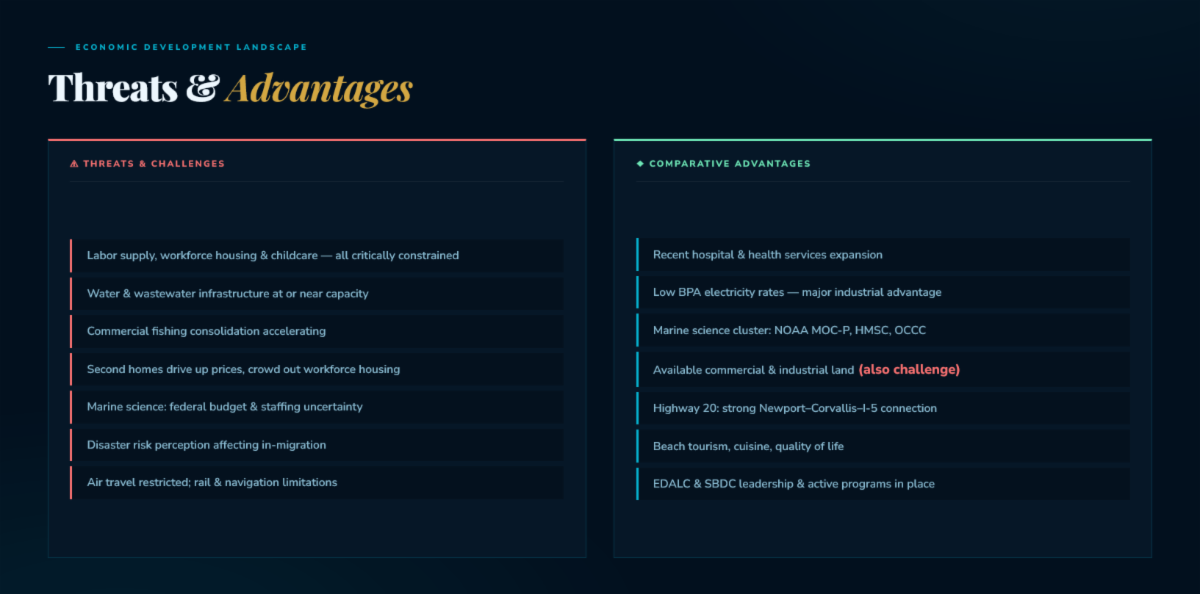
Lincoln County has far fewer households in the highest income brackets than the State. The lower income profile faces a housing problem. Workers are unable to secure affordable housing as rising demand for coastal property has priced homes and rentals out of their reach. This lack of workforce housing in turn makes it more difficult for employers to attract and retain workers in occupations such as trade and service workers. This is especially true for businesses oriented towards the tourism industry.

There has been a boom in the market for “second homes” in Lincoln and all coastal counties. In some coastal communities, 50 percent of the housing stock are second homes. The median value of owner-occupied homes is less than Oregon, but the residential assessed value per capita is much higher. These second homes increase the property tax base, but also increase public service costs for residents. The strong demand for second homes is pricing many coastal residents out of the housing market.

Potential workers will also be concerned with housing cost and childcare availability and cost. Unless those costs are reasonable, attracting employees may be difficult. These hiring problems negatively impact business growth and economic competitiveness.

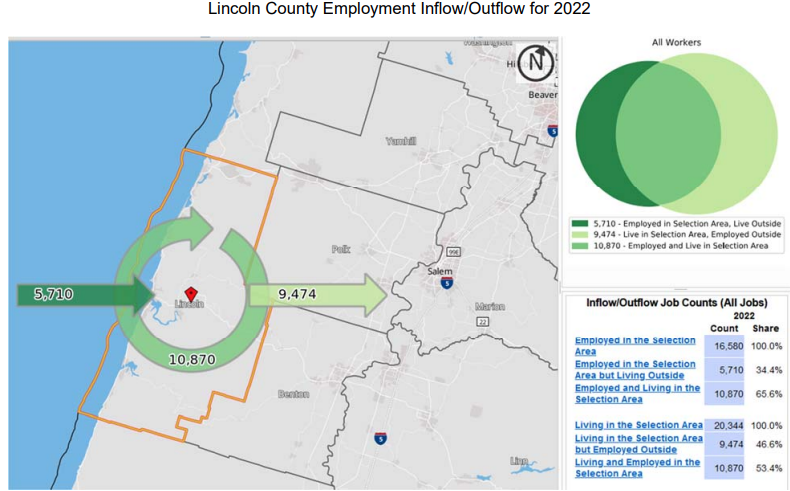
One result of the housing shortage is that people working at the coast live somewhere else. Of our 16,500 workers, a third live outside the county. Interestingly, another 9,500 workers travel outside of Lincoln County for that work.

The population is growing in Lincoln County and on the Oregon Coast. However, the increases are in older age groups. Natural population increase (births minus deaths) decreased to negative for the first time in Oregon coastal counties during the 1990-00 period. The net migration growth is coming from the national “boomer generation.” As these people reach retirement age, they are coming to the Oregon Coast seeking a higher quality of life. Most migration is coming from California. Curry County has the highest growth of retirees, but all coastal counties are experiencing an aging of the population.

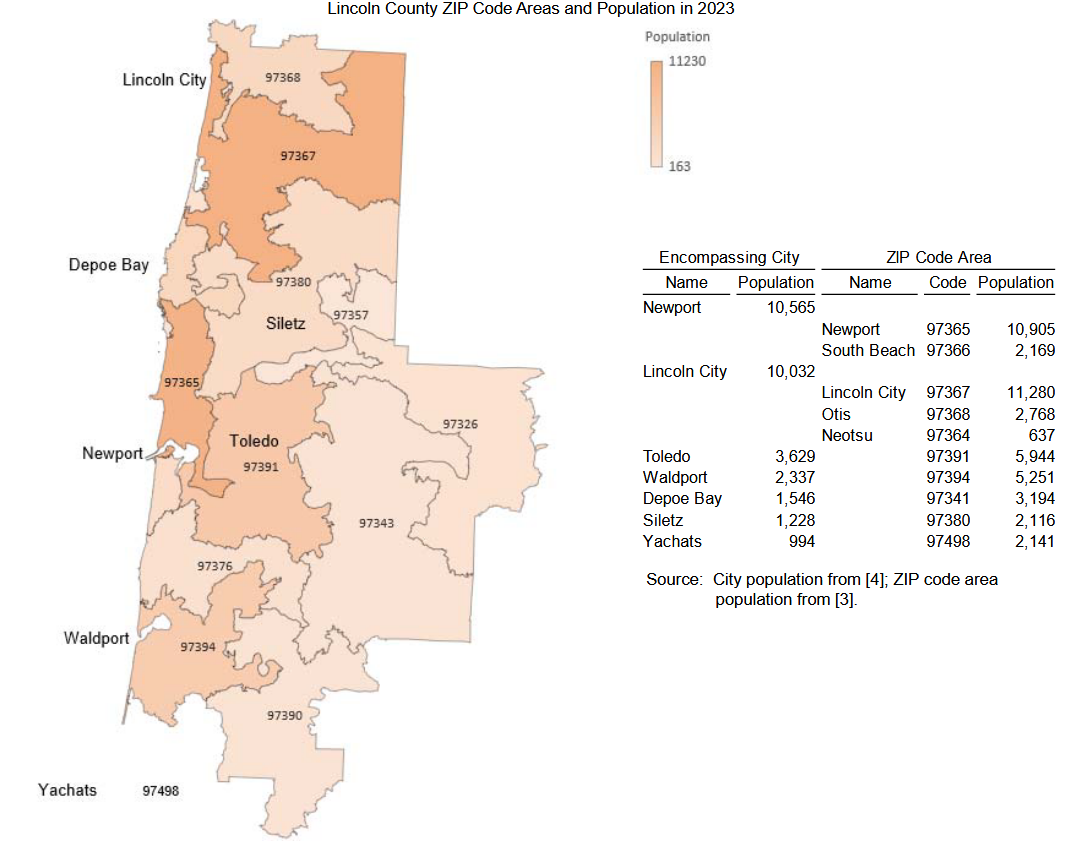
Population in North County continues to grow with Lincoln City now larger than Newport.

Lincoln County business establishment net numbers increased from 2013 through 2023 then slightly declined in 2024.

The Great Recession (years 2008-2009) and the COVID-19 pandemic (years 2020-2022), which was exacerbated by effects from the 2020 Labor Day Wildfires, interrupted the trend of economic growth in Lincoln County. The recovery since the pandemic and wildfires is less robust than since the Great Recession.

Beyond considerations for operational costs and sales to target markets for the business products, startup decisions to locate in Lincoln County will look to factors such as quality-of-life for owners and workers along with labor force mobility, broadband presence, education and training accessibility, and commercial and industrial land availability.

You can learn more about the Economic Development Alliance of Lincoln County here. The full 74 page report I’ve summarized here should be online soon.
Before I close this week’s report, I need to share a note about upcoming communications: This week marks the beginning of the pre-election “blackout period.” State law prohibits legislators who are running for office from using state resources for mass constituent communications (like this newsletter) during the 60 days before an election. That means from March 20th–May 20th.

You will not receive newsletters from my legislative office. However, to keep you informed on a weekly basis as I have for the past six years, I will continue sending updates using my own resources.

I’m in the district every day now, and my Salem office is not staffed. You are still welcome to reach out to us directly. The best way to contact me is by email: rep.davidgomberg@oregonlegislature.gov.

Next week I’ll be back with news from events stretching from Lincoln City to Junction City and from Florence to Philomath.

Slide Slide Slide Slide Slide Slide Slide Slide Subscribe Contribute

Ads

Featured Video

Tillamook Weather

Tides

Tillamook Church Search

Cloverdale Baptist Church
Nestucca Valley Presbyterian
Tillamook Ecumenical Service

Tillamook County Pioneer Podcast Series

Archives

  • Home
  • EULA Privacy Policy
  • Contact
  • Opt-out preferences
  • Search...
Share on facebook
Facebook
Share on pinterest
Pinterest
Share on twitter
Twitter
Share on linkedin
Linkedin
Catherine

Recent Posts

  • NEWS UPDATE FROM DAVID GOMBERG: A Deep Dive on the Coastal Economy

    March 23, 2026
  • HAIKUING IN OREGON WITH CHUCK MCLAUGHLIN - SPRING

    March 22, 2026
  • United Paws’ Kittens of the Week: Meet Tango & Cash

    March 22, 2026
©2026 Tillamook County Pioneer | Theme by SuperbThemes

Manage Cookie Consent
To provide the best experiences, we use technologies like cookies to store and/or access device information. Consenting to these technologies will allow us to process data such as browsing behavior or unique IDs on this site. Not consenting or withdrawing consent, may adversely affect certain features and functions.
Functional Always active
The technical storage or access is strictly necessary for the legitimate purpose of enabling the use of a specific service explicitly requested by the subscriber or user, or for the sole purpose of carrying out the transmission of a communication over an electronic communications network.
Preferences
The technical storage or access is necessary for the legitimate purpose of storing preferences that are not requested by the subscriber or user.
Statistics
The technical storage or access that is used exclusively for statistical purposes. The technical storage or access that is used exclusively for anonymous statistical purposes. Without a subpoena, voluntary compliance on the part of your Internet Service Provider, or additional records from a third party, information stored or retrieved for this purpose alone cannot usually be used to identify you.
Marketing
The technical storage or access is required to create user profiles to send advertising, or to track the user on a website or across several websites for similar marketing purposes.
  • Manage options
  • Manage services
  • Manage {vendor_count} vendors
  • Read more about these purposes
View preferences
  • {title}
  • {title}
  • {title}