Tillamook County Pioneer

News & People of Tillamook County. Every Day.

Menu
  • Home
  • Feature
    • Breaking News
    • Arts
    • Astrology
    • Business
    • Community
    • Employment
    • Event Stories
    • From the Pioneer
    • Government
    • Letters to the Editor
    • Non Profit News
    • Obituary
    • Public Safety
    • Podcast Interview Articles
    • Pioneer Pulse Podcast: Politics, Palette, and Planet – the Playlist
  • Guest Column
    • Perspectives
    • Don Backman Photos
    • Ardent Gourmet
    • Kitchen Maven
    • I’ve been thinking
    • Jim Heffernan
    • The Littoral Life
    • Neal Lemery
    • View From Here
    • Virginia Carrell Prowell
    • Words of Wisdom
    • Chuck McLaughlin – 1928 to 2025
  • Weather
  • Post Submission
  • Things to do
    • Calendar
    • Tillamook County Parks
    • Tillamook County Hikes
    • Whale Watching
    • Tillamook County Library
    • SOS Community Calendar
  • About
    • Contribute
    • Advertise
    • Subscribe
    • Opt-out preferences
  • Search...
Menu

NEWS UPDATE FROM STATE REPRESENTATIVE DAVID GOMBERG: A Closer Look at Transportation

Posted on February 17, 2026 by Editor

By Representative David Gomberg, House District 10

2/16/26

Dear Friends and Neighbors,

One of my favorite movie lines is from the film Groundhog Day. “It’s going to be cold, it’s going to be gray, and it’s going to last you for the rest of your life.”

The 2026 legislative session began on Groundhog Day, February 2, and fittingly, it felt quite familiar to be back in the Capitol. And as I have explained, our work this year largely fell into three broad areas.

First, we need to rebalance the 2025-2027 budget. We approved that budget last June in the 2025 session. But soon after, changes in federal tax law and spending affected Oregon tax revenue. Increasing costs, declining income, and programs cancelled in Washington DC left Oregon with the need to cover new expenses, leaving us with a roughly $750 million shortfall.

Immediately, state agencies and legislative budget committees began reviewing plans on how to rebalance the budget. Agencies provided lists of possible cuts, which predictably brought throngs of advocates to the Capitol, imploring us to cut someone else. Legislative committees worked to prioritize those cuts. A new economic forecast, which I detailed last week, provided some encouragement and a bit more revenue. And tax committees in Salem also considered changes to adjust some of the new deductions in the federal tax code.

Tax and spending deliberations will continue until the last day of session in March. And we will need to make cuts. But at this point, they don’t look as consequential as they did six months ago.

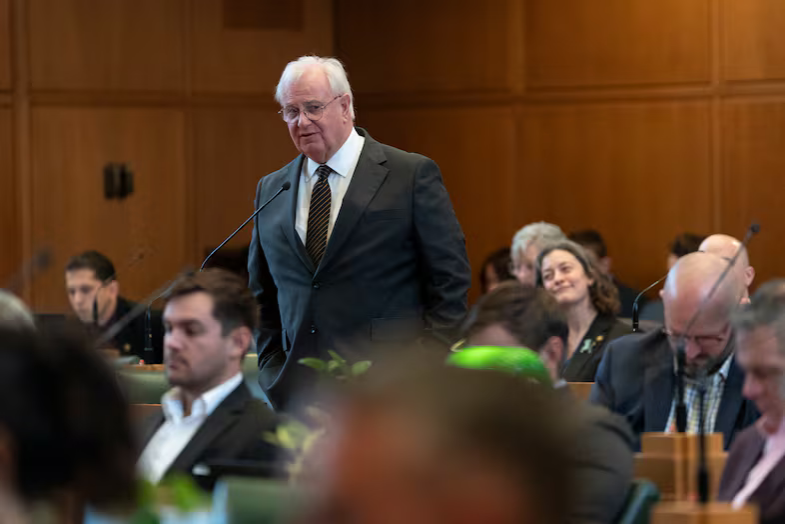
Opening day of the legislative short session in Salem, Ore. on Feb. 2, 2026. Saskia Hatvany / OPB

A second major subject is our work to resist the overreach by the federal administration and the upsurge of immigration enforcement with a suite of bills that strengthen civil rights and protect our immigrant neighbors and their families.

Last week, I detailed 10 bills that address how federal authority operates physically within Oregon’s borders and the systems that make enforcement and federal pressure possible in the first place. Proposed legislation is focused on immigration enforcement, law-enforcement cooperation, and National Guard participation, narrowing the circumstances under which state resources or personnel may be used in support of federal action. Other bills address the flow of information, data usage, election administration, public lands, health care oversight, and long-term financial exposure.

Those bills are being heard in committees, and many are advancing to votes in either the House or the Senate.

And that brings us to the third subject, which is where I’m doing most of my work. We need an immediate fix to the Oregon Department of Transportation budget.

Last summer, the Legislature convened a special session to consider and pass a revenue proposal to fund ODOT, support our transit systems, and provide revenue for transportation needs managed by local governments. The tax and fee increases of that special session package were then challenged in a successful referendum, and voters will now decide the fate of those recommendations, placing those proposed revenue increases on hold unless approved in an upcoming election.


This delay leaves ODOT with a roughly $300 million deficit. Transportation costs in Oregon are largely paid for with gas taxes and fees. With income increases on hold, we need to properly manage spending decreases.


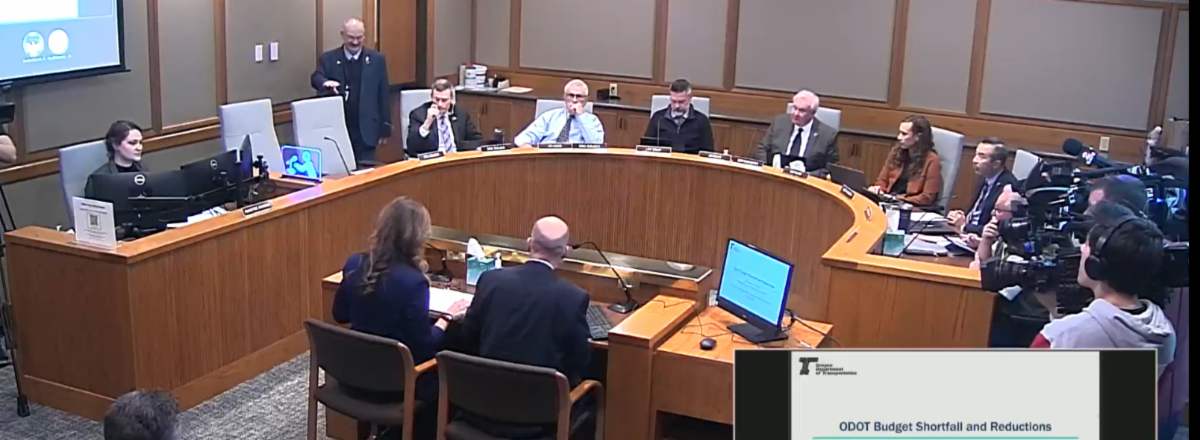
This week in the Transportation and Economic Development Committee I co-chair, we heard an outline of possible cuts and how they would affect our highways and drivers. “We’re looking at a budget pothole that gets deeper every time a tire hits it,” I told the Committee.

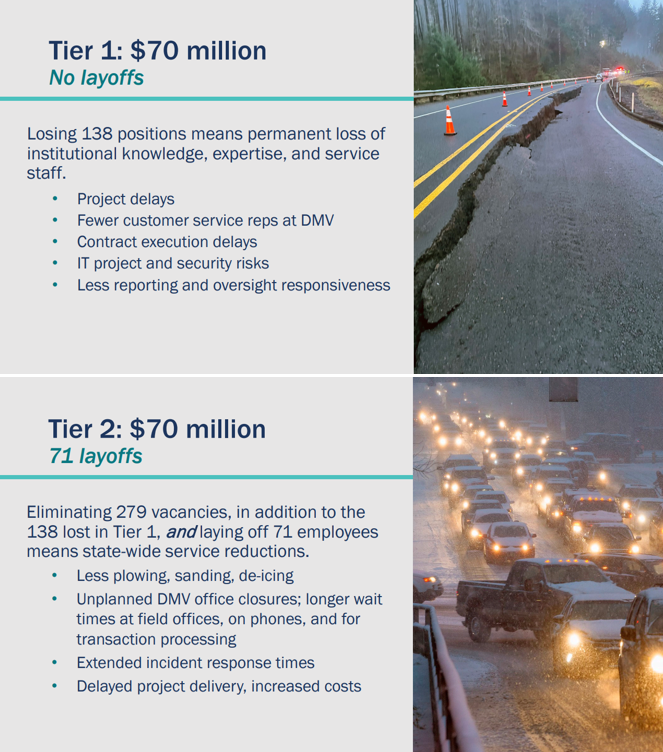
In 2025, we reduced ODOT spending by about $50 million and cut roughly 100 positions. The budget uncertainty has also caused a number of employees to retire or leave. “We are down almost 700 vacant positions,” Lisa Sumption, ODOT’s new director, told lawmakers. Sumption and others stressed Tuesday that there are few good options in an agency that has cut spending on nuts-and-bolts services repeatedly in recent budgets.

The first two options presented reduced spending by eliminating vacant positions or further reducing the workforce.

A second set of options included reductions in programs that support local improvements:

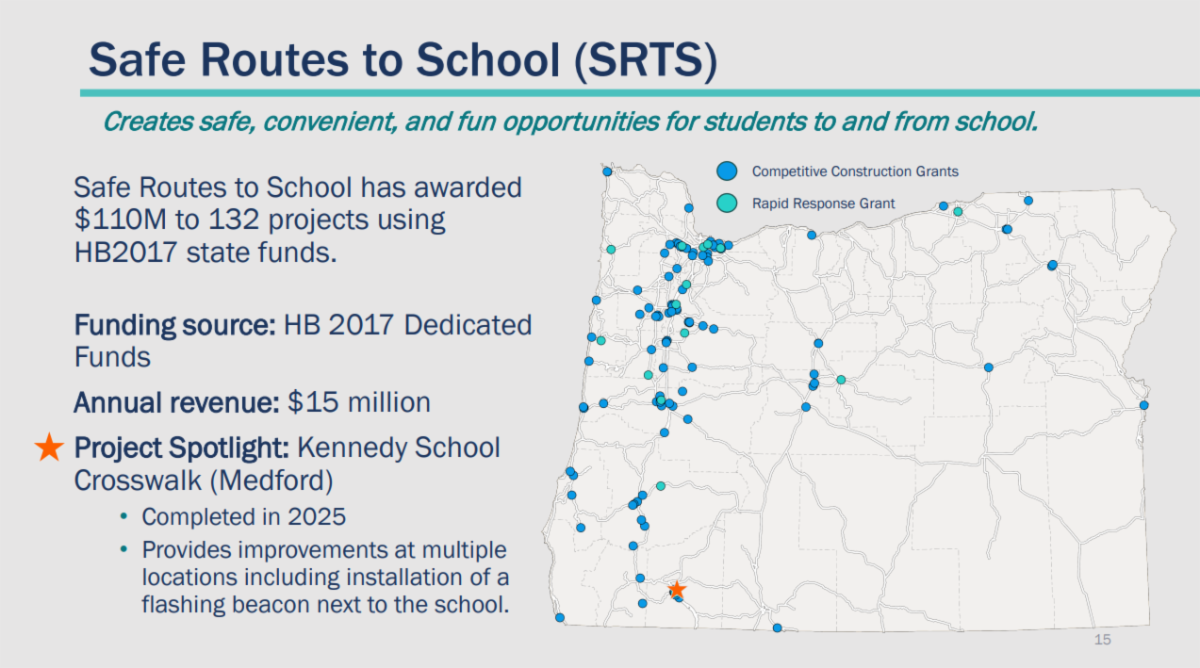
  • Safe Routes to Schools helps fund sidewalks, bike paths, and crosswalks near schools.
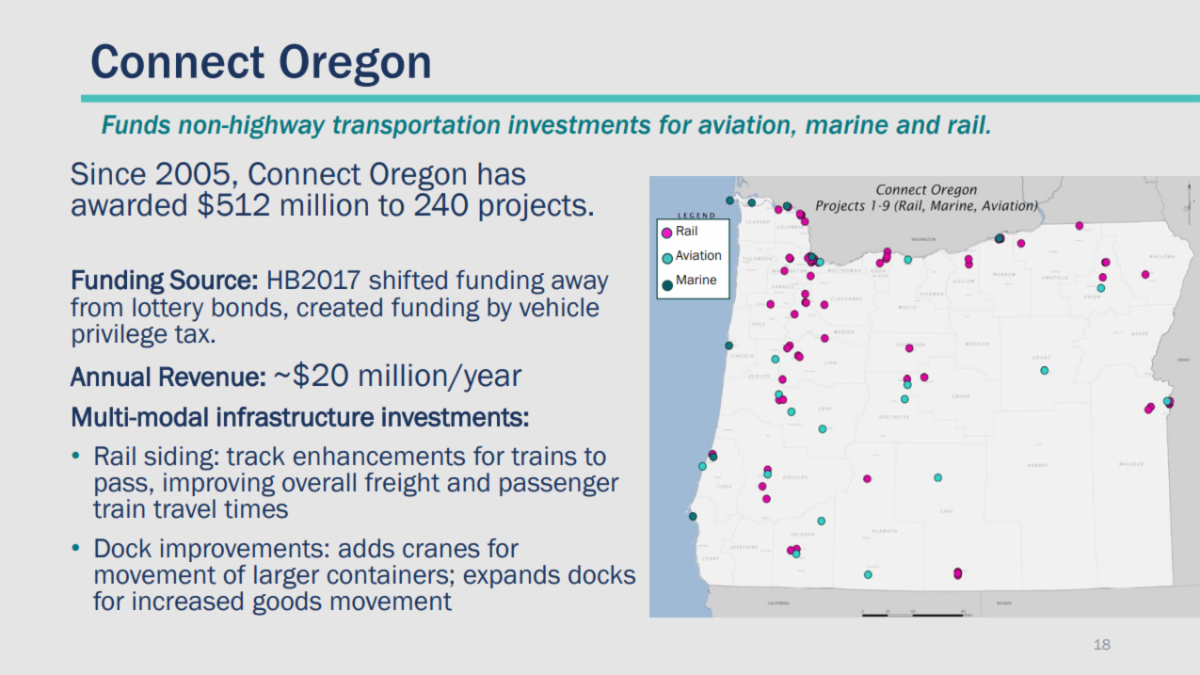
  • Connect Oregon invests in our ports, rail lines, and small airports.
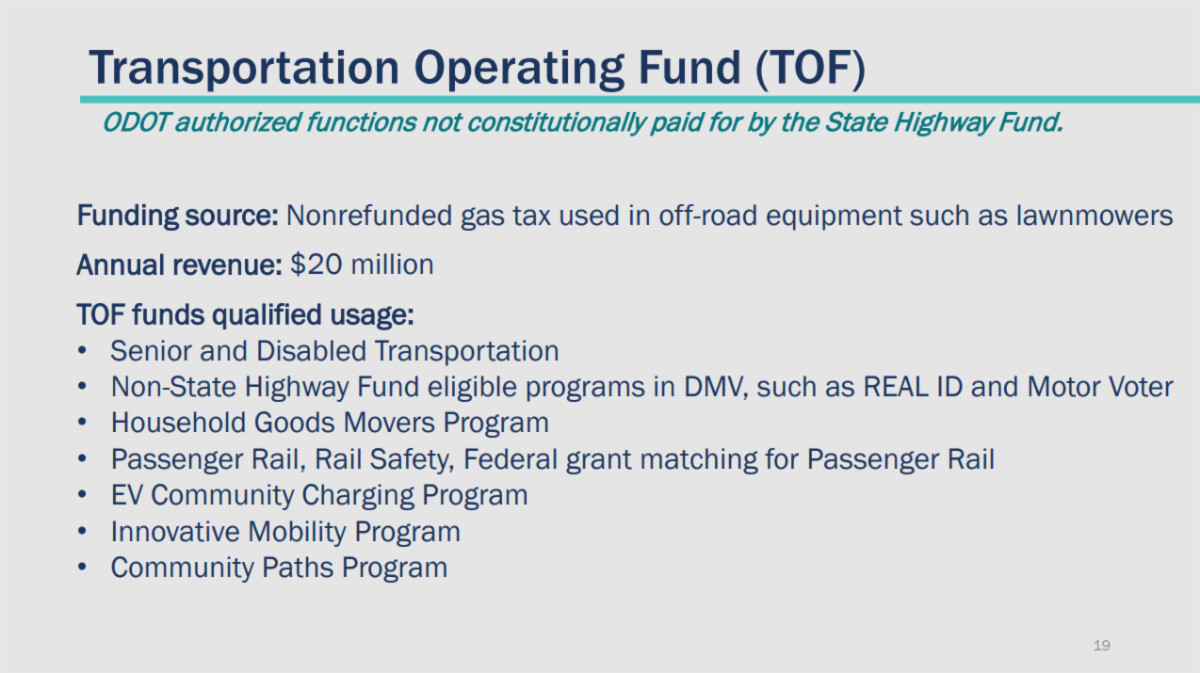
  • The Transportation Operating Fund supports passenger rail like AMTRAK, senior and disabled transportation, EV charging stations, and community paths.
A third set of options considers the delay of work on planned bridge repairs and highway projects. That might include work in Portland in the Rose Quarter or Abernethy Bridge, the Center Street Bridge in Salem, or dozens of rural and coastal bridges deemed less safe or seismically vulnerable.

At one point, I pressed the Director: “I was in a much larger hearing room yesterday afternoon and heard consistently from Oregonians who say we don’t need more gas tax revenue — we need to go to the agency and reduce fraud, waste, and administrator salaries. I wanted to give you an opportunity to respond to that since we’ve been hearing that quite a bit.”

Director Sumption pushed back on that criticism, saying the agency has already made substantial cuts. “The agency has taken so many measures and reductions,” Sumption said. “We’ve been talking to you for over six years about this, and we have been making cuts for multiple biennia now. This is not a new problem.”

  • Read more in OPB here.
  • Watch a report on KATU here.
  • Watch the full committee hearing here.
  • See all of the ODOT presentation here.

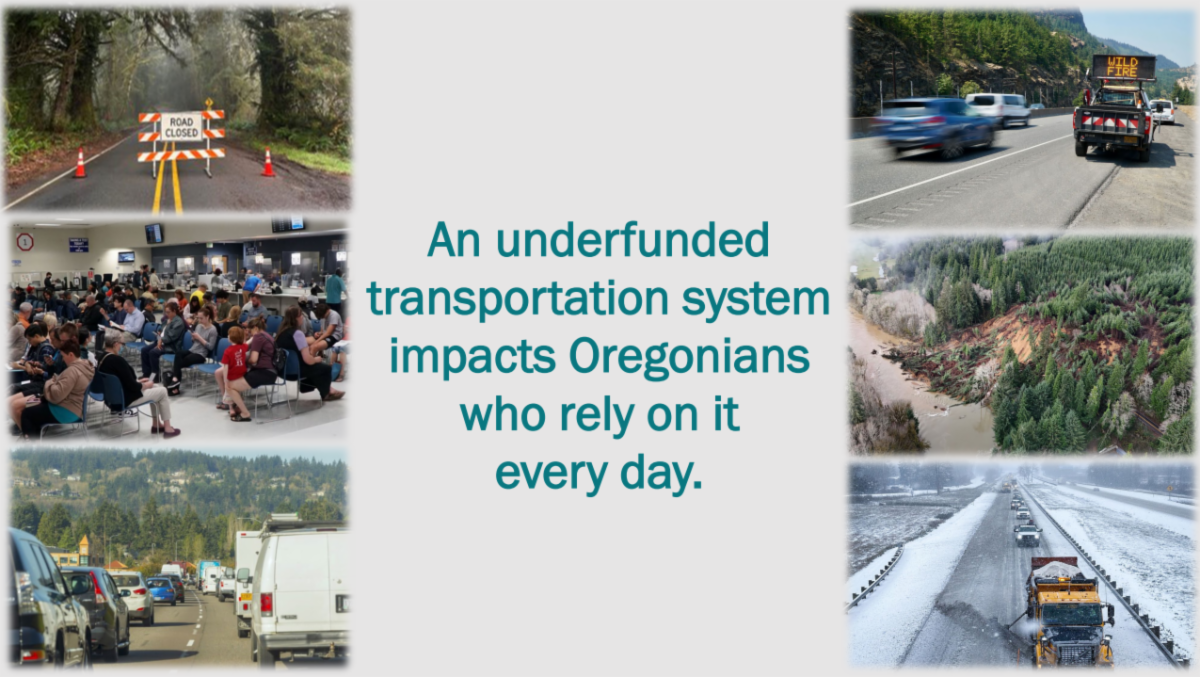
I have often reported that the ODOT budget is huge, consequential, and complex. In the best of times, managing it is difficult. The reductions we’re facing are going to affect highway safety, livability in smaller communities, and our regional economy.


Bipartisan discussions continue, and we’ll see this question resolved before we adjourn.

While our focus is, of course, in Salem, my work outside the Capitol continues as well.

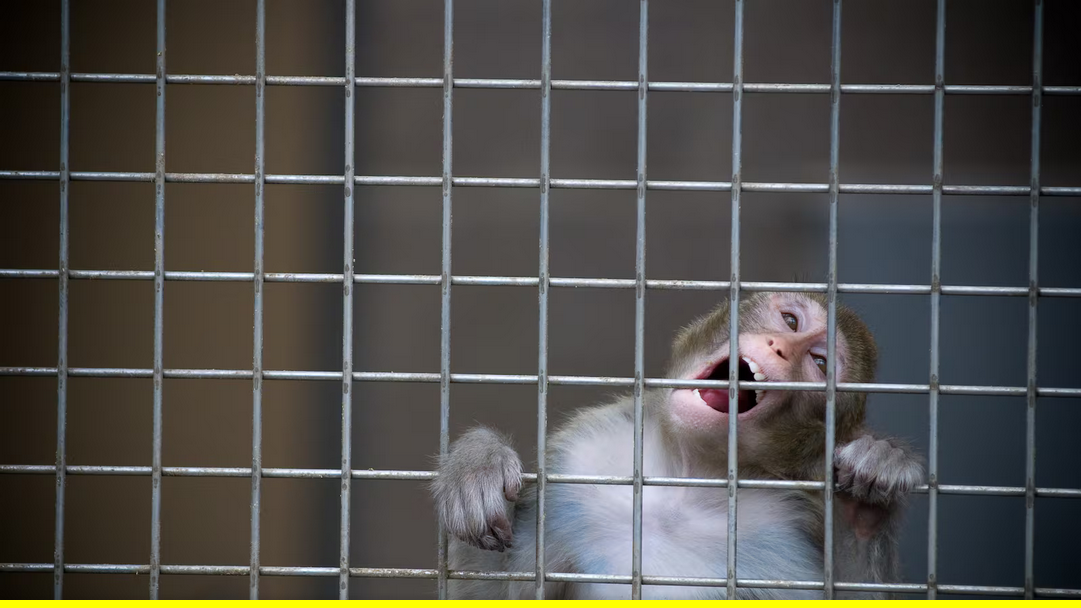
Regular readers are well aware of my long-standing commitment to animal welfare. And that absolutely includes the research being conducted on monkeys at the Oregon National Primate Research Center (ONPRC). I have been an advocate for more accountability, more transparency at a facility that continues to lead the nation in animal welfare violations, and more thought to how we transition to evolving modern, human-relevant, non-monkey science.

Last session, I authored a requirement in the Oregon Health & Science University (OHSU) budget to require ONPRC create a plan for the future. Should federal funding of animal research decline, the University was instructed to detail how it would take care of current employees, modernize research, and care for the 5,000 primates currently at the Center.

In response, the University issued a report detailing that it was currently losing more than $10 million a year on monkey research.

Two weeks later, the University leadership issued a statement. “We also recognize that science evolves. Advances in technology, changes in ethical standards, and shifting public expectations are shaping how research is conducted across the country.”

The OHSU board, on February 9, approved a plan to negotiate with the federal government over the future of the ONPRC. With the vote, OHSU formally launches a process that could—though by no means certainly will—culminate in the transformation of a nationally significant scientific research center into an animal sanctuary.

Mike Perrault photo at ONPRC.

The resolution opens a 180-day period in which OHSU president Dr. Shereef Elnahal and his team may negotiate with the National Institutes of Health (NIH) on an agreement that, among other things:

  • Continues all currently approved research.
  • Seeks input from faculty, unions, and the animal protection community.
  • Provides for investment in new areas of science like bio-fabrication and gene therapy.
  • Considers the protection of jobs at the ONPRC.
  • Provides for the financial and management support to “provide maintenance, operation, and administration of an animal sanctuary.”

Physicians Committee for Responsible Medicine president Neal Barnard said, “Physicians all over Oregon are delighted to see a transition away from monkey experiments toward better research methods that will help our patients.”

And Wayne Pacelle, president of the Center for a Humane Economy & Animal Wellness Action, opined:

“In Oregon, a once-unthinkable opportunity is emerging.

Oregon Health & Science University houses approximately 5,000 primates at the largest primate research center in the United States. Oregon state Rep. David Gomberg has been the key driver of the effort to transform the facility into a primate sanctuary. He’s won over Governor Tina Kotek and so many other thought leaders in the state.

And now the NIH is offering the prospect of funding the transformation of that facility from a house of pain to a safe zone for the animals. Imagine it: the nation’s largest primate lab becoming a refuge instead of a pipeline for invasive experiments.”

This is a complex and controversial issue. Reasonable people may disagree. But I hope we can all agree that financial accountability and constructive change are good things. I thank the OSHU President and Board for their courageous concern.

We can’t leave this report without noting that February 14 was the 167th anniversary of Oregon’s statehood. To celebrate, Representative Pam Marsh compiled a summary of notable, pioneering policy produced in our state over time.

On February 14, 1859, Oregon became the 33rd state in the U.S. Most years, we celebrate this milestone at the Capitol with cupcakes and cheer, but since it was on a Saturday this year, we are celebrating by acknowledging innovative legislation that makes Oregon unique.

Oregon began passing trailblazing policy soon after statehood, via both the legislature and voter initiatives. In 1902, voters approved the establishment of the initiative and referendum process in the Oregon Constitution. We can thank ballot initiatives for granting Oregon women the right to vote in 1912; codifying the Death with Dignity Act in 1994; and establishing Vote by Mail in 1998—just a few of the 377 ballot initiatives on the ballot since 1902. Oregon passed both Death with Dignity and Vote by Mail over a decade before any other state enacted similar legislation.

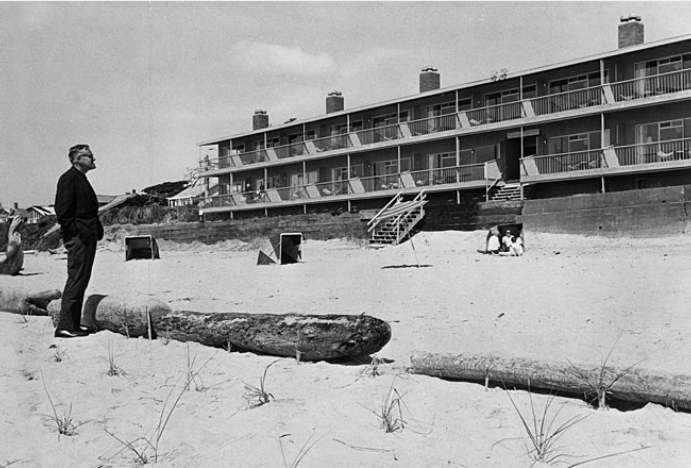
From the coast to the desert and the mountains and valleys in between, Oregonians have always treasured our extraordinary landscape. In 1913, Governor Oswald West established the state’s 362 miles of shorelines as a public highway. In 1967, the state legislature passed the Beach Bill, expanding public access to sixteen vertical feet above the low tide mark.

In 1969, the legislature approved SB 10, the first law in the nation to mandate local governments to zone all of the land within their jurisdictions, but the law was limited by lack of enforcement. Recognizing that the state’s precious farm and forestland remained vulnerable to development, in 1973, Governor Tom McCall called on the legislature to do better. SB 100 established a unique, statewide framework to protect farm and forest land and manage growth through mandatory Urban Growth Boundaries (UGBs), and created the Land Conservation and Development Commission to oversee compliance of local planning with statewide goals. This law protects Oregon’s farms, forests, and beautiful landscapes from development to this day.

Governor Tom McCall looks at “private property” in Cannon Beach in 1967. Courtesy Oregon Hist. Soc. Research Lib.

In 1971, Oregon passed the nation’s first Bottle Bill, encouraging recycling for single-use beverage containers through a deposit system, leading the way for nine other states to follow suit. Today, over 2 billion containers, around 88 percent of beverages sold, are returned through the BottleDrop system.

In 1987, in a bipartisan vote, Oregon led the nation again by becoming the first Sanctuary State, prohibiting state and local law enforcement from helping federal authorities with immigration enforcement. Since then, ten other states have passed similar laws. In 2018, voters affirmed the state’s sanctuary status by rejecting Measure 105 by a 2-1 vote, which would have repealed the law. Legislators strengthened the law in 2021.

Sometimes, as in the example above, innovation can be traced to a singular piece of legislation, while other times, it’s a reflection of work conducted over years. The establishment of the Oregon Health Plan in the early 1990’s, and subsequent efforts to focus health care dollars on wellness to reduce long-term medical costs, have positioned Oregon as a national leader on health care policy. Similarly, passage of housing initiatives and programs to promote density, infill, and expedited development has set a course for other states to emulate.

I encourage you to test your mastery of fun facts in this Oregon Trivia Quiz.

email: Rep.DavidGomberg@oregonlegislature.gov

phone: 503-986-1410

address: 900 Court St NE, H-480, Salem, OR, 97301

website: http://www.oregonlegislature.gov/gomberg

Slide Slide Slide Slide Slide Slide Slide Slide Subscribe Contribute

Ads

Featured Video

Tillamook Weather

Tides

Tillamook Church Search

Cloverdale Baptist Church
Nestucca Valley Presbyterian
Tillamook Ecumenical Service

Tillamook County Pioneer Podcast Series

Archives

  • Home
  • EULA Privacy Policy
  • Contact
  • Opt-out preferences
  • Search...
Share on facebook
Facebook
Share on pinterest
Pinterest
Share on twitter
Twitter
Share on linkedin
Linkedin
Catherine

Recent Posts

  • BUTCH'S BLOG: Writing on the Inside

    February 17, 2026
  • Compassion Clinic: Free Medical & Dental Care, Plus More Services, Resources at Tillamook Fairgrounds Feb. 22

    February 17, 2026
  • CALL TO ACTION: Tillamook County Commissioner Mary Faith Bell Letter to ODFW Opposing Petition that Impacts Dungeness Crab Fishing, Calls for Community to Testify

    February 17, 2026
©2026 Tillamook County Pioneer | Theme by SuperbThemes

Manage Cookie Consent
To provide the best experiences, we use technologies like cookies to store and/or access device information. Consenting to these technologies will allow us to process data such as browsing behavior or unique IDs on this site. Not consenting or withdrawing consent, may adversely affect certain features and functions.
Functional Always active
The technical storage or access is strictly necessary for the legitimate purpose of enabling the use of a specific service explicitly requested by the subscriber or user, or for the sole purpose of carrying out the transmission of a communication over an electronic communications network.
Preferences
The technical storage or access is necessary for the legitimate purpose of storing preferences that are not requested by the subscriber or user.
Statistics
The technical storage or access that is used exclusively for statistical purposes. The technical storage or access that is used exclusively for anonymous statistical purposes. Without a subpoena, voluntary compliance on the part of your Internet Service Provider, or additional records from a third party, information stored or retrieved for this purpose alone cannot usually be used to identify you.
Marketing
The technical storage or access is required to create user profiles to send advertising, or to track the user on a website or across several websites for similar marketing purposes.
  • Manage options
  • Manage services
  • Manage {vendor_count} vendors
  • Read more about these purposes
View preferences
  • {title}
  • {title}
  • {title}