Tillamook County Pioneer

News & People of Tillamook County. Every Day.

Menu
  • Home
  • Feature
    • Breaking News
    • Arts
    • Astrology
    • Business
    • Community
    • Employment
    • Event Stories
    • From the Pioneer
    • Government
    • Letters to the Editor
    • Non Profit News
    • Obituary
    • Public Safety
    • Podcast Interview Articles
    • Pioneer Pulse Podcast: Politics, Palette, and Planet – the Playlist
  • Guest Column
    • Perspectives
    • Don Backman Photos
    • Ardent Gourmet
    • Kitchen Maven
    • I’ve been thinking
    • Jim Heffernan
    • The Littoral Life
    • Neal Lemery
    • View From Here
    • Virginia Carrell Prowell
    • Words of Wisdom
    • Chuck McLaughlin – 1928 to 2025
  • Weather
  • Post Submission
  • Things to do
    • Calendar
    • Tillamook County Parks
    • Tillamook County Hikes
    • Whale Watching
    • Tillamook County Library
    • SOS Community Calendar
  • About
    • Contribute
    • Advertise
    • Subscribe
    • Opt-out preferences
  • Search...
Menu

NEWS UPDATE FROM STATE REPRESENTATIVE DAVID GOMBERG: A Final Detailed Review of the Last Session

Posted on March 30, 2026 by Editor

By Representative David Gomberg, House District 10

3/30/2026

Dear Neighbors and Friends,

The last two weeks have been a bit of a blur.

Town Halls in Benton and then Lincoln Counties. Meeting with local Girl Scouts to explain government and the legislature. A presentation to the Newport Chamber of Commerce. Fundraising as auctioneer for first the Community College scholarship gala, and then the Newport Symphony. Two recorded podcasts. Addressing the Waldport Chamber for breakfast. And speaking out on ICE at the Coast during the No Kings protests in both Lincoln City and Newport.

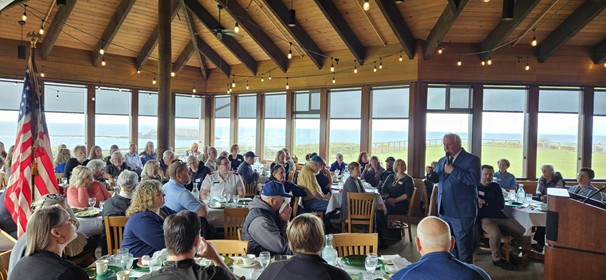
At the Newport Chamber of Commerce lunch.

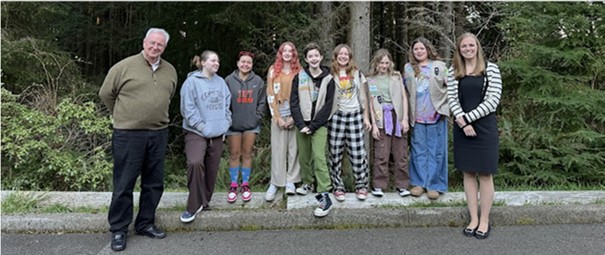
Discussing the economics of Girl Scout cookie sales.

At the Newport Symphony auction, I sold a photo of Bobby Kennedy visiting Oregon in May 1968.

As I mentioned recently, my wonderful wife Susan says that at least during legislative session, she knows where I will be from day-to-day.

Most of my public appearances have focused on a review of the 2026 legislative session. Here are three links if you would like to listen in, ten minutes, thirty minutes, or ninety minutes respectively.

  • Double R Show podcast
  • Coffee with Kiera video
  • Community College Town Hall video
I’ll spend some time in this newsletter to again review the session in detail. There is a lot to see here and I suggest you skim for subjects you care most about. And then in coming weeks we’ll move on to other matters.
We approached the session with three major goals: to make Oregon a more affordable place to live, with good jobs and thriving businesses; to insulate Oregonians from overreaches of the Trump administration; and to re-balance our state budget after the federal budget bill (HR 1) significantly cut the resources we have available to us as a state.

In just five weeks, we passed legislation that delivered on every single one of those goals.

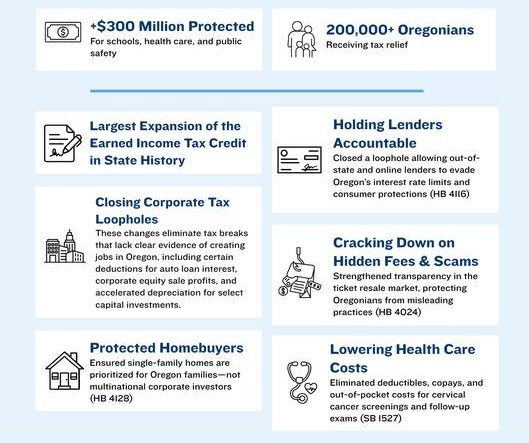
Addressing Affordability: Affordability continues to be one of the top concerns I hear about from voters—and this session, we made real progress to address those concerns. We expanded the Earned Income Tax Credit to put more money in the pockets of working Oregonians. We also worked to protect home buyers, lower health care costs, and strengthen consumer protections. There’s more work to do, but this is real progress—see the links for more information about each of these bills.

  • Expanded the Earned Income Tax Credit for over 200,000 households. (SB 1507)
  • Prioritized families over Wall Street investors in the housing market. (HB 4128)
  • Closed predatory lending loopholes exploited by out-of-state lenders. (HB 4116)
  • Increased transparency in the ticket resale market. (HB 4024)
  • Eliminated out-of-pocket costs for cervical cancer screenings. (SB 1527)
Growing our Economy and Creating Good-Paying Jobs: While we took action on affordability and on our short-term budget challenges, we know that growing our economy and creating new jobs is key to our state’s prosperity in the long term. This session, we made economic development an intentional focus—streamlining permitting processes to help attract private investments, supporting small business recovery, creating a new Jobs Tax Credit to promote job creation across the state, and building on Oregon’s distinctive economic advantages in key industries.

  • Created a new $1,000-per-job tax credit for businesses that increase net Oregon employment. (SB 1507)
  • Allocated funding for a new grant program for small businesses impacted by increased costs due to federal tariffs. (HB 4061)
  • Invested in “Industrial Symbiosis” pilot programs, which can turn one facility’s waste stream into another’s resource and help build more sustainable industrial ecosystems. (HB 4086)
  • Directed Business Oregon to evaluate and consolidate its 90+ grant, loan, and tax incentive programs to reduce administrative burdens and improve efficiency. (HB 4062)
  • Created a corporate income tax credit (up to $1 million annually for three years) for newly chartered Oregon banks to encourage new community banking institutions, especially in underserved areas. (HB 4052)
  • Established a Joint Permitting Council to speed up regulatory approval for large capital projects ($25M–$100M+ depending on location), coordinate agency timelines, and increase accountability. (HB 4084)
  • Improved transparency, efficiency, and public input in state permitting and rulemaking to clearly explain why permits are denied and how applicants can appeal. (HB 4020 and HB 4021)
  • Passed legislation to speed up environmental permit reviews at the Department of Environmental Quality, while maintaining public safeguards. (HB 4102)
  • Established clear rules allowing recreation providers to use liability waivers for ordinary negligence in inherently risky activities, while preserving liability for gross negligence, safety failures, and other prohibited areas. (SB 1517)
  • Supported family farms and rural communities by allowing farm stores to sell locally produced products, prepared foods, and beverages. The bill also allows agritourism activities and on-site kitchens licensed to serve farm-to-table meals. (HB 4153)
Responding to Federal Overreach and Protecting Oregonians’ Civil Rights: In the months leading up to the short session, it was clear that Oregon would need to take action to respond to everything from increasingly violent immigration enforcement tactics, to clean energy rollbacks, to attacks on Planned Parenthood. Oregon has long been a leader on immigrant rights, and this session, we stepped up to protect our immigrant communities. We strengthened civil rights protections, improved transparency for law enforcement in our state, protected personal data, and ensured people can seek health care without fear.

  • Strengthened anti-discrimination protections so that immigrants can work, access courts, and interact with law enforcement without fear. (HB 4111)
  • Established clear protocols for immigration enforcement on school grounds. (HB 4079)
  • Strengthened consumer protections by preventing the sale or sharing of personal data for immigration enforcement purposes. (SB 1587)
  • Ensured Oregonians can seek medical treatment without fear of immigration enforcement. (SB 1570)
  • Prevented schools from discriminatory admissions processes, including on the basis of immigration status. (SB 1538)
  • Required law enforcement—including federal immigration agents—to clearly display their agency and badge number and restricted when face coverings can be used. (HB 4138)
  • Created a path to legal action when federal agents violate our civil rights. (HB 4114)
  • Protected state funding for Planned Parenthood so Oregonians can continue to access basic health care. (HB 4127)
  • Prevented the criminalization of health care providers and protected access to health data. (HB 4088)
  • Required health insurers to cover vaccinations with no out-of-pocket costs for those who choose to immunize and authorizes the state to issue recommendations for covered vaccines. (SB 1598)
  • Safeguarded public lands in Oregon that are managed by the federal government from being sold to the highest bidder. (SB 1590)
  • Expedited the siting process for renewable energy projects, so they can draw down the expiring federal tax credits as soon as possible in advance of the deadlines the Trump administration has imposed. (HB 4031)
  • Updated Oregon’s child labor laws so that state standards for minors’ working hours cannot be weakened by shifting federal rules. (HB 4013)
  • Codified federal McKinney-Vento practices in state statute to ensure homeless students can continue learning and accessing the resources they need to succeed, regardless of whether there are federal rollbacks. (HB 4149)
Balancing our State Budget: As I have explained before, Oregon’s tax code is automatically tied to the federal code. Federal tax changes and spending reductions hit our state budget—reducing our available resources for the 2025-27 budget cycle by $900 million without any input from Oregonians or the legislature.

Unlike the federal government which can run a deficit, the State of Oregon is required to balance our budget each biennium. To close the deficit created by the Trump budget bill, we knew we would need to take a balanced approach—both tightening agency budgets and closing some of the new tax loopholes, in order protect the essential services that Oregonians depend on.

Part of our plan to balance the budget included passing SB 1507, which will cut taxes for more than 200,000 working households, give a $25 million tax credit for businesses that create good-paying jobs in Oregon, and close some tax loopholes that mostly benefit the wealthy and corporations. Passing SB 1507 allowed us to adopt a budget that protects our schools, as well as the key programs and services that Oregonians depend on. The remainder of our budget gap was closed by leaving some state agency positions unfilled and reducing or reallocating certain operational costs.

Our work to balance the 2025-27 budget in a responsible manner means that key areas like healthcare, education, childcare, and public safety will avoid cuts that would have impacted Oregon’s working families. This OPB article has more information about the legislature’s budget work this session.

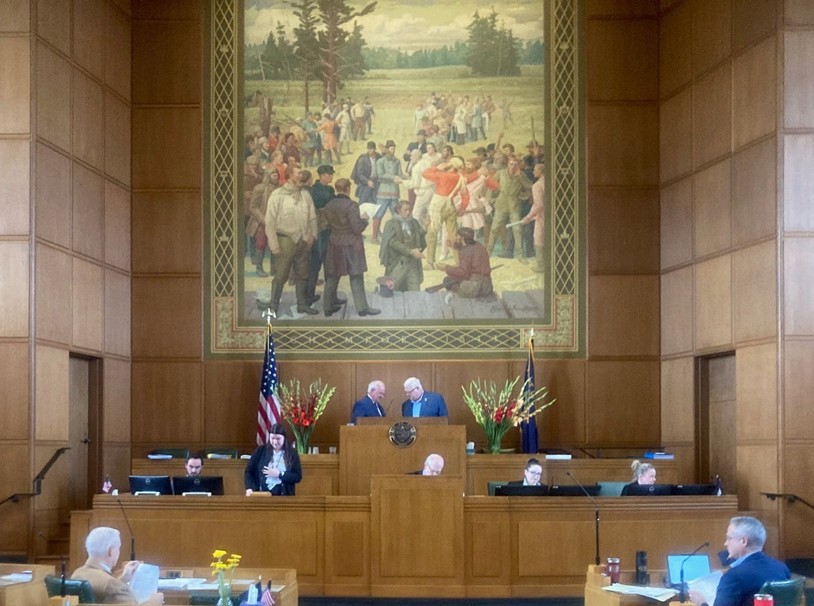
Most days I presided over session of the Oregon House.

Continuing to tackle Oregon’s Housing Crisis: Housing affordability and availability remain front and center in Oregon. While our work is far from over, several bipartisan housing bills advanced this session to make meaningful progress:

  • One-time UGB expansion fixes. SB 1537 (2024) created a one-time opportunity for cities to expand their UGB for housing. We made several important fixes to ensure this limited expansion will work better for more cities who want to use it. (HB 4035)
  • Housing Omnibus. The omnibus housing bill this session is really about technical and language fixes for issues and programs passed in previous legislative sessions such as revolving loan funds and city and county building department review processes. (HB 4037)
  • Housing opportunities for those 55 years and older. Authorizes a one-time urban growth boundary (UGB) expansion using the same process created in SB 1537 (2024) for up to 100 acres for larger cities or 50 acres for smaller ones to develop housing prioritized for Oregonians 55 and older. (HB 4082)
  • Allowing a change in smoking policies for rentals. We passed new legislation for landlords to prohibit smoking in residential rentals, protecting tenants’ health and safety. (HB 4120)
Wins for Rural and Coastal Oregon: Supporting rural and coastal communities and their economy requires extra effort and bi-partisan cooperation.

  • Protecting Coastal Jobs and Ocean Science: While dollars were tight this short session, it was imperative that dollars secured in previous budgets remained secure and were delivered where needed most. I worked with agencies and colleagues to make sure dollars were not cut from commitments to our Marine Reserves and Maritime Workforce. I also passed legislation to expand funding options for the Oregon Ocean Science Trust. (HB 4097)
  • More funding for county fairgrounds: I, and other rural legislators, have been pushing for years the necessity of our rural fairgrounds. These grounds are the heart of rural Oregon. The place where we gather for fairs, have important community events and stage emergency assistance in times of trouble. At the start of our next budget cycle (July 1, 2027) our county fairgrounds will start receiving a full 1% of lottery funds. These dollars will be much needed additional resources for repairs, upgrades, and more.
  • Farm Stands: This bi-partisan legislation helps preserve family farm stores, like your favorite pumpkin patch and tulip farm. It creates a Farm Store permit to expand opportunities to sell local products, host seasonal agritourism events, such as corn mazes and flower festivals, and welcome families and educational opportunities for others to experience life on the farm. It also has protections for farmland and provides counties clear, enforceable language for rules around important issues like public health and safety. (HB 4153-A)
  • Horse racing in Oregon: Rural legislators helped secure $5 million for Crook, Harney, Josephine, Tillamook, and Union counties to ensure horse racing operations do not close and are well regulated by the State. The alternative is informal racing which is more dangerous for the horses and the riders.
  • Protecting Oregon Agriculture: Over $2 million has been allocated to fight Japanese beetle and protect nursery market export access for Oregon nurseries. Nurseries are a top agriculture industry for Oregon; and without this program, many nurseries would have lost access to the import/export markets. These dollars will help contain Japanese beetle where it is currently identified.
  • Rebuilding Homes After Disasters: It may not surprise you to learn when a home is destroyed in a fire or other natural disaster, there is significant government red tape to prevent rebuilding. SB 1561 fixes many of those issues. There is more to be done when we lose homes and communities to devastating wildfires, but this bill is a step in the right direction. (SB 1561)
  • Tax relief for on-farm processing operations: This bill will allow farmers to obtain special assessment for land underneath buildings being used for preparation or processing of farm products. HB 4130 resolves decades old confusion about whether a farmer is “preparing” farm products for market or “processing” products into value-added goods. Additionally, the bill also grants farmers who are processing their products property tax relief if at least 25% of the goods they are processing come from their own farm. HB 4130 is another win for agriculture in Oregon as it allows farmers to vertically integrate without risk of a crushing tax bill. (HB 4130)
  • Key budget items protected: During the early part of the budget process, FFA, outdoor school programs, and extension programs were all at risk of being cut. Thanks to many of you, Legislators received an overwhelming response to these proposed cuts in the form of emails and phone calls. Your advocacy was the key to protecting this funding!
  • Wildfire and Rural Infrastructure: While dollars were tight this short session, it is imperative dollars secured in previous budgets remained secure and were delivered where needed most. I worked with agencies and colleagues to make sure dollars were not cut from programs just getting started, additional dollars were included in a few areas to support previous efforts and transparency highlighted for these dollars.

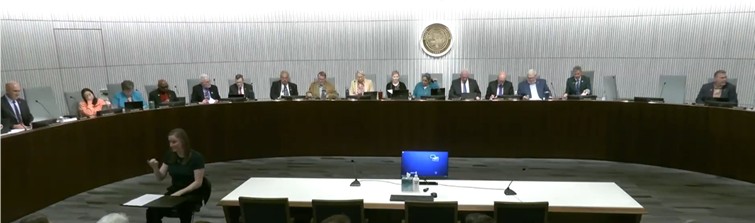
Ways and Means became the forum where budgets were reduced and key programs were preserved. I serve as vice-chair (just to the right of the state seal).

Other Noteworthy Bills: This busy session also produced legislation dealing with lodging taxes, wildlife preservation, AI Chatbots, behavioral health and school attendance.

  • 1.25% for Wildlife: Oregon’s diverse wildlife populations face threats from habitat loss, invasive species, poaching, and climate change, yet the state’s wildlife conservation programs remain chronically underfunded. HB 4134 increases Oregon’s state transient lodging tax (a tax paid for by people staying in hotels or other short-term lodging) from 1.5% to 2.75%, dedicating additional resources to the Recovering Oregon’s Wildlife Fund Subaccount. The fund supports multiple conservation priorities, including the State Wildlife Action Plan, species recovery and management, wildlife stewardship, invasive species control, poaching prevention, and the Oregon Conservation Corps. This bipartisan bill was a major priority for environmental organizations this session and was championed by Rep. Ken Helm (D) and Rep. Mark Owens (R). (HB 4134)
  • Expediting Credentialing for Behavioral Health Workers: To help reduce administrative barriers for behavioral health workers, HB 4083 directs the Oregon Health Authority to establish a uniform electronic credentialing process for behavioral health providers. The bill also prevents coordinated care organizations from adding credentialing requirements and allows certain cross-license supervision among provider types. (HB 4083)
  • Protecting Minors from AI Companion Chatbots: As technology evolves, we must build guardrails that help keep people safe–especially children. SB 1546 requires AI companion platform operators to disclose to users when they are interacting with AI, develop protocols to detect and respond to users experiencing thoughts of self-harm by referring them to crisis services, and prohibit manipulation and inappropriate content for minors. (SB 1546)
  • Balancing Tourism Promotion with Community Resilience Funding: Local governments in Oregon are allowed to impose their own transient lodging tax (TLT)—the majority of the funds generated from those local TLTs have historically been spent on tourism promotion. At the same time, rural communities that rely on tourism increasingly need these revenues to fund essential services. HB 4148 allows local governments to use a greater share of local transient lodging tax revenues to fund services, with transparency requirements and a future study to evaluate how the tax structure serves both tourism and community needs. (HB 4148)
  • Improving School Attendance Data and Transparency: Regular attendance at school is a key predictor of student success—and yet in the 2024-2025 school year, 34% of Oregon students were chronically absent. HB 4154 requires the Oregon Department of Education to publish quarterly attendance data, beginning in the 2026-2027 school year, providing communities with more frequent visibility into school attendance trends. (HB 4154)
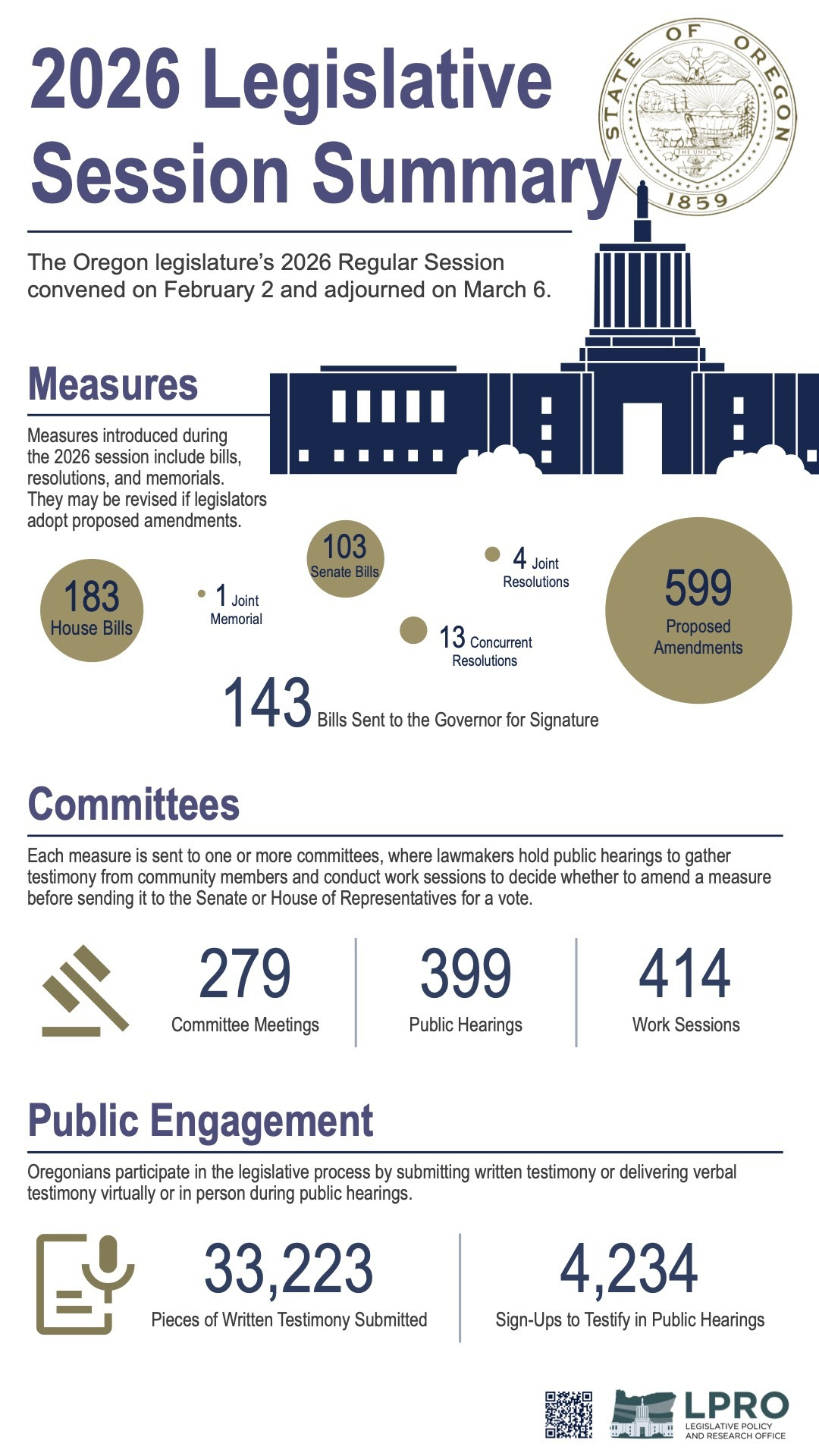
Over the course of the session we received over 33,000 pieces of written testimony on proposed bills and heard from over 4,000 witnesses. In the end, 143 bills were passed and sent to the Governor.
I’ve received several questions from folks a bit confused about the April 1 cover story in Oregon Coast Today this week that detailed creative plans for balancing the budget at the Oregon Department of Transportation.

In one case we renumbered milepost markers along highway 101 so that some sections “disappeared” even though no asphalt was removed. At least on paper, the Department would have fewer miles to maintain.

In another case, we offered to sell advertising in construction zones. Pilot vehicles at the lane closures on Cascade Head that now say “Follow Me” could be changed to read “Follow Me to Tillamook County!”. We also reported that Phil Knight was offering to change construction cones from bright orange to green and decorate them with a NIKE “swoosh”.

Does anyone remember April Fools?

Yes, we need to reduce the ODOT budget. But the notion that I’m out there cutting sections from the highway is… shear nonsense…

Read the entire whimsical story here.

To contact Representative Gomberg: rep.davidgomberg@oregonlegislature.gov

Slide Slide Slide Slide Slide Slide Slide Slide Subscribe Contribute

Ads

Featured Video

Tillamook Weather

Tides

Tillamook Church Search

Cloverdale Baptist Church
Nestucca Valley Presbyterian
Tillamook Ecumenical Service

Tillamook County Pioneer Podcast Series

Archives

  • Home
  • EULA Privacy Policy
  • Contact
  • Opt-out preferences
  • Search...
Share on facebook
Facebook
Share on pinterest
Pinterest
Share on twitter
Twitter
Share on linkedin
Linkedin
Catherine

Recent Posts

  • NEWS UPDATE FROM STATE REPRESENTATIVE DAVID GOMBERG: A Final Detailed Review of the Last Session

    March 30, 2026
  • GORDON'S WEEKLY WEATHER UPDATE 3/30/26: Rain Returns Wednesday; Clearing Friday, Dry for Easter Weekend

    March 30, 2026
  • BUTCH'S BLOG: Yes, It Matters

    March 29, 2026
©2026 Tillamook County Pioneer | Theme by SuperbThemes

Manage Cookie Consent
To provide the best experiences, we use technologies like cookies to store and/or access device information. Consenting to these technologies will allow us to process data such as browsing behavior or unique IDs on this site. Not consenting or withdrawing consent, may adversely affect certain features and functions.
Functional Always active
The technical storage or access is strictly necessary for the legitimate purpose of enabling the use of a specific service explicitly requested by the subscriber or user, or for the sole purpose of carrying out the transmission of a communication over an electronic communications network.
Preferences
The technical storage or access is necessary for the legitimate purpose of storing preferences that are not requested by the subscriber or user.
Statistics
The technical storage or access that is used exclusively for statistical purposes. The technical storage or access that is used exclusively for anonymous statistical purposes. Without a subpoena, voluntary compliance on the part of your Internet Service Provider, or additional records from a third party, information stored or retrieved for this purpose alone cannot usually be used to identify you.
Marketing
The technical storage or access is required to create user profiles to send advertising, or to track the user on a website or across several websites for similar marketing purposes.
  • Manage options
  • Manage services
  • Manage {vendor_count} vendors
  • Read more about these purposes
View preferences
  • {title}
  • {title}
  • {title}