Tillamook County Pioneer

News & People of Tillamook County. Every Day.

Menu
  • Home
  • Feature
    • Breaking News
    • Arts
    • Astrology
    • Business
    • Community
    • Employment
    • Event Stories
    • From the Pioneer
    • Government
    • Letters to the Editor
    • Non Profit News
    • Obituary
    • Public Safety
    • Podcast Interview Articles
    • Pioneer Pulse Podcast: Politics, Palette, and Planet – the Playlist
  • Guest Column
    • Perspectives
    • Don Backman Photos
    • Ardent Gourmet
    • Kitchen Maven
    • I’ve been thinking
    • Jim Heffernan
    • The Littoral Life
    • Neal Lemery
    • View From Here
    • Virginia Carrell Prowell
    • Words of Wisdom
    • Chuck McLaughlin – 1928 to 2025
  • Weather
  • Post Submission
  • Things to do
    • Calendar
    • Tillamook County Parks
    • Tillamook County Hikes
    • Whale Watching
    • Tillamook County Library
    • SOS Community Calendar
  • About
    • Contribute
    • Advertise
    • Subscribe
    • Opt-out preferences
  • Search...
Menu

NEWS UPDATE FROM STATE REPRESENTATIVE DAVID GOMBERG: Blink and You’ll Miss It – Short Session is Underway

Posted on February 3, 2026February 3, 2026 by Editor

By Representative David Gomberg, House District 10

2/2/2026

Dear Friends and Neighbors,

The 2026 legislative session is now underway, which means I’m trading long days on the road in our sprawling, beautiful district to long days in Salem reviewing bills and budgets.

This year, your legislature is convening for what is called a “short” session, as the Legislature must conclude its business within a strict, 35-day timeline set in the Oregon Constitution. This means deadlines sneak up quickly, and the margin for error is slim. Consequently, legislators will be working at a breakneck pace to complete the work our districts elected us to do before we adjourn in early March.


The short session will conclude before spring arrives.

Each lawmaker is provided the opportunity to introduce just two bills during a “short” session. And in between our work shepherding those bills toward the finish line, we’ll also be tasked with reconciling our state’s two-year budget for the 2025-2027 biennium.

Last week, I provided a thorough deep-dive into the current work I’ve been doing to rebalance our transportation department budget, but the work certainly doesn’t stop there.

While we await our latest revenue forecast this week that will serve as the basis for looming budgeting decisions, current estimates suggest we have a $900 million hole (general funds and transportation) to fill, largely because of federal actions.

As far as who benefits from the Trump cuts, according to the nonpartisan Congressional Budget Office, overwhelmingly the richest Americans will pay less, while our neighbors who rely on Medicaid or SNAP are going to be harmed.

If you’ve been following along with my newsletter, this shouldn’t be a surprise – but it’s nonetheless still shocking, and it will mean hard choices. Unlike the federal government, the State of Oregon has a constitutional obligation to maintain a balanced budget.

This week, the Joint Committee on Ways and Means will hold a public hearing to receive feedback on proposed budget reduction options to fill this $900 million gap, and we want to hear from you!

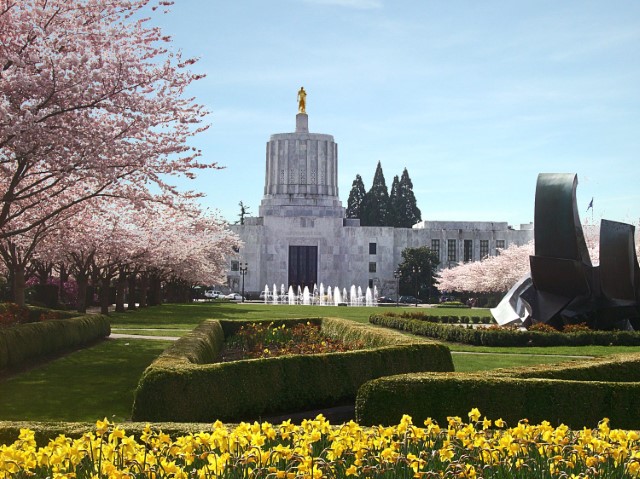
The public hearing is scheduled for February 3 from 5 p.m. to 8 p.m. in Hearing Room 40 in the Oregon State Capitol building. Members of the public can attend the hearing in-person or tune in virtually through the Oregon Legislative Information System.

Individuals interested in providing testimony on possible budget reductions can register to speak via the committee’s webpage on OLIS. Written testimony can also be submitted and will be accepted for up to 48 hours following the hearing.

To learn more from both Senator Anderson and me on what to expect this session, check out our interviews on the Double R Show from last week.

So if each legislator gets two bills this session, what am I bringing to the table in Salem?

My first bill, HB 4097, expands on the work I’ve been doing with the Oregon Ocean Science Trust (OOST). Established by the legislature in 2013, OOST serves to promote and support ocean science research and monitoring by securing private and federal dollars for grantmaking opportunities.

In other words, they find money, evaluate research proposals, and provide grants to researchers working at the cutting-edge of ocean and marine science.

Senator Anderson and I both serve as non-voting members of OOST, and over the years, I’ve seen firsthand the real impacts of the work they fund. From assessments of our Marine Reserves program to research on ocean acidification and hypoxia, OOST is helping the scientific community pioneer solutions to some of our most challenging ocean problems.

HB 4097 is a simple, bipartisan bill that authorizes OOST to form and maintain a 501(c)(3) non-profit within its organization, allowing them to pursue both federal and private grant opportunities that prefer or require such an organization to receive those dollars.

This bill is especially important in our current budget environment, as it provides more flexibility for OOST to compete for private funds they wouldn’t otherwise qualify for. Ultimately, this means more opportunities for advancing ocean science in Oregon when state dollars are in short supply!

My second bill is HB 4095 – relating to Oregon’s semi-independent state agencies. I’m a big proponent of oversight and accountability at our state agencies, and lately, I’ve been working to find better ways to ensure every state agency budget is given a thoughtful and thorough review to ensure public dollars are being used efficiently and effectively.

In Oregon, there are a little over a dozen state agencies that operate with “semi-independent” status, which means they receive certain exemptions from regulatory statutes that every other state agency must follow.

Among these regulatory statutes is the requirement that each state agency’s budget be put through a complete fiscal review by the legislature and Governor’s office before a final vote of approval by the House, Senate, and Governor. These semi-independent agencies have historically been exempt from this process.

Most of these semi-independent agencies are small licensing boards – the Board of Geologist Examiners, the Board of Optometry, or the Board of Physical Therapy. A few are related to marketing and supporting industries that help bolster Oregon’s economy – Travel Oregon (tourism promotion), the Oregon Wine Board (wine industry promotion), and the Oregon Film & Video Office (film industry promotion).

Another agency you may be familiar with is the Oregon Travel Information Council (OTIC), which maintains rest areas and Oregon’s “blue sign” program. If you’ve ever wondered where those signs along our highways advertising which businesses await at the next exit come from, they are managed by the OTIC through fees businesses pay to have their location featured.

One of OTIC’s helpful “blue signs”.

All of these agencies have budgets that are currently reviewed and approved by their Governor-appointed, Senate-approved board members in public meetings. HB 4095 proposes that these agencies must receive budget review and approval by the legislature and Governor as well, just like every other state agency.

Interestingly, these agencies are also free to open their own bank accounts rather than place state monies in state accounts.

These small semi-independent agencies certainly do important work. And for the most part, these agencies are funded by fees levied on the industries they work with, not taxpayer dollars. But nonetheless, it’s important they receive the same level of oversight and accountability that all other public agencies have. Whether an agency’s funding comes from business licensing fees, taxes on hotel stays, or fees on grape harvests, I believe it’s imperative that officials like me who were elected to ensure our public agencies are being good stewards of their funds have the opportunity to do so.

These are the two bills I have authored. But there are other bills I have agreed to sponsor that were written by another legislator. Here are a few examples:

  • HB 4002 limits to 25 the number of measures that a member may introduce for a regular session of the Legislative Assembly.
  • HB 4078 provides some tax relief for businesses awarded compensation as a result of wildfires.
  • HB 4121 creates an updated statewide emergency preparedness office and authorities to coordinate emergency management.
  • HJM 201 urges Congress to extend federal tax cuts for wildfire victims.
  • SB 1553 prevents utilities from charging rate payers for settlement costs or expenses if a court or jury finds that a wildfire resulted from the negligence.
  • HB 4048 expands the rural health care income tax credit to include pharmacist services performed in rural communities.
  • HB 4138 requires law enforcement agencies to enact policies to provide identifying information on law enforcement uniforms.
  • SB 1587 prohibits private data brokers from selling Oregonians’ personal information to law enforcement without a warrant
  • SB 1581 requires school districts to offer lunch and breakfast to students at no charge.
  • SB 1593 releases recreation business from some types of liability claims.
I’ve received a number of questions from constituents over the past few weeks asking if there are any updates on the proposed ICE detention facility in Newport. It has been quiet on that front for some time. The federal Department of Homeland Security (DHS) has made no contact with our state agencies, and inquiries from federal contractors to local businesses that provide services like water and sewage hauling have seemed to slow.

However, a court filing by DHS last week has shed some new light on the situation.


There are currently a handful of lawsuits making their way through the federal courts. Lincoln County, the Newport Fishermen’s Wives, and the State of Oregon filed suit against DHS late last year when the federal agency had quietly and abruptly relocated Newport’s Coast Guard rescue helicopter to North Bend ahead of crabbing season. That lawsuit has resulted in a temporary order to return that helicopter to Newport on the grounds that DHS may have violated federal law when moving that resource with no notification to Congress or the local community. If you’ve been keeping up with my newsletter over the past few months, you know just how important that helicopter is for the safety of our fishing fleet and tourists on the water or on the trails.

A US Coast Guard rescue helicopter. KGW Photo.

Now, as part of that lawsuit, DHS has finally admitted in court that they had intended to convert the Newport Coast Guard Air Facility into a “temporary holding/processing facility” for ICE until those plans were interrupted by efforts to keep our helicopter stationed in Newport.

The biggest news of this filing by DHS is that they have admitted there are no current plans to build an ICE facility in Newport between now and May 1 of this year.

What does this mean?

Evidence has been clear that ICE wants to turn Newport into the epicenter of its Oregon detention and deportation efforts. But when asked a straight question, DHS refused to give us a straight answer. They tried to sneak into Lincoln County, and we pushed back. This newest declaration makes clear that rather than sneak away, they want to keep their options open. But if they think they can quietly set up shop here, they are in for a very rude awakening.

Some might read this and disagree with my stance. I’ve certainly received a fair share of emails and phone calls expressing frustration and disappointment with what they perceive as a knee-jerk reaction against the Trump Administration.

But I want to make very clear why I am opposed to this facility in Newport. DHS and ICE have not demonstrated an ounce of transparency or accountability throughout this situation. They have not communicated openly with state, local, or federal elected officials, and have refused to answer a single question. They have operated in the shadows to fast-track this facility, and in doing so, put at risk lives and safety of our community by attempting to jeopardize our Coast Guard resources in favor of their mass deportation efforts.

I’ve said time and time again, DHS seems more interested in detaining lives here than saving them.

The Newport Coast Guard Air Facility. OPB Photo.

I believe in transparent and honest government. It’s why I take the time to author a newsletter every week to keep you informed on my candid thoughts. It’s why I respond to every constituent who emails my office each week.

Government needs to be responsive to the people. If there is just one essential quality a public official must embody without fail, it’s open, honest communication. When the Obama Administration attempted to quietly remove our rescue helicopter in 2014, I pushed back. When the Biden Administration attempted to fast-track offshore wind turbines off our Oregon Coast without proper consultation of our fishing fleet and tribal nations, I pushed back. And now when the Trump Administration tries to circumvent state and federal laws to fast-track an ICE detention facility in our community, I am pushing back.

Reasonable people can disagree on our nation’s immigration policies. And of course, discussion on the shock and awe campaign we’re seeing in Minnesota is worth having.

We should all agree that good government starts with community engagement, good-faith discussion, and transparency. We should all be, at the very least, skeptical and cautious of this project if we value those qualities. We can disagree about immigration. We can’t disagree about the responsibility government has to be open and honest with the people it serves.

The legislative session isn’t just for legislators! Check out the legislature’s Citizen Engagement page to learn more about the legislative process and how you can be a part of it.

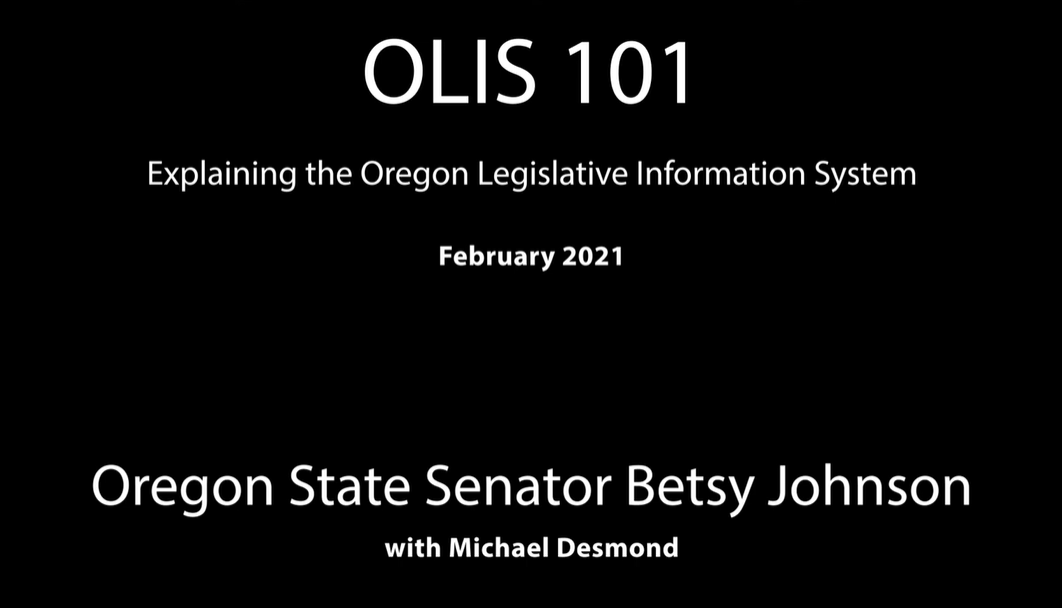
As well, take a look at this wonderful tutorial former Senator Betsy Johnson put together on how to navigate the Oregon Legislative Information System (OLIS) and what all that jargon means when looking at a bill’s webpage. With OLIS, you can track committees and bills, what I’m sponsoring, and see what I’m doing each day of session. You can even stream my committee hearings live!

Click here to watch Senator Johnson’s OLIS tutorial.

This session, I serve as Co-Vice Chair of the Joint Committee on Ways and Means (the budget committee), and Co-Chair of the Transportation and Economic Development Subcommittee of Ways and Means (the budget committee on all things transportation, economic development, and more).

I also serve on the House Commerce and Consumer Protection Committee, the Joint Legislative Audits Committee (oversight of executive branch agencies), and the General Government Subcommittee of Ways and Means – another budget committee that notably handles the budgets of our statewide elected offices, like the Governor and Secretary of State.

Needless to say, I spend a lot of time in the Capitol working on our state’s budget, with three of my five regular committee meetings dedicated to that work.

I serve on a couple of other committees as well that meet on an ad-hoc basis, typically to handle matters related to internal legislative policies. Those are the Joint Legislative Administration Committee and the Joint Legislative Policy and Research Committee.

And finally, I have been elected by my colleagues to serve as Speaker Pro Tempore. That means I frequently preside over meetings of the House. Other members can sit at their desks and, when things become tedious, can catch up on mail, write speeches, or even peruse Facebook. I stand up front and must follow each word, every motion, and keep things running smoothly and fairly.

The filing season for 2025 Tax Returns officially opened on January 26th! Since this is a “kicker year,” the Oregon Department of Revenue expects more people to file returns sooner and have an interest in their refund status. Here’s a bit of info to get you started.

The kicker is a refundable credit that will either increase a taxpayer’s Oregon state income tax refund or decrease the amount of state taxes they owe. It is not sent to taxpayers separately as a check. Taxpayers may use the “What’s My Kicker? Calculator” to determine their credit.

Only taxpayers who filed a return in tax year 2024 and 2025 can receive a kicker. The credit is a percentage of Oregon personal income tax liability for the 2024 tax year.

On average, taxpayers who e-file their returns and request their refund via direct deposit receive their refund within two weeks. E-filed returns will be processed in the order they are received, with the first refunds expected to be issued February 15. For paper-filed returns, refunds will not start being issued until early April.

Due to the delayed receipt of tax forms and information from the IRS in late 2025, processing of paper-filed Oregon personal income tax returns will be delayed until late March, a process that has historically begun in February.

The delay in paper return processing means the department won’t be able to tell taxpayers who file paper returns that their return has been received until paper return processing starts at the end of March. Also, information on paper-filed returns won’t be available in the “Where’s My Refund?” tool until that time.

Oregon residents who normally mail their tax return to the department should consider using Direct File Oregon, a free filing option available through Revenue Online, or other online tax preparation software, to receive their refund—and their kicker—sooner.

Free guided tax preparation is available from several companies for taxpayers who meet income requirements. Using links from the department’s website ensures that both taxpayers’ federal and state returns will be filed for free.

All electronic filing software options approved for filing Oregon personal income tax returns can be found on the Electronic Filing page of the agency’s website.

Free tax preparation services are available for low- to moderate-income taxpayers through AARP and CASH Oregon. United Way also offers free tax help through its MyFreeTaxes program. Visit the Department of Revenue website to take advantage of the software and free offers, and get more information about free tax preparation services.

As the legislative session unfolds, please don’t be a stranger! Email is always the best way to get a prompt answer from me, and I’m also happy to see constituents in-person throughout the session as well. If you email me in advance of your visit to the Capitol, I will be sure to get you on my calendar!

The session is going to be moving fast, so I’ll be sure to keep you updated with what I know each week.

Stay engaged, stay safe, and have a wonderful rest of the week!

email: Rep.DavidGomberg@oregonlegislature.gov

phone: 503-986-1410

address: 900 Court St NE, H-480, Salem, OR, 97301

website: http://www.oregonlegislature.gov/gomberg

Slide Slide Slide Slide Slide Slide Slide Slide Subscribe Contribute

Ads

Featured Video

Tillamook Weather

Tides

Tillamook Church Search

Cloverdale Baptist Church
Nestucca Valley Presbyterian
Tillamook Ecumenical Service

Tillamook County Pioneer Podcast Series

Archives

  • Home
  • EULA Privacy Policy
  • Contact
  • Opt-out preferences
  • Search...
Share on facebook
Facebook
Share on pinterest
Pinterest
Share on twitter
Twitter
Share on linkedin
Linkedin
Catherine

Recent Posts

  • City of Rockaway Beach Monthly Update February 2, 2026

    February 3, 2026
  • NEWS UPDATE FROM STATE REPRESENTATIVE DAVID GOMBERG: Blink and You'll Miss It - Short Session is Underway

    February 3, 2026
  • MENTAL HEALTH MONDAY: The Dead Man’s Float

    February 2, 2026
©2026 Tillamook County Pioneer | Theme by SuperbThemes

Manage Cookie Consent
To provide the best experiences, we use technologies like cookies to store and/or access device information. Consenting to these technologies will allow us to process data such as browsing behavior or unique IDs on this site. Not consenting or withdrawing consent, may adversely affect certain features and functions.
Functional Always active
The technical storage or access is strictly necessary for the legitimate purpose of enabling the use of a specific service explicitly requested by the subscriber or user, or for the sole purpose of carrying out the transmission of a communication over an electronic communications network.
Preferences
The technical storage or access is necessary for the legitimate purpose of storing preferences that are not requested by the subscriber or user.
Statistics
The technical storage or access that is used exclusively for statistical purposes. The technical storage or access that is used exclusively for anonymous statistical purposes. Without a subpoena, voluntary compliance on the part of your Internet Service Provider, or additional records from a third party, information stored or retrieved for this purpose alone cannot usually be used to identify you.
Marketing
The technical storage or access is required to create user profiles to send advertising, or to track the user on a website or across several websites for similar marketing purposes.
  • Manage options
  • Manage services
  • Manage {vendor_count} vendors
  • Read more about these purposes
View preferences
  • {title}
  • {title}
  • {title}