By Representative David Gomberg, House District 10
1/5/2025
Dear Friends and Neighbors,
 I’m beginning the newsletter this week with some sad news for our special part of Oregon. Lincoln County Commissioner Claire Hall passed away late Sunday evening. For decades, Claire was a stalwart leader in our community, and I am deeply saddened by this news.
I have known Claire for many years, and I was always heartened by our conversations and interactions. She had deep convictions and a dedication to helping those less fortunate in our county. She will be dearly missed.
Many of you may be wondering what this means for the recall election. As of today, ballot collection boxes around the county will be locked, as the election is now moot. Lincoln County Clerk Amy Southwell will be identifying whether ballots that have already been cast need to be counted.
In just a few days I return to our Oregon Capitol for quarterly committee meetings. And then in less than a month from today, the 2026 “short” legislative session begins.
While normally, the even-numbered legislative assemblies are limited to small adjustments and ideas that have broad support, this one appears to be quite different. How do we address the concerns of so many Oregonians who worry about paying for rent, food, and utilities? How do we balance the state budget in response to declining revenue forecasts and tax changes from the federal government that will cost Oregon needed tax income? How do we ensure Oregonians have access to housing or healthcare as the federal government reduces Medicare coverage? How do we maintain the safety of our roads and highways now that the plans to provide the needed funds have been put on hold by ballot referral? How do we improve school performance, and how do we provide opportunities for Oregonians and economic improvements in a time of declining resources?
And how do we accomplish any of this in just five weeks??
Long sessions are a marathon with plenty of time to hear ideas, sort out compromises, craft amendments, and cautiously move budgets and bills forward toward conclusion. Short sessions are a sprint. To be successful, a House bill needs to be heard by the committee in the first week, to be voted on in the House the second week, to receive a hearing in the Senate the third week, and then be voted on in the Senate the fourth week. There are dozens of ways for a bill to fail. And most do.
The good news is that bills are limited in the short session. Each legislator can bring only two. That means instead of the thousands of ideas proposed in 2025, we’ll only see about 200 in 2026.
Here is an outline of the next two months:
- Interim Legislative Days – committee meetings – January 13-15
- Short Session Begins – February 2
- First Chamber Deadline – February 16
- Second Chamber Deadline – February 26
- End of Session (Sine Die) – On or before March 8
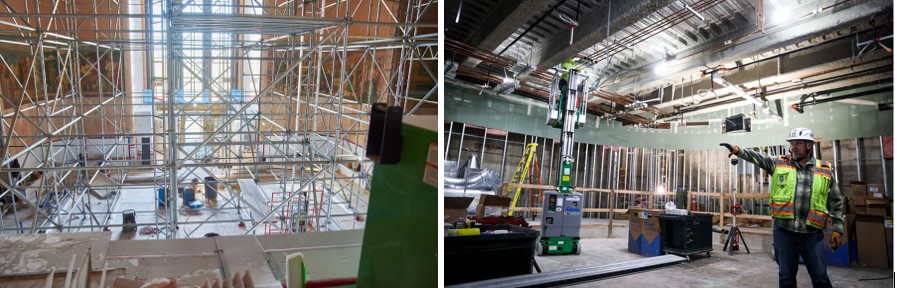
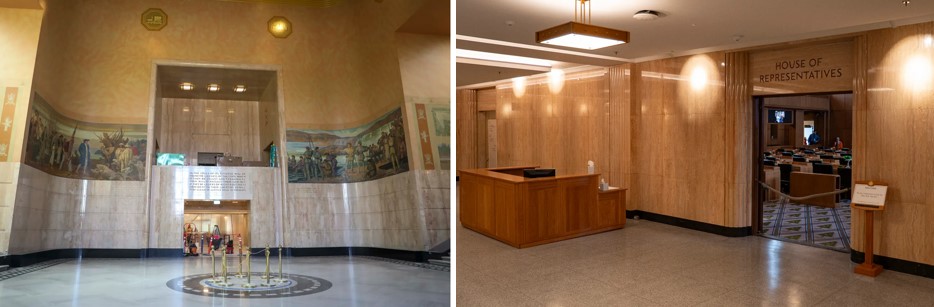
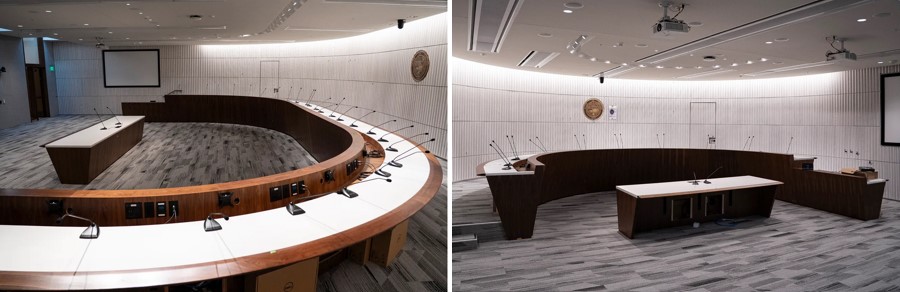
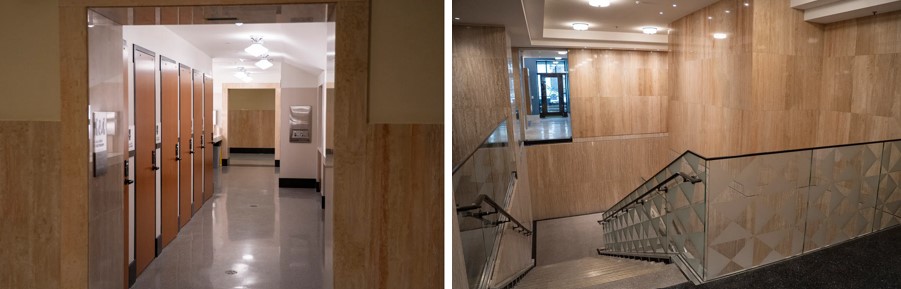
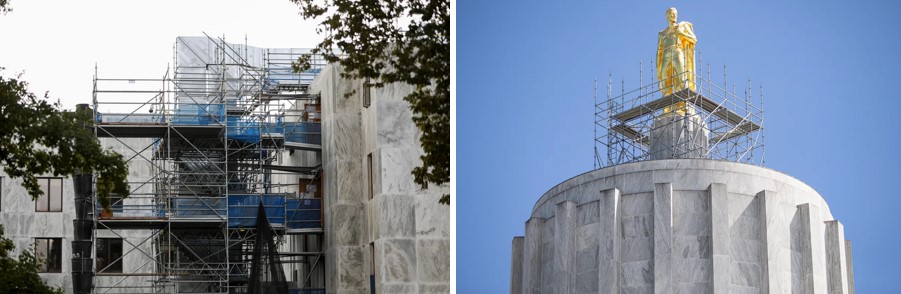
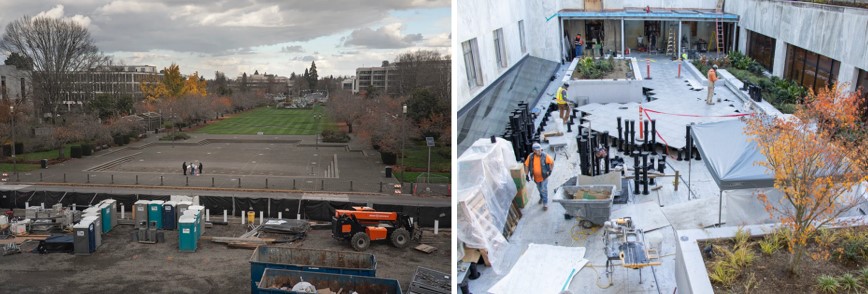
Challenges we face aside, I’m excited to return to the Capitol for entirely different reasons. For the past five years, much of the building has been closed for seismic renovations and repairs. And at the same time, the entire lower level of the building has been opened up to replace dark, dingy corridors with new spaces, a public restaurant, new and larger committee rooms, and new, modern restrooms instead of the old “historic” ones. The Oregon Capitol was rebuilt in the 1930s following a catastrophic fire. The result was an Art Deco design much different from classic, capitol domed buildings. In the 1970s, office wings for members were added (until then, your floor desk was your office). And now with the new year comes the largest improvement and expansion of the building in the past 50 years.
Here are a few photos courtesy of the Statesman Journal and Salem Reporter.
|
The Capitol rotunda was repainted and replastered, filled with large indoor scaffolding (shown here, with the century-old artwork behind). The corridor on the lower level now connects new hearing rooms, press rooms, and a public restaurant.
|
|
The newly-improved Capitol rotunda and entrance to the House of Representatives chamber.
|
|
The inside of new hearing rooms 30 and 40 on the lower level.
|
|
New all-gender restrooms and stairs leading down to the lower concourse.
|
|
Construction noise and smells disrupted Capitol business for the past five years. Even the iconic Golden Pioneer, gazing steadily west toward Lincoln County, was not immune and was regilded during the renovations.
|
|
A view of the Capitol Mall from the third floor, and another of the improvements to the inner courtyards.
|
| I hope everyone in Oregon can experience the Capitol as it fully reopens. This is not a building just for legislators and lobbyists. It is your State Capitol. Let me know if you come by in February and, schedule permitting, I’ll show you a few things not on the normal tour. |
|
| I always try to look forward with optimism. But candidly I’m beginning this new year with one major note of disappointment.
At the end of 2024, wildfire survivors who had waited years to be paid in settlements over powerline-ignited fires got major relief from the federal government. They would not have to pay federal income taxes on the damages they were awarded. But the short-lived Federal Disaster Tax Relief Act expired at the end of 2025. Any fire-related settlements beginning in 2026 will again be subject to federal income taxes.
The average amount that electric utility PacifiCorp, owner of Oregon-based Pacific Power, has been ordered by a jury to pay survivors of several of the 2020 Labor Day fires is roughly $5 million each. (PacifiCorp is appealing that order.) Under federal income tax rates, a $5,000,000 award would leave the average fire survivor turning over about 1/3 of their settlement to the federal government.
As I detailed in our most recent newsletter, some survivors opted for negotiated settlements rather than go to court. In an outcome announced on November 19th, PacifiCorp agreed to pay $150 million to 1,434 people in the 2020 Labor Day wildfires. Payments varied depending on the extent of losses and averaged $107,142 each. Most of those claims were from Lincoln County. And because they were resolved in 2024, recipients will not be liable for federal taxes.
In 2024, the Oregon Legislature unanimously passed SB 1520, ending state income taxation on settlements and lawyers’ fees for wildfire victims. The bill was championed by survivors of the 2020 Labor Day fire, and I was one of the sponsors. A bill I sponsored this year that would have required utilities causing a powerline-ignited fire to cover the cost of federal income taxes on settlements paid to survivors died in the final hours of the recent Oregon legislative session.
Read more in the Capital Chronicle. |
|
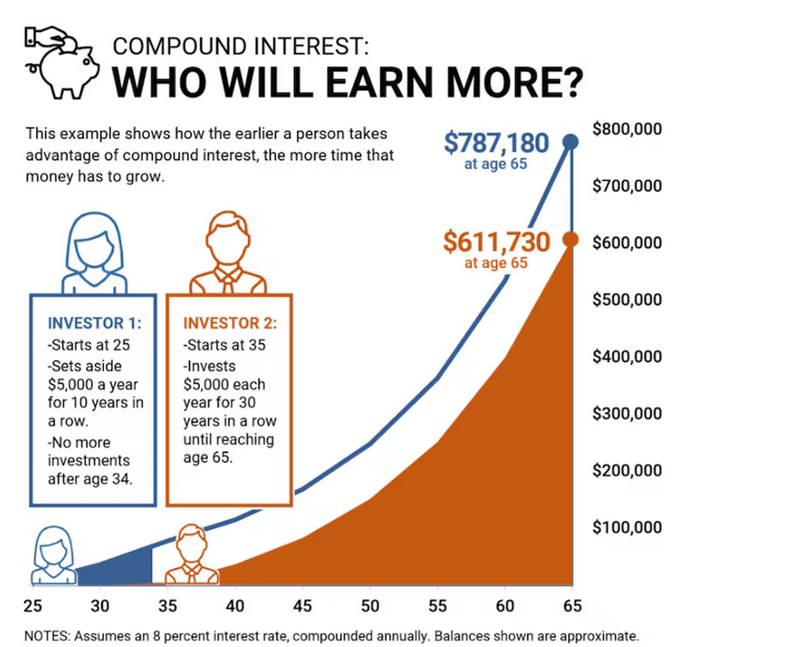
| The average retirement savings of a 60-year-old American is close to $250,000 – but that’s only counting people who actually save. Roughly 40% of Americans don’t have any kind of retirement account.
Eight years ago, OregonSaves was started to give Oregonians who don’t have a workplace retirement plan a place to save. Oregon was the first state in the nation to introduce such a program. Under the program, between 5% and 10% of your paycheck would be deducted and invested for you in a Roth IRA. You could opt out or back in and remove funds whenever you wished. It’s designed to follow people as they move from job to job and it would come directly out of your paychecks. |
|
| I thought hard about the bill and ultimately voted against it. I thought that most people would opt out of the deductions and that the process would be one more burden for small businesses. I thought people should be responsible and manage their own savings by setting up their own IRA’s. But I also recognize that automatic deductions were easier before people actually saw their paycheck Accounts would start early and follow people from job to job. And having the state manage investments had some benefit.
The plan ultimately passed and by many measures OregonSaves has been a success. Some 180,000 Oregonians now have accounts. The average enrollee invests about $200 a month and sets aside almost 7% of their income. |
| But OregonSaves also has a problem. People keep dipping into their savings.
Of the 180,000 accounts in the system, close to 40% have had withdrawals. A good portion of those withdrawals are from people who have retired. But another sizable portion is from people who simply needed the money. The result is that the average account balance at OregonSaves is just $3000.
Of course, averages can be misleading. About 1700 new people are enrolling in the system every month, starting with nothing in their accounts. There are many enrollees who have hundreds of thousands of dollars.
The importance of savings is only growing. The bipartisan Policy Center expects Social Security to be significantly depleted by 2033. So, unless Congress acts, people are likely to see benefits reduced by 23% in just eight years.
And as this year ended, economists were recommending people fully fund their retirement accounts, whether they be personal, job, or government supported.
See the story in OPB. |
|
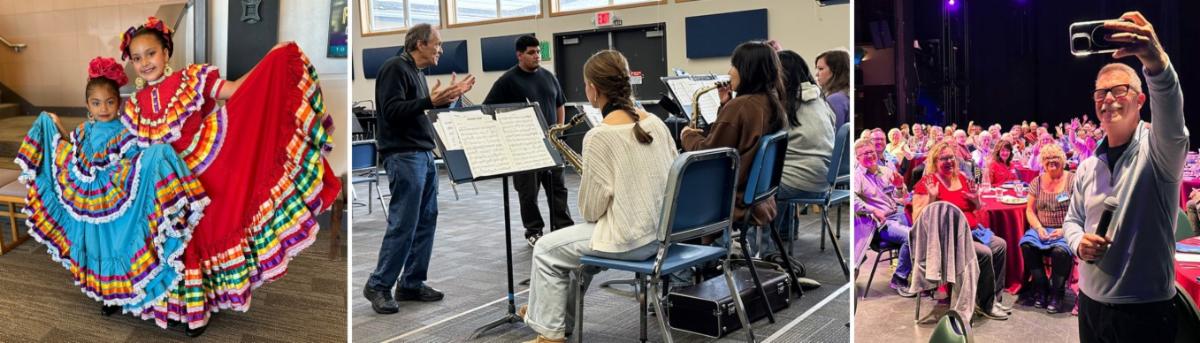
| Regular readers know I’m a big fan of arts and culture.
It isn’t just because I appreciate music, theater, or art. It isn’t just because they make our communities more interesting, more vibrant, and more enjoyable. It is because arts and culture have a very real impact on our local economy.
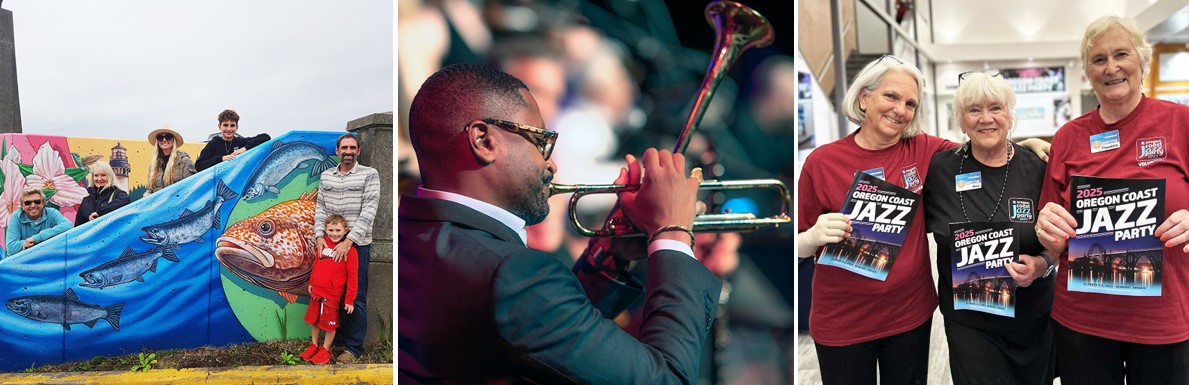
The arts economy in Lincoln County is a significant economic driver, particularly for tourism, generating over $50 million annually in total economic activity and supporting hundreds of jobs, according to a recent survey conducted by Americans for the Arts and the Oregon Coast Council for the Arts. Nonprofit arts and cultural organizations, including museums, theaters, and festivals, attract visitors who spend significantly on lodging, dining, and souvenirs, boosting local business and generating tax revenue, while also fostering community identity and creating livable places.
Let me say that another way. From the symphony in Newport, the stages at Chinook Winds, the Sitka Center, the Siletz Bay Music Festival, the Oregon Coast Jazz Party, the new stands at the Philomath Frolic and Rodeo, to a dozen farmers markets, to glorious galleries, to every tavern and brew pub with live music, the arts are big business across the District as well as a good time.
- Total Spending: Nonprofit arts and cultural organizations and their audiences generate over $50 million in total economic activity.
- Jobs: Supported approximately 610 jobs direct, indirect, and induced.
- Resident Income: Generated nearly $24 million in personal income for residents.
- Tax Revenue: Contributed over $1.5 million in local, state, and federal tax revenue.
- Visitor Spending: Audiences, especially non-local attendees, spent significantly more per event (around $115) compared to locals, highlighting the tourism draw.
|
| In essence the arts aren’t just cultural amenities. They are a vital economic engine for our district boosting tourism and supporting local business and residents.
Key local players include:
|
|
| As the year begins and I embark again on the challenges of being your legislator, an honor and responsibility I take very seriously every day, I was thinking this weekend about the people who had inspired and mentored me along my pathway.
I thought about Mr. Steinberg, my high school civics teacher who brought passion to the subject and believed good government mattered. I thought about my first boss in the Capitol when I was fresh out of graduate school, a freshman legislator (and future governor) named Barbara Roberts. I still see Barbara regularly and phoned her on New Year’s Day. I think about all the budget lessons I learned from my pal Betsy Johnson and the importance of accountability in government. And I thought about Tom McCall. For one glorious semester after his time as governor, Tom taught a class at OSU. A small group of Poli Sci seniors would sit with him for an hour every Tuesday and Thursday afternoon. We learned about his view of good government, his values, about compromise and negotiation, creative problem solving, and about bipartisanship in a different political time.
I’m still inspired every day – when I see the faces of students as they receive their degrees, meet with volunteers at a local food bank, join crowds at public meetings, or on sidewalks as they express their passion about democracy and their government. I’m inspired by all of you when we meet and talk briefly at the grocery store, the bank, or at a concert. I’m inspired by your letters, which I read every day.
I mention all of this because I came across a quote today that I often repeat. They’re the words long ago of our governor and my teacher, Tom McCall: “Heroes are not giant statues framed against a red sky. They are people who say ‘This is my community and it’s my responsibility to make it better’”
As my friend Jeff Golden recently wrote, “My wish for all of us is a new year full of that kind of heroism … full of more connection with the people in our lives, more grace for the people we’ve been struggling with, and the courage to stand up with respectful strength for what we believe in and for a healthier world that we still know is possible.”
Take good care. |
|