By Representative David Gomberg, House District 10
3/9/26
Dear Friends and Neighbors,
The 2026 short session came to a close late Friday.
For the first time in years, Oregon lawmakers in Salem’s newly-reopened Capitol streamed out of the chamber floors into the rotunda to cap the end of a short legislative session that had both Republicans and Democrats claiming victories.
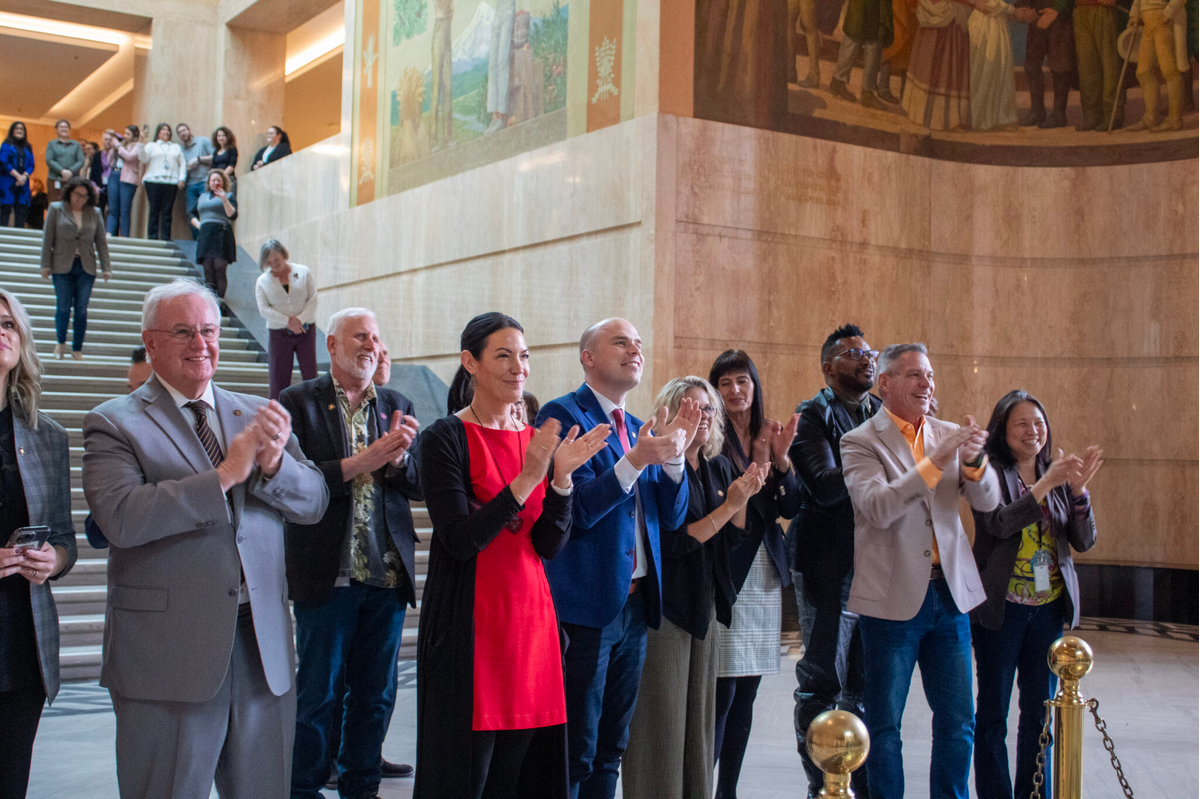 Oregon House members greet their colleagues from the Senate in a celebration of the end of the legislative session at the Capitol in Salem on Friday, March 6, 2026. (Photo by Mia Maldonado/Oregon Capital Chronicle)
Responding to the federal government’s aggressive deportation campaign, safeguarding access to and funding for reproductive care, and filling a budget hole caused by federal tax and spending changes topped the Democratic majority’s agenda this year. Republicans, meanwhile, touted their success in gutting a wide-ranging gun bill and delaying, though not blocking, a bill to reschedule a statewide vote on transportation taxes.
Last week, I outlined several of the larger questions that needed to be resolved. Here is a look at three of those bills where I parted ways with the Democratic leadership.
The economic health of Oregon depends on the economic health of Portland. And concerns that the Trailblazers may leave are regarded as a major threat to the pride, prestige, and struggling comeback of our largest city. Major renovations to the Moda Center, the 30-year-old Portland arena that some have deemed unfit for a modern NBA team, were addressed in Senate Bill 1501.
Under this measure, the state would spend an anticipated $72 million in the next budget cycle to pay off $365 million in bonds. Those bonds could ultimately cost the state between $530 million and $625 million, including interest, according to budget analysts.
The state funding is conditioned on the Blazers signing a 20-year-lease to remain at Moda. And it would require major spending from the City of Portland and Multnomah County, which have said they would combine to chip in more than $200 million to the renovation.
What’s missing? Any contribution by Texas billionaire Tom Dundon, who is expected to take over the team later this month.
I know that many folks across our district love basketball and travel to Portland for games. But I worry we have a lot of other pressing needs in Oregon. The bill passed. But I voted no.
| The race for governor in 2022 raked in more than $70 million in contributions. Campaign finance is a legitimate concern in Oregon. So in 2024, I was an enthusiastic supporter of serious steps to create contribution limits and address big money in politics.
Soon after, our Secretary of State warned that the bill was flawed and that election staff needed far more time and money to make it happen. So, Oregon lawmakers this year crafted House Bill 4018.
But the bill’s changes highlighted a simmering feud between big campaign spenders — union and business groups among them — and the good government groups seeking to rid Oregon’s elections of financial influence. Some campaign finance experts argue the bill creates huge loopholes.
I agreed that the Elections Division needed funding to update computer reporting, compliance, and public access to contribution records. But I was troubled that “technical fixes” appeared to keep the money coming. The bill passed. But I voted no. |
|
| A particularly difficult question regarded the Bay Area Hospital, a rural hospital in Coos Bay. The hospital is struggling to stay afloat without dipping into its cash reserves or downgrading to a Type B hospital, which would lead to a severe cut to staff, beds, and services. HB 4075 would direct the State Treasurer to provide a stabilization loan.
The problem is that HB 4075 is a creative precedent, using interest from the Unclaimed Property and Estates Fund as a band-aid for local funding challenges. That money normally supports the Common School Fund. Oregon schools cannot afford such a hit, as essential programming and services are already in jeopardy due to proposed budget cuts.
I note that while the median family income in Coos County is similar to that of Lincoln County and actually higher than Tillamook County, central coast residents pay taxes to support our local hospital districts, while Coos County does not. I was not convinced that the hospital faced an immediate crisis and felt rushed to approve a creative but flawed solution. I could not justify asking my constituents to pay taxes for their hospital and then also pay taxes for a hospital somewhere else, in a region where residents declined to collect local taxes. And I was troubled that if – IF – Bay Area was downgraded, it would then be in the same category as our Lincoln and Tillamook hospitals.
All our rural hospitals are facing financial challenges. But Oregonians deserve better than choosing between healthcare and education. The bill passed. But I voted no. |
|
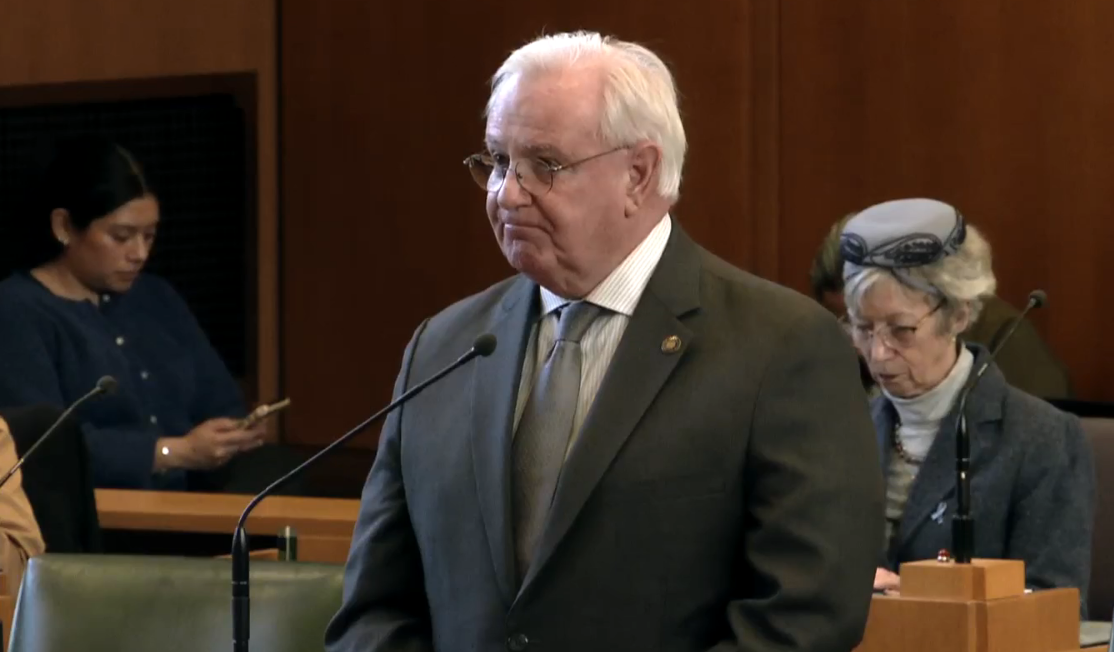
I stepped down from the podium to speak on the floor against HB 4075. Listen to my remarks here.
|
|
| Lawmakers came into this session focused on some daunting numbers.
As reported by OPB, budget writers figured they’d need to find around $750 million to close a hole in the state’s general fund. A huge reason: The so-called “One Big Beautiful Bill” passed by Congress last year had reduced revenues by nearly $900 million and also created new costs. At the same time, the state’s transportation budget was looking at a roughly $300 million shortfall, after proposed tax and fee increases were referred to a statewide vote.
The first hole wound up being the least daunting. Legislators eliminated a set of federal tax breaks from impacting state revenues, sparing $311 million for the general fund. An improved revenue forecast, along with lower-than-anticipated costs in some areas, helped cover the rest. In the end, the Legislature made around $128 million in trims — largely through keeping vacant positions open and slashing agencies’ budget for supplies. At the same time, they increased funding for wildfires, immigrant legal services, industrial development, and more.
The transportation budget proved more complicated.
I was asked to help lead the effort, using vacancies at the Oregon Department of Transportation and federal funding to cover around half of the $300 million hole. For the rest, we reduced or delayed programs that make roads safe for pedestrians, seismically retrofit bridges, fund rail projects, bolster vehicle electrification, and a lot more. Even with those changes, lawmakers say residents should expect threadbare services. |
|
| I often opine that policy bills and partisan squabbles get all the headlines. But state support to fund local projects often has a larger impact on your quality of life, cost of living, and economic vitality. Small communities often can’t afford large, expensive projects. That’s why I have focused so much of my legislative attention on sewer and water systems, ports, and parks.
We’ve had some real success over the past few years helping finance dozens of local improvements. With funds limited this session, legislators were limited to just two “asks” for lottery bond support. I’m pleased to report we were successful.
We secured $2.5 million in lottery bond money to build a 47-unit affordable and workforce housing development located on the north end of Depoe Bay in Lincoln County. This project addresses a critical need for affordable housing to support hospitality and tourism industry workers, who face an urgent shortage of attainable housing in the region.
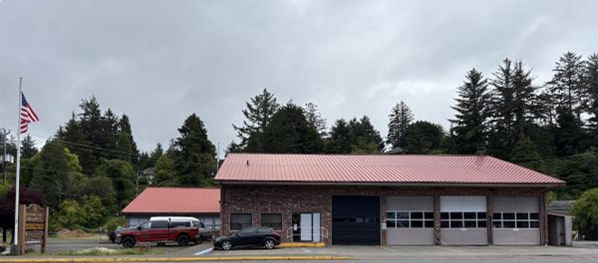
We also secured an additional $1.1 million in lottery bond money to assist Central Coast Fire and Rescue in Waldport. This money will help them purchase their fire hall from the City of Waldport so they can finally pursue much-needed renovations to help them expand their services.
Finally, the City of Philomath will receive $2.65 million in lottery bond money to expand its sewer infrastructure to support new housing development in this growing community. |
|
Central Oregon Coast Fire and Rescue will receive $1.1 million.
|
| In addition to the dollars we secured this session, it’s important to take stock of the dollars we were able to preserve as well. We faced difficult choices in this tough budget environment, but I went to bat for some key coastal priorities that were on the chopping block late last year.
Our coast’s popular Marine Reserves program was at risk of seeing serious cuts that could have impacted important ocean science work and potentially hampered vessel contracts in the Reserves. Our recently-funded maritime workforce program was also facing serious proposed cuts, jeopardizing the recent gains we’ve made to bolster job opportunities in our blue economy. As well, the City of Monroe was on the budget reductions list for its water system improvements.
I went into this session with a clear objective to stave off these proposed reductions, and I’m pleased we were successful.
My bill to help the Oregon Ocean Science Trust (OOST) broaden its fundraising opportunities, HB 4097, was signed by the Governor last week, which is very exciting news. Established by the legislature in 2013, OOST serves to promote and support ocean science research and monitoring by securing private and federal dollars for grantmaking opportunities. In other words, they find money, evaluate research proposals, and provide grants to researchers working at the cutting-edge of ocean and marine science.
Senator Anderson and I both serve as non-voting members of OOST, and over the years, I’ve seen firsthand the real impacts of the work they fund. From assessments of our Marine Reserves program to research on ocean acidification and hypoxia, OOST is helping the scientific community pioneer solutions to some of our most challenging ocean problems. |
|
| Democratic lawmakers made clear at the start of the 35-day legislative sprint that their priority would be pushing back on what they believe is the federal government’s overreach when it comes to mass deportation efforts.
They passed a bill to try to ensure immigration agents are easily identifiable. House Bill 4138 would require officers to clearly display their name or identifying number, their agency, and their badge. The bill also limits the use of facial coverings that conceal a person’s identity, with exceptions for undercover operations and health and safety needs.
A push to protect students from discrimination and codify immigration status as a protected class under anti-discrimination laws in the state’s K-12 public school system in Senate Bill 1538 made it to the governor’s desk.
Under House Bill 4114, lawmakers tried to make it easier for people to sue federal agents if they enter a person’s home without having a proper warrant or identifying themselves. That measure passed.
In Oregon, an entire family was arrested and detained while they were seeking medical care for their 7-year-old daughter, who had a nosebleed that wouldn’t stop. Legislators tried to make it harder to detain someone seeking medical care under Senate Bill 1570. The bill prohibits hospitals from sharing a person’s immigration status with law enforcement except when required by law or court order. It passed both chambers.
Meanwhile, here at the coast, the Department of Homeland Security (DHS) said in its federal court filing last week, “ICE has made no decision to build any such facility, has no present intent to make such a decision, and is not currently building any such facility in or around Newport or anywhere in Lincoln County, Oregon”.
The federal government apparently was considering Coos Bay as a possible alternative for an immigrant detention center – with the help of a leading local politician – but the idea appears to have stalled for now after a wave of public resistance. |
|
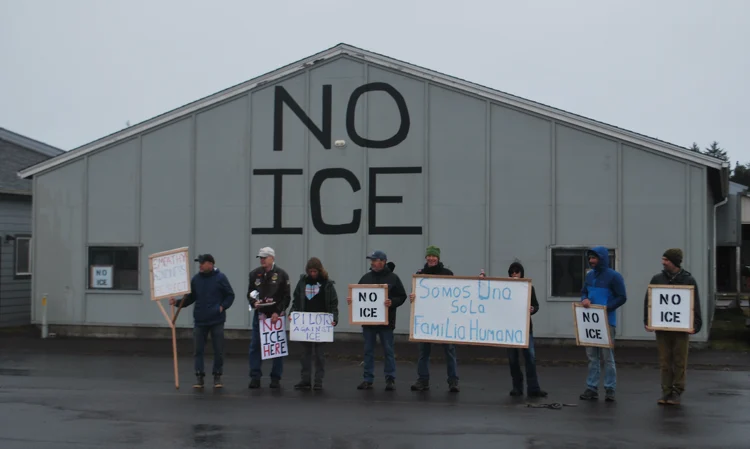
A group of local pilots staged a “No ICE” demonstration at the Newport Airport in December, the day Oregon U.S. Senator Ron Wyden conducted a town hall in Newport to hear residents’ concerns about the potential federal facility. (Jeremy C. Ruark / Lincoln County Leader)
|
|
To make life more affordable for Oregonians, this session we:
- Expanded the Earned Income Tax Credit for 200,000 Oregon families and created a new tax credit for businesses that bring jobs to Oregon (SB 1507)
- Preserved state budgets for health care, education, public safety, and economic development
- Closed loopholes that had allowed lenders to charge as much as 100 percent interest on consumer loans (HB 4116)
- Put Oregonians ahead of huge corporate investors in homebuying (HB 4128)
- Cracked down on ticket scams and rip-offs (HB 4024)
- Strengthened support for veterans (HB 4132)
- Mandated that state-subsidized housing developments meet accessibility standards (SB 1576)
- Removed financial barriers to preventive health care and cervical cancer testing (SB 1598, SB 1527)
- Improved information for families seeking affordable day care (HB 4057)
- Protected renters’ ability to pay their bills using the method they choose, not just online portals that can trigger huge fees (SB 1523)
- Extended the Oregon Imagination Library program (HB 4022)
- Prohibited homeowners’ associations from stopping people who want to make fire-safe improvements to their homes (SB 1551)
For a comprehensive review of the short session, check these reports:
With the final gavel down, I transition right back into the interim lifestyle.
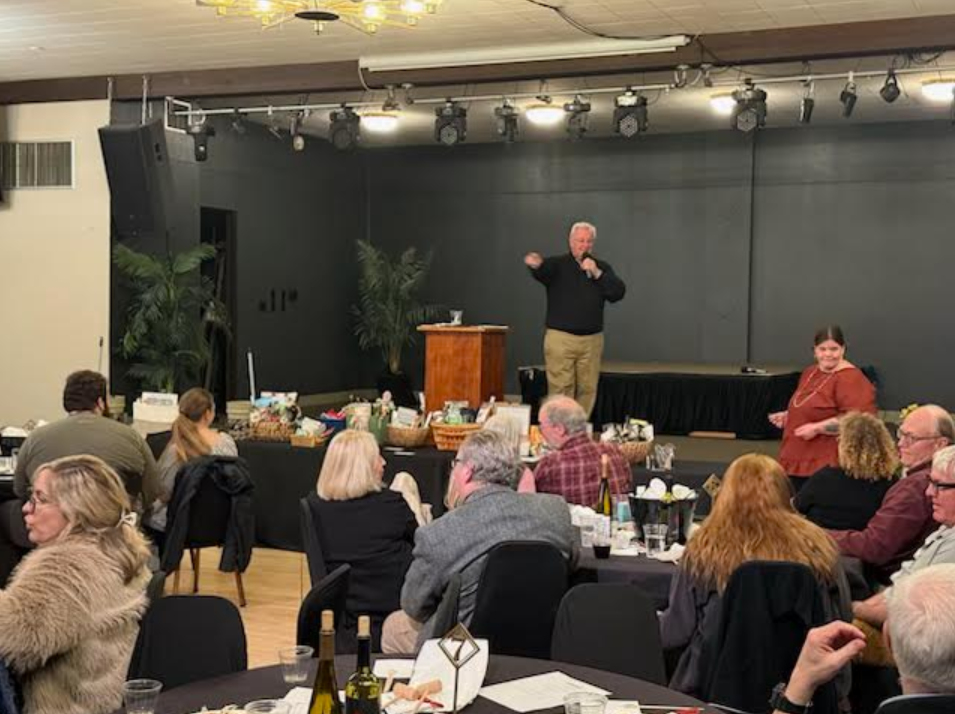
Saturday, I attended a ribbon cutting in Lincoln City, joined the Lincoln County Republicans as they heard from congressional and statewide candidates, and then enjoyed dinner with Lincoln County Family Promise, where they invited me to be their impromptu auctioneer. |
|
| Plans this week include breakfast with district mayors, a legislative review at the Lincoln County Economic Summit, a Town Hall in Benton County Saturday morning, and the Pearls of Wisdom scholarship dinner at the Oregon Coast Community College that evening.
Susie says I’m gone more when I’m home than when I drive to Salem each day. But I’m absolutely glad to be back with all of you. |
|