Tillamook County Pioneer

News & People of Tillamook County. Every Day.

Menu
  • Home
  • Feature
    • Breaking News
    • Arts
    • Astrology
    • Business
    • Community
    • Employment
    • Event Stories
    • From the Pioneer
    • Government
    • Letters to the Editor
    • Non Profit News
    • Obituary
    • Public Safety
    • Podcast Interview Articles
    • Pioneer Pulse Podcast: Politics, Palette, and Planet – the Playlist
  • Guest Column
    • Perspectives
    • Don Backman Photos
    • Ardent Gourmet
    • Kitchen Maven
    • I’ve been thinking
    • Jim Heffernan
    • The Littoral Life
    • Neal Lemery
    • View From Here
    • Virginia Carrell Prowell
    • Words of Wisdom
    • Chuck McLaughlin – 1928 to 2025
  • Weather
  • Post Submission
  • Things to do
    • Calendar
    • Tillamook County Parks
    • Tillamook County Hikes
    • Whale Watching
    • Tillamook County Library
    • SOS Community Calendar
  • About
    • Contribute
    • Advertise
    • Subscribe
    • Opt-out preferences
  • Search...
Menu

NEWS UPDATE FROM STATE REPRESENTATIVE DAVID GOMBERG: Some Non-Legislative News

Posted on March 17, 2026 by Editor

By Representative David Gomberg, House District 10

3/16/2026

Dear Friends and Neighbors,

For a break this week, I’m offering some non-legislative news. But if you are anxious to hear more about the recent session, new laws, or the budget, I’m planning a live town hall together with Senator Anderson on March 27. This is your best chance to get both a Democratic and a Republican coastal perspective.

The event will be live-streamed via Zoom, so participants can watch from their homes or offices. Attendance is welcome in person at the Oregon Coast Community College North County Center, at 3788 SE High School Drive in Lincoln City. A limited number of seats are available in the broadcast classroom, but additional space will be provided to watch the livestream in separate rooms if necessary.

And of course, we will be taking questions.

To participate, simply click this link at 9 a.m. on Friday, March 27. The link will also be available from the College’s web page that day. Simply visit oregoncoast.edu.

Saturday morning, I took part in a Benton County town hall hosted by the League of Women Voters. Wednesday morning, the 18th, I’ll present a legislative update at the Waldport Chamber breakfast. And Wednesday the 25th, I’m speaking at the Newport Chamber luncheon.


And most intimidating of all, Monday evening I’m meeting with Girl Scout Troop 10143 in Lincoln City, who are working on their Democracy Badge. I’ve asked them to come up with ideas for new laws and questions. Already on the list: What’s the weirdest law you’ve seen come up to pass?

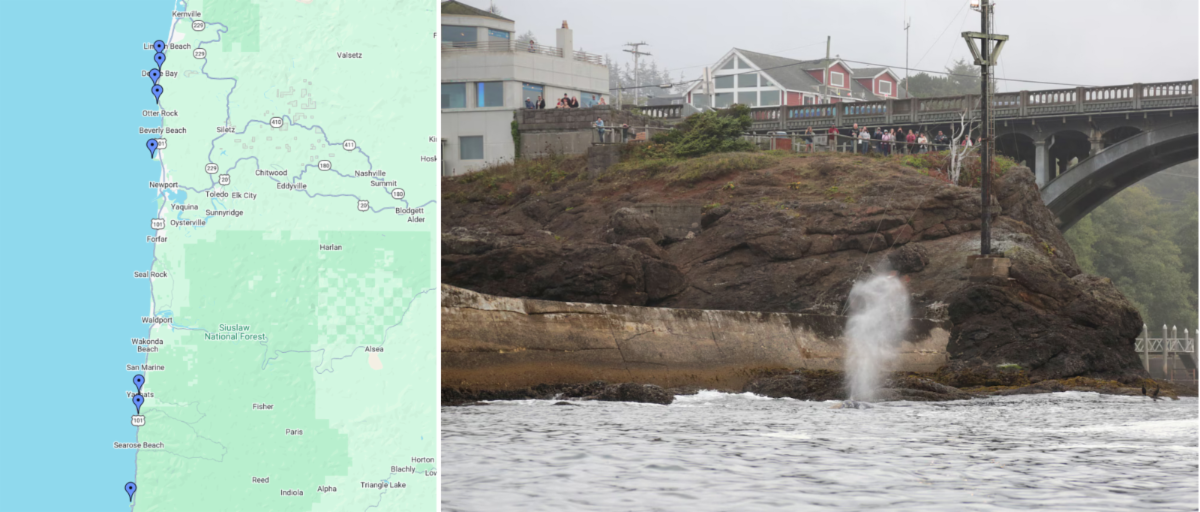
Spring Whale Watch Week, an annual whale watching event organized by the Oregon Parks and Recreation Department, will take place March 21-29 this year. The OPRD places trained volunteers and park rangers at park sites up and down the coast to help people spot the migrating gray whales.

Spring Whale Watch Week will be held at 15 locations along the coastline from Fort Stevens to Harris Beach, where volunteers will be available from 10 a.m. to 1 p.m. on each day of the event. There is a small cluster of participating parks around Depoe Bay, the “whale watching capital of the Oregon coast,” including the Whale Watching Center itself.


The gray whales are on their annual migration path between breeding grounds in Mexico and feeding grounds off the coast of Alaska. They return every year at the end of December, when the state parks department hosts the shorter Winter Whale Watch Week event.

An estimated 13,000 gray whales are expected to swim past Oregon’s shores this spring, the parks department said, a significant decrease from last spring, when 19,260 whales were expected.

Would you like to be a volunteer?

Last year, volunteers spoke with thousands of visitors from around the globe. Volunteers also count whales spotted and the number of visitors at the 15 designated sites during each Whale Watch Week. Learn more and sign up at orwhalewatch.org.

It will get more expensive to use our parks after Whale Watch Week this spring. Visitors will have to pay parking fees at more Oregon state parks by the end of the month.

The Oregon Parks and Recreation Department requires day-use parking permits at 46 parks and waives fees at more than 150 parks across the state. On March 30, the department will add parking fees at an additional 22 day-use parks to help pay for the maintenance and operations of amenities at those locations. These are the first increases in parking fees since 2009.

About 35% of funding for Oregon State Parks comes from user fees, including overnight camping reservations and parking fees. Fee changes are to protect the experience at these locations, interim department director Stefanie Coons said in a statement.

“We know fee changes are tough and we truly appreciate the support from visitors,” Coons said. “These changes help us take care of things people count on like restrooms, boat ramps and trails, so we can keep parks safe, clean and welcoming for everyone.”

Access to state parks remains free for visitors arriving without a car. Oregon residents must pay $10 to park a car, while out-of-state visitors must pay $12 for the entire day of purchase. For frequent park visitors looking to save on parking, an annual parking permit costs $60 for Oregon residents and may be purchased online.

There will be several ways to pay for parking. The annual permit can be purchased on the department’s website, at some park offices, at some stores and outside vendors.

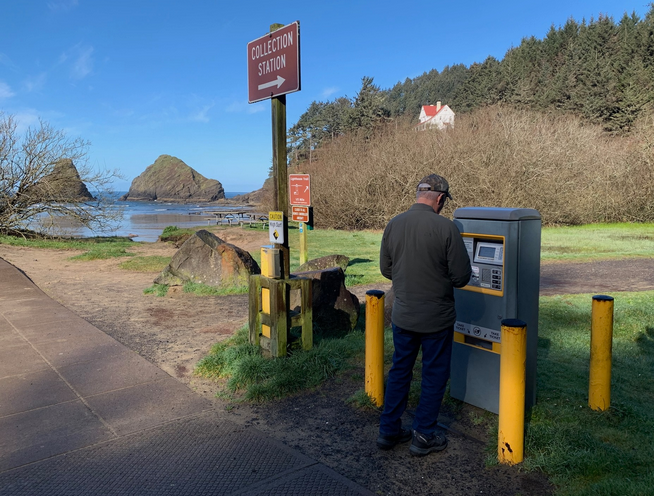
A visitor uses a machine to pay to park at Heceta Head Lighthouse State Scenic Viewport south of Yachats, which increased its fee from $5 to $10 in 2025. (Garret Jaros/Lincoln Chronicle)

Daily permits will be available at the individual parks using a fee machine, a posted QR code, or both. Information about how to use the QR codes will also be on the department’s website.

Exempt from the fee are Oregon foster parents, guardians, and parents who have adopted Oregon foster children, U.S. veterans with a service-connected disability, and active duty U.S. military on official leave. Fees are also waived for the general public the day after Thanksgiving, New Year’s Day, and Oregon State Parks Day, which is the first Saturday in June.

Enforcement will be carried out by park rangers, with no additional park staff being hired to perform those duties. The fine for not paying is $60.

Fourteen of the new fee sites are on the Oregon Coast, and seven are in Lincoln County.

The state parks in Lincoln and north Lane counties with new fees beginning March 30 include:

  • Carl G. Washburne Memorial State Park south of Yachats;
  • Governor Patterson Memorial State Recreation Site in Waldport;
  • Brian Booth State Park, including the Ona Beach day use and beach access, and Beaver Creek State Natural Area north of Seal Rock;
  • Agate Beach State Recreation Area in Newport;
  • Devil’s Punchbowl State Natural Area in Otter Rock;
  • Fogarty Creek State Recreation Area north of Depoe Bay;
  • Gleneden Beach State Recreation Area, south of Lincoln City; and
  • Roads End State Recreation Site in Lincoln City.

Beverly Beach and South Beach state parks implemented the new fee last October, and the parking fee at Heceta Head Lighthouse State Scenic Viewpoint increased from $5 to $10 in January 2025.

State parks are funded primarily through Oregon Lottery funds, which provide about half of the department’s revenue. Another 20 percent comes from parking, camping, and reservation fees (which have also increased), and the remainder from recreational vehicle registrations. In December, the agency projected an $8 million budget gap for state park operations for 2025-2027.

From my perspective, I think parks should be free and open to everyone. But the fact remains that keeping our parks clean and maintained costs money. The bad news is that our local parks are the most popular and expensive to keep up. The good news is that parking fees help out-of-state visitors pay for them.

Information for this report came from the Lincoln Chronicle and Oregon Capital Chronicle. For more information about day-use fees at Oregon State Parks, visit the Oregon Parks and Recreation Department website.

We’ve got a penny problem.

The problem is that there aren’t enough of them in circulation, and some stores are running out. And that means if you are owed a few cents change when you buy something, you may not get it.

Federal mints have stopped making pennies and some stores don’t have enough to give you change.

House Bill 4178, which passed overwhelmingly in both chambers and is waiting for the Governor’s signature, would allow transactions to be rounded to the nearest five cents for cash purchases. That means cash purchases ending in 1, 2, 6 or 7 cents would be rounded down, and purchases ending in 3, 4, 8 or 9 cents would be rounded up.

Oregon’s bill is meant to make rounding “neutral” over time — sometimes the customer will be a few cents ahead and sometimes the retailer will be. But over time, no one should suffer a monetary loss or gain.

The bill, requested by the Northwest Grocery Retail Association, is meant to provide clarity for businesses after the federal government stopped minting pennies last fall. It would require stores that choose to adopt this policy to apply it consistently and to place proper notice in their storefronts about the change. As an emergency declaration, this bill would take effect immediately after the governor’s signature.

The penny problem disproportionately affects rural communities, small businesses, and low-income consumers, Pam Leavitt, a lobbyist for credit unions, told the House Rules Committee. These populations are more likely to use cash transactions.

Last November, the U.S. Mint ceased production of pennies. President Donald Trump ordered a full stop to penny production because of the expense, with federal figures showing it cost about 3.7 cents to make each 1-cent coin. The federal government estimates it’ll save about $56 million annually in production costs.

So here is a practical suggestion. Stores could solve the problem if they started setting prices in five-cent increments. For example, an item that’s $1.29 would become $1.25 or $1.30.

The Federal Reserve will continue to recirculate the roughly 114 billion pennies currently in existence for as long as possible. How long existing pennies remain in circulation depends largely on consumer behavior.

Here are a couple of other little things that make me crazy.

How often do you see signs in your local grocery store that compare their “low” prices to another store’s higher prices? Do you believe them??

A group of Oregon consumers has filed a class-action lawsuit against one discount grocery chain, alleging the company engaged in deceptive pricing practices that violate state consumer protection laws. The lawsuit, filed last week in Multnomah County Circuit Court, accuses the chain of promoting its prices as being lower than those found “elsewhere” without specifying where those higher prices can actually be found. The legal action was brought by a law firm affiliated with Oregon Consumer Justice, a nonprofit organization, on behalf of three local consumers.

The legal filing details several instances where consumers were misled through pricing practices:

  • Unavailable Products: In one case, the retailer promoted three frozen, gluten-free items as being priced lower than “elsewhere,” when those specific products were not actually available anywhere else in the state.
  • Inflated Comparison Prices: The suit claims inflated prices from competitors. For example, the company promoted its $3.19 price for an oat milk product as being less than the $4.99 price found “elsewhere,” when a nearby store actually offered the same product for $1.99.
  • Misleading Percentage Savings: The lawsuit also challenges the use of language such as “save 46%” on certain items, claiming these comparisons sometimes refer to fictitious prices purportedly offered at other stores.

“These deceptive practices created the illusion of significant savings, when in fact, consumers often paid the same or more than they would have at other local retailers,” the lawsuit states. Read more in Consumer Affairs.

Here is something of greater concern.

Your grocery bill might soon depend on more than just inflation — it could depend on who you are, where you live, and what data a store has on you. “Surveillance pricing” uses AI and personal data — ranging from your ZIP code to your browsing history or even facial recognition — to adjust prices in real-time.

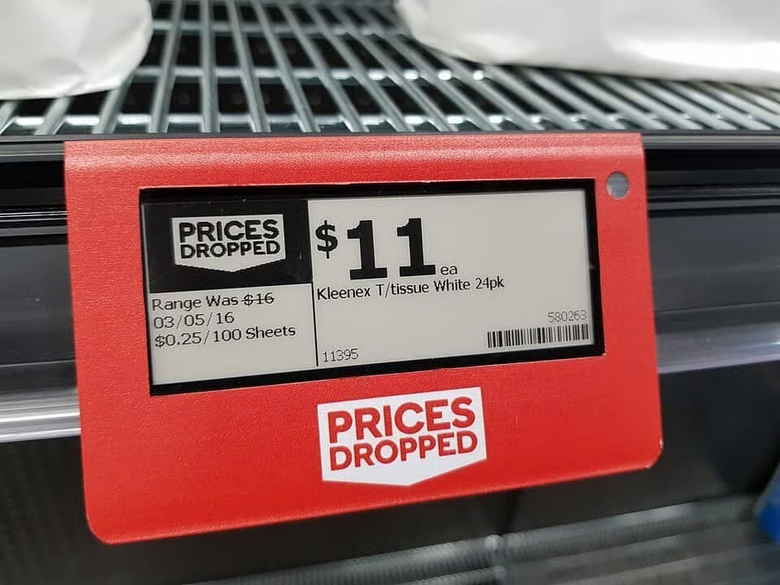
The end of the paper tag? Electronic shelf labels are digital price tags that can be updated more quickly and uniformly than standard paper price tags.

At issue are Electronic Shelf Labels (ESLs). Unlike paper tags, which require manual labor to change, ESLs allow stores to fluctuate prices at the click of a button. Predictably, the unions representing grocery clerks want job security while grocery chains what to save money and making pricing easier. And the rest of us are just concerned with personal privacy and consumer protection.

Legislation in Washington, D.C., supported by our Oregon delegation would ban ESL’s. They want the price you see on the shelf to be the same price the person behind you pays—no matter what the algorithm says.

Read more in Stumptown Savings.

Last week I talked about the change from legislative session to the interim lifestyle. I’m out and around our large diverse district every day now.

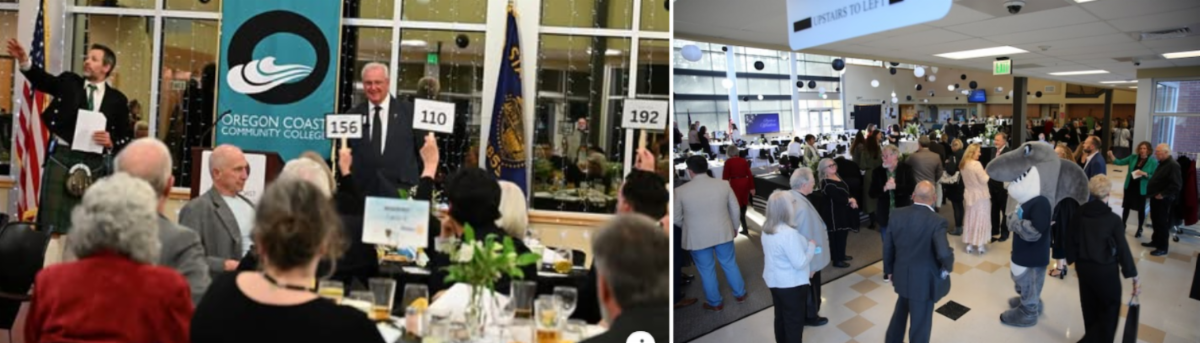
Saturday morning I was in Corvallis for a Benton County Town Hall. That evening, I was in Newport as co-auctioneer for the Community College scholarship fundraiser. BTW – for as little as $1500, you can sponsor a named scholarship to support local students. Susan and I have done so for several years now.

The College Foundation raises about $100,000 each year to support future teachers, nurses, business owners, and technical workers.

Wednesday I sat down with District mayors and a Lincoln County Commissioner to discuss common concerns and new legislation.

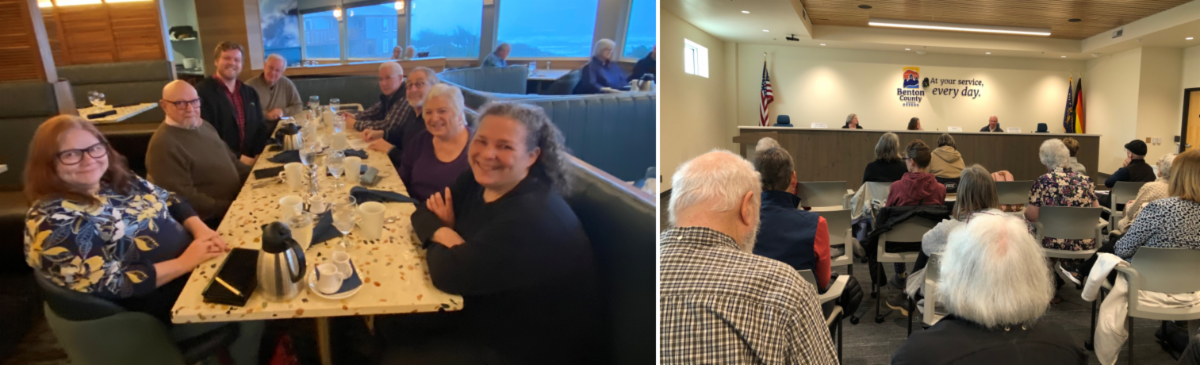
Mayor’s breakfast and Benton County town hall.

Earlier in the week, I recorded podcasts with Roger Robertson for the Double R Show and Kiera Morgan for Coffee With Kiera. Watch for those online in a few days.

I’ll watch for the chance to meet with you as well in the coming weeks. Until then…

email: Rep.DavidGomberg@oregonlegislature.gov

phone: 503-986-1410

address: 900 Court St NE, H-480, Salem, OR, 97301

website: http://www.oregonlegislature.gov/gomberg

Slide Slide Slide Slide Slide Slide Slide Slide Subscribe Contribute

Ads

Featured Video

Tillamook Weather

Tides

Tillamook Church Search

Cloverdale Baptist Church
Nestucca Valley Presbyterian
Tillamook Ecumenical Service

Tillamook County Pioneer Podcast Series

Archives

  • Home
  • EULA Privacy Policy
  • Contact
  • Opt-out preferences
  • Search...
Share on facebook
Facebook
Share on pinterest
Pinterest
Share on twitter
Twitter
Share on linkedin
Linkedin
Catherine

Recent Posts

  • FRIENDS OF NETARTS BAY WEBS: Turning the Tide in Oregon’s Blue Ecosystems - Seaweeds & Green Crabs Webinar March 18th

    March 17, 2026
  • CITY OF TILLAMOOK: Ribbon-Cutting for All-Abilities Playground Equipment Installed at Coatsville Park Features Food, Fun & Trail Blazers Saturday March 21st

    March 17, 2026
  • NEWS UPDATE FROM STATE REPRESENTATIVE DAVID GOMBERG: Some Non-Legislative News

    March 17, 2026
©2026 Tillamook County Pioneer | Theme by SuperbThemes

Manage Cookie Consent
To provide the best experiences, we use technologies like cookies to store and/or access device information. Consenting to these technologies will allow us to process data such as browsing behavior or unique IDs on this site. Not consenting or withdrawing consent, may adversely affect certain features and functions.
Functional Always active
The technical storage or access is strictly necessary for the legitimate purpose of enabling the use of a specific service explicitly requested by the subscriber or user, or for the sole purpose of carrying out the transmission of a communication over an electronic communications network.
Preferences
The technical storage or access is necessary for the legitimate purpose of storing preferences that are not requested by the subscriber or user.
Statistics
The technical storage or access that is used exclusively for statistical purposes. The technical storage or access that is used exclusively for anonymous statistical purposes. Without a subpoena, voluntary compliance on the part of your Internet Service Provider, or additional records from a third party, information stored or retrieved for this purpose alone cannot usually be used to identify you.
Marketing
The technical storage or access is required to create user profiles to send advertising, or to track the user on a website or across several websites for similar marketing purposes.
  • Manage options
  • Manage services
  • Manage {vendor_count} vendors
  • Read more about these purposes
View preferences
  • {title}
  • {title}
  • {title}