

With our March 8th constitutional deadline approaching, we are working hard to move important bills forward.
I’m proud to share that SB 1504, allowing alternative epinephrine delivery methods in schools, has passed the Legislature and is now awaiting the Governor’s signature, a big win for student safety.
We also discussed SB 1524(Lottery funding for county fairs) and HB 4112 (Outdoor School funding), both currently stalled in Ways and Means. These programs matter to our rural communities, and I encourage you to respectfully reach out to committee leadership if you would like to see them scheduled.
In addition, SB 1561 (Replacement Dwelling) is moving forward to help families rebuild after catastrophic loss, and HB 4151 strengthens penalties for dangerous swatting calls.
As always, thank you for staying engaged. Your voice truly makes a difference.
|
|
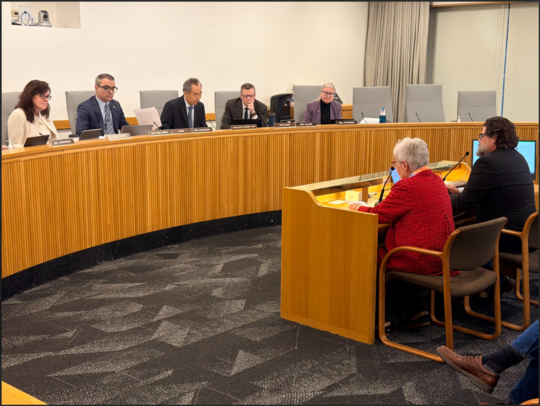

SB 1524 Saving Horse Racing, Saving a Community.
I testified before the Senate Finance and Revenue Committee in support of SB 1524, legislation to stabilize funding for Oregon’s county fair horse racing events.
Horse racing has been part of the Tillamook County Fair for nearly a century, drawing thousands of visitors each year and generating significant economic activity for the local community. These events are more than entertainment — they are a longstanding rural tradition and an important part of the local economy.
SB 1524 helps fulfill the bipartisan commitment made last session to offset lost revenue following changes to greyhound wagering. Without this support, Oregon’s horse racing account faces a significant funding shortfall that could threaten county fair racing events across the state.
This bill ensures Oregon keeps its promise and protects a cultural and economic cornerstone for rural communities like Tillamook.
|
|
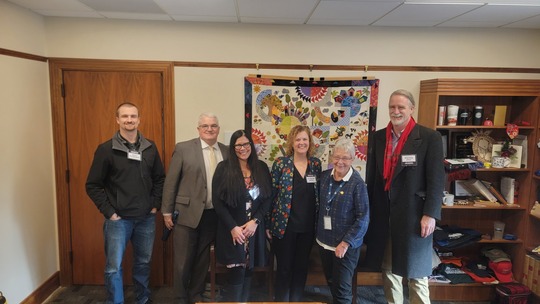 Education Leaders Speak Up for Oregon’s Students
I recently had the opportunity to meet with several superintendents from across Oregon who came to the Capitol to share their concerns about the growing threats to K-12 education funding. What they shared was sobering.
Proposed budget reductions for K-12 education would not mean small adjustments. They would mean larger class sizes, fewer programs, reduced support staff, and fewer opportunities for students, ultimately lowering the quality of education at a time when our schools are already working hard to meet significant challenges.
Oregon currently ranks 35th nationally in key education outcomes. That is not a reflection of our students’ potential or our educators’ commitment. It reflects years of policy challenges, underinvestment, and a system that needs thoughtful improvement. Cutting resources now would only widen achievement gaps and make it even more difficult for districts, especially in rural communities, to serve their students effectively.
Our schools are the backbone of our communities. They prepare the workforce of tomorrow, support families today, and shape the long-term economic and civic health of our state. When superintendents tell us that proposed reductions will have devastating impacts, we need to listen.
Instead of pulling resources away, we should be focused on strengthening and modernizing our education system. Strategic investments in early literacy, career and technical education, student support services, and classroom resources deliver long-term benefits for our communities and our economy.
Our children are not a line item, they are an investment in Oregon’s future. If we want a stronger state, we must commit to building a stronger education system by prioritizing funding, supporting educators, and ensuring every student, regardless of zip code, has the opportunity to succeed.
The opinion piece linked with the photo above from the Cascade Policy Institute highlights Oregon’s current academic rankings and underscores the urgency of improving outcomes for our students.
|
|
 Martin on the Run!
One of the hardest parts about needing to be in Salem during session is having to leave Martin at home. And because of that, he doesn’t get the exercise that he needs, but I found a solution, a doggy treadmill! He loves running on the treadmill and will go for a good 45 minutes each time.
|
|
 Cattleman’s Associations day at the Capitol
|
|

Upcoming changes to Oregon State Parks
Beginning March 30, 2026, Oregon State Parks will no longer waive the parking fee at 22 additional day-use parks. The parking fee is currently $10 for in-state visitors and $12 for out-of-state visitors.
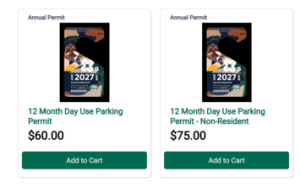
Access to parks remains free for visitors who walk, bike, or use public transportation. Visitors who drive in can show valid parking by displaying a current hangtag from camping at an Oregon State Park or a 12 or 24-month parking permit. Visitors who purchase parking permits online or via the parking QR codes can associate their license plates with valid payment.
Currently, OPRD charges for parking at 46 parks and waives parking fees at over 150 parks across the state. The 22 additional parks were selected based on amenities and features that require maintenance and operation such as restrooms, trails, irrigation, boat ramps and more. Visitor fees help pay for maintenance and operation of parks. Additionally, some Oregon State Park campground RV dump stations will begin requiring a fee this spring.
State Parks’ funding comes from three main sources. A little less than half comes from constitutionally dedicated lottery funds, about 15% comes from the agency’s share of recreational vehicle license plate fees and roughly 35% comes from park fees from visitors. Oregon State Park operations are not funded by general fund taxes.
Oregon State Parks are facing a multi-million-dollar budget shortfall this biennium and worse in future biennia, due to rising operational costs, increased visitation, and reduction in projected Lottery funding. Visitor fees do not cover the full cost of park operations. State Parks’ costs are continuing to rise, and revenue is not keeping pace. If nothing is done, this is a risk of destabilizing the park system that is central to what makes Oregon, Oregon. The rising costs of everything coupled with a projected reduction in lottery funding available for operations means this budget gap will only grow. These fee changes are one part of a broader effort to maintain service levels, and create new opportunities for visitors, partners, and staff alike.
There are also other things being done to stretch current resources while providing high-quality visitor experiences. In addition to the fee increases, OPRD is working to address this shortfall through a variety of measures, including:
-
Pausing some large-scale construction projects
-
Increased public-private partnerships
-
Streamlining agency operations for efficiencies
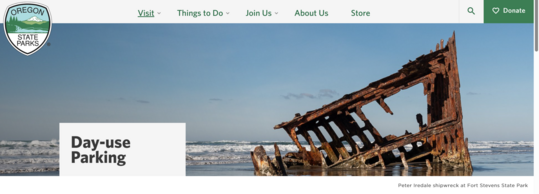
First Photo Link: This first link will take you to the Oregon State Parks page, where you will find a map of our state parks and more details about permits, Camping, and more.
Second Photo Link: This Link will take you to the Oregon State Parks website, where you can purchase the parking passes.
Third Photo Link: This link goes to the Special Access Pass for Veterans with Disabilities and Refunds for Active-Duty Military Members on leave. Please follow the linked photo to get more details.
|
|
 Open Seat on Oregon Wildfire Program Advisory Council
There is a current vacancy on the Wildfire Program Advisory Council (WPAC) for the “Member Representing City Government” position for a four-year term. This position was most recently held by Jim McCauley of LOC until his retirement. The application is due no later than 5 PM on Friday, March 13, 2026.
The position is open to any elected city government official, city employee or member of the League of Oregon Cities (LOC)
The current term for this position runs through September 2028, and is the only vacancy on the Council.
Linked to the photo above is the Advisory Council website where you can find more information about the application and contact the Governor’s office for more details.
|
|
 Honoring Oregon’s Dory Tradition
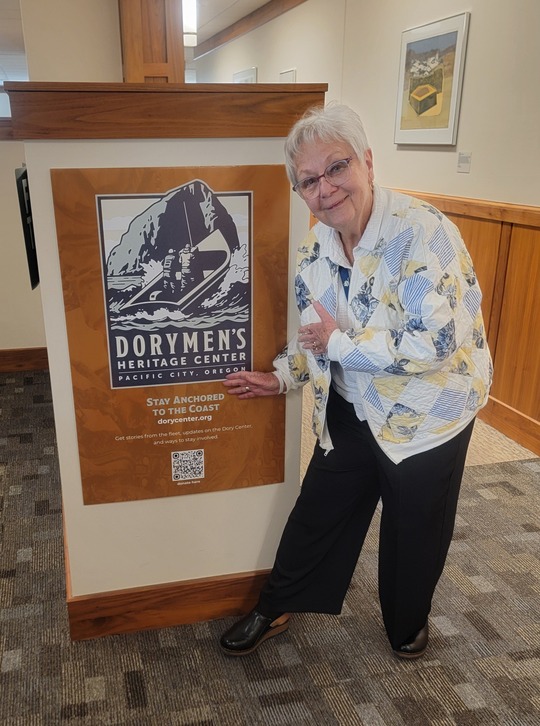
I want to recognize the incredible work being done by the Dorymen’s Heritage Center in Pacific City, a project rooted in the community’s deep respect for its history, its people, and its working waterfront.
For more than a century, Pacific City’s dory fleet has been part of what makes Oregon’s coast so special. It is Oregon’s only beach launched fishing fleet, and it represents the resilience, independence, and ingenuity that define our coastal communities.
The Dory Center is more than a museum. It is a living tribute to the fishermen, families, and traditions that have shaped the culture and economy of this region. Through oral histories, hands on exhibits, and educational programs, the Center ensures that future generations understand the skill, courage, and hard work required to make a living from the ocean.
Our coastal heritage matters. These stories are not just about the past. They are about the identity of our communities and the working waterfronts that continue to support Oregon families today.
I am grateful to the volunteers, dorymen, and community leaders who are preserving this important piece of Oregon’s history and keeping the spirit of Pacific City’s fishing tradition alive.
|
|
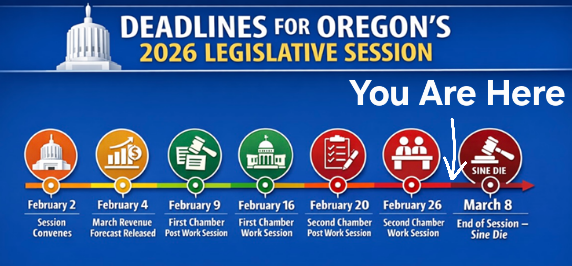
“You are here”, in the final stretch to Sine Die!
In the Oregon Legislature, the end of session is called Sine Die, a Latin phrase meaning “without a day,” or adjournment without a date to return. Once Sine Die is declared, the session ends and any bills that haven’t passed are finished.
With the March 8 constitutional deadline fast approaching, these final days are critical as we work to move priorities across the finish line for our communities.
|
|
 Join me for this week’s episode of From the District for the full update on what’s happening during this fast-paced short session. You can listen in on SoundCloud or watch on YouTube.
Capitol Phone: 503-986-1716 District Phone: 503-300-4493
Capitol Address: 900 Court St. NE, S-405, Salem, Oregon 97301
Email: Sen.SuzanneWeber@oregonlegislature.gov
Website: https://www.oregonlegislature.gov/weber/