
(Corvallis, OR) – The Oregon Parks and Recreation Department and Siuslaw National Forest remind visitors to the Oregon Coast that western snowy plover nesting season begins March 15 and runs through Sept. 15. Beachgoers can help recovery efforts for the threatened shorebird by observing recreation restrictions at designated plover beaches.
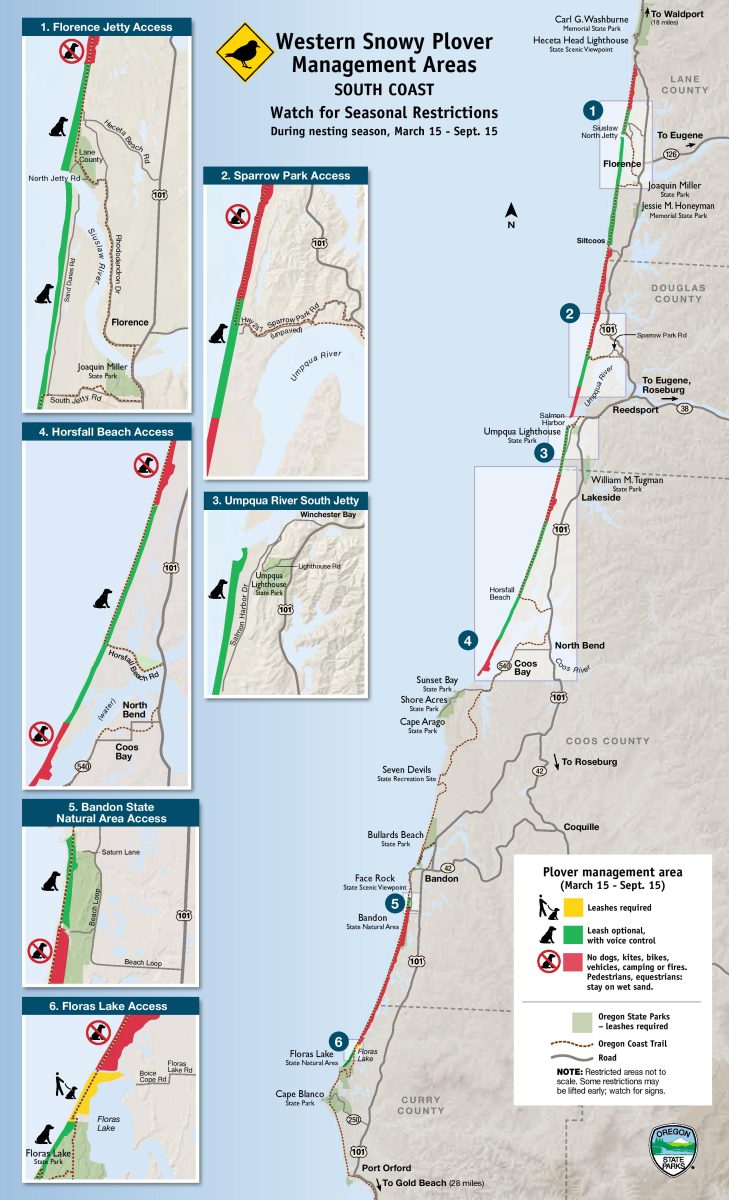
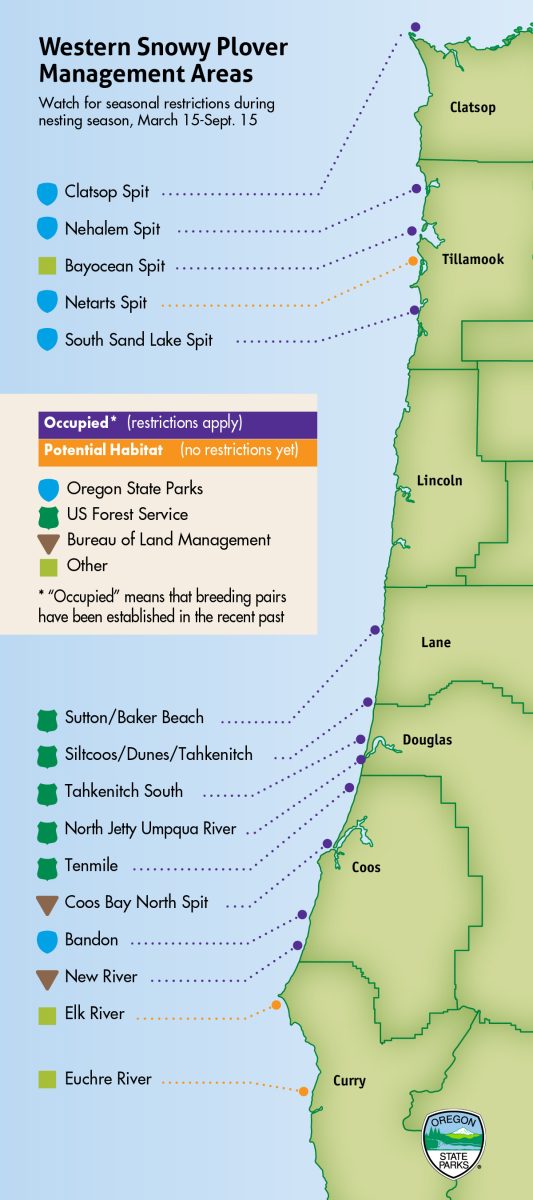
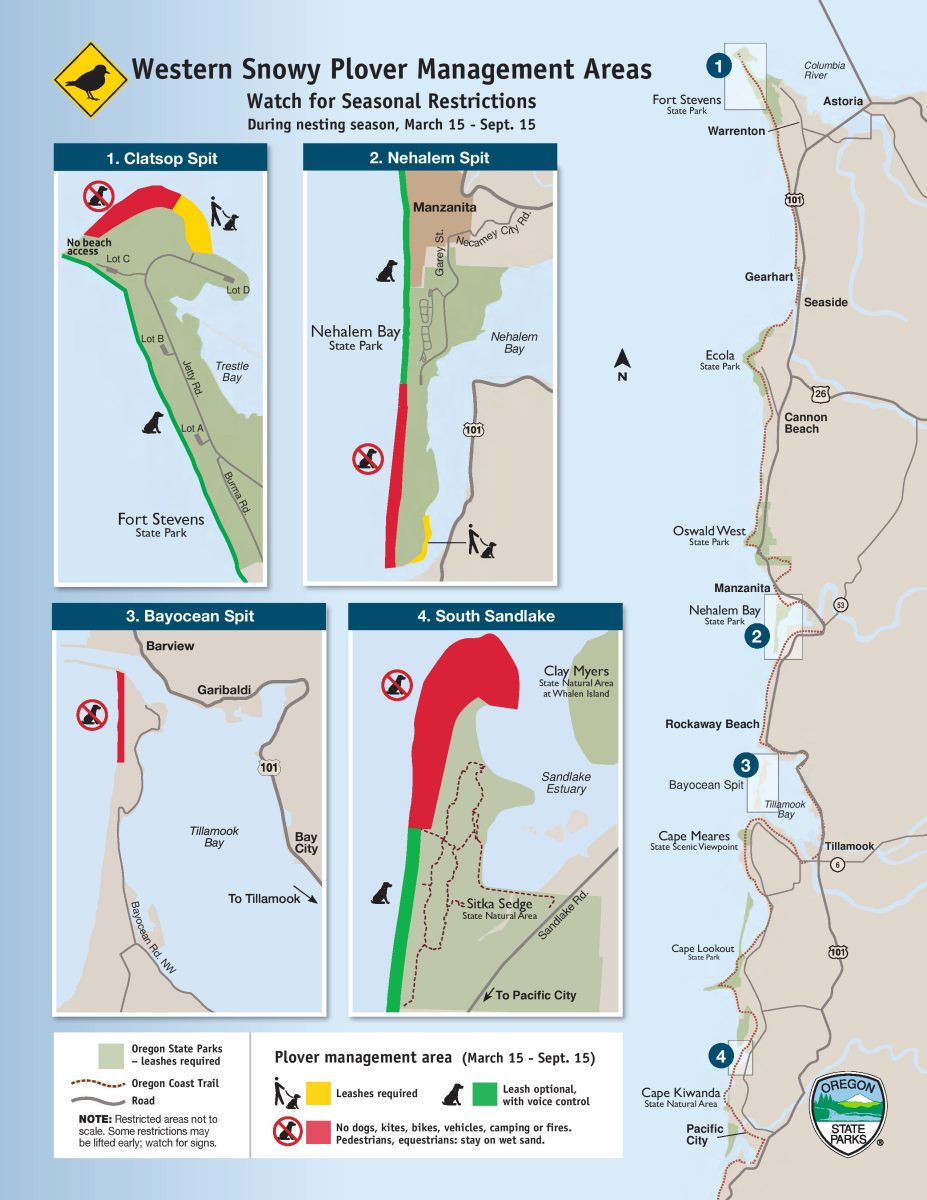
Sensitive plover nesting areas are identified on maps for the northern Oregon Coast and southern Oregon Coast. Western snowy plovers nest in dry sand above the high tide line and are often difficult to see because they camouflage well. To help protect these tiny shorebirds, please stay on wet sand and leave your dogs at home or at your campsite, even if they are leashed. Visitors may notice signs at trailheads with additional rules and limitations. There may be rope fencing in dry sand areas; this fencing delineates some, but not all, of the critical plover habitat that should be avoided.
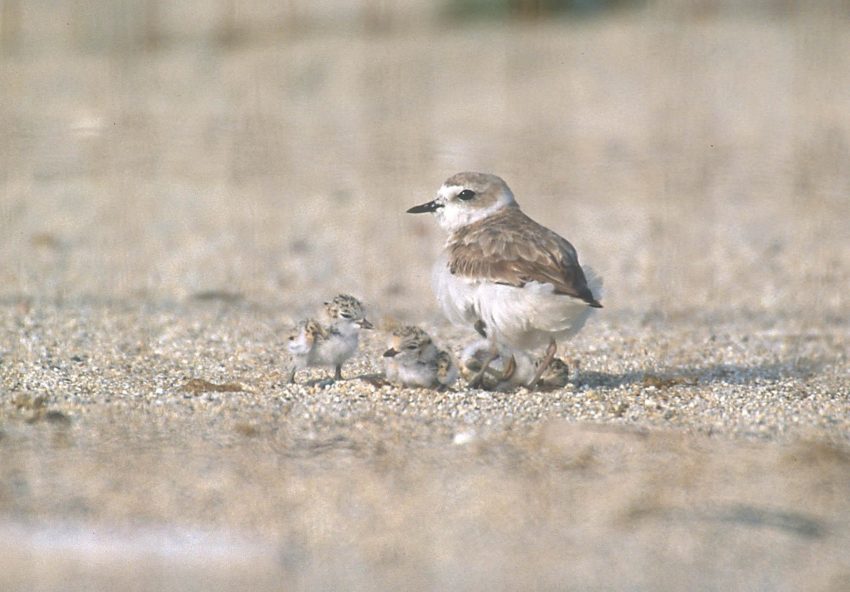
Seasonal recreation restrictions have helped protect and recover the western snowy plovers living on Oregon’s beaches. Nests, and especially chicks, are well-hidden. During the nesting season, human disturbances can flush adult plovers away from their nests as they attempt to defend their young. Left alone too long, or too often, eggs or chicks can die from exposure and predators. Habitat loss from invasive plants and human disturbances—including litter and discarded food scraps that attract predators— also contribute to the birds’ decline.
Recreation restrictions occur only in designated plover management areas where plovers nest or might nest. These areas combined make up about 40 miles of Oregon’s 362 miles of shoreline.
Reminders for recreation on designated plover beaches March 15 – Sept. 15:
- The following are not permitted: dogs (even on a leash), driving a vehicle, riding a bicycle or e-bike, camping, burning wood, flying kites or operating drones.
- Foot and equestrian traffic are permitted below the high-tide line on wet, hard packed sand.
- Respect signs and barriers to protect nesting habitat.
The U.S. Fish and Wildlife Service listed western snowy plovers as a threatened species in 1993 when officials counted only 45 breeding adults. Populations have steadily increased since then due to ongoing efforts. Officials counted 546 during the breeding season survey in 2025.
“We appreciate visitors’ support in keeping these shorebirds safe. We invite visitors to enjoy permitted recreation in sensitive areas or to recreate without seasonal restrictions on beaches not designated as plover nesting areas,” said Laurel Hillmann, ocean shore specialist for the Oregon Parks and Recreation Department.
More information on the snowy plover, including detailed maps of nesting sites, can be found on the Oregon State Parks website (oregon.gov/plovers) and on the Siuslaw National Forest website (fs.usda.gov/r06/siuslaw/animals-plants/western-snowy-plover).
Visitors to the Oregon Dunes National Recreation Area can review Off-highway Vehicle (OHV) maps to identify unrestricted recreation areas and information on riding motor
vehicles on the sand at fs.usda.gov/r06/siuslaw/recreation/rules-and-guidelines.
Plover activity near Sand Lake Recreation Area
The increase in plover numbers may result in nesting occuring at new or historical nesting sites. For example, visitors to Sand Lake Recreation Area may see small roped off areas near the lake’s inlet to protect active nests and may encounter plovers on the beach. Beachgoers are encouraged to protect these birds by restricting recreation activities to wet sand areas, avoiding roped off nesting areas, packing all trash out and keeping dogs on leash. Paragliders should steer toward the northern area of Sand Lake Recreation Area to avoid gliding or landing near plover nests on the southern edge of the Sand Lake spit.
Background on plover protections
Several land managers oversee beach activity for plover protection, primarily the U.S. Forest Service (USFS), the Bureau of Land Management (BLM) and Oregon Parks and Recreation Department (OPRD). For more information on how plovers are managed in Oregon, see the Habitat Conservation Plan (HCP): https://www.oregon.gov/oprd/PCB/Documents/WSP-HCP_08182010-web.pdf.