
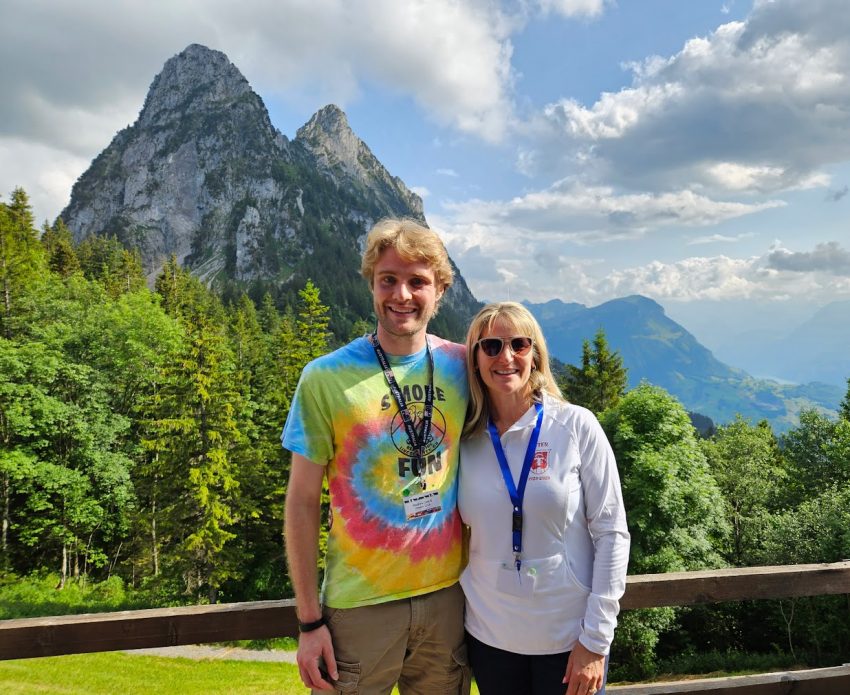

EDITOR’S NOTE: Here’s part two of Michelle Jenck’s “Autism – a Mother’s Perspective” – see below for a link to part one. With all the mis-information about autism and what causes it, I reached out to Michelle Jenck. I’ve worked with her for over a decade on Tillamook County Wellness, and I knew that she was well-informed about autism. As the mother to two children “on the spectrum”, she’s done her research and utilized effective therapies to help her kids. She now shares that knowledge at www.pqinitiative.com to help others navigate the neurodivergent experience. For Michelle and her family, the cause wasn’t important, but coming up with solutions so they could help him to live a happy life.
By Michelle Jenck
The Wellness Lady
These experiences impacted me deeply. I am very frustrated that we have not made more progress in effectively treating autism and other co-occurring issues, such as ADHD. We hear a lot about how more kids are presenting with these conditions but very little about effective treatments for them.
Some of the other changes we made as a family were to improve our eating habits. It became clear, early on, that artificial food dyes and sugar made our son’s symptoms worse. Cutting out processed food from his diet made a big difference, something he began to recognize on his own. It was refreshing to see him turn down certain snacks at baseball practice, explaining that he was “allergic.” I wish more people understood the impact food has on their children’s brain and behavior.
A side note on nutrition. There seems to be a relationship between autism and the gut. There are different theories out there but the takeaway message to me is that parents should pay attention to the severity of their child’s behaviors based on what they are eating. It might help to keep a food diary and track relationships between food and symptoms. In my experience, deferring to a child’s preference to only eat goldfish crackers and macaroni and cheese may lead to worse behaviors. Adding protein, healthy fats and fruits and vegetables with key micronutrients is critical for healthy development and brain function.
Being a stay-at-home mom made it possible for me to volunteer at school. I began to see how many children were struggling with neuro-developmental, visual and behavioral differences. Compelled to help other families and keep these kids from falling through the cracks, I went back to school at the age of 40 for a Master of Education in Health & Kinesiology. In the process, I somehow became the “Wellness Lady,” preaching the gospel of healthy eating and movement habits.
My true passion is for kids particularly during the window of childhood development from conception to age three. Frustrated that there has not been more progress over the past 3 decades since our son was born, I decided to turn my passion into a project. I developed the PQ Initiative as a way to mainstream understanding of the role physical movement plays in early brain development. We have IQ to describe cognitive intelligence and EQ to describe our emotional intelligence. It may surprise people to learn that our PQ, or physical intelligence, is a necessary foundation for both IQ and EQ. Please visit the site to learn more about our journey and the research used to help our family.
Adulting with Autism
Our job as parents did not disappear as our son, who turns 30 next year, grew older and more independent. Autism often presents blind spots that can affect how well we navigate our world – challenges navigating social situations, inflexible thinking, difficulty seeing life from other perspectives, obsessive behavior patterns. As we have helped him assimilate into the world, supporting him as he went through college and now lives and works on his own in another city, it has become clear that we, as parents, also have our own blind spots – our own autism-like tendencies that can also get in the way.
Whether our kids have autism or not, one thing we need to keep in mind is that they are their own person. They have their own unique worldview, passions and quirks. Learning how to distinguish between the traits that fundamentally make up a person versus those that might be rough edges needing to be smoothed out, is the challenge of every parent. Not only in how we raise our kids but in how we recognize this in ourselves, adopting and modeling a growth mindset to develop into the best version of ourselves alongside our kids.
The Autism Cause Debate
As a mom, I have been asked many times what I believe causes autism. Throughout this journey, the best description I have come across regarding the cause of autism is this: Genetics loads the gun. Environment pulls the trigger. Autism traits exist in both my and my husband’s families. As I read in many accounts, parents often discover they are a bit “spectrumy” while receiving the run-down of diagnostic traits for their child during their assessment.
I had plenty of stress and trauma leading up to and during my pregnancy that may have impacted our son’s development. I cannot go back and change that. I wish I had known then what I know now. I would have declined a surgical procedure when I was five months pregnant with him. I would have started meditating and doing yoga to better manage my stress levels. I would have had my son spend more time on his belly during his first year of life, even though he would fuss and cry. I now know that this would have helped him integrate his primitive reflexes and strengthen his vestibular system. At that young stage of development, this could have significantly helped reduce his sensory sensitivities.
There is Help & Hope
I have learned that we cannot control everything, and we don’t know what we don’t know. All we can do is the best we can with the knowledge we have at the time. If you are worried about a child in your family, I encourage you to have them evaluated. Take advantage of early intervention services, home visiting programs, and Occupational Therapy, which will provide a lot of the support described here.
As a family, make a commitment to eat for health rather than convenience. Move more as a family. Expose your kids to books, new environments, social experiences with other children and other activities that provide new ways of learning. This isn’t just good advice for neurodivergent kiddos. This can help every child – and every adult thrive.
VIEW FROM HERE: Autism – A Mother’s Perspective (Series – Part 1 of 2)