

 By Neal Lemery
Conversations ensue, led by the obnoxious and tenacious scrub jays, who noisily monopolize the suet cage and also push aside the other birds from the black sunflower feeder. The jays show off their gymnastic abilities and their agility in hanging off the suet cage with their talons.
During the frenzy, other birds perch in nearby shrubs, waiting their turn. Those who have had their fill fly back to their home nesting and perching trees, and spread the word of the arrival of dinner.
It all seems miraculous to me, as when I arrive with food, the back yard is silent, absent of the neighborhood birds. It seems deserted, but I am being watched. “He who feeds us” must be the topic of the neighborhood avian gossip, my movements closely monitored. They must have lookouts, scouts who keep an eye out for me, when I return to fill the feeders again.
News of my arrival spreads quickly and nearby shrubs quickly fill with sharp-eyed birds watching my every move.
The birds are my barometers of impending storms, wanting to fill their bellies before the rains and winter winds arrive. How they fly, congregate, and act tells me a lot about the state of the weather, and the local forecast, if only I take the time to watch and learn. About 45 minutes before dusk, the feeding frenzy subsides, as birds return to their nighttime abodes, finding shelter from frosty nights and weather fronts.
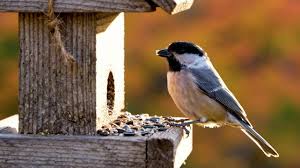
A few mornings ago, I realized I had been derelict in my feeding duties, as a black capped chickadee tapped annoyingly on my bedroom window, at the first light of the new day. The tapping was vigorous and persistent, accompanied by a shrill, insistent chirping. The bird’s behavior was unusual and loud, and it was not just my imagination thinking the bird was talking to me. He was. “He who feeds us” was slacking off and needed to do his job.
The birds are my calendar, the variety of species changing over the months, marking time. Last week, the male house finches arrived, their bright pink coloring a sharp contrast to the spotted brown feathering of the females, who had arrived a few weeks earlier. They came early this year, consistent with my sense that we are going to have an early spring. This is a message agreeing with the neighborhood gossip from the daffodils, camelias, and the neighbor’s hazelnut orchard. Most of the garden now is responding to the longer days, the sunshine, and the increasing warmth of February afternoons.
The robins came last week, too. They are not much for the feeder, preferring to hop around on the lawn, and snack on more earthbound offerings. They don’t hobnob with the usual feeder crowd of finches, chickadees, sparrows, and the occasional Asian doves, flickers, and woodpeckers.
In my yard, it’s a mixed crowd, diverse, yet congenial as squabbles over my seed offerings are rare. Most everyone, except for the scrub jays, are content to wait their turn.
The resident geese and eagles of the neighborhood seem to ignore the feeder crowd, preferring to just watch the action from the geese’s periodic sorties over the neighborhood, and the eagles’ perch on the distant spruce trees.
For more information on how to feed the birds: https://feederwatch.org/learn/feeding-birds/

Books: NEW book – Recharging Ourselves, Building Community: Rural Voices for Hope and Change; Finding My Muse on Main Street, Homegrown Tomatoes, and Mentoring Boys to Men