

 By Neal Lemery
I had coffee with a friend and a few of his friends the other day. They were headed to a waterfall and would spend the afternoon of an unseasonably warm and sunny January day seeking solitude and respite, communing with nature and like-minded hikers. He is a lover and student of nature, who delights in introducing others to the serenity of simple experiences in the wild. Time with him calms me, and resets my soul.
We spoke of our collective need to recharge ourselves, and to purge ourselves of the seemingly endless stream of toxic current affairs and the conflict of being both obsessed and depressed by social media and political conversations. We shared our renewed desire to take a break, get some fresh air and be rejuvenated by a walk in the woods, taking in the natural beauty of where we live.
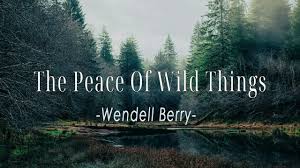
I was reminded of Wendell Berry’s soothing poem, The Peace of Wild Things, heeding his command to “come into the peace of wild things” when “despair for the world grows within me”. https://www.scottishpoetrylibrary.org.uk/poem/peace-wild-things-0/#:~:text=I%20come%20into%20the%20peace,the%20presence%20of%20still%20water ©2012
“Whatever sorts of problems you may have in your everyday life, you can come out here or reflect on here, and realize how unimportant they really are; this is definitely a place for me to let go and be myself.” (a participant in a US Forest Service study on wilderness)
A US Forest Service study “highlight(s) the importance of wilderness in allowing for unplugging and leaving behind the intrusions of modern, technological society. The isolation, freedom, and simplicity of being in wilderness allow a different pace and a different focus, which in turn allows space for renewing and reinforcing relationships. We found frequent mention of the intimacy and privacy that wilderness provides, which in turn strengthens communication and attention whether they be to self, to other species, or with higher beings. Wild places teach and remind what it means to be human in relation to the natural world. Escaping daily routines, demands, interruptions and expectations into a time and space of refuge and sanctuary allows exploration of our place in the wider world. In wilderness, we found that social constraints are lessened. The cultural information to be processed is limited, immediate practices are common, and unfiltered or raw encounters with the natural world more frequent. In these conditions, the human relationship with the larger wild can be kindled, stoked, and sustained.
The studies “demonstrate the role wilderness can play as a haven or sanctuary from modern society. Much as the notion of wildness can mean freedom from human domination for the plants and animals there, so too should wilderness provide a respite for humans from the demands and pressures of modern society. In that space, away from the expectations and watchfulness of secular and societal concerns, we have room for personal expression, identity and relationship. In wilderness, there is time for the unknown, the new, and the profound. It is a place to belong, connect and fully, freely be.”
William T. Borrie, Angela M. Meyer, and Ian M. Foster, Wilderness Experiences as Sanctuary and Refuge from Society https://www.fs.usda.gov/rm/pubs/rmrs_p066/rmrs_p066_070_076.pdf (2012)
On the way home, I turned off the news on the radio, and pulled over to take in the winter sunshine on the mountains and the sparkle of the light on the river. I took a deep breath, and then another. I took time to just be, to give myself Wendell Berry’s peace of wild things. I took time to find myself, again, and to find my own peace.

Books: NEW book – Recharging Ourselves, Building Community: Rural Voices for Hope and Change; Finding My Muse on Main Street, Homegrown Tomatoes, and Mentoring Boys to Men