









One-time savings and the passage of Senate Bill 1507 allowed the state to avoid deep budget reductions for the remainder of this biennium
(SALEM, OR) – Today, March 2, 2026, the co-chairs of the Joint Committee on Ways and Means released the 2025-2027 budget rebalance, which maintains critical state services despite a multi-year budget crisis sparked by cuts from the Trump administration.
“The federal budget cuts have caused both short-term and long-term crises for Oregon’s budget,” said Sen. Kate Lieber (D-SW Portland and Beaverton), co-chair of the Joint Committee on Ways and Means. “This rebalance preserves essential state programs for the next 18 months to give us time to solve the larger challenges the federal budget cuts will have for Oregon.”
Last summer, the federal cuts blew a $900 million hole in the Oregon state budget putting essential services like education, public safety, and health care at risk. The Legislature is required by the Oregon Constitution to maintain a balanced budget.
Over the next few months, the budget hole was reduced by a one-time corporate tax enforcement, budget reversions from the 2023-2025 budget, and a modest upward revision in the state’s revenue forecast.
Gov. Tina Kotek’s directive to state agencies in September to implement cost-saving measures such as halting non-essential out-of-state travel and holding positions vacant also helped reduce the budget deficit.
Through an extensive, bipartisan process, the co-chairs identified potential savings and the most manageable budget reductions across state government to ensure core, mandatory state services were protected. Budget reductions totalled $128 million, mostly achieved through vacancy savings, fund swaps, program delays, and reductions in non-programmatic agency budgets.
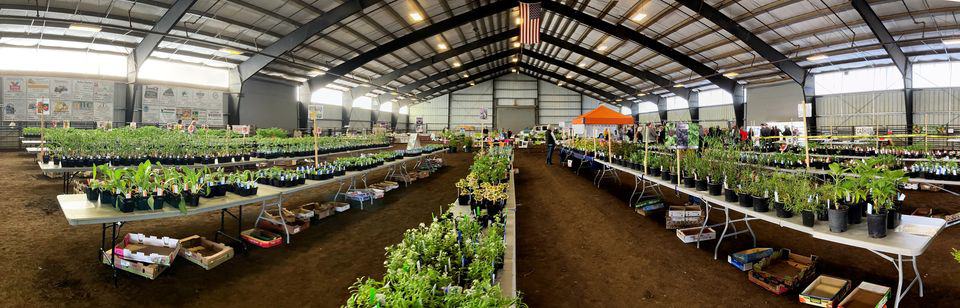
These reductions would have been much greater had legislative Democrats not passed Senate Bill 1507, which preserved $311 million in state revenue for this biennium. The budget also makes targeted investments to address emergent issues, such as eradicating the Japanese Beetle, providing support to immigrants and refugees, and aiding Southern Oregon University.
However, the crisis from the federal cuts is far from averted. In particular, the shifting of costs for Medicaid and SNAP to the states from the federal government will have greater budget impacts for Oregon in over the next two biennia. “Our priority continues to be maintaining the essential services that Oregonians rely on, like education, health care, and public safety,” said Rep. Tawna Sanchez (D-Portland), co-chair of the Joint Committee on Ways and Means. “While this budget rebalance was relatively benign, we know there will be difficult decisions in the years ahead due to the disastrous policies of the federal administration.”
Included as part of the budget rebalance are reductions for the Oregon Department of Transportation after additional revenues to preserve services were put on hold pending a vote on the gas tax referendum. ODOT maintenance and operations are primary funded through the State Highway Fund and fees; its budget is not balanced with the same funds as the rest of the state budget.
Significant funding shortages and prolonged uncertainty at ODOT over the past year have led to hundreds of employees leaving the agency. This has negatively impacted services at the agency, but generated vacancy-savings that allowed the co-chairs to rebalance the ODOT budget without requiring layoffs. The ODOT rebalanced budget has $288.7 million in reductions, largely through already-accrued vacancy savings, directing ODOT to hold certain positions vacant, swapping state funds for federal funds where possible, and temporarily redirecting revenue that supports programs including Connect Oregon, Community Paths, Safe Routes to School, the Transportation Operating Fund, and bridge seismic improvements. “These were not easy decisions, and are the result of a good deal of compromise across the aisle,” Sanchez said. “Throughout the process we stayed focus on the safety and stability in our state and local roads and bridges.”
Maintaining funding for programs that directly support health and safety of Oregon’s current transportation systems were prioritized. This rebalance brings much needed stability to an agency that has faced significant uncertainty over the past year. “We ran a bipartisan process to create a budget that provides short-term certainty to ODOT,” Lieber said. “Redirecting funds, holding positions open, and deferring maintenance are manageable in the short-term, but are not a long-term solution for this essential state agency.”
