









 EDITOR’S NOTE: Here’s an installment from Tillamook County’s State Representative Cyrus Javadi’s Substack blog, “A Point of Personal Privilege.” Oregon legislator and local dentist, representing District 32, a focus on practical policies and community well-being. This space offers insights on state issues, reflections on leadership, and stories from the Oregon coast, fostering thoughtful dialogue. Posted on Substack, 5/25/26
Memorial Day, Churchill, and the Country Worth Saving
By State Representative Cyrus Javadi
Let me ask you a question: What kind of country are we trying to be?
And not in the grand, marble-statue sense. I mean on Tuesday morning. When the rent is due. When the tire is flat. When the child is sick. When the small business is hanging on by its fingernails. When the veteran is waiting for care—again. And when the single mom is doing math in the grocery aisle and losing.
That country. The real one.
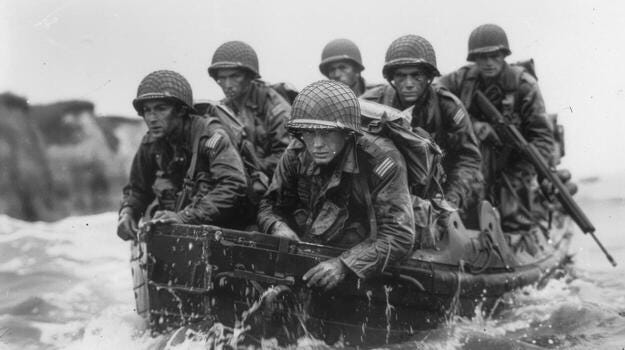
Because Memorial Day asks us something serious. It asks us to remember the men and women who did not come home.
Why did they do it?
Why did so many ordinary people leave homes, families, farms, jobs, schools, and small towns to fight for something larger than themselves? Why did so many willingly risk everything? And why did so many never come back?
They were real people. Sons. Daughters. Fathers. Mothers. Friends. Neighbors. People who had plans, bad jokes and good ones, favorite meals, unfinished arguments, and places at dinner tables that stayed empty.
We honor them because they gave what could not be repaid.
So maybe the best way to honor them is not only to say “thank you,” though we should. Maybe it is to ask what kind of country they believed was worth saving.
That is the question underneath Memorial Day. And it is the question underneath politics too.
Churchill and the Ambulance
This brings us, oddly enough, to Winston Churchill.
In 1925, Churchill was Chancellor of the Exchequer, which is the British version of Treasury Secretary, but with more waistcoats and better insults.
Britain had survived World War I. It had survived the Spanish flu (the 1920 version of COVID 19). It had survived grief, debt, inflation, and national exhaustion. The country was not in the middle of war anymore, but it was still wounded.
And the question facing Britain was simple: What is the purpose of government after the crisis passes?
That question still matters.
Sometimes, like during war, the purpose of government is often clear. Defeat the enemy. Protect the homeland. Supply the troops. Keep the country alive.
But in peace, government faces a different test. What do we do with the people who are still limping—both literally and metaphorically?
Churchill used a phrase I cannot shake. Speaking in 1925, six years after the war ended, he said aid should not go first to “the sturdy marching troops,” but to “the stragglers, to the exhausted, to the weak, to the wounded, to the veterans, to the widow and the orphans.”
“To them,” he said, “the ambulances of the State” should be directed.
The ambulance. That image matters. You see, an ambulance does not show up because your life is perfect. It shows up because something has gone wrong. It does not ask whether you are morally impressive enough to bleed. It does not move into your house and run your life.
It gets you from danger to care. That is a very different thing.
The Country Worth Defending
So this Memorial Day weekend, while we see flags on porches and flowers at cemeteries, we should remember what those graves are asking of us.
They are not asking us to build a perfect country. There is no such thing.
They are not asking us to agree on every program, tax, rule, or budget line. (Thank goodness. That would be unbearable. Also impossible. Also very likely to involve a committee.)
They are asking whether we still know what this country is for.
A country is not only an economy. It is not only a military. It is not only a Constitution, though the Constitution is the frame that holds the house together.
A country is people.
Strong people, yes. But also tired people. Poor people. Sick people. Wounded people. Children. Widows. Orphans. Veterans. Stragglers.
The people at the back of the line.
The country our fallen died to defend is not made stronger when the strong get stronger and the weak are told to limp faster.
It is made stronger when free people, in a free economy, under a constitutional government, choose to protect the vulnerable, lift the exhausted, and help the wounded stand again.
That does not mean we stop debating taxes, spending, fraud, waste, incentives, and unintended consequences.
We should debate all of it. We should be tough-minded. But we should never become numb.
Because the ambulance of the state is not there to make people dependent. It is there to return them, as much as possible, to strength, work, family, dignity, and citizenship.
That is civilization.
And on Memorial Day, when we remember those who gave everything to defend this civilization from enemies abroad, the least we can do in peace is refuse to let it rot from indifference at home.
If you made it this far, congratulations. You have survived Memorial Day, Churchill, Adam Smith, and a brief detour through the grocery aisle. There should probably be a commemorative mug.
I write about Oregon, government, freedom, responsibility, and the daily work of keeping public life from becoming either cruel or ridiculous.
Subscribe if that sounds useful. Share this with someone who still believes a country can be tough-minded without being hardhearted.
