


Is IP-28 really “Stupid is as Stupid Does,” to quote Forrest Gump’s momma?
EDITOR’S NOTE: The so-called “PEACE” act has been mis-represented to people as strengthening animal abuse laws, while Oregon already has some of the strongest in the nation, and what IP-28 REALLY looks to do is to end consumption of meat. Ready to be a vegan? No hunting, fishing, and millions of animal products will no longer be available or produced in Oregon. If you might have signed one of these petitions not understanding it’s true implications, see the Oregon Secretary of State’s website for information on how to remove your name from the petition. The group has turned in over 100,000 signatures that still need to be verified, but need to start talking about this issue now to stop the attack on our choice to fish, hunt and consume meat.
By Don Backman
We are all hearing about IP-28. It has been around a while, and there have been two previous attempts to get enough signatures to put similar measures on the ballot. They failed. Unfortunately, IP-28 looks like it is close to making it. Supporters consider making the ballot a victory. The measure is widely expected to fail. So why spend time discussing it? This short series of articles will explore the impacts.
What is IP-28? Initiative Petition 28, the PEACE Act, People for the Elimination of Animal Cruelty Exemptions, is billed as preventing animal abuse. It is actually an Animal Liberation Act and the Chief Petitioner, David Michaelson, uses those words and the words “rights of animals” in his writings. IP-28 seeks to stop people from consuming (eating) animal protein – something also known as meat — and consuming or using animal products such as milk, cheese, leather, wool — and from benefitting from the work of animals such as draft animals.
Michaelson’s words on the Yes on IP28 website are informative. In a January 25, 2026, writing titled “How can we get the world to talk about animals’ inviolable rights?”, he compares his Animal Rights movement to the Suffragette movement and the right to vote. He wrote: “In addition to my view that the suffragists have demonstrated the incredible potential of ballot initiatives for social change, it is also my position that a nationwide campaign forcing the public to vote on protecting animals’ inviolable rights would create the cultural evolution necessary to prevent incremental changes from being undone and to achieve what left social movements refer to as “non-reformist reforms.” In just the same way that the world began considering whether to “let” women have the right to vote, I want the world to earnestly consider whether to “let” animals have the right to a life free from slaughter, hunting, experimentation, confinement, forced breeding, and other forms of exploitation. To make this a reality, I believe we must commence the conversation, build a political bloc, and advocate with authenticity.”
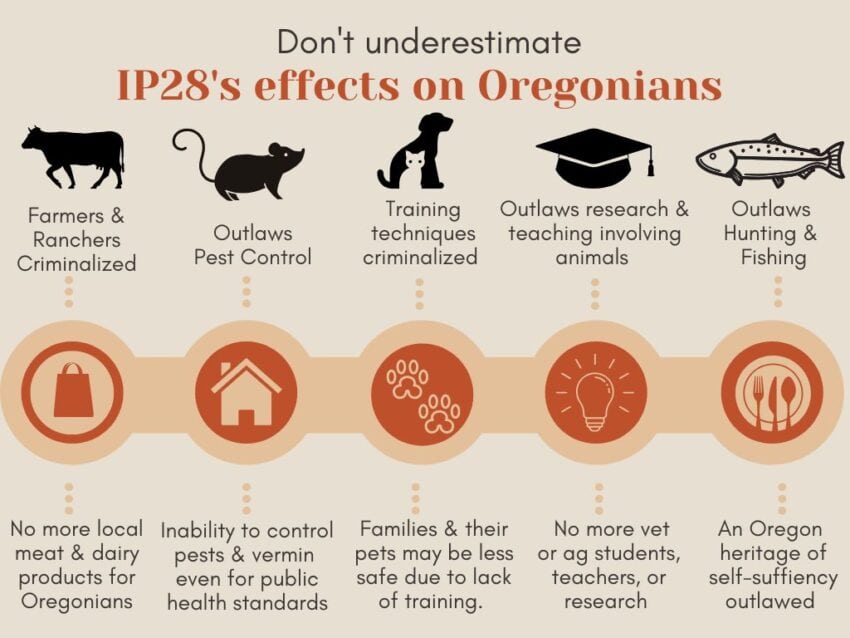
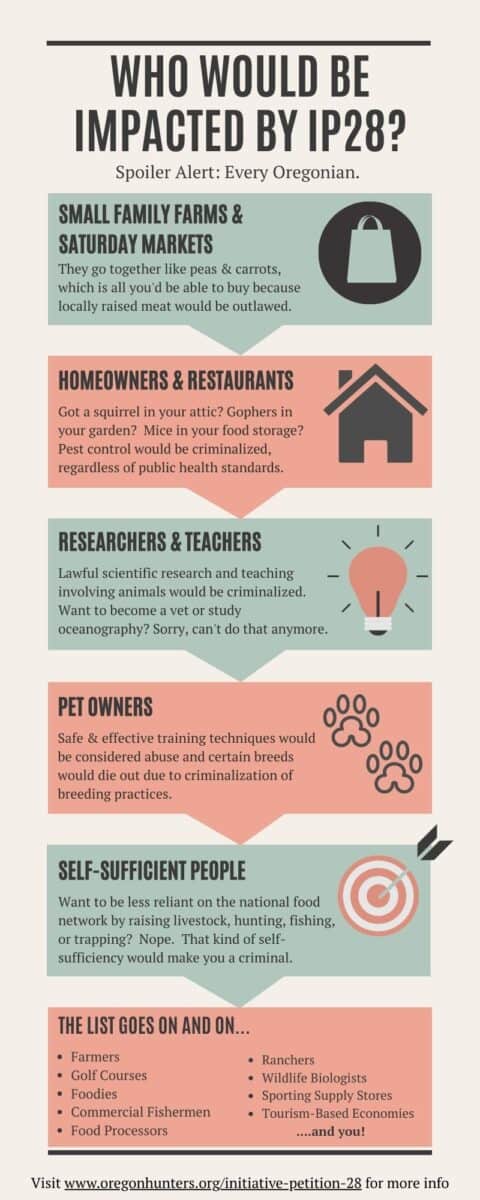 IP-28 works by removing exemptions in the Oregon animal abuse statutes. For example, all forms of ranching and farming of animals and fish would be considered animal abuse, as would hunting, trapping rodents in your house (the backers maintain that live traps and birth control would possibly remain legal), transporting an animal in a pet carrier, or virtually any other form of interaction with animals. While Michaelson claims that veterinary medicine would be allowed, not everyone agrees, and many experts believe that simple tasks such as neutering cats and dogs would be considered animal abuse. As reported by Carlos Fuentes, and published on Oregon Live, part of the Oregonian newspaper, “In practice, the measure would prohibit hunting, fishing, slaughtering livestock, conducting scientific research on animals, using animals in rodeos, operating a commercial poultry business and castrating or neutering livestock, among other activities.”
The group behind IP-28 knows it won’t pass, but they are openly pushing a long-term strategy. First, by getting it on a ballot, then by making changes to laws and to the public perceptions over time. Most people won’t read the entire document, which is why the Initiative is expected to make the ballot. The impact, were it to become law, would be widespread and devastate both our economy and Oregon’s wildlife.
To start with, the Oregon Farm Bureau reports that Oregon’s 34,000 plus farms and ranches will be devastated. This number does not include all of the small farm and backyard businesses that provide products at farmstands and Farmers Markets all across the state. Since even raising hay or wheat can result in animals being harmed, such as mice or snakes being caught in equipment, the impact is widespread and clearly goes beyond dairy farming and cattle ranching.
The Oregon Farm Bureau states, “IP 28 would fundamentally alter Oregon’s animal abuse statutes in a way that criminalizes longstanding, lawful, and necessary activities across agriculture, natural resource management, and daily life.” Basic activities necessary for farming and ranching would become illegal. They go on to say about the ban: The loss of ‘Any operations, whether a small family farm, a few backyard chickens, larger dairies that create our most famous brands or taking wild birds, fish, or game for meat would make Oregon completely reliant on out-of-state production of meat, eggs and dairy products.”
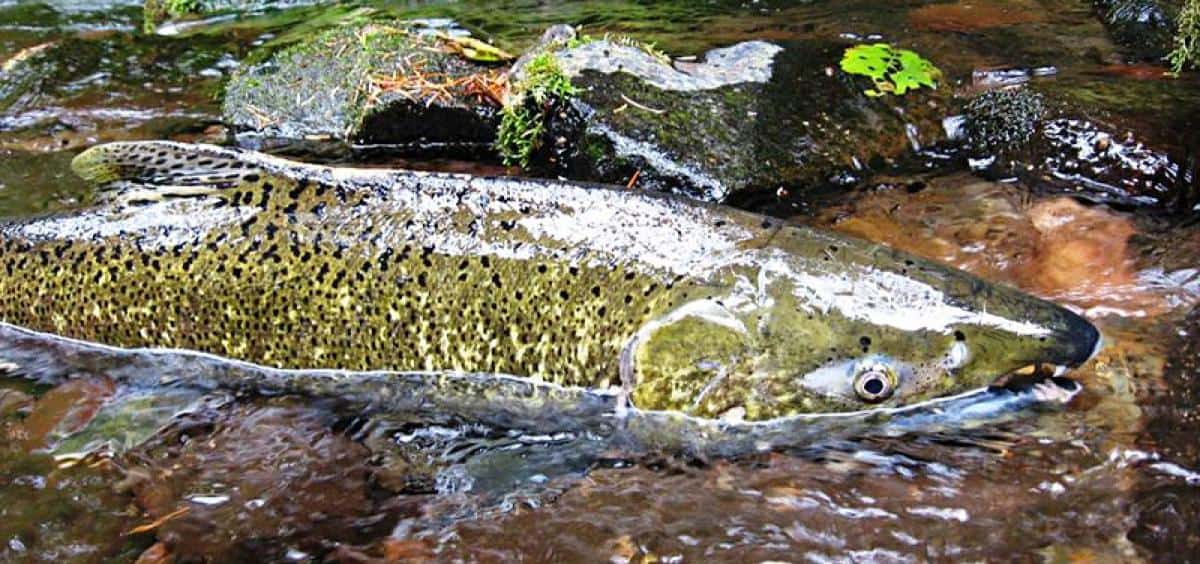
The ballot initiative also stops fishing. This is true whether you are a commercial fisherman, a gal who loves tossing flies to hungry trout in the backcountry for catch and release, or someone who takes their grandkids to dig clams.
The Association of Northwest Steelheaders, one of the largest sport fishing associations and strongest advocates for fish and fish habitat in Oregon, simply sums it up as “The end of fishing in Oregon.” According to the group, “The campaign promoting IP 28 frames the measure as an effort to end animal cruelty. However, the language of the initiative goes far beyond that goal. If enacted, the proposal would effectively outlaw recreational fishing, and shellfish harvesting, in Oregon’s rivers, lakes, and coastal waters. The broader implications would effectively outlaw agriculture, wildlife management, pest control, scientific research, and responsible animal husbandry across the state.”
It doesn’t take a lot of imagination to see how the reasoning behind IP-28 can snowball. Activities such as land clearing, logging, and roadside brushing, to name just a few, routinely disturb bird nests and can harm animals, which the measure considers abuse. While these examples can seem silly and extreme, the impacts are not, and they extend far and wide.
It isn’t hard to understand the impact on Tillamook County (and virtually every county in Oregon). Here, our economy depends heavily on the dairy farming industry, logging, commercial fishing, outdoor recreation such as hunting and fishing, and tourism. All of these areas are impacted. Dairy farming will have to cease immediately. The same goes for the commercial fishing industry, which will simply be out of business. As for logging, how do you clear brush or cut a tree without possibly harming a bird or an animal that may be living in the tree or brush pile? This measure will have a severe impact on industry. Then there are fishing guides, restaurants, tourism, and the list goes on.
Fortunately, the impact on Oregon’s economy and way of life is rapidly becoming apparent. Republicans, Democrats, unaffiliated voters, and nonpartisan leaders are joining in opposing IP-28. Tina Kotek, Oregon’s governor, has come out in opposition to this initiative. Other leaders from across the political spectrum are stepping up, too. Locally, State Representative Cyrus Javadi recently released a scathing analysis of the impact. Other leaders and candidates are following suit.
In the next section, we will discuss the negative impacts that IP-28 and any similar measures or legislation would have on hunting and on wildlife. Spoiler alert: IP-28 would be devastating and set back over 100 years of wildlife conservation.
