







By Leanna Coy, FNP BC
The menopausal transition brings significant bodily changes. Muscles may feel less toned, and strength may decline. Physically active women may notice slower recovery time after their workouts. These changes are common during menopause, as declining estrogen levels affect muscle and bone health. Unchecked, these changes put a woman’s health at risk. The gradual loss of muscle mass and bone density increases frailty and the risk for falls. These changes also contribute to the development of chronic disease with aging. The good news is that regular resistance training and a high-protein diet improve overall health.
Hormonal Changes Affect Muscle Health During Menopause
During the menopause transition, estrogen levels fluctuate and drop sharply. Estrogen shapes feminine traits and regulates metabolism. Lower estrogen levels make the body burn energy less efficiently, leading to increased fat and reduced muscle. After age 50, muscle mass declines 5% to 10% every decade, or by about 4 to 6 pounds per decade.
We call the gradual loss of muscle mass, strength, and physical ability sarcopenia. As muscle mass declines, your risk for falling—and losing independence—increases. Sarcopenia affects about 50% of adults over 80. You can manage muscle and bone changes through resistance training and a high-protein diet.
Resistance Training Builds and Preserves Muscle
In menopause, you want to maintain strength by preserving muscle mass through resistance training. Also known as strength training, resistance training works your muscles against a weight or some type of resistance. You don’t need special equipment or a gym. You can use your body weight, exercise bands, or household items like water jugs, especially when starting out.
When you exercise with resistance, you challenge your muscles to contract and strain the tissues. Microscopic tears in the muscle occur. Don’t let this alarm you. These tears are a natural process that encourages your body to start muscle growth. As the body makes repairs to the tears, the muscles become thicker and more powerful. A similar process is occurring in the bones as they adapt to the increased stress from weights or resistance.
The benefits go beyond just strong muscles. The increased bone strength improves bone density and reduces the risk of osteoporosis. As muscles and bones grow stronger, physical strength and balance should improve, reducing the risk of falls. Some side effects of regular strength training may include improved weight and a better mood.
Resistance training works best when you do a progression. This means you start with a lower weight and fewer repetitions, aiming to build a solid foundation of good form and joint stability. The body will adapt over time, so you can increase your repetitions of the exercises or the resistance weight by about 10% every four to six weeks. Using a progression like this helps reduce the risk of injury and over-training, and keeps your muscles from reaching a plateau.
How protein works in maintaining muscle mass
The effort of growing and maintaining muscle and bone mass requires the right kind of nutrition to help support all that work, and protein is that source. Your muscles need protein to repair and grow. The body doesn’t make protein well, which is why it is important to eat a high-quality protein with each meal. Older adults who eat more protein will have less muscle loss.
The average woman’s protein intake declines with aging. This means you may need to rethink how you incorporate protein in your diet. The recommended protein intake is 1.5 to 1.8 grams per kilogram of lean body mass. Lean body mass is the weight at which you feel good, or your goal weight. A simpler way to think of this is to aim for 25 to 30 grams of protein per meal, plus 10 to 20 grams per snack. Some good sources of protein include:
- Fish and seafood
- Poultry
- Eggs
- Dairy products
- Beans and lentils
- Tofu and tempeh
- Nuts and seeds
Because everyone’s diet and physical needs are different, you should discuss personal dietary recommendations with your healthcare provider or with a dietician.
Here’s more about the importance of protein – https://www.tillamookcountypioneer.net/in-good-health-eat-protein-like-your-life-depends-on-itbecause-in-menopause-it-does/
Remember: It’s Never Too Late
It’s never too late to get started—every step you take benefits your future. The combination of resistance and strength training is a powerful tool to boost healthy aging, and there is strong evidence that women can gain strength and muscle after menopause. Make sure to check with your healthcare provider before starting an exercise program. If you’re new to working out, start slowly and focus on small wins. Aim for 2 to 3 resistance training sessions a week at first. Focus on working the major muscle groups (think larger), such as your legs and arms. With small, consistent changes, women can remain strong, active, and independent throughout life.
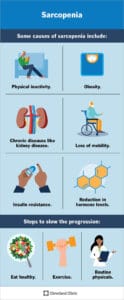 Signs of sarcopenia developing include:
- Less stamina for physical activity, such as walking
- Trouble doing normal daily activities, like cleaning house
- A slower pace when walking
- Difficulty climbing stairs
- Poor balance and an increased number of falls
