| Have you ever driven on a familiar route, arrived at your destination but failed to remember much of the journey? This is usually due to a phenomenon called “highway hypnosis”, an altered mental state where your brain continues to control the vehicle while your conscious attention drifts, leading to inattention blindness. A 2014 experiment observed university students who were walking down a path while looking at their phones. Findings showed that these students were able to avoid major obstacles, such as signs on the sidewalks, but failed to actually see and realize the researchers had hung money on the trees.
Inattention blindness supports the idea that while we are in autopilot mode, our brain can only process external stimuli to a limited extent. The study suggested tips to avoid highway hypnosis:
- Keep eyes moving across the road or landmarks, instead of fixed on one spot.
- Drive with the window open or the fan on.
- Sing along to music.
- If using GPS, use the voice function to prompt action.
- Take an alternate, less-traveled route (if possible) to keep brain engaged in new surroundings.
- Avoid heavy mental load while driving.
- Take breaks on long trips to refresh attention.
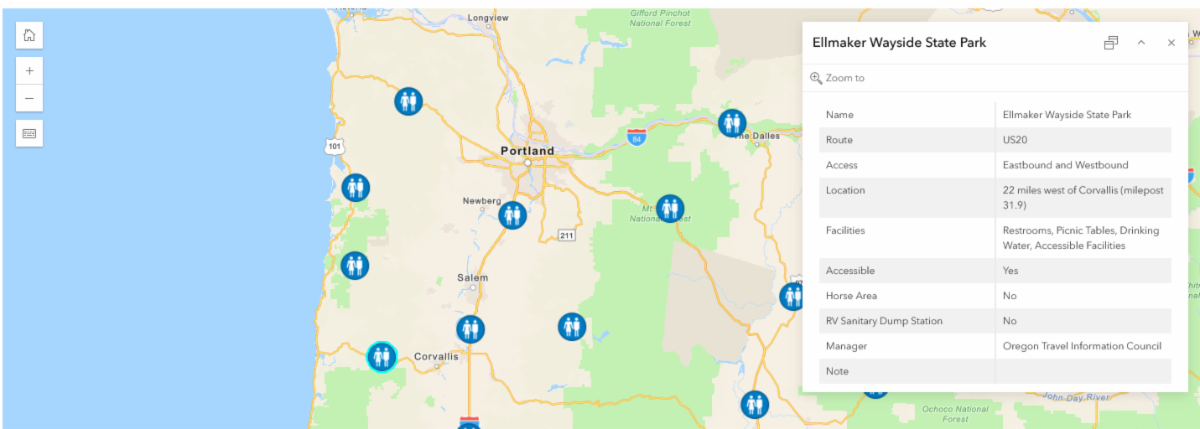
Rest areas are provided by the Department of Transportation to offer a stopping place for travelers to take a short break from driving, relax, have a snack, or use the restroom.
Many of these rest areas are managed by Oregon Travel Information Council (OTIC). The Council, which operates under the name Oregon Travel Experience (OTE), is a semi-independent state agency and does not receive general tax funds.
The council funds its operations—which include managing highway rest areas, the logo sign program, historical markers, and heritage trees—through program revenues like highway “Blue Logo” sign fees, state highway funds allocated by the legislature, and sponsorships.
- Business Fees: The agency collects application and renewal fees from businesses (gas, food, lodging) that advertise on the state’s blue highway logo signs.
- State Highway Funds: The Oregon State Legislature allocates a portion of the state highway fund to the TIC. Under the Oregon Constitution, these funds (derived from gas taxes and vehicle registrations) are legally restricted and used specifically to help construct, operate, and maintain roadside rest areas.
- Community Sponsorships: Specific historical markers and heritage tree programs are often co-funded by local community sponsors and OTIC.
Note: The council is often confused with Travel Oregon (the Oregon Tourism Commission). Travel Oregon is a separate agency entirely funded by the statewide transient lodging tax paid by overnight visitors.
All of the Department’s Interstate rest areas and most of our rest areas on other highways are ADA accessible. Other features may include picnic tables, drinking water, traveler information and vending machines. |