







 By Trimaine Clark
Living and working in Tillamook County is an art of balancing two worlds. In one world, we go with the grain of nature as master gardeners, small-scale farmers, and multi-generational dairy farmers. On the other end, the coastal destination hustle with an intense summer surge of tourism, along with shifting real estate markets which puts a strain on local infrastructure.
When the small coastal towns here experience tension, like a city website lacking easily accessible and critical zoning updates, it isn’t because local leaders don’t care. It’s a rural resource gap stemming from limited off-season budgets coupled with high-season demands. In a recent public forum, local realtors accurately highlighted how delayed data and correspondence makes the town as a whole look bad. All the same, the local mayor’s response was equally true. They have limited staff and a tight budget within a community that says they don’t want to talk to AI.
Even then, as local writer Kiandre Clark recently pointed out in these pages, we are already participating in the AI ecosystem we claim to reject [1.1]. We use AI for GPS systems, package routing, streaming recommendations, social media feeds, and even Canva uses AI while we create “custom, man-made” flyers. The question isn’t whether or not we allow a machine to replace people. The question is whether we’ll let our local leaders and business owners burn out, or use background automation as a means to an end in better serving our communities.
24/7 Access vs. Radio Silence
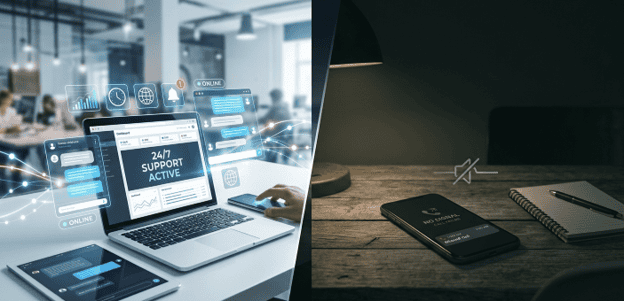
Two things can both be true. People don’t want to talk to AI, but they do it anyway. Whether you’re interacting with a chatbot for customer support or using your phone’s voice assistants, you are talking to AI. Whether you would rather talk to an AI agent or face total radio silence has already been decided by our own everyday habits. Data published by Zoom and Intercom reveals that 61% of consumers prefer an instant AI reply over waiting for a customer service rep [1.3]. Joint research by Zoom and Morning Consult establishes that 77% of bot users successfully resolve issues without human intervention at least sometimes [1.3]. Skeptics may argue that Oregon is the exception, but hard data tells a different story. The Statesman Journal reported that according to Anthropic’s economic index study, Oregon ranks 9th in the nation per capita for overall AI usage [1.2]. Our desire for immediate answers has outpaced our fear of an AI takeover.
The true power of modern, AI-based software isn’t the chatbot on the front-facing end of the customer experience. It’s the invisible plumbing working behind the scenes through automations and API mapping. To understand why this is so substantial for Tillamook County, one must assess our current employment landscape. Municipal leaders and business owners aren’t just fighting against tight budgets, they are fighting a shallow labor force. Finding specialized staff and professionals in a small, localized talent pool is a constant uphill battle. Manual data management breaks under this pressure.
The Backend Lifeline
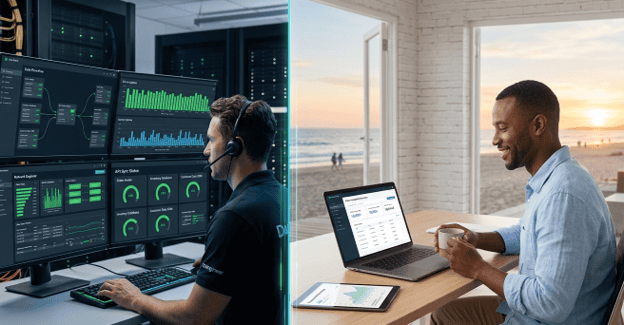 This is exactly where the backend, invisible pipeline of API mapping and automations comes into place. We often assume technology is built to replace human workers, however, operational data from McKinsey & Company reveals a vastly different outcome. In its internal implementation of automated workflows, McKinsey grew its client-facing operations by 25% while decreasing non-client, back-office workloads by roughly 25%, translating into a massive 10% increase in output [1.4].
That 25% decrease on the administrative end may mean layoffs in a large metropolitan area. In a small coastal town, where an office faces a vacant desk with zero ideal applicants, a 25% workload reduction is a lifeline. Management no longer needs to manually copy and paste, add constant online updates, or manage countless repetitive tasks to maintain a well-oiled ecosystem. The automation bridge silently handles the data replication in the background.
The limited resource dynamic isn’t restricted to City Hall. It affects our seasonal hospitality and service industries in a brutal way, every year. Vacation property management and cleaning operations encounter the same roadblock of finding cleaners during the peak season who are willing to do the hard work, even with a stable infrastructure.
Because our coastal economy is driven by a flourishing summer boom followed by quiet winters, most cleaners are subject to what’s essentially gig work. They are slammed during peak seasons, followed by an employment drop-off for the remaining months. Breaking that cycle requires independent local businesses to operate as year-round agencies. However, a small-scale business owner is already overwhelmed by summer cleans, challenged with building long-term contracts, and scaling operations while still doing daily tasks.
Smoothing the Summer Cliff
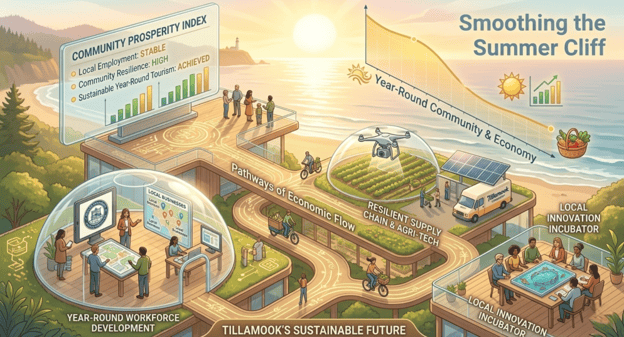
The solution isn’t to replace cleaners with AI-based software. The solution is to use AI to help build a solid platform. Instead of draining an already tight budget on metropolitan marketing firms or spending countless hours drafting flyers, content, campaigns, and promotional materials, AI tools serve as a low-cost virtual assistant.
By offloading marketing content to AI resources, a local business owner is able to save several critical hours every week. Those hours are directly invested into the community. They allow entrepreneurs to look beyond the chaotic summer months and instead focus on building a stable model to support housekeepers year-round.
When we strip away the futuristic, Hollywood stigma associated with artificial intelligence, we find that it’s neither a threat to traditional rural character nor a cure-all. It’s simply an operational tool.
For a small town facing municipal infrastructure challenges, background pipelines aren’t a luxury, they are a means toward basic fiscal survival. For local growers managing perishable crops and hospitality agents faced with employment consistency concerns, letting software handle everyday administrative tasks is what allows them to stay viable in an increasingly demanding market.
As Kiandre Clark accurately observed, drawing superficial moral boundaries around the digital tools we use only stops us from having practical and intelligent conversations and solutions toward our future [1.1]. We already trust artificial intelligence in our everyday life. Bringing the same resource to our operational strategy isn’t a takeover of our coastal communities.
By letting backend software absorb the hit of an increasing demand, we don’t lose our sense of community. We achieve the opposite. We protect limited public funds, keep local economies moving forward, and clear the administrative clutter so we can focus on the land and the people that make Tillamook County home.
Trimaine Clark is a Rockaway Beach-based journalist, master gardener apprentice, and founder of Communities Over Competition, a resource platform serving networks from Texas to Tillamook County. With an educational background in citizen journalism from WitsX, Trimaine’s reporting for the Tillamook County Pioneer highlights the intersection of technology, local workforce development, and seasonal hospitality. Alongside his wife, Kiandre, he operates localized farm-to-table initiatives, focusing his lens on innovative, practical ways to preserve and elevate rural coastal economies.
References
- [1.1] Clark, K. O. (2026). “View From Here: AI Is New, Our Addiction To Outrage Is Not.” Tillamook County Pioneer. Read the full local column.
- [1.2] Statesman Journal. (2026). “Oregon ranks among states with the highest AI usage. See where we land.” Statesman Journal / Anthropic Economic Index. Read the regional study report.
- [1.3] Zoom Video Communications. (2026). “Chatbot Statistics: Compelling Data on Automated Assistants.” Zoom / Intercom / Morning Consult. Read the customer preference data.
- [1.4] Business Insider. (2026). “McKinsey’s CEO on How AI Agents are Shifting the Modern Workforce.” Business Insider / McKinsey & Company Operational Studies. Read the back-office automation study.
