| Oregon has long been considered a state friendly to workers and the unions that represent them—and history may back up that claim. In 1887 the state became the first to pass a law declaring Labor Day a holiday.
This year’s holiday comes with opportunities for the Oregon economy, which has struggled to fully recover from the pandemic downturn in 2020. The state’s unemployment rate sits at a relatively low 5.2%, but it has steadily ticked upward over the last year. Meanwhile, the state’s workforce has shrunk by more than 10,000 people in the last year to around 1.97 million.
The data from Oregon’s Third Quarter Revenue Forecast is in. Oregon’s economy remains relatively stable, and some key metrics are improving. Specifically, our economic growth is catching up to national levels, but there is more work to be done.
More people are working, and more people are earning higher wages. Oregon’s relatively stagnant employment rate indicates we are seeing more wage growth than job growth.
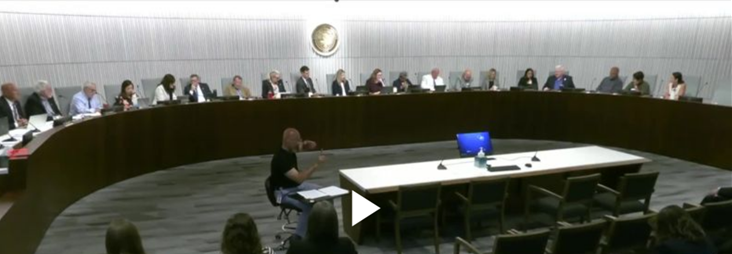
The latest revenue forecast was released at a joint meeting of the Senate and House interim Revenue committees by the Oregon Office of Economic Analysis. A growing economy is a good sign, but there are also signs that gains are flowing primarily to workers with better jobs, leaving too many still struggling. Families are hanging on under incredible pressure with gas and utility prices too high, and 35,000 families are already losing food assistance because of federal cuts. Our strongest future is one where every Oregonian shares in our state’s prosperity.
Other news from the forecast:
- Kicker Outlook – There is no personal or corporate kicker projected for the 2027-29 biennium.
- Economic Outlook – The overall economic forecast reflects a resilient economy nationally and in Oregon. Economic growth in the state has typically lagged national trends but looks to have largely caught up to the rest of the United States. Oregon’s unemployment rate is relatively stable, at 5.2 percent. This is a slight increase from the 4.7 percent unemployment rate shown in the March 2026 forecast. A “low hire-low fire” economy appears to remain the status quo. Population growth is expected to have a slow positive increase in the future, averaging 0.4 percent through 2035.
- Corporate Activity Tax (CAT) Projections – Anticipated revenues for the current biennium (2025-27) are $2.98 billion, down $94.6 million from the June 2026 forecast. For 2027-29, projected revenue is now $3.42 billion, down $25.7 million from the June 2026 forecast.
Despite inflation running between 3% and 4% throughout the year, consumer spending is up in the U.S. and in Oregon. Individuals are saving less and racking up debt to maintain spending levels. There are promising indicators in this week’s forecast, but too many Oregonians are struggling to make ends meet. Oregon families continue to face rising prices and that’s likely to continue as tariffs drive up costs for everyday goods and the war in Iran keeps gas prices high.
In early August, state economists released a report that shows the steep price Oregonians paid because of new tariffs. Oregon importers paid nearly $3 billion in federal tariff taxes between March and December 2025. Exports fell 17.3% in 2025, a roughly $5.8 billion decline. And the state missed out on an estimated $442 million in tax revenue. The report coincided with the state filing a third lawsuit against the president over increased import taxes.
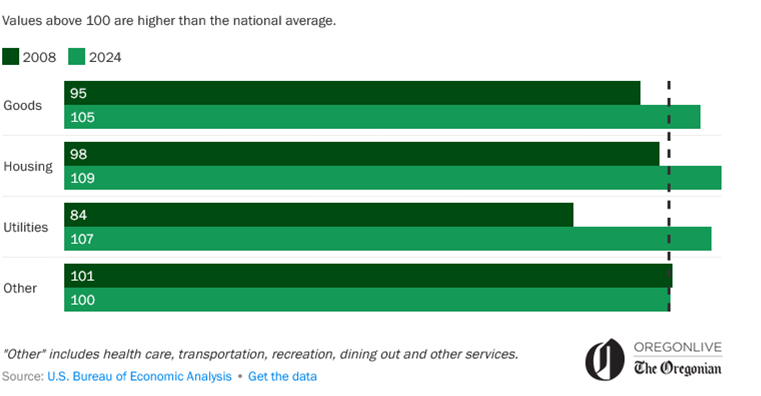
Oregon used to be something of a bargain. The state was a rare find on the West Coast, a place where homes were cheap by national standards, household products like groceries were relatively inexpensive, and utility rates were the envy of many other parts of the country.
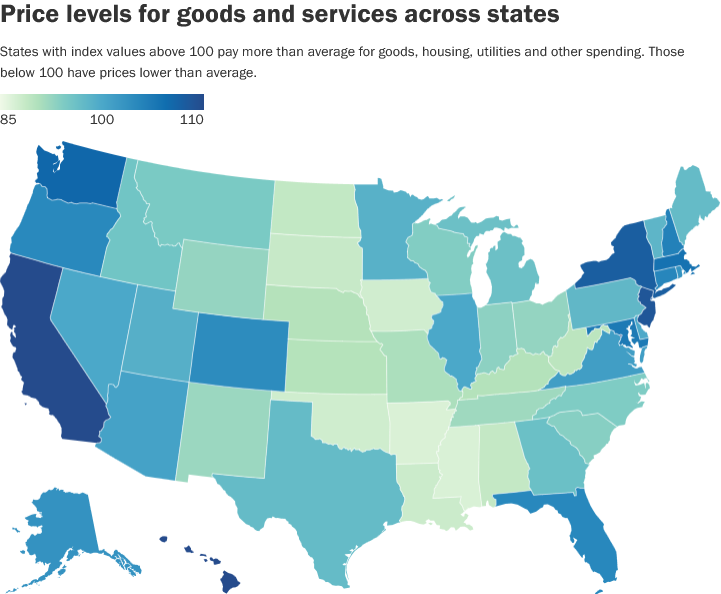
No longer. Oregon is now the nation’s 12th most expensive state, according to an annual federal survey that tallies the cost of housing, utilities, and retail goods. Portland, Corvallis, and Bend all rank among the most expensive metro areas in the U.S.
That’s a big issue for families all over the state who are trying to stretch their dollars to cover rents, mortgages, power bills and put food on the table. It’s also a big issue for Oregon itself, which is struggling to overcome years of stagnant population growth and can no longer cast itself as a good buy relative to other states. |