





The Tillamook County Pioneer provides readers with expanded election coverage – Questions for the Candidates – gives our communities an introduction to the candidates and an unbiased view to compare the candidates side-by-side on important issues. All candidates were provided with the same questions; the questions were provided by a wide variety of Tillamook County residents. We did not receive a response from all candidates. If you have other “questions for the candidates” – please forward them to editor@tillamookcountypioneer.net.
Candidates for State Senate District 16: Courtney Bangs, Rachel Armitage and Melisa Finkle
Courtney Bangs
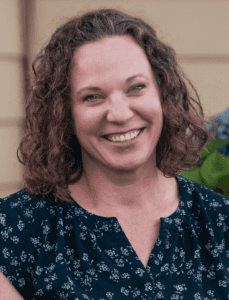
1. What are the main points you want voters to remember about you? Introduce yourself to the community.
I’m Courtney Bangs; an educator, Clatsop County Commissioner and Vice-Chair, and a mom of three. My husband, Derek, and I are raising the sixth generation on our family farm in Knappa. For nearly 25 years, I’ve worked with students of all ages. Since first being elected Commissioner in 2020, I’ve followed through on my promises to protect working forests, reduce barriers to housing, fight for rural infrastructure, support law enforcement, and hold government accountable. Northwest Oregon is my home, and I understand the challenges our communities face because I live them every day, I am rooted here. I will continue showing up, listening, and fighting to protect what matters most to the people of our region.
2. What do you believe are the responsibilities for someone elected to this office?
A state senator’s responsibility is to listen, show up, and be a strong voice for the people they represent. That means reading the bills, understanding their impacts, and demanding accountability for every tax dollar sent to Salem. It means defending local control, protecting the interests of rural communities, and ensuring Northwest Oregon has a seat at the table when decisions are made. Elected officials should answer to the people who sent them there, not political insiders or special interests. My job is to represent the values, priorities, and concerns of the communities I serve.
3. What characteristics or principles are most important for an elected official?
Honesty, integrity, hard work, personal responsibility, and service to others. Keep your word. Treat people with respect, even when you disagree. Put the needs of families and communities ahead of political ambition. I believe in fiscal responsibility, local control, and common-sense solutions. Public service is about earning trust and delivering results, not seeking attention. Voters deserve leaders who will stand up for their communities and remain accountable for their decisions. They want someone who isn’t afraid to vote “no” when a proposal is wrong for the people they represent. I’ve proven I’ll do that.
4. What areas of public policy are you personally passionate about?
Any that will have an impact on my region. I have been at the forefront of conversations surrounding the BPA SAFE program, the Habitat Conservation Plan (HCP), regulatory burdens facing our commercial crabbing fleet, and the challenges confronting farmers, foresters, and other natural resource industries. I have testified against unnecessary regulations that impact working families and local businesses, and I have advocated for improvements to critical transportation corridors and rural infrastructure. I’ve shown up not only as an elected official, but as a community member who genuinely cares about the future of Northwest Oregon.
I am passionate about protecting working forests and natural resource jobs, expanding housing opportunities, and creating conditions for businesses to grow and succeed. I care deeply about improving rural roads, bridges, and flood-protection infrastructure, increasing access to affordable childcare, supporting parents and local schools, strengthening public safety, and ensuring taxpayer dollars are spent responsibly. As a mom, educator, and county commissioner, I have experienced many of these challenges firsthand, and I remain committed to pursuing practical, common-sense solutions that improve quality of life for Northwest Oregon families.
5. What do you think are the 3 most important issues to voters in our communities today? And what solutions would you offer?
First, protecting jobs and key industries. Timber, fishing, farming, construction, and other natural resource sectors are vital to our communities. I will continue advocating for policies that support these industries and the families who depend on them.
Second, affordability. Rising housing and childcare costs are making it harder for families to get ahead. I will work to reduce unnecessary regulations that delay housing development and build on successful childcare initiatives started in Clatsop County.
Third, infrastructure. Too many rural communities are waiting for improvements to roads, bridges, septage, water, connectivity, and flood-protection systems while resources are directed elsewhere. I will fight for accountability in state spending and prioritize investments that strengthen Northwest Oregon.
6. Who do you look up to? Whose example would you like to follow, and why?
I greatly admire Senator Suzanne Weber and former Senator Betsy Johnson. Both have been strong advocates for Northwest Oregon and have demonstrated what it means to put the needs of their communities first. They have consistently defended rural interests, supported natural resource industries, and worked to ensure our region’s voice is heard in Salem. I am honored to have their endorsements and hope to follow their example of independent, principled leadership by advocating for educational improvement, economic opportunity, responsible government, and the people who call Northwest Oregon home.
7. If presented with overwhelming evidence that something you believe in is proven to be false, are you willing to admit you are wrong? How will you address mis-information and the divisiveness in politics today?
Yes, and I have. Good leaders should be willing to follow the facts, admit mistakes, and adjust course when necessary. Accountability begins with honesty. I approach issues by doing the work, reading proposals carefully, asking questions, and looking beyond headlines and talking points. I am not interested in political theater or division for its own sake; I choose the path of directness, transparency, and results.
Throughout my time as Commissioner, I have worked with people of different perspectives to achieve meaningful results for our communities, including expanding broadband access, supporting childcare sustainability, and strengthening local organizations. Respectful dialogue, honest communication, and a focus on practical solutions are the best ways to address misinformation, reduce division, and move our communities forward together.
8. Who are your top five campaign donors? What percentage of your donors are local (Oregon)? Have you taken any cryptocurrency donations?
-
Bring Balance to Salem PAC
-
The Leadership Fund
-
Oregon Realtors PAC
-
Starr Leadership Fund
-
Oregon Automobile Dealers Association PAC
90.2% of my donations come from Oregon, I am supported by Oregonians and will fight for our interests only. I have not taken any cryptocurrency donations.
9. What is the most recent song or music that you listened to?
I listen to KLOVE, it’s a radio station that provides praise music and encouragement. My favorite song is “Still Waters” by Leanna Crawford.
10. What are your personal interests or hobbies – what do you do in your spare time?
Most of my free time is spent with my family on our farm and supporting my children’s activities. I enjoy spending time outdoors, whether at the beach, in the woods, or working around the farm. I am an avid reader and appreciate the simple joys of home life. I grew up playing sports and still enjoy staying active whenever I can. Living in a rural community and having family close by has been a blessing. It has given my children the opportunity to grow up surrounded by people who know them, support them, and love them.
11. Last photo on your cell phone (didn’t submit)
Rachel Armitage
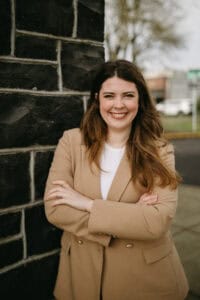 1. What do you want voters to remember about you? Introduce yourself to the community.
My name is Rachel. I live on a rural road in St. Helens, Oregon. I grew up quickly, the way that oldest daughters who come from working families do. By the time I was in 5th grade, making spaghetti for my three younger siblings before retreating to do my homework. These days, I see children growing up the way I did without anyone truly looking out for them in Salem. I’m running because I have a heart for working families in this district.
I was appointed to represent Senate District 16 in the Oregon State Senate back in 2022 and got to work. I brought home critical investments in housing, health care, and infrastructure. I then went on to work at the Oregon Community Foundation, where I met many Tillamook County non-profits doing important work. I championed funding for the arts, education, and health care. I recommended funding for CTE at Tillamook High School, the North County Food Bank, and the Nehalem Bay Health Center and Pharmacy, which I supported in both capacities.
I’ve always been a rural advocate. All too often, the assumptions we make when writing legislation are based on what’s happening along the I-5 corridor. When it comes to rural communities, Salem gets it wrong all too often. I’m running to change that. I have both the heart and the skills. I believe that’s why Tillamook County Commissioners Erin Skaar and Mary Faith Bell have both endorsed me.
2. What do you believe are the responsibilities for someone elected to this office?
The person in this position should be accountable to acting in the best interests of Senate District 16 in Salem. It’s not enough to be pro-schools, health care, or small businesses. Your State Senator is responsible for defending this district’s schools, health care, and small businesses. That’s why I spend so much time listening to what people really think, because I will take your voice to Salem and make sure you have a seat at that table.
3. What characteristics or principles are most important for an elected official?
Integrity is key. It’s my job to be loyal to you. I’m also supported by County Commissioners Erin Skaar and Mary Faith Bell because of my ability to listen and get results. It’s not enough to be an advocate. Talk doesn’t fix anything. At the end of the day, you have to trust that your State Senator is going to get things done.
4. What areas of public policy are you personally passionate about?
I have a strong background in education, having worked in early childhood, K-12, and higher education. I also grew up sharpening pencils in my mom’s classroom, worked for legislators on the House Education Committee, and worked on education related issues at the Oregon Community
Foundation.
I am also deeply passionate about child welfare. As staff, I was responsible for shepherding the Foster Youth Sibling’s Bill of Rights through both the House and Senate. I also introduced a bill to cut red tape for child care facilities. Child welfare, to me, also means funding programs that engage children and teenagers—things like theatre, sports, FFA, shop class, and outdoor school.
It’s important to me that children have opportunities to play and explore. Over the summer, my favorite part of visiting the Tillamook, Clatsop, and Columbia County Fair was asking young people to tell me about the animals they were showing. I learned so much! While at the Oregon Community
Foundation, I helped secure funding for the Tillamook Library Teen Room and I learned all about the great work happening at the Tillamook YMCA. I have yet to go bowling at the Pastega Activity Center, but it’s on my list!
Finally, I care about economic development. All too often, Oregon’s economic development conversation centers our biggest companies. And while I will absolutely fight for Tillamook Creamery (maker of my favorite ice cream), I will fight just as hard for Tillamook’s workers, the family-owned dairy farms, and every adjacent small business that supports Tillamook. We need to make Oregon a more affordable, business friendly state so that entrepreneurs, and small business owners from working-class backgrounds can be successful. Rural small businesses don’t get the seat at the table they deserve and I’d like to change that.
5. What do you think are the 3 most important issues to voters in our communities today? And what solutions would you offer to address these issues.
Affordability: I like to say that I will use every tool in Salem’s toolbox to keep costs low. I am committed to cutting fees for small businesses and working Oregonians. We also need to protect access to food and snap benefits and fund our food banks. If elected, I will address the red tape that spikes the cost of housing and prices you out.
Infrastructure: We need to fund our infrastructure the right way. Working people who commute for reasons out of their control shouldn’t have to carry the full cost of our infrastructure on their shoulders. The legislature wanted to wait on fees for delivery fleets like Amazon, but they didn’t think working families deserved the same courtesy. I carried the bipartisan study on Highway 6. I’m committed to a solution that is the best deal for you. I will also call for massive investments in wastewater and electricity infrastructure so that we can build housing more affordably and bring good jobs to the community.
Education: Rural students deserve access to the same opportunities as students living anywhere else in Oregon. I am going to fight the unfunded mandates that keep rural school districts under water, and make sure education dollars get to the classroom. We won’t see improvements in literacy and math, for example, without funding that specialized instruction time. We need to streamline our testing standards so we can collect accurate data without teaching to the test. And finally, I will fund our CTE programs, arts, sports, agriculture education, shop class, outdoor school so that students
have real-world opportunities to apply what they learn.
6. Who do you look up to? Whose example would you like to follow, and why?
My dad is the recently retired senior adult pastor at a church down in Medford. He spent his career visiting people in the hospital and he’d often ask me to pray over them. I also did my fair share of yard work for people in need. I appreciate how my dad could sit with people and be present in their most challenging times. I was once a constant sermon example (pastor’s kids understand).
These days I still seek out opportunities to be present for people who are hurting or in need. I am in public service because I care about people and I want to help fix what is broken. If you feel more connected and engaged in what the government is doing when I’m in office, then I’ll be doing my job.
7. If presented with overwhelming evidence that something you believe in is proven to be false, are you willing to admit you are wrong? How will you address mis-information and the divisiveness in politics today?
Yes! I care about being correct, not right. There’s a difference. Over this past year, I carried around a big banner that said “Tell Me What You REALLY Think,” and it worked! I heard so many stories from people all across the political spectrum. I am a Democrat who is supported by Independents and Republicans alike because I listen. I’ve learned that we all have more in common than we think we do. My job is to focus on the common ground and build those bridges.
People also ask me if I am going to be susceptible to special interests in Salem, and I am not.
Here’s why: I worked across the aisle and bucked my party when I was appointed. When I take any vote I will be able to say for certain that I’m voting in the interest of my district because so many of you told me what your interests are. If you’ve shared your story with me in the last year, thank you.
8. Who are your top five campaign donors? What percentage of your donors are local (Oregon)? Have you taken any cryptocurrency donations?
I appreciate this question! I have accepted checks from 160 individual contributors, the vast majority of whom are individuals. Of those individuals, most people either live on the coast, are family, or are former colleagues. My largest checks were written by the building trades and UFCW Local 555, followed by a number of checks from former colleagues in the State Senate. The Senate Democrats also in-kinded about $20,000 to my race. The check that made me blush the most was from the first state house candidate I ever knocked doors for fifteen years ago.
The corporate interests backing my opponent have placed my defeat high on their priority list, even compared to other Oregon Legislative races. They’ve spent more on sending out-of-district canvassers to your door to spread false information about me than I have spent on my entire campaign. Special interests with cash to spend want to buy loyalty, and they know they can’t buy mine. In fact, they seriously underestimate how much a working-class kid from Medford can take. My loyalty is to working families in this district who are constantly knocked down by rising prices and bad policies. I’m independent, pragmatic, and I work for you.
9. What is the most recent song or music that you listened to?
Country Roads by John Denver. Or maybe Fast Car by Tracy Chapman. Seems like either one makes me dewy around the eyes, but maybe it’s just the foggy coastal air!
10. What are your personal interests or hobbies – what do you do in your spare time?
I am a total homebody. I love going antiquing, arranging flowers, hosting friends, and spending time around the fire. I also love sports. I had a Taylor Swift-themed Fantasy Football team for a long time. I also love trivia at my local taproom and as we have now all learned, I really love to sing karaoke.
11. Send us the last photo you took with your phone.

Melisa Finkle
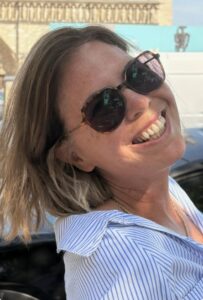
- What do you want voters to remember about you? Introduce yourself to the community.
A: I’m someone who has spent my career helping people navigate complicated systems, and I bring that same lived experience to my work as a person with a learning disability. My background in supporting workers across Oregon over the last 10 years has shaped my commitment to fairness, transparency, and clear communication. I want people to remember that I show up, I listen, and I speak directly about what matters to our communities. I choose not to seek endorsements because I believe leadership should be grounded in clear judgment, not obligations to outside groups. I’m not someone who expects everyone to agree with me, and I don’t pretend that every issue is simple. What I do believe in is showing up with honesty, listening even when perspectives differ, and finding the common ground that helps communities move forward. Respectful disagreement doesn’t intimidate me; it’s part of how real problem‑solving happens.
- What do you believe are the responsibilities for someone elected to this office?
A: I believe anyone elected to this office has a responsibility to understand how everyday people experience the systems that shape their lives, especially in rural communities where access to services, information, and support is often limited. My work helping people navigate complicated processes, along with my own experience doing the same with a learning disability, has shown me how easily folks can be left behind when systems aren’t built with them in mind. To me, the role requires honesty, accessibility, and clear communication, with a focus on listening to what people in District 16 need and bringing those realities back to the center. Elected officials should gather information from their communities and carve out spaces that genuinely benefit the people they serve
- What characteristics or principles are most important for an elected official?
A: I believe the most important characteristics for an elected official are the ability to truly listen and the willingness to apply what they learn. Real leadership means hearing people’s experiences, understanding the barriers they face, and using that knowledge to create collaborative spaces where communities, workers, and local groups can come together.
- What areas of public policy are you personally passionate about?
A: I am personally passionate about improving healthcare access in rural communities, where people face real barriers, from limited internet that makes telehealth impossible to shortages in mental health providers, physical therapists, caregivers, and basic medical services. And none of that can improve without stable housing, because a functioning healthcare system depends on people having a safe place to live. My experience navigating complex systems, both as a worker advocate and as someone with a learning disability, has shown me how easily people fall through the cracks when resources aren’t built for them. I care deeply about making healthcare reachable, reliable, and responsive for every part of District 16, including coastal areas that consistently struggle the most.
- What do you think are the 3 most important issues to voters in our communities today? And what solutions would you offer to address these issues.
-Healthcare Access – Improving healthcare access starts with understanding the barriers rural and coastal communities face and listening to what people actually need. That means working with local providers, counties, and community groups to expand services, strengthen telehealth through better internet access, and address shortages in mental health care, physical therapy, and caregiving. Real progress happens when leaders bring community experiences back to the center and collaborate on solutions that make healthcare reachable and reliable for everyone.
-Housing Stability – Housing stability means bringing together the people affected, the organizations that support them, and the systems that control resources. It starts with truly listening to communities and using what you learn to remove barriers and build practical partnerships. In rural and coastal areas, that means working with local providers and community groups to expand stable housing, strengthen infrastructure, and ensure essential services like healthcare, transportation, and internet are actually reachable. Real stability happens when leaders bring community knowledge back to the center and collaborate on solutions grounded in everyday realities.
– Access to Public Systems and Services – Improving access to public systems and services starts with understanding how hard it can be for rural and coastal communities to navigate them. That means listening to people’s experiences and using that knowledge to simplify processes, strengthen infrastructure, and make essential services—like transportation, internet, state programs, and emergency support that is actually reachable. Real access happens when leaders bring community feedback back to the center and work collaboratively to build systems that match the realities people live in every day.
6. Who do you look up to? Whose example would you like to follow, and why?
A: I look up to people who lead by listening first and acting with integrity, the kind of leaders who stay grounded in real community experiences and don’t lose sight of the people behind the policies or get bogged down by keeping people who have endorsed them happy. I look up to Ruth Bader Ginsburg because she led with clarity, discipline, and a deep commitment to understanding how systems affect real people. Her example showed that real leadership comes from listening, thinking carefully, and applying what you learn to create fair, collaborative solutions. I admire how she approached complex issues with both precision and empathy, qualities that matter deeply to me as someone who has navigated difficult systems myself and helped others do the same. Her legacy reminds me that meaningful change happens when you stay grounded, ask honest questions, and keep people at the center of every decision.
- If presented with overwhelming evidence that something you believe in is proven to be false, are you willing to admit you are wrong? How will you address mis-information and the divisiveness in politics today?
A: Yes. If I’m presented with evidence at something I believe is true and is indeed false, I’m willing to admit I’m wrong. I think that’s a basic responsibility of anyone in public service, to stay open to new information, listen to people’s experiences, and adjust when the facts show a different reality. My own life has taught me that systems are complicated, and sometimes what we think we know changes when we hear from the people living it. When it comes to misinformation and divisiveness, I believe the best approach is grounded in honesty, accessibility, and clear communication. That means listening first, checking information against reliable sources, and being transparent about what’s true and what isn’t. It also means creating collaborative spaces where people can talk openly, ask questions, and feel heard. Divisiveness grows when people feel ignored or dismissed.
- Who are your top five campaign donors? What percentage of your donors are local (Oregon)? Have you taken any cryptocurrency donations?
A: My top donor is myself. I have not received endorsements, and I feel strongly about that. I’ve seen how some leaders can be pressured to align with certain groups or expectations because of who funds or endorses them, and I don’t want that dynamic influencing my decisions. Being my own top donor means I’m accountable to my values and to the people in the community who voted for me, not to outside interests.
Because I am my own donor, 100% of my contributions are local to Oregon. I have not taken any cryptocurrency donations.
- What is the most recent song or music that you listened to?
A: The most recent music I listened to was Shawn Mullins, but I also listen to the Foo Fighters a lot and they’re usually in my regular rotation.
- What are your personal interests or hobbies – what do you do in your spare time?
A: In my spare time, I enjoy tasting wine and local art hunting at Fish with Lips, Yoga at the community center, walking on the beach and gathering shells to paint for the Christmas tree lighting in downtown Rockaway. I love searching for agates, spending time with my dog, my husband, my friends, and working on really challenging puzzles — the kind that take a year to finish.
11. Send us the last photo you took with your phone
