








Doorsteps, democracy, and the things politics tends to forget.
 EDITOR’S NOTE: Here’s an installment from Tillamook County’s State Representative Cyrus Javadi’s Substack blog, “A Point of Personal Privilege” Oregon legislator and local dentist. Representing District 32, a focus on practical policies and community well-being. This space offers insights on state issues, reflections on leadership, and stories from the Oregon coast, fostering thoughtful dialogue. Posted on Substack, 9/8/26.
By Cyrus Javadi
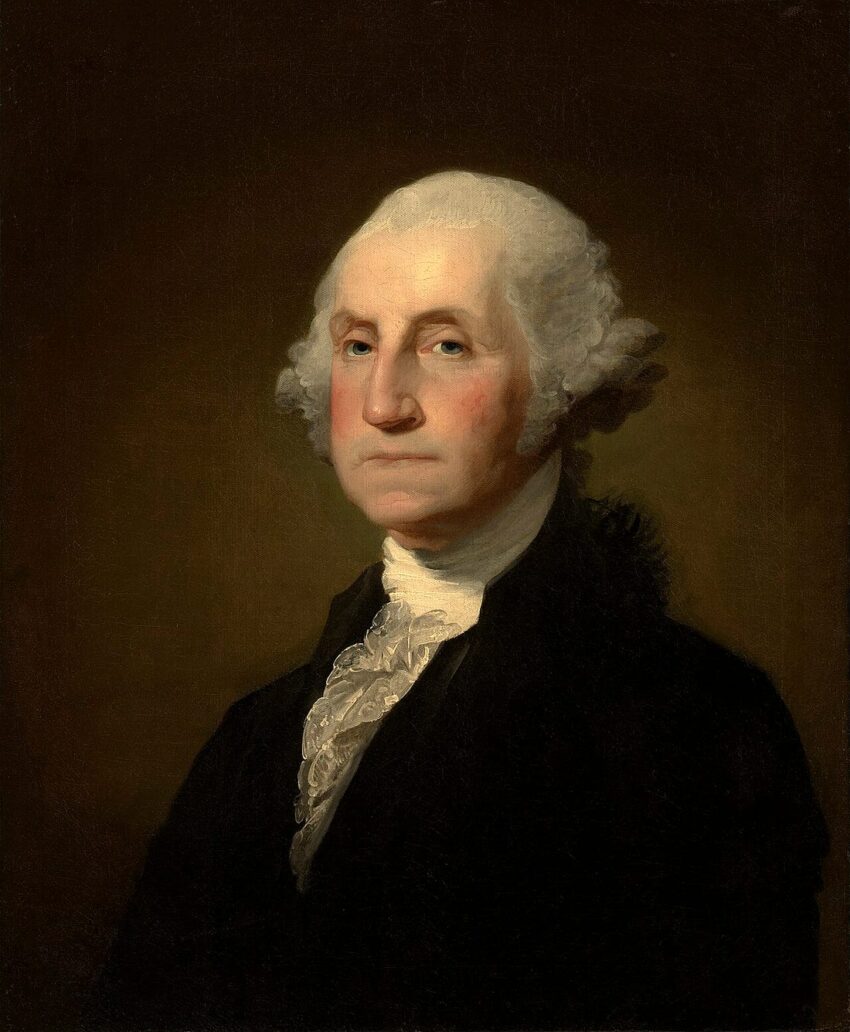
He was battle-scarred. He had gone toe-to-toe with the most powerful army in the world and won. He endured a Congress who refused to pay his troops. He had presided over a convention where men fought over the wording of a Constitution that would change the course of human history.
And he did it in July. In wool clothing. With no air conditioning.
Honestly, it’s a wonder any of them survived.
He was also the closest thing the country had to an A-list celebrity in 1789. His name recognition wasn’t a problem. The job was his if he wanted it.
So he sat at home in Mt Vernon contemplating the choice in front of him—live the good life, or step up to serve one last time.
We know how that story ends.
He was elected with all 69 electoral votes—the only President to be unanimously elected by the Electoral College.
Twice actually—he did it again 4 years later.
That is hard to wrap your mind around. Try getting 69 people to decide whether or not pineapple belongs on pizza—it doesn’t by the way—let alone who should lead a new country through what everyone agreed was going to be a rough start.
Washington Didn’t Have Facebook
Now, I’m not George Washington.
Shocking, I know.
First, despite what you may have learned in elementary school, Washington didn’t have wooden teeth. Neither do I. And if you are ever faced with that choice, I’d recommend porcelain.
Trust me, it’s worth the extra cost.
Second, I have never nor am I likely to ever cross the Delaware River in the middle of a cold winter at the head of an army.
Third, nobody has painted a heroic picture of me by a horse.
At least not that I’m aware of. Although I have seen a few clever AI generated images of me in other contexts from my Republican fan club.
However, the campaign season is young, so stay tuned.
Washington lived in a very different world. It took a little longer to get from place to place. Medicine was sometimes helpful, but your doctor was also likely to drain a substantial portion of your blood, compel you to drink a mixture of liquids spiked with mercury to induce vomiting, and call it a treatment plan—which, as Washington would find out later, has its limitations.
Another quirk: communication was slow. Very slow.
Mail and messages took days or weeks to find their recipient, which means arguments could unfold over months rather than minutes.
Pause there.
Can you imagine finding out someone was mad at you two weeks ago?
Are they still upset? Or have they cooled off?
And what if they wrote a second letter three days later, “Never mind, I overreacted” and that letter is still on a pony somewhere between Salem and Astoria?
By the time the second letter arrives, everyone may have forgotten what the original argument was about.
Thankfully, we solved that problem. Spectacularly well. Today, if someone is mad at you, you can find out four seconds later and anywhere on the globe—except along Highway 101 between Manzanita and Cannon Beach, where cell service goes to die.
But communication wasn’t the only difference in Washington’s day.
His campaign budget was basically zero. Mine is not.
Washington didn’t have a campaign manager. He didn’t have a field director, or a digital media team, a mail consultant, or weekly meetings with a small army of political professionals.
He had no yard signs, no polling, no Facebook comments, and no volunteer telling him how he could better optimize his SEO.
He also, as I said at the top of this article, didn’t knock doors.
But I do. A lot of them. And so do many other candidates.
Let me tell you why I think it’s a good idea.
People Aren’t Data Points
People want to be heard—which is one of those things about politics that hasn’t changed over the course of recorded history. It was true in Washington’s day. It was true when Cato was arguing over the fate of the Roman Republic. It was even true when Socrates stood before his accusers in ancient Athens.
Being heard by those who are elected to represent you is ancient.
But what has changed is how the listening happens.
Campaigns have become professional exercises in finding people. We find people by neighborhood, by age, by party registration (or lack of it). We find people by whether they voted in the past three elections, by the television they watch, by what they read, and by what they buy.
Ok, we don’t actually know what you read or buy. But somewhere out there, I bet there is a database that knows you bought hiking socks in July and determined that you are persuadable on state park policy.
Exaggeration? Maybe. A little.
But here’s the important take-away: people aren’t data points. They are surprising. And deep. And unique.
And complicated.
It’s Simple, Until It’s Not
When an candidate is elected, they don’t swear an oath to a political party, a caucus, a campaign committee, or a donor.
They have a responsibility to faithfully represent the people who elected them. All of them. Even the ones who didn’t vote for you.
That’s the job.
It’s simple.
Mostly.
Because people are messy. I don’t mean that in a bad way. I mean we don’t line up very well into the little red and blue boxes politics has made for us.
I know this because I meet them on their porches when I’m knocking doors. I run into them at Safeway and Fred Meyer. At the kids’ basketball games. At restaurants.
Sometimes I’m just trying to buy milk and suddenly we’re discussing Medicaid reimbursement rates next to the yogurt.
And once we start talking to each other, the little red and blue boxes we put each other in fall apart pretty quickly.
A woman can be worried about whether or not her insurance will cover breast cancer treatment, and still think her taxes are too high. A Democrat who owns a business can think Salem has enacted too many regulations. A Republican farmer can oppose labor laws while still supporting government subsidies. Loggers may be concerned about climate change, and environmentalists may think Portland liberals have gone too far.
Those are real people, not just a few random political oddballs. They are people I meet every day on the North Coast.
That’s the problem with party labels—they are too simple. People are not.
It turns out, we are full of contradictions. And it’s the tension of those contradictions that is dismissed in modern political discourse.
You see, I believe most people are just trying to get through Tuesday.
They have bills, and parents who are getting older, and a truck that is making a weird noise that is probably going to be expensive to fix. A doctor’s appointment six months away even though the lump has gotten bigger than it was last week. A the road that flooded a year ago still hasn’t been fixed, which means they have to take the longer way to work.
They have children to get ready for school. They are working two jobs, making what used to be considered a decent middle-class income, but they are still falling behind.
There are a lot of everyday problems. Real worries.
So people don’t want to hear ideologic party platforms.
They want to know that someone is listening. They want a government that works, not one that just talks about working.
It doesn’t need to work perfectly. Just better. Even just a little.
When I’m standing on their doorsteps or talking to them on the streets, they don’t talk to me about Sean Hannity or Rachel Maddow.
We talk about condition of Highway 6 and 26 and how it hasn’t improved in 30 years.
Or fear that the hospital in town might close, and there isn’t another one for more than an hour in any direction.
Or their one-hundred-year-old family fishing business that is paying higher fuel bills because of a war in Iran.
Or about expensive housing, food, and childcare.
Or Taxes. They are always too high.
And then I answer. And do you know what happens?
We keep talking.
We keep listening.
We start to understand each other. That we are a lot more similar than we are different.
Pretty soon it’s just a conversation between the people and their elected representative.
And I think that’s remarkable.
That’s evidence that the process is still working. That people matter.
That elections matter.
Your Voice Still Matters
Campaigns can have unintended consequences.
They can take people and flatten them into oversimplified characters. Hero or villain. Patriot or extremist. Traitor and sellout.
All in an easy-to-read 48-point font on a two-sided glossy 8” x 11” mailer.
Nobody ever sends a campaign mailer that says: “MY OPPONENT IS ACTUALLY A REALLY NICE GUY, WHO HAS REACHED HIS CONCLUSIONS BASED ON HIS UNIQUE BACKGROUND AND HIS THOUGHTFUL RESEARCH.”
Why?
First, it’s too long—postcards aren’t big enough. And second, it apparently doesn’t poll well.
Shocking, I know.
Over the next two months there will be mail. Lots of it. There will be television ads, radio ads, internet ads, Facebook posts, Reels, and TikToks.
Maybe not TikToks.
Very serious photographs of candidates standing with their arms crossed. Ready to do business.
At some point, someone will take a black and white photograph of me, give it dark borders to make me look like I’m wanted for grand theft auto.
That does poll well. Unfortunately.
But that is what campaigns do now. And some of it is useful.
Because campaigns are supposed to draw distinctions. They are supposed to show how one candidate differs from the other.
Explain where they disagree.
Records should be examined. Votes should be scrutinized. People seeking power should be questioned.
That’s all fair.
That’s democracy.
But there has to be a line drawn somewhere between dehumanization and scrutiny. Between disagreement and ridicule. Between loyalty and obedience.
Now, I’ll admit that I don’t always know where that line is, which is annoying. But that doesn’t mean we should be looking for it.
Because November will eventually come. And the mailers will stop. And so will all of the TV ads.
Facebook will go back to being mostly about cat memes and math puzzles—little did I know in high school how important word problems would be later in life.
Once all of the campaigning is over, somebody has to govern.
Because the pothole doesn’t really care which party fills it. Cancer doesn’t care about voter registration. And third graders who can’t read aren’t helped by which side has the better press releases.
Although if they can read them, they are doing pretty good.
Once the ballots have been counted, politics has to return to the stubborn task of solving real problems for real people.
That is where I want to live. And I think most people want to live there too.
George Washington eventually retired. He escaped politics. He returned to the solitude of Mt. Vernon after eight years of doing the toughest job in politics, where he didn’t worry about someone knocking on his door to ask for his vote.
He had had enough.
I still have two months to go. So, I’ll keep knocking.
Some doors will belong to Republicans. Some will belong to Democrats. A lot will belong to Independents and the people who haven’t chosen a party.
Many of them will be supportive. Some, less so. And a few will pretend they aren’t home even though they are standing six feet away on the other side of the door.
Don’t worry. I get it.
It’s fine.
But I hope we can spend the next two months talking to each other rather than shouting at each other simply because of the team we’ve chosen (or not chosen) to join.
Ask hard questions. Challenge me. Challenge my opponent. Look at our records (or lack thereof). Decide what matters to you.
Then when the ballot arrives, vote.
Because your voice still matters.
Congrats! If you made it this far, you are either oddly patient or deeply committed to 2,000 word essays about George Washington, political parties, dogs barking, and potholes.
Either way, I’m glad you kept reading. I’d like you to stick around.
So, subscribe. Become a regular, and I’ll send you the next article when it comes out—without the 48-point font. No mailers either. Just stories, meandering thoughts, and my attempt to explain politics so you can sound a little more interesting at the office (or the book club) this week.
 Subscribe here for more
To help directly with the campaign itself, visit the website to learn more.
Donating $5 or $50 helps pay the campaign bills, which require a surprising amount of shoe leather, coffee, postage, and money.
Mostly postage.
