

By Watt Childress
May today mark the start of a season of holiness, with fellowship that honors the life of every community.
As I offer this holiday prayer, my betrothed midwife fends off a nasty cold while waiting to attend an imminent birth on the south side of Tillamook, 50 minutes away.
Floodwaters are rising with king tides and heavy rain. We’ve been stranded at home on many occasions, this time of year.
If the power-lines don’t falter from wind-gusts, we’ll still be able to plug into the hive. We can read the news about how dominant political forces want to raid our privacy, suck up all our data to feed the lords of surveillance commerce.
As early as next week Congress could pass a massive bill that will take away more of our capacity for local self-governance. They’ve given this legislation a big beautiful name – the Bipartisan Affordability and American Jobs Act (BAAJA). If enacted, it will gobble up much of what’s left of our ability to tend and protect the wholeness of creation that surrounds our communities.
Even if politicos grab every ounce of fat, as is their habit, this prayer won’t end. It will continue because miraculous meaning is woven into the web of existence. Do not forget.
Seemingly small points connect with epic stories. For Oregon they link us with the birthplace of Tom McCall, in the Wampanoag homelands of Plymouth County, Massachusetts. As a Republican Governor he led the charge for conservation – championing America’s first bottle bill, for example, and preserving public access to Oregon’s beaches.
Governor McCall also raised the bar for conserving farmland, curbing sprawl, and securing life quality for rural neighbors who love our abodes. He stewarded the passage of one of America’s strongest land-use planning laws.
I quoted from McCall’s biography “Fire at Eden’s Gate” (Brent Walth, 1994) in front of a gathering of Republican women in the hills of east Tennessee.
“I am simply saying that Oregon is demure and lovely,” said McCall, speaking at an event event during his simultaneous battle with growth-is-good zealots and cancer. “It ought to play a little hard to get. And I think you’ll all be just as sick as I am if you find it is nothing but a hungry hussy, throwing herself at every stinking smokestack that’s offered.”
When I read those words to fellow Republicans my family and I were fighting a proposed half-billion-dollar highway project that would rip through farmland in order to add a redundant high-speed corridor parallel to an existing interstate.
Words like “growth” and “progress” and “infrastructure” are seldom used by politicians to do anything but fill their campaign coffers. The same sentiment certainly advanced the government careers of those who preached the doctrine of manifest destiny.
McCall was a rare exception to this norm. I never met him, except through books. But I did experience a related encounter at a Visitors Center near McCall’s birthplace, when Jennifer and I travelled to Massachusetts to attend an annual Fall gathering of the National Recycling Coalition.
“Where are you from?” asked the fellow behind the counter.
“Tennessee, how about you?”
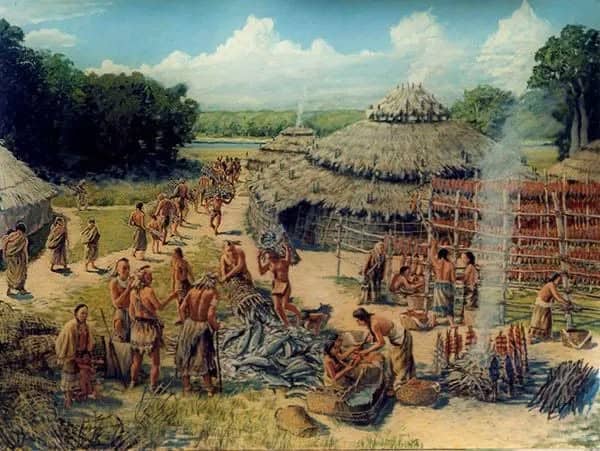
“Right here. I’m one of 2,500 enrolled Wampanoag Indians. My ancestors greeted the Pilgrims at Plymouth Rock.”
Which probably would have prompted someone else to mention the story of Thanksgiving, when America imagines Natives and immigrants gathered in neighborly union, all grateful for the shared bounty of God’s creation.
But I’d just finished reading “In The Spirit of Crazy Horse” (Peter Mattheissen, 1991). So instead I said how astounded and humbly honored I was to have the privilege of visiting with him.
He gave me his address, said to let him know if we returned so we could help with the cranberry harvest. After the talk I went off by myself in the dark, removed my clothes and took a ritual plunge in the estuary.
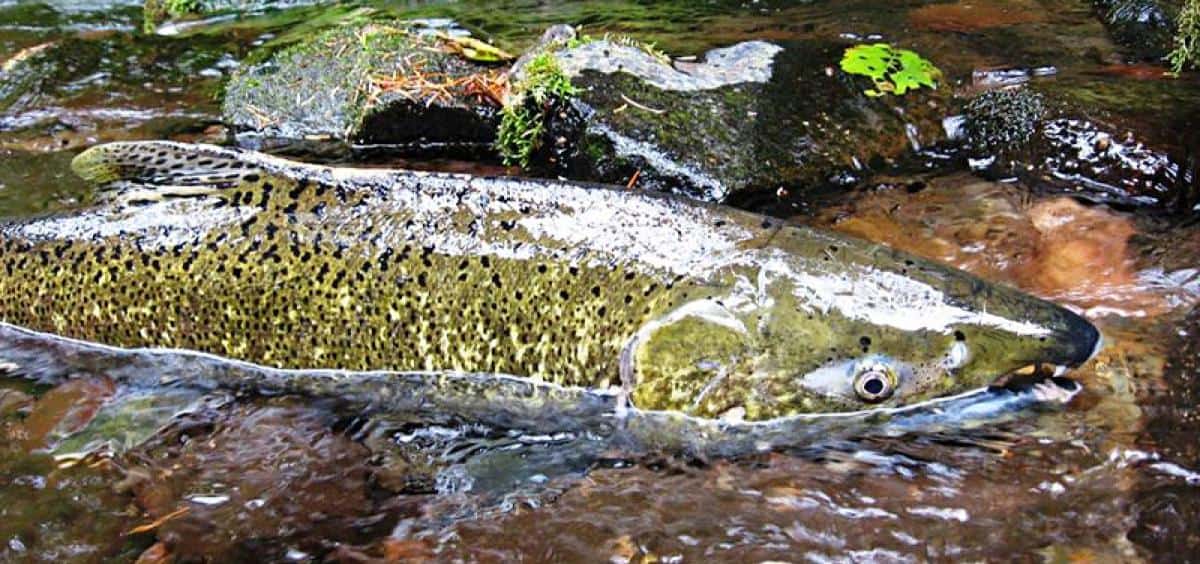
I’ve often remembered the blessing of that encounter when Pacific salmon return to the Nehalem watershed. I imagine the Atlantic salmon runs that once peaked during October and November in Massachusetts. Those runs are gone, crowded out by hubris. Yet there’s medicine in memory and imagination and prayer.
Today the Wampanoag have joined over a hundred Native American tribes to oppose BAAJA.
Please call your Representative in Congress. Tell them to vote NO on this bill (202-224-3121).
https://truthout.org/…/indigenous-sovereignty-is-under…/
