










“Democracy cannot succeed unless those who express their choice are prepared to choose wisely. The real safeguard of democracy, therefore, is education.” – Franklin D. Roosevelt
By Marc C. Johnson
American voters have precious little experience with multi-party democracy. The two party system has always dominated our politics, and in our age of hyper partisanship, the polarization dividing Republicans and Democrats has rarely, if ever, been as pronounced as it is right now.
It’s not like this in many other western democracies.
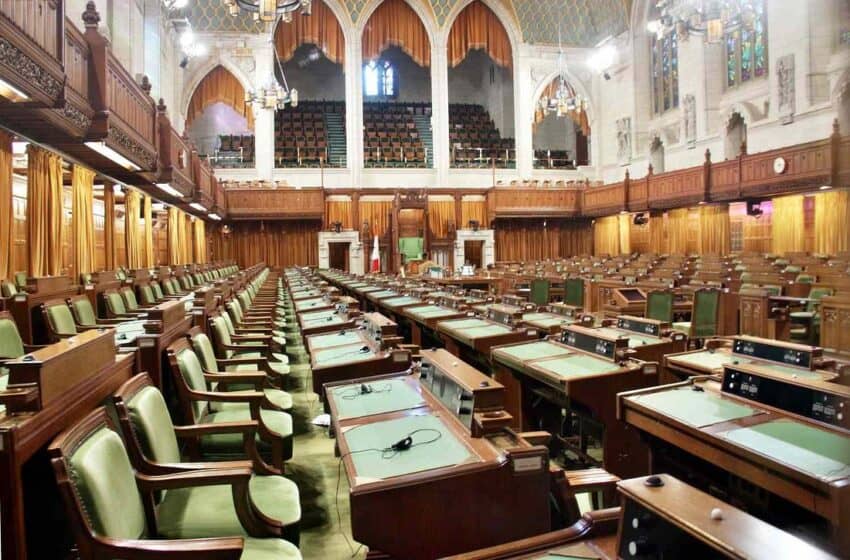
Canada, for instance, has five parties and a couple of independents represented in the national legislature. Britain has 15 parties represented in its House of Commons. Some of these parties are tiny or tied primarily to regional issues, but each party has a following and at least some ability to affect national policy.
Yet even with many choices when it comes to voting, many Canadians and Brits practice what political scientists call “strategic voting,” a calculated effort to make sure your individual vote supports a candidate who may not be your ideal choice but is closer to ideal than any alternative, and with a legitimate chance to prevail at the ballot box.
Maybe this is just the ‘lesser of two evils’ as political theory, but strategic voting can be remarkably effective if voters are willing to consider candidates beyond party label.
The strategic approach to casting a ballot goes a long way to explain why Mark Carney, the leader of the Canadian Liberal Party, is currently the very popular prime minister. And Canada is a case study for the proposition that if enough voters think strategically rather than tribally about an election, we have a chance to change our politics for the better.
In Canada in 2025 the national election was dominated by threats to national sovereignty, security and trade by the erratic and untrustworthy American president. Many Canadian voters saw Donald Trump as an existential threat to their nation and voted strategically for the candidate, in many cases despite their party identification, who seemed most able to take on Trump.
The strategic voting approach boosted Carney who won votes from Canadians who often cast their ballots for the left of center New Democratic Party (NDP) or the Bloc Québécois, the regional separatist party in Quebec.
As four Canadian political scientists wrote in the online journal The Conversation on the first anniversary of Carney’s election: “Instead of evaluating parties along familiar ideological lines, many Canadians approached the election as a question of who could best protect the country during an unusually turbulent moment. It seems that a year later, Canadian voters are still regarding the Liberals in this light.”
Had those Canadians given in to purely party considerations it’s a good bet Canada would have a conservative Trumpist prime minister rather than the prime minister they have who has quickly become an outsized actor on the world stage due to his calm and sure leadership.
There is a lesson here, perhaps more than one, for voters this fall.
The biggest battle in American politics this year is control of the United States Senate, and it is in the Senate that the idea of strategic voting could have a major impact.
An analysis from Newsweek found more than 200 independent candidates are on the ballot in the 2026 cycle, including 47 Senate hopefuls. Most of these Senate candidates are simply not competitive, but a number of independents seem to be seriously contesting races in Idaho, Montana, Nebraska and South Dakota of particular note.
In each of these states the Democrat brand is in tatters, but it’s also clear that many voters, if not the hardcore Trumpian base of the GOP, are profoundly disappointed in both parties.
“The Republicans are definitely dragged down this year by Trump’s unpopularity, which helps the Democrats,” Michael S. Kang, a professor covering voting rights at Northwestern Pritzker School of Law in Chicago, told Newsweek. “But the Democratic brand is still not very strong either. So there’s opportunity perhaps for independent candidates to separate themselves from both and attract voters who aren’t excited about either major party right now.”
This is happening in Montana where a young independent candidate, Seth Bodner, the former president of the University of Montana, is snagging endorsements and money against a Republican who was anointed in a blatantly corrupt scheme to deny voters a primary election and a Democrat who is going nowhere fast. The brutal political logic is clear in this race: if most Democrats stick with their doomed candidate another lackluster and already tainted Republican will win. ¹
The same logic applies in Idaho where James Risch, a historically unpopular politician, who at age 83 is seeking another term in the Senate and is clearly vulnerable, but not in a three-way race.
Risch is the very definition of a career politician, in public office almost nonstop since 1970. His record of legislative accomplishment would comfortably fit on a matchbook. Given his disappearing act during wars in Ukraine and Iran and attacks on NATO – you wouldn’t know by any action by him, but Risch chairs the Foreign Relations Committee – he has abandoned any notion of influencing U.S. foreign policy.
Risch is also embracing Trump’s damaging tariffs and gruesome cuts to Medicaid, while tolerating Justice Department stonewalling on the Epstein files. This should make him genuinely vulnerable, and he is.
Risch lost the only serious campaigns in his long and not illustrious career, twice beaten in state legislative races when he was merely arrogant and self-assured on a local level. Now he’s a big wheel, at least in his own mind, in the Senate. But Risch is running a campaign full of fluff that looks like he’s still hankering for a state senate in Ada County.
In short he is scared and knows he’s well past his sell by date.
 |
A remarkably cynical Risch Facebook post seems to forget that his party is in control of both houses of Congress, the White House and the Supreme Court. When in doubt go after those damn bureaucrats
Risch’s opponent, Todd Achilles, is the independent candidate, a veteran, decades younger than the senator and a guy going everywhere and anywhere in Idaho to talk to voters about serious issues. Risch hasn’t done a public town hall since Donald Trump was bankrupting a casino.
But like the Montana situation, in a three-way race a Republican wins in Idaho, even a pandering lightweight like Risch.
Most voters are smart enough to figure out that the independents in these races are the change makers, the anti-elites that will begin to return the Senate to what it ought to be, which is not a retirement home for used up politicians.
But if Democratic candidates in Montana and Idaho continue to make these three-way races, Republicans win, while the Democratic Party, never known for thinking strategically, loses again.
So it’s likely up to voters to do the strategic thinking in November, that is unless they long to double down on the chaos, incompetence and corruption that hangs over Washington, DC like a death shroud.
It’s difficult to be an optimist in today’s world and I’m not all that optimistic, but I do focus on realism and try to populate my writing with solid sourcing and not merely opinion. I write these pieces to offer a perspective based on history and particularly American political history since 1900.
These essays are free, but a financial contribution helps support my writing and research, including a new book in progress.
Subscribe here for more; Marc’s Substack for $8 a month or make a pledge.
Many thanks.
