











By Leanna Coy, FNP-BC
Mike is a hard worker, and the callouses on his hands show it. His years of hard work have allowed him to take care of his family and go on the occasional vacation. But he failed to take care of his own health, and it’s starting to show. He’s thirsty and feels the need to pee all the time. He’s also starting to get headaches, which he’s never had before.
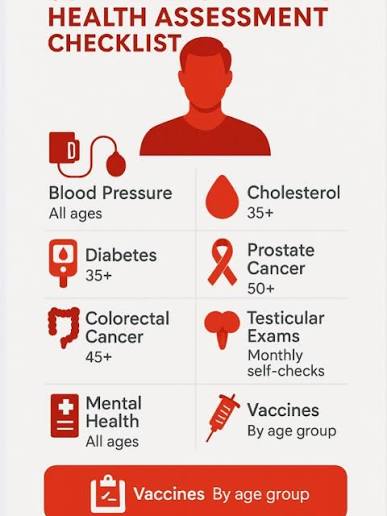
Men tend to put off or avoid health screenings. Often, they fail to get a checkup until they find a problem or their spouse pushes them to see a doctor. This delays catching health problems early on – when treatments work best. If you know someone like Mike, Men’s Health Month is a good time to encourage them to get these key screenings.
Protecting Your Heart: Blood Pressure and Cholesterol
Heart disease is the leading cause of death among men. The common causes — high blood pressure and high cholesterol — are manageable if found. Frequently, these conditions have no warning signs. When symptoms like headaches appear, the problem is usually severe. Routine screening can help prevent a heart attack or stroke by catching problems early and getting treatment started.
Regular check-ups include blood pressure and cholesterol screening. Recommendations are to check your blood pressure at least once a year, more frequently if your numbers are high. Newer guidelines recommend screening cholesterol starting at age 30 and repeating every 5 years, more frequently if someone has a higher risk.
At your annual health check, ask your doctor:
- What are my target numbers?
- What are my risk factors?
- How often do I need testing?
Colon Cancer Screening: Stopping the “Tsunami of Cancer”
Colon cancer is one of the most preventable cancers. But the number of newly diagnosed and more advanced stages of colon cancer is rising for people under age 50. Dr. Ahmedin Jemal at the American Cancer Society called this a “tsunami of cancer.” These younger cancer diagnoses prompted a major shift in screening recommendations a few years ago.
With average risk, screening starts at 45 instead of 50. Screen until 75, then base it on preference, health, or life expectancy. Screening is not recommended after 85. Screening options include:
- Colonoscopy: Done every 10 years, more often if a problem — such as a polyp — is found. This is the gold standard for testing because the doctor can see and remove polyps during the same procedure.
- Highly sensitive stool tests: A small stool sample is tested. These annual tests don’t screen for cancer and instead look for blood, a symptom of cancer. The test is done by your primary care provider.
- Multi-targeted stool DNA test: Known as Cologuard, this is another stool test. This one looks for both blood and DNA markers of cancer. This test is usually done every 3 years.
Prostate Health: Understanding the PSA Test
Prostate cancer occurs in about 1 out of every 8 men, and the risk goes up with aging, with about 60% of all cases occurring after age 65. Men at most risk for developing this cancer are men who have a brother or father who also developed prostate cancer.
Screening recommendations have evolved and are debated. The PSA test measures prostate-specific antigen (PSA) in the blood and is the primary test for prostate cancer screening. Understand that a PSA test result is not positive or negative, but a level of the PSA protein in your blood. Elevated PSA levels can come from other, non-cancerous conditions, such as an enlarged prostate or prostate infections.
PSA tests detect cancer and help reduce cancer deaths. However, they also find very low-risk cancers that don’t cause problems. When low-risk cancer is found, it can lead to unnecessary treatments, such as radiation or surgery, which negatively affect the man’s quality of life. Recommendations now use shared decision-making. Talk with your provider about your risks and the meaning of results.
Skin Cancer: A Hidden Risk When You Work Outdoors
Skin cancer is the most common form of cancer, affecting about 1 in 5 Americans by age 70. It develops from exposure to ultraviolet (UV) radiation from the sun and from tanning beds. The body needs small amounts of UV radiation – up to 15 minutes three times a week – to help it produce vitamin D. Outdoor workers, such as farmers and fishermen, and anyone spending time outdoors for recreation, are at higher risk of skin cancer due to years of sun exposure.
Melanoma is the most aggressive type. It starts in cells that produce skin pigment, often beginning as a mole that looks odd or starts changing. The “ABCDE” guide can help spot melanoma:
- Asymmetry – if you folded it in half, it would not match up
- Border is irregular with blurry or jagged edges
- Color – more than one color or shade
- Diameter larger than a pencil eraser
- Evolving or changing shape, size, or color over time
Prevention is key for skin cancer. Avoid sunburns by using a broad-spectrum sunscreen with SPF 30 or higher daily, and by covering up with clothing, hats, and sunglasses. If you’re at risk, check your skin monthly for any changes and see a dermatologist once a year for a full skin exam.
Diabetes: Finding Trouble Early
Diabetes is a quiet disease that slowly develops over years, causing high blood sugars. This happens when the body doesn’t make enough insulin or doesn’t use it well. Blood sugars that run high over long periods of time increase the risk for serious health problems, including heart disease, kidney disease, stroke, eye disease, and nerve damage.
Type 2 diabetes most often starts in middle-aged adults and is more common in Black, Hispanic, Native American, and Pacific Islanders. If you have a family history, are over age 45, overweight, or obese, you have a greater risk of developing diabetes. Having high blood pressure also increases the risk. The main way to diagnose diabetes is with a blood test. High fasting blood sugar or a high A1c (the 3-month average) usually confirms it. You can reduce your risk for developing diabetes by staying physically active, keeping your blood pressure in the normal range, and losing 5 to 10% of your weight if you’re overweight.
The best time to detect a health issue is before symptoms appear. This is why preventive care, including annual health checks with your primary care provider and routine cancer screening, is so important. These visits also give you a chance to ask questions about your health. Don’t wait for symptoms to appear. Schedule a check with your healthcare provider.
Warning Signs Men Should Not Ignore
Seek medical attention right away for these symptoms
- Chest pain
- Sudden shortness of breath
- Fatigue that does not go away
- Unexplained weight loss
- New skin changes
- Blood in your urine or stool
