By Representative David Gomberg, House District 10
Dear Neighbors and Friends,
On Friday, I took time to drive around our sprawling district, visiting chambers of commerce, new college campuses, sitting down with a delegation from Tiawan in Philomath, and finishing the day at Monroe’s First Responders’ Appreciation Event about two hours from home. Friday was September 11.
Anyone over 30 remembers exactly where they were when they first heard the news. We continue to honor the courage and sacrifice of that dark day. We continue as we must, to remember.
My colleague, Paul Evans, said it better than I ever could in his own newsletter.
Twenty-five years ago, the world shifted course.
Whatever track we were on before the morning of September 11, 2001, disappeared beneath the destruction, rubble, and smoke rising above New York City, Pennsylvania, and the Pentagon. For more than 3.3 million Americans who would serve in uniform during the decades that followed, the attacks were demonstrable proof of a dangerous world desperately in need of a robust defense.
Service is not something you proclaim. It is something you do.
Patriotism is not measured by the size of the flag you wave, the volume of your rhetoric, or how often you invoke the military. It is measured by what you are willing to give, the responsibilities you accept, and the sacrifices you make for people you may never meet.
Take a moment to reflect, remember, and respect those we loved and lost. Remember, too, that for millions of Americans, the consequences of answering the call after September 11 continue to linger—in bodies, families, memories, and empty chairs. Then ask yourself a harder question: Am I doing everything I can to make America worthy of the price others have paid for its existence?
On September 12th, 2021 we were one nation. Now we are a divided nation. It should not take a national disaster to bring us together again.
I also took a moment while in Monroe to reflect on another anniversary. In early September 2020, wildfires raged across much of Oregon and unexpectedly, across portions of our own coastal district. When Susan and I returned home after ten days of evacuation, we found a crew in their soiled yellow “brush shirts” sprawled across our lawn finally resting.
Too many of our neighbors lost their homes that week, and too many still struggle to recover six years later.
Oregon is still fighting fires. But the men and women who show up to fight those fires or in other emergencies large and small will always have our gratitude and respect. They are here to help strangers on what for many may be the worst day of our lives. They run toward danger when the rest of us run away.
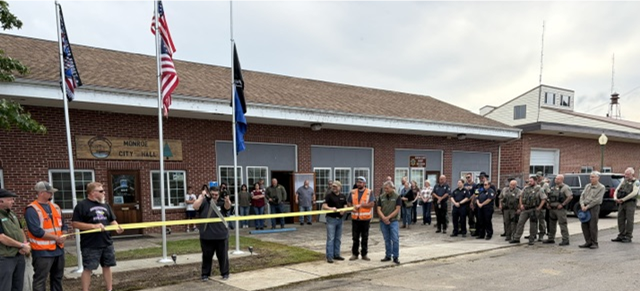
| First responders in Monroe helped Mayor Sheets cut the ribbon on new flagpoles at city hall Friday. |
|
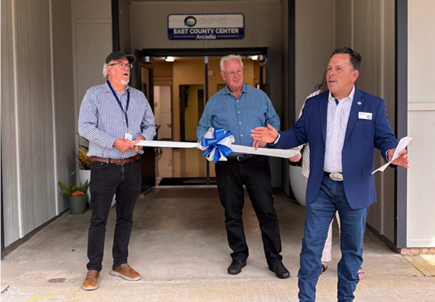
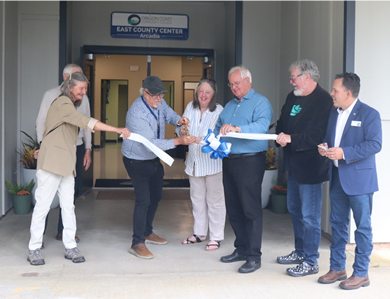
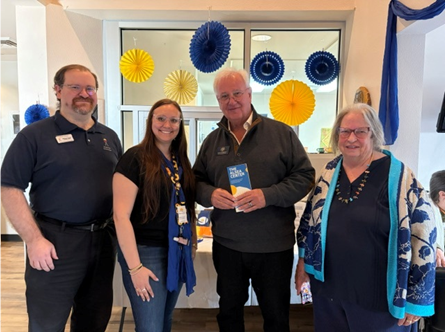
| Friday, we also cut the ribbon on the new Oregon Coast Community College East County Center in Toledo at the former Arcadia School building.
It was a great turnout in Toledo as Oregon Coast Community College celebrated. The new center marks OCCC’s first permanent presence in East Lincoln County and was made possible through a partnership between OCCC and Lincoln County School District. The partnership gives the former school building a new purpose while expanding access to post-secondary education for residents of Toledo, Siletz, Eddyville, and surrounding communities. Classes are scheduled to begin at the center this fall, with additional programs and educational opportunities expected as the center grows. |
|
| This college is doing what community colleges do best – prepare our students for good, local, worthwhile and well-paying jobs.
I often opine that our greatest export from the coast is talented young people who leave in search of education and opportunity. Our challenge is to offer those opportunities here closer to where they grew up and then to provide good jobs to keep them here.
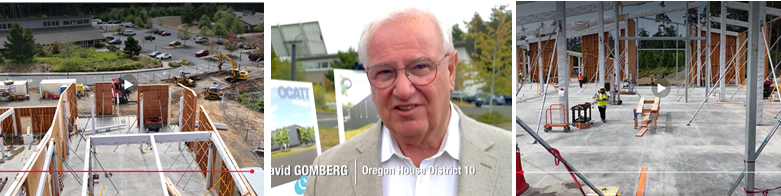
OCCC is offering nursing and teaching degrees along with small business training and support. And now with construction of the new Oregon Coast Advanced Technology & Trades Center or OCATT Center well underway, we’re greatly expanding pre-apprenticeship training and programming for county residents and offering a variety of certificates and degrees in the marine, technical, and construction trades.
- Construction/Carpentry Skills Development
- Industrial Facilities Maintenance
- Maritime Technology including Refrigeration, Marine Diesel, and Electronics
- HVAC and Welding
- Pre-Apprenticeship
|
|
| The new Center is being funded with a local bond measure approved by 64% of County voters and $8 million in state support I helped provide. |
|
| I’m often asked if I’m spending days in Salem. The answer is yes and no….
Our legislature convenes for six months in odd-numbered years to consider bills and pass a two-year balanced budget. In even-numbered years, we meet for only one month. But during the “interim,” formal Task Forces and Commissions meet, and we go to the Capitol every three months for a week of committee meetings called “Legislative Days.” September Legislative Days just concluded.
While there were a number of interesting meetings that I previewed last week, there are two items I wanted to review.
The first regards our ongoing fire season.
Let’s begin with some background. A story first produced by the Oregon Journalism Project reports Oregon’s unfinished fire season is the most destructive ever, burning more than 2.5 million acres and choking off clean air across the state.
Most of the destruction takes place on federal land. Since 2020, only 1% of the land damaged by wildfire in Oregon is owned by the state. The bulk of the land that burns every year is federal, managed by either the Bureau of Land Management or the U.S. Forest Service. The high proportion of wildfires on federal land isn’t surprising, given that 53% of the land mass in Oregon is federal.
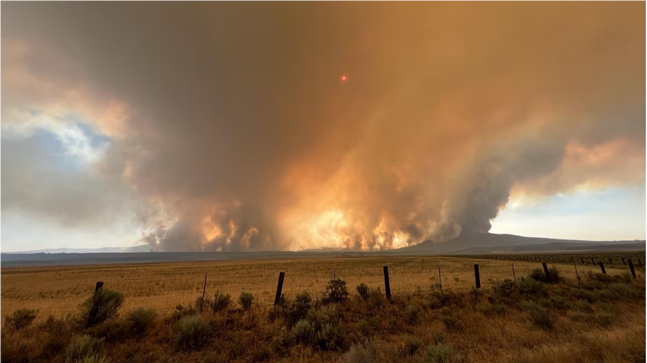
This summer, most wildfires were not in our timberlands. While more than half of the acres in Oregon that are considered high risk to wildfire are forests, most of the acres burned this summer were covered by dry brush and grass. Short grass has been the primary fuel source for 1.8 million acres of the record 2.5 million acres burned in 2026. |
|
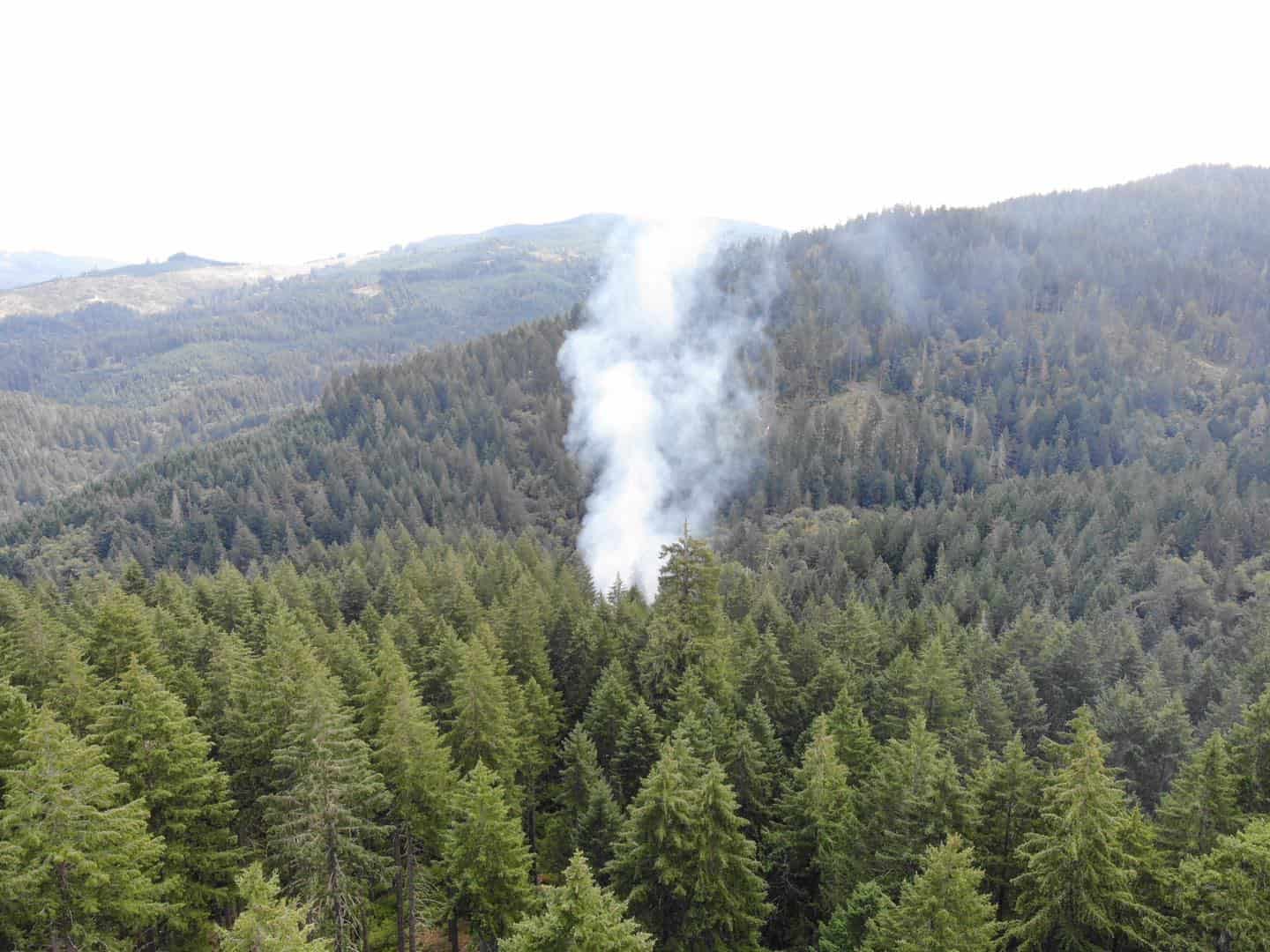
| The Wrights Spring Fire as seen on the afternoon of Friday, August 7 from Sprague River Road. (InciWeb) |
|
| Humans cause nearly half of wildfires, but account for a lesser fraction of the total acres burned. This season, 45% of the fires that have a known cause were started by people. Those causes are many—campfires, burning cigarettes, hot exhaust pipes, even dragging tow chains creating sparks that ignite dry grass or pine needles. Fortunately, human-caused wildfires don’t typically grow into large fires, in part because they are less likely to be in remote parts of the state.
Fires caused by lightning are usually the biggest. Fires ignited by natural causes like lightning are responsible for Oregon’s megafires (blazes of more than 100,000 acres) and often occur in rural or forested areas. They spread depending on winds, humidity, and temperature. Because of their remoteness, fighting them can be particularly challenging.
With that background as context, the Emergency Board met this week to consider wildfire costs. The 20-member board has the authority to allocate funding when the full Legislature isn’t in session. As of late August, wildfires have cost the state $236.2 million. Those costs are expected to reach $350 million by the end of the wildfire season—putting 2026 on track to surpass the state’s previous $318 million record when wildfires scorched 1.9 million acres in 2024.
On Thursday morning, the “E-Board” agreed to allocate $108 million more to the Oregon Department of Forestry and $15 million to the Department of the State Fire Marshal. We also agreed to authorize the agency to borrow $150 million from the Oregon State Treasury to maintain solvency through the end of the year.
As I said earlier, most of the destruction takes place on federal land. And the federal government reimburses Oregon for fighting those fires. The problem is, reimbursement can take years, and we need funding now to pay firefighters and the small businesses that feed them and provide other services and equipment.
The Federal Emergency Management Agency still owes Oregon about $92 million in fire management and public assistance grants from 2020. Typically, they take about two to three years to be fully released to the states. This is not an unusual amount of money owed, nor is it unusual that it’s taking so long to be reimbursed, according to a spokesperson for the Oregon Department of Forestry.
But still, the slow pace of federal reimbursements frustrated lawmakers.
As reported in the Oregon Capital Chronicle, “Through the course of today’s allocations, we’re going to be taking general fund dollars away from our schools, from healthcare, from housing, from public safety, while we’re waiting for reimbursement from the federal government,” said Rep. David Gomberg, D-Otis.
Lawmakers on the emergency board thanked all the agencies who worked to put out the wildfires this summer. |
|
| Another seemingly boring but actually consequential hearing was the House Rules Committee update on the Outcomes Review Process. Initiated by House Majority Leader Ben Bowman, D-Tigard, the program aims to evaluate whether legislation accomplished what was intended and whether any changes are needed.
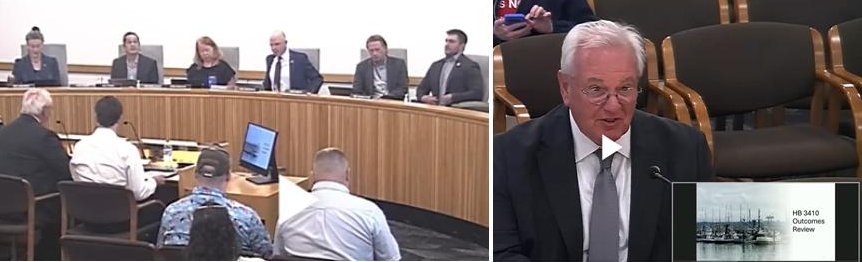
Legislators love to pass bills. But to come back later and review whether they actually worked is risky. Do I really want to know whether the measure I wrote made a difference? Do I want the public to know if it didn’t? The answer should be a resounding yes! And that’s why I volunteered to be one of five legislators that audited one of our bills. In this case it was HB 3410, a proposal to improve workforce training in coastal economies and also to get more Oregon seafood into Oregon restaurants. (Currently about 10% of seafood on Oregon menus comes from Oregon waters. A 10% change is estimated to benefit our fishing industry by $90 million.) |
|
| Watch the presentation here. My portion begins at the 41 minute mark. |
|
| An editorial in the Sunday Oregonian praised the effort. Legislators should share accountability for whether their legislation works—not just for passing it, they said.
What was the conclusion in the case of HB 3410? Yes, we created licenses and certificates needed for local jobs. More than 1,000 individuals received 215 industry-recognized certifications. But I also observed that bills could be written better to track results. As the Oregonian said, “Another legislator who piloted an outcome review, Rep. David Gomberg, D-Lincoln County, noted that lawmakers can write reporting requirements and other provisions into their bills to better track the effectiveness of legislation. While lawmakers should weigh how much of an administrative burden such reporting requirements would pose, it seems entirely reasonable to include some way to measure the impacts.”
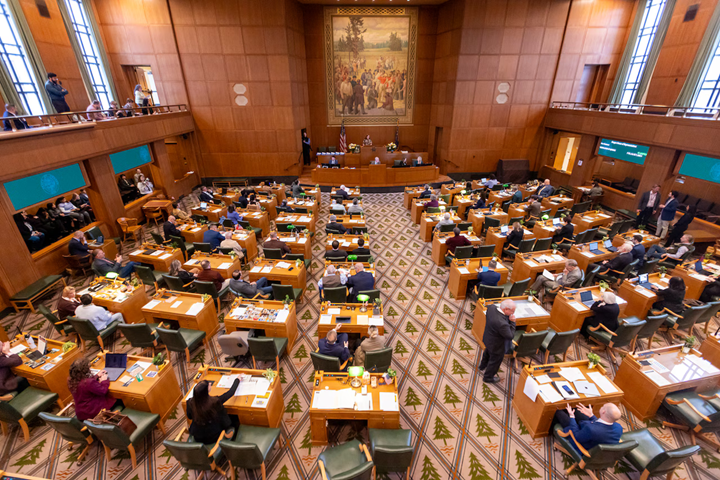
Where’s David? Find me in the photo from the Oregonian review of our review process… |
|
| A new program evaluating the effectiveness of legislation shows promise and signals a good step forward for accountability and oversight, the editorial board writes. But for this to amount to anything, legislators must be willing to turn such scrutiny on their most controversial and consequential bills. Sean Meagher/The Oregonian |
|
| Another subject that dominated my time and most meetings in the Capitol last week was transportation. I co-chair the committee that manages the Oregon Department of Transportation (ODOT) budget.
State agencies are required to prepare proposed budgets for the state’s chief financial officer and the governor, who then releases a recommended budget for the upcoming two-year cycle that lawmakers use when creating the state budget in odd-year legislative sessions. That process is now underway. As revenue from gas taxes continues to decline and costs continue to increase, ODOT is projecting a $200 million shortfall.
I receive mail each week arguing that ODOT doesn’t need more funds, they simply need to reduce budgets. So let’s be clear, those budgets have been undergoing reductions for the past three sessions.
- 2025-27: $125 million in reductions
- 2023-25: $224 million in reductions
- 2021-23: $78 million in reductions.
That is $427 million in cuts over the past five years with $200 million more projected. And what are we cutting?
- Safe Routes to School – sidewalks, crosswalks and bike paths.
- Connect Oregon – ports, freight and rail that power rural and coastal economies.
- Unsafe Bridges – delay needed repairs and seismic improvements
In a presentation to the Oregon Transportation Commission in July, the Department detailed that closing an anticipated $200 million hole for the upcoming budget cycle will mean cuts for operations and maintenance include cutting 548 positions. That’s fog lines, potholes, DMV hours, and slower response to accidents and landslides.
ODOT staffing is currently at a 27 year low following recent budget adjustments and hiring freezes, with 20% fewer employees than the agency’s staffing peak in 1999. Cuts include 11 senior management and executive roles. Facing uncertainty, people are leaving and more than 700 positions remain vacant. |
|
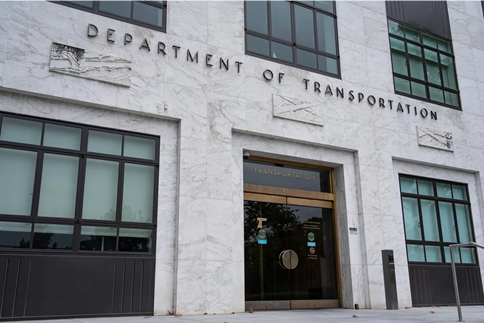
| ODOT is looking at a $200 million anticipated hole for operations and maintenance in ODOT’s 27-29 budget which could mean cuts to 548 more jobs. Kevin Neeery/Statesman Journal |
|
| Most transportation funding is directed by law to be spent on specific programs and services. ODOT can’t move most of its money to more immediate and higher priorities without legislative approval.
The cost of everything from paving to plowing roads, purchasing equipment, maintaining facilities, transit services, and providing DMV services is going up. Oregon’s gas, tax and vehicle and freight hauler fees are not tied to inflation. With every year that passes the same dollar purchases fewer materials and less services.
Oregon’s transportation agencies rely on gas taxes to fund the maintenance and improvement of our roads and bridges. However, the gas tax is struggling to keep up with rising cost as cars become more fuel efficient and electric vehicle use increases. For example, a 2009 Toyota Camry gets 25 miles to the gallon on average. The driver of this car would pay about $160 per year in Oregon gas tax. A 2026 Toyota Camry can get 50 miles to the gallon which equates to about $77 per year in Oregon gas taxes.
Remember that half of the funds collected in gas taxes are sent to counties and cities.
To help replace some of the lost revenue from electric and hybrid vehicles ODOT is working to launch Oregon’s road user charge for electric and hybrid vehicles which will roll out in three phases starting on July 1, 2027. |
|
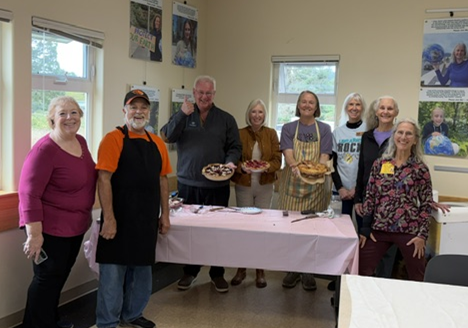
| I made two trips from Otis to Benton County this week—about two hours driving each way. The highlight was Saturday at the annual Blackberry Blast in Alsea. Blackberry pie. Blackberry cinnamon rolls, Blackberry cheesecake. Blackberrys with ice cream. I’d go back again tomorrow if they had any left! |
|
| Susan and I also toured the Alsea Center—a space for community activities and health-related services. We then connected over to Turner (a bit out of district) to celebrate a groundbreaking of new acreage at Willamette Valley Vineyards. When I was much younger, I navigated a tractor up and down those hills to clear scotch broom for the first pinot plantings. And forty years later, I co-chair the Oregon Legislative Wine Caucus.
We finished out the day helping celebrate a 60th Anniversary of North Lincoln Sanitary. Too often we take trash service for granted. But the fact is that our district enjoys exemplary support from a number of good firms that reliably make our unwanted garbage, recycling, and garden debris disappear. And as I learned Saturday night, those trash people also know how to party!
The coming week is filled primarily with a variety of Zoom meetings and briefings. Then Thursday, we’re slipping away for two days for Susan’s 50-year high school reunion. We’re still pondering how that many years have passed so quickly… |
|