By Representative David Gomberg, House District 10
6/22/26
Dear Friends and Neighbors,
The Trump administration is backing off from its plans to remove a decade-old ocean monitoring system Oregonians rely on for fishing, recreation, science and emergency services. The system was described by US Senator Jeff Merkley as “a scientific wonder—900 ocean sensors that measure temperature, currents, salinity, waves, and even biological factors like chlorophyll and phytoplankton.”
A decision was announced last week to quickly dismantle the complex and massive array of underwater equipment that for 10 years has studied the ocean’s health. But by week end, the National Science Foundation announced they were reversing the decision to shut down buoys and other maritime science equipment used to monitor weather and climate conditions along the Pacific Northwest coast and elsewhere.
Two of the cabled array’s three research buoys, located off Newport and Waldport, had already been pulled from the ocean. Researchers were offloading the last of the high-tech data buoys from Pacific Northwest waters onto a flatbed truck in Newport on Thursday morning when they got the word—the science foundation was turning the dismantling ship around.
This was good news for ocean science and the ocean economy.
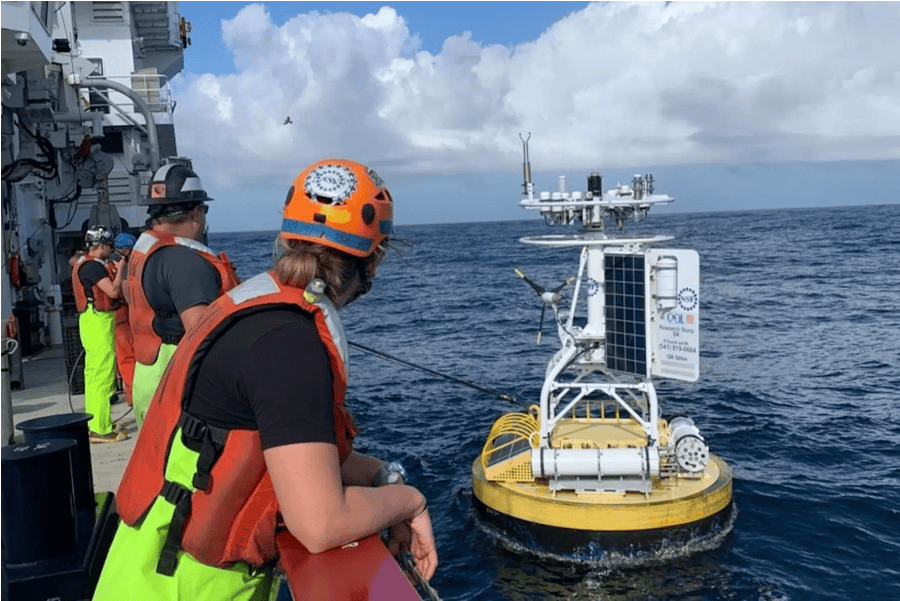
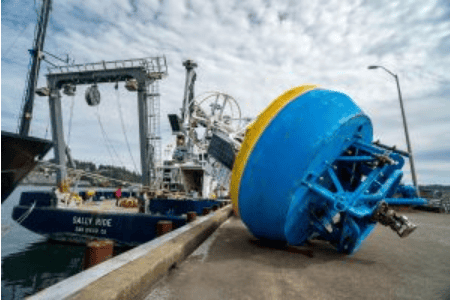
A network of huge ocean-monitoring buoys was in the process of being removed from the water and sent to storage when the decision was abruptly reversed by the federal government.
The foundation’s own website characterizes the Ocean Observatories Initiative (OOI) as a “science-driven ocean observing network that delivers real-time data from more than 900 instruments to address critical science questions regarding the world’s ocean.”
The loss of the ocean monitoring equipment would have had a big effect on OSU’s Hatfield Marine Science Center in Newport, officials said last week, because it counts on hiring researchers, graduate students and post-doctoral candidates to help with the OOI operations and studies.
“At Hatfield alone we have about 450 people, with another 400 or so on the main campus in Corvallis,” said Mark Farley, who directs business operations at Hatfield. “It’s a significant footprint for the West Coast. It’s like a small town is just folding up and going away.” But the jobs stretched well beyond the science community. Buoys in need of repainting to better withstand the harsh marine environment were often sent to the Port of Toledo’s shipyard. Similarly, jobs to fabricate and repair platform parts often went to machine shops in Corvallis.
What does that data mean for our local fishing fleets?
When fishermen were stumped as to why they were pulling up pots that held nothing but dead Dungeness crab, OSU scientists using the array tracked it back to low levels of dissolved oxygen in the water. “Understanding where that was happening and why, which this equipment accomplished, allowed us to show where this was occurring and, more importantly, where it wasn’t. In other words, it allowed us to pinpoint for folks where the fishing was good.” explained Jack Barth, an OSU oceanography professor.
The government’s reversal came the day after Senator Merkley led a successful push in the U.S. Senate with Senator Lisa Murkowski, R-Alaska, to advance their “Save Our Sensors” initiative. The bill, which would prohibit the National Science Foundation from using federal funds to decommission the maritime network, passed by unanimous consent.
The same day as the Senate vote, state lawmakers representing districts along the Oregon coast expressed “strong opposition” to the federal government’s removal of the ocean network in a letter addressed to the National Science Foundation. I was one of the signors of that letter.
It’s not insignificant that the majority of members of the Coastal Caucus who criticized this decision are in fact Republican members. The situation goes beyond partisanship in the impact it’s going to have on the coastal economies, coastal residents, and on ocean science.
In our letter, Oregon’s state lawmakers wrote that the program, particularly the Coastal Endurance Array, is “indispensable” to coastal communities’ safety, economy, and emergency preparedness.
On June 18, NSF responded, “Effective immediately, NSF will not proceed with further removal or descoping of equipment from the remaining arrays and will continue operations including planned maintenance. While the Endurance Array has been removed from the water, we are developing plans to redeploy the equipment after servicing”.
| As I detailed in my last report, legislators spent most of last week in Salem. In addition to committees meeting to consider issues and legislation for 2027, the Emergency Board met.
The legislative Emergency Board is made up of twenty members from both legislative chambers and parties and has limited authority to adjust budgets while the Legislature is not in session. It has the power to allocate emergency funds but not to approve policy. There were thirty-three items on the Board agenda Wednesday and I’d like to highlight three. |
|
| Oregon’s Justice Department plans to take a more aggressive approach to preventing monopolies and high-profile mergers in the state. To support that effort, we approved sixteen new positions under Attorney General Dan Rayfield dedicated to investigate and fight corporate mergers in the anti-trust division. The new positions include five assistant attorneys general, four paralegals, six legal secretaries and administrative staff, and one economist. It would double the number of attorneys and triple the office’s capacity in the ODOJ Antitrust Division, according to Rayfield’s office. The new positions will be funded through attorney fees from the court cases and will not tap into the state’s general fund.
The agency currently has eight antitrust officials for “resource-heavy cases,” but agency leaders say they need to expand the division in light of what officials have said is an enforcement vacuum left by the federal government under President Donald Trump.
The state Justice Department has been successful in blocking the merger of grocery giants Kroger and Albertsons, and an anti-trust lawsuit against Live Nation and Ticket Master. Rayfield and thirty-three other state attorneys general will push for the companies’ full separation in the damages part of their trial, expected to take place early next year. |
|
| Lawmakers also voted to send $7.5 million to Southern Oregon University in Ashland amid the school’s ongoing budget woes but warned higher education funding and structures will need major changes in the coming years.
In February, university officials projected that they could fail to meet financing obligations by spring of 2027 given fifteen years of declining revenues. The Legislature in the most recent session approved putting $15 million aside for the university, contingent on officials submitting to lawmakers an operational plan through June of 2027 and a long-term plan for staying solvent. The university delivered its short-term plan, unlocking the first $7.5 million, and will bring its long-term plan to the Emergency Board in September to receive the other half of the $15 million.
Higher education continues to face funding issues, especially in our regional universities like Eastern, Southern, and Western.
Rep. Greg Smith, R-Heppner, voted to approve the funds but said the state needs to revisit funding for higher education and how state and community colleges are structured in the near future. “Eastern Oregon University’s enrollment is less than Hermiston High School,” he said.
At the same time, many high school students are graduating with enough transfer credits to earn a Community College Associate Degree or cover two years of a four-year university degree. And on some campuses, as many as one-third of students are taking classes virtually rather than in person.
Southern Oregon’s situation comes as the Higher Education Coordinating Commission is conducting a comprehensive study of the state’s public post-secondary education system and developing recommendations to address financial instability and declining enrollment. Oregon currently operates seven public universities and 17 community colleges.
The study launched a little more than a decade after lawmakers dissolved the centralized Oregon University System out of a desire to grant the universities greater independence. But a report the Higher Education Coordinating Commission released in January found the hopes that independence would make the universities stronger haven’t panned out. I was one of three House members to vote against SB 80 in 2015.
The final issue I wanted to touch on is water.
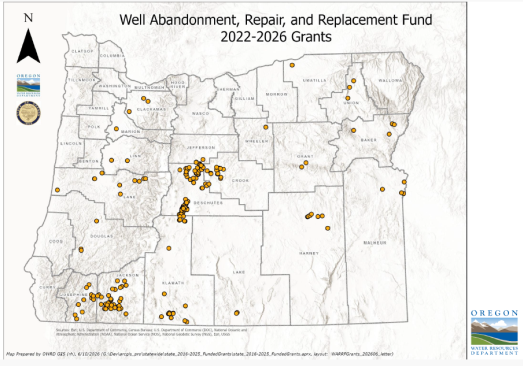
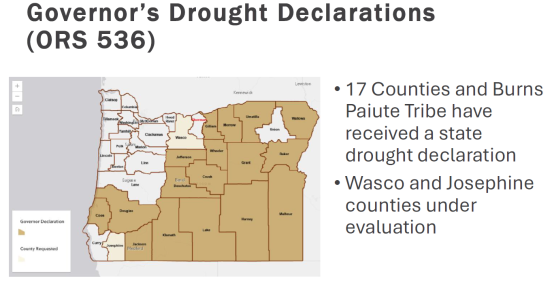
Emergency Board members approved $1 million for thirty-five households who urgently need to replace or repair wells that have dried up or were destroyed by wildfire. Governor Tina Kotek, who has issued drought declarations for nearly half the state’s counties, urged the Legislature to approve the funds which will provide the low- to moderate-income households up to $40,000 each for well work.
The move effectively doubles the biennial budget of the state’s Well Abandonment, Repair and Replacement Fund established in 2021, but it is enough to meet only a small fraction of the applicants requesting support. I voted to approve the funding but also raised concerns that since 2021, the Fund has disproportionately served specific areas of central and southern Oregon, despite well issues throughout the state. |
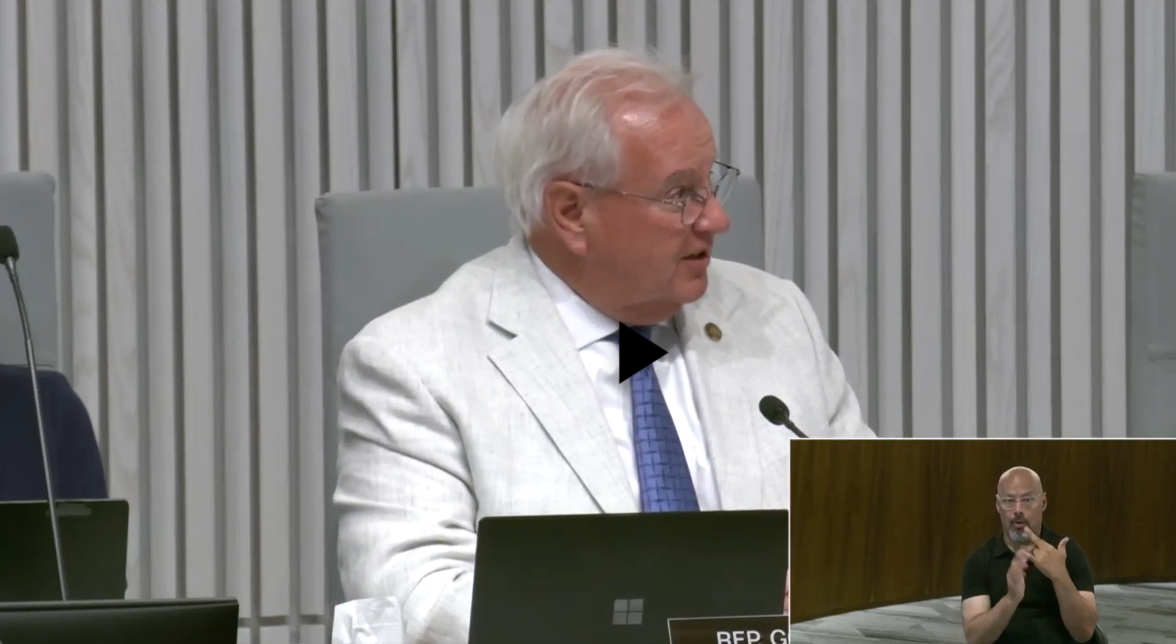
| “My county has regularly declared droughts. My county has experienced fires. But since 2021, not one of these wells has appeared in my county,” I said. “I see one well since 2021 along the entire length of the Columbia River, and as I look at these maps, it appears to me that there are roughly the same number of wells we’ve supported in Lane County, as in Malheur, Baker, Wallowa, Union, Umatilla and Morrow counties combined”.
People certainly need help with water and wells. But a million dollars for just thirty families seems disproportionate, and I asked if the backlog of applicants were being prioritized or just taken in order. I recommended that the Legislature come back in 2027 with a plan to get “better bang for the buck” through the program, including focusing on funding community wells that can support multiple families over private household wells.
You can watch the full meeting here. |
|
| While the Emergency Board did spend money this week, it is clear that budget leaders are holding back the majority of funds to address drought and fire issues evolving quickly this summer.
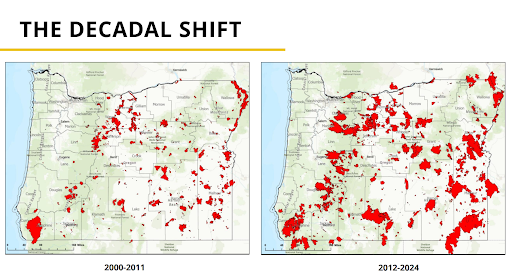
The time period since the year 2000 is the driest on record for Oregon in the past 1,200 years. For context, the drought that caused the Dust Bowl of the 1930s lasted for less than a decade.
The leading contributors to drought are temperature and precipitation such as rain or snowfall. These two factors influence snowpack, soil moisture, and streamflows, which are common indicators of drought. Drought conditions can disrupt water supply cycles to the point that demand for water is greater than the water supply, impacting both people and ecosystems.
During a severe or multi-year drought, groundwater and above-ground reservoirs are not able to adequately refill. Unfortunately, this sets the stage for wildfires, poor grazing and crop conditions, decreased streamflows and habitat for fish, diminished water quality, and scarce water supplies for human consumption.
Oregon is facing potentially extraordinary drought in 2026, driven by historically low snowpack, one of the warmest winters in state history, and multi-year precipitation deficits. Conditions are similar to 2015, when a snow drought led to 25 of 36 Oregon counties receiving state emergency drought declarations. With snowpack typically peaking around April 1, significant recovery is unlikely. |
|
| Nearly half of Oregon’s counties are now under drought emergency declarations as state officials warn of increased stress on the state’s environment and agricultural industry due to water shortages. Drought declarations unlock emergency state resources for those counties, such as temporary water-rights transfers and emergency water-use permits.
State officials said these drought conditions are expected to significantly affect Oregon’s farms, ranches, drinking water, and fish and wildlife habitats heading into the summer.
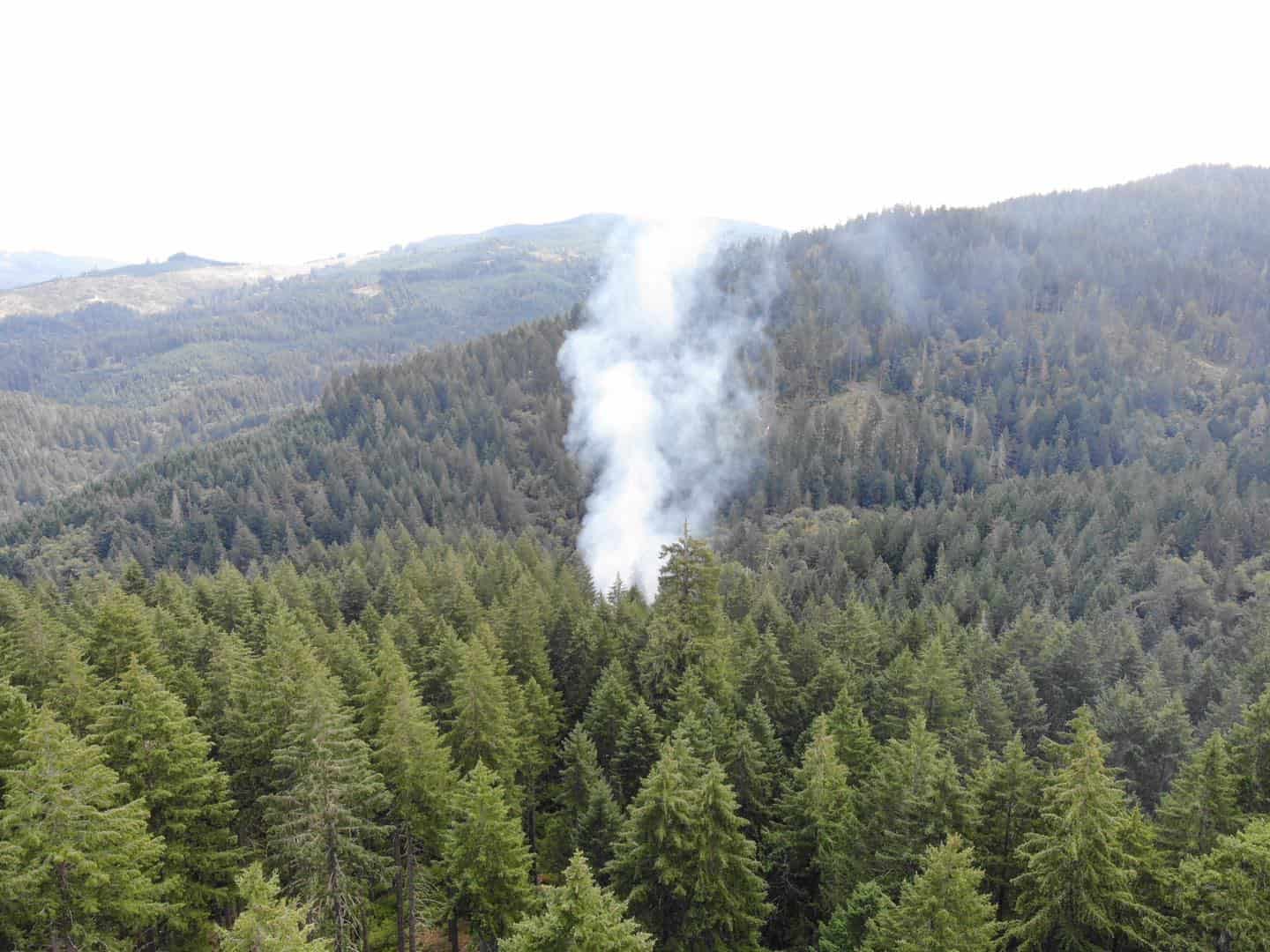
The extreme dryness will also increase wildfire risk. State officials have already warned that drought conditions will make the upcoming fire season lengthy and difficult. |
|
| Hotter, drier summers have resulted in larger, longer, and more expensive wildfires. |
|
| Let me wrap up this week’s report with some good news.
Friday, I worked my way down Highway 101 from Otis to Waldport and the new Bayfront Hotel. There, I joined the celebration of the 70th Beachcomber Festival. We heard from the Grand Marshall, coronated two queens and their court, and enjoyed a great dinner at the La Baia Italian Restaurant.
There is much to celebrate in Waldport and community spirit was on full display Saturday with shiny classic cars, music, food, and a long parade filled with big trucks, horses, floats, balloons, and lots of candy being tossed to crowds that lined the highways through town. |
|
| Members of the Oregon Coast Veterans Association led the color guard and the 70th Beachcomber Festival parade through downtown Waldport on Saturday. (Quinton Smith/Lincoln Chronicle) |
|
| That’s the news for this week. I’ll look forward to seeing you on my travels around our district as we enjoy the stunning summer weather. |
|