By Representative David Gomberg, House District 10
7/13/2026
Dear Friends and Neighbors,
Last week, OPB published an illuminating assessment of Coastal legislative politics.
As recently as 2021, Democrats held five of the seven seats in the Oregon House and Senate stretching from Brookings to Astoria. Today there is only one elected Democrat—me. The GOP now controls five seats—they had six before one of their own switched parties.
Registered Republican voters outnumber Democrats on the coast, according to June voter registration data from the Oregon Secretary of State. But that dynamic is evolving as the population ages, industries change and retirees from Oregon cities or out-of-state move to the beach. The region’s largest electorate are non-affiliated voters, a group with a history of electing moderate coastal politicians known for taking atypical stances—sometimes against their own party.
Historically, the economies of the coastline, like much of rural Oregon, were focused on fishing, forestry, and farming. Blue collar union workers supported blue-dog democrats like Fred Heard from Klamath Falls, John Kitzhaber from Roseburg, Jason Boe of Douglas County, and on the coast, Max Rijken from Newport, Betsy Johnson from Scappoose, and Bill Bradburry from Coos County. That trend continued until recently with moderate Democrats dominating the Coastal Caucus with Arnie Roblan and Caddy McKeown from Coos County, Deb Boone and Betsy Johnson from the North Coast, and David Gomberg in Lincoln County. Representative Cyrus Javadi, elected as a Republican from Tillamook, left the Republican party in September.
But slowly, the economic and political environment has changed and like much of the nation, attitudes have hardened.
Democrats nominated more progressive candidates who had trouble raising money and gaining traction. And almost overnight, our partisan representation shifted. As Roblan said, “I think that over time in our state the progressive part of the Democratic Party has not really felt welcoming to a lot of the people on the coast. And so you get the independents who really make the decisions.”
Solid constituencies continue on the left and the right but overall, electorate results moved toward the center. We are not blue or red; we are purple. The north and south coast shifted right and the central coast left. As natural resource industries struggled, tourism and recreation flourished with a focus on smaller businesses. People who visited the Coast often chose to retire here. One-in-three residents is now over 65 and the largest source of income in Lincoln County is not fishing or even tourism, but transfer payments like pensions, investments, and social security.
“I’m in a no-win position,” says our Senator Dick Anderson, a Lincoln City Republican who serves Senate District 5, an area from Coos Bay to Florence to Newport where Democrats outnumber Republicans. “I’m never conservative enough for some, and not liberal enough for others. I fit right in the middle.”
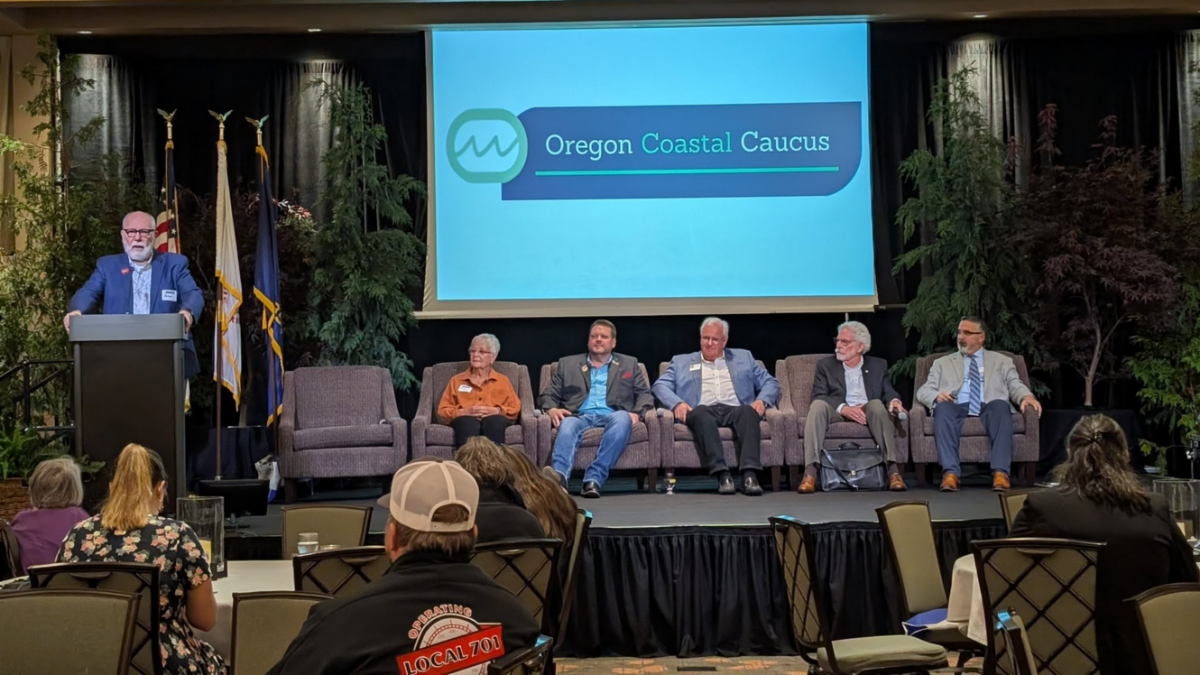
| The Coastal Caucus hosts an annual economic summit. |
|
| The Coastal Caucus can be an influential force in the state capitol known for unified stances that can block or advance legislation. As I said to OPB, “The Coastal Caucus has long been a group that has been perceived as having disproportionate influence, more focused on geography than on partisanship.” During my tenure, the group included the Speaker of the House, the co-chair of budget-writing Ways and Means Committee, and the chairs of several powerful committees.
Chairmanships go to members of the majority party and most coastal legislators, as I have said, are now in the minority. But still, working together, we get things done.
Balancing these compounding demands comes with unique challenges, particularly for the lawmakers in the coast’s purple districts. That means taking atypical stances—sometimes against their own party.
This year, most coastal lawmakers backed a bill to increase the state’s tax on campground, hotel and Airbnb stays to fund wildlife conservation programs. Coastal legislators backed House Bill 4148 in this year’s short legislative session, which received bipartisan support but some Republican pushback. The bill allows municipalities to spend a greater share of lodging tax revenue on services like police, emergency services and road maintenance, rather than tourism promotion. Earlier this month, the entire coastal caucus signed a letter seeking to stop the Trump administration from pulling buoys from the sea that help track ocean conditions.
For my own part, I have voted against funding the MODA Center in Portland, a baseball stadium in Hillsboro, rent controls that could limit costal housing development, and some (but certainly not all) firearms bills. “I’m a Democrat, but I’m a moderate Democrat, and I don’t always vote with the Democratic leadership.”
Much of Oregon is solid blue urban or solid red rural. The Coast is unique. And it is interesting to me that Central Oregon is changing in similar ways as the population there has grown and traditional Republican seats have turned Democratic. They too have created a bipartisan caucus on the Coastal model.
This November will be a pivotal election on the Coast.
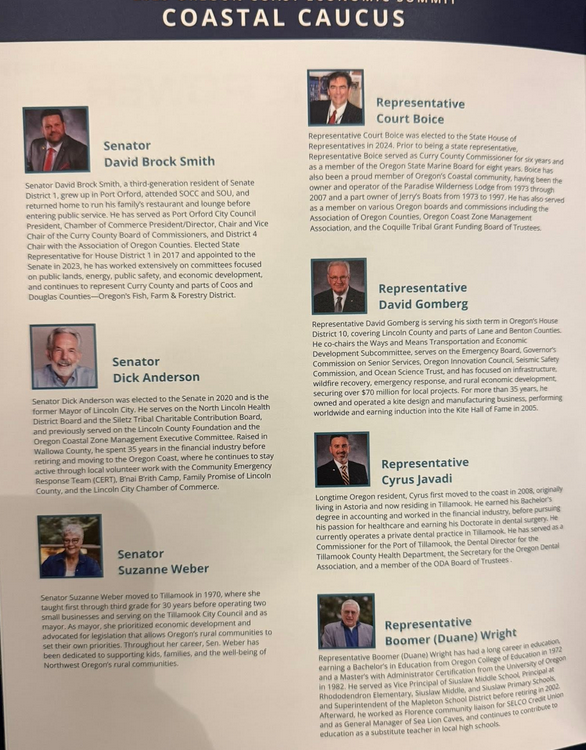
Senators serve four years and two of our three senators are not up for election. But David Brock Smith in the south is running for the US Senate against Ron Wyden. (He will continue in the state senate if he loses.) Dick Anderson in the Center has two years left in his current term. Further north, Suzanne Weber participated in the 2023 walkouts and is barred from seeking reelection. She represents Senate District 16, another swing district that includes Tillamook, Clatsop, and Columbia counties. Weber has endorsed Republican Courtney Bangs, a Clatsop County commissioner, who is running against former state Senator Rachel Armitage, a St. Helens Democrat.
All four House seats are on the ballot. In the south, Court Boyce in District 1 seeks re-election. Boomer Wright in south-central is retiring. His District 9 seat has shifted from Democrat to Republican and the race this year will be between Claire Lynn (R) and John Scheirman (D). Incumbent Cyrus Javadi (D) will face Max Sherman (R), a retired teacher, in what is shaping up to be a competitive race for House District 32, which includes Tillamook and Clatsop counties. And by contrast, here in our district, I have again earned the nomination of the Democrats, Independent Party, and the Republican write-in nomination. I’m very proud of that broad support. |
| Whoever wins in November will join the Coastal Caucus at a critical time. The coming session will need to address reductions in Federal funding for the Oregon Health Plan which provides insurance for one-in-three Oregonians. We need to chart the future of our transportation network. We will need to address Oregon’s short school year and disappointing education outcomes. Climate challenges are producing hotter, drier summers and larger wildfires. And here along the Coast, we hope to support the emerging blue economy workforce, address lagging infrastructure and ongoing housing shortages, and changing ocean science that challenges the fishing fleet as well as our collective future.
Please let me be clear that I’m striving here to provide information on the coming election and not advocacy for any candidate. Legislative offices are not allowed to use state resources for partisan campaign purposes. |
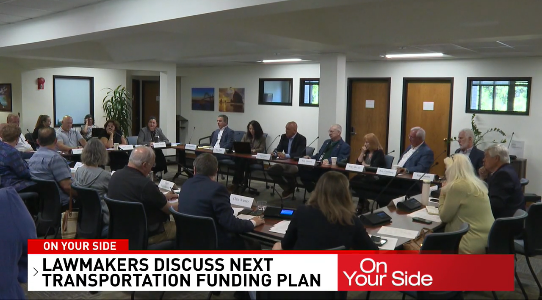
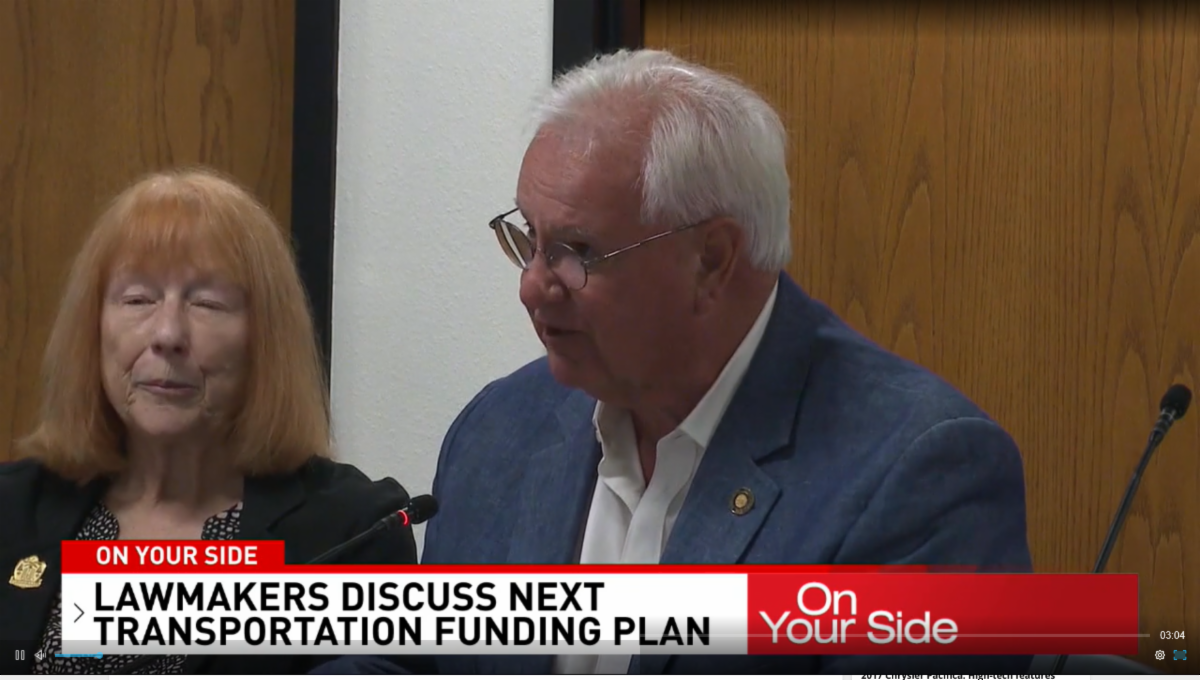
| On July 7, Oregon lawmakers joined Governor Kotek’s Rebuilding our Transportation Vision Workgroup for a roundtable discussion about the needs, priorities and costs of Oregon’s transportation system. You can watch the full meeting here.
“We are excited to talk with legislators because they are the key piece in making any of our recommendations a reality,” said Grace Crunican, the Workgroup’s co-chair, prior to the meeting. “The cost of doing nothing—and allowing our transportation system to deteriorate—is too high. So we want to make sure we’re bringing practical and workable solutions to the table for the governor and legislature to move forward in 2027.” |
|
| From left to right: Sen. Anthony Broadman, Rep. Khanh Pham, Sen. Bruce Starr, Sen. Chris Gorseck, Rep. Susan McLain, Rep. David Gomberg and Rep. Mark Gamba |
| The Workgroup invited legislative leadership and a bipartisan group of legislators with an interest in transportation to attend. The lawmakers who joined the meeting included: Sen. Anthony Broardman (D-Bend), Sen. Chris Gorsek (D-Gresham), Sen. Khanh Pham (D-Portland), Sen. Bruce Starr (R-Dundee), Rep. Mark Gamba (D-Portland), Rep. David Gomberg (D-Otis), Rep. Susan McLain (D-Forest Grove).
The Workgroup is tasked with reviewing transportation needs, funding challenges, priorities, and tradeoffs in order to provide recommendations to the Governor and legislature. They are bringing together experts and system users from across the state to support these efforts. A key group of stakeholders are the legislators who can turn their recommendations into legislation.
The roundtable discussion focused on three questions:
- What are the most important needs and priorities you believe should be reflected in a future transportation funding package?
- Was there a specific element of the 2025 proposed package that you’d like to have on the table for reconsideration in a future funding solution?
- How can this workgroup, or its outcomes, best equip you as an elected official for a successful legislative proposal for the 2027 session?
Each of the lawmakers shared their perspectives on the importance of maintaining Oregon’s transportation system for the state’s economy, public safety, and connecting people with the places they need to go.
While the legislators shared many ideas on how to address the challenge, they all agreed on one thing—any recommendations that the Workgroup provides to the governor should help lawmakers achieve consensus for bipartisan solutions so Oregon can achieve sustainable, durable transportation funding. |
|
| Representative David Gomberg, D-Otis, said success should be measured not only by good policy, but by whether lawmakers can actually pass it.
“I’m looking for something that can garner not just a majority, but something close to a consensus and to do so in a bipartisan way,” said Gomberg. “Something that Oregonians will be confident in, confident that the proposals that we come forward with will be meaningful, will be effective, will be fair, and will be easy to collect.” Learn more here.
The public will have an opportunity to join the conversation and provide their feedback to inform the Workgroup’s final report. The Oregon Department of Transportation will be launching an online open house to collect input from Oregonians in the coming weeks.
A recording of the meeting is available on YouTube. Visit the Workgroup homepage to learn more and stay up to date. |
|
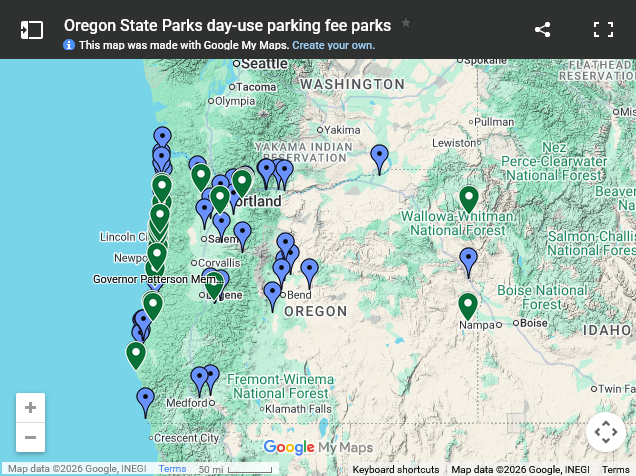
| I’ve been hearing a lot about recent decisions to fund our state parks with new parking fees.
Currently, Oregon State Parks waives day-use parking fees at more than 150 parks across the state. However, many day-use parking areas now require a parking permit. Oregon residents can purchase a 12-month parking permit for $60 (or $75 for non-residents) online, at most major state park offices, or from vendors statewide. The permit covers two license plates and is transferable among vehicles.
If you’re not camping and don’t have an annual parking permit, you need to buy a daily parking permit for your vehicle. Daily parking permits are $10 per day per vehicle for residents of Oregon (or $12 per day for non-residents). You can purchase one at a park that charges a day-use parking fee, online the day of your visit or by calling reservations at 1-800-452-5687. |
|
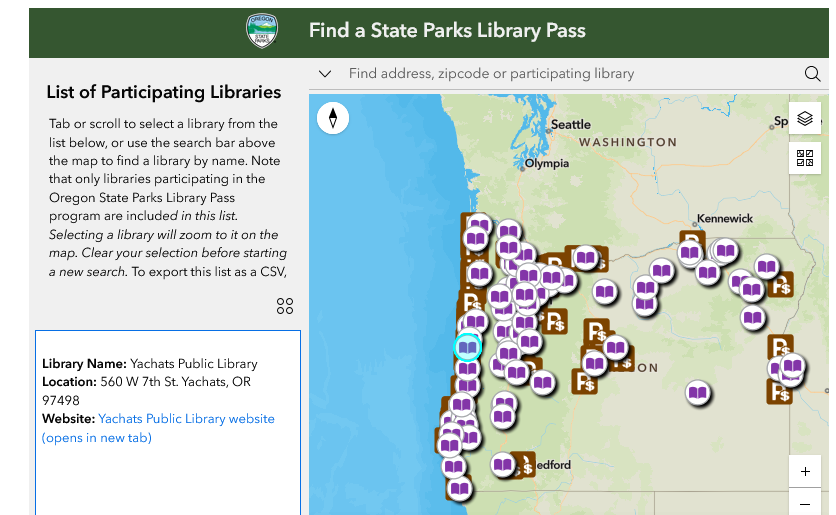
| And now some good news. OPRD and the State Library of Oregon partnered to offer free Oregon State Parks parking permits to Oregon public libraries. There are currently 200 parking permits available across 82 libraries throughout the state. At this page you can find an interactive map of libraries with passes. |
|
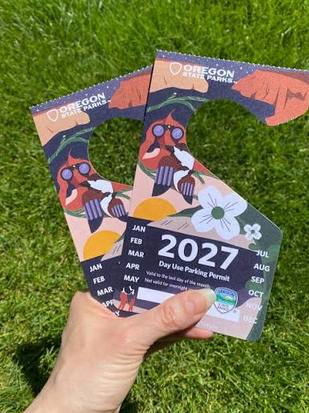
| Each library received up to four parking permits. Go to your local, participating library to check one out with your library card. You’ll get a physical hang tag to put on your rearview mirror when you get to the park. The permit covers parking in all Oregon State Parks day-use areas for one vehicle any day of the week.
The program, conducted by the Oregon Parks and Recreation Department and State Library of Oregon, aims to make park access more equitable. Funding came from the Library Services and Technology Act from the federal Institute of Museum and Library Services. |
|
| I often opine that water and sewer isn’t sexy. But without clean water coming out of the tap and dirty water going down the drain, we don’t have much of a future. That’s why I’m excited this week to be celebrating another sewer success as the Salishan Sanitary District celebrates a ribbon cutting and dedication ceremony on their plant renovation.
Salishan Sanitary District serves the Salishan Hills residential area, portions of Salishan Leaseholders residences, the Salishan Lodge and Shops, Siletz Keys homeowners, and several condominium units. The sewage plant is located at the north end of the Salishan Shops area between the Salishan Shops and the Salishan Spa.
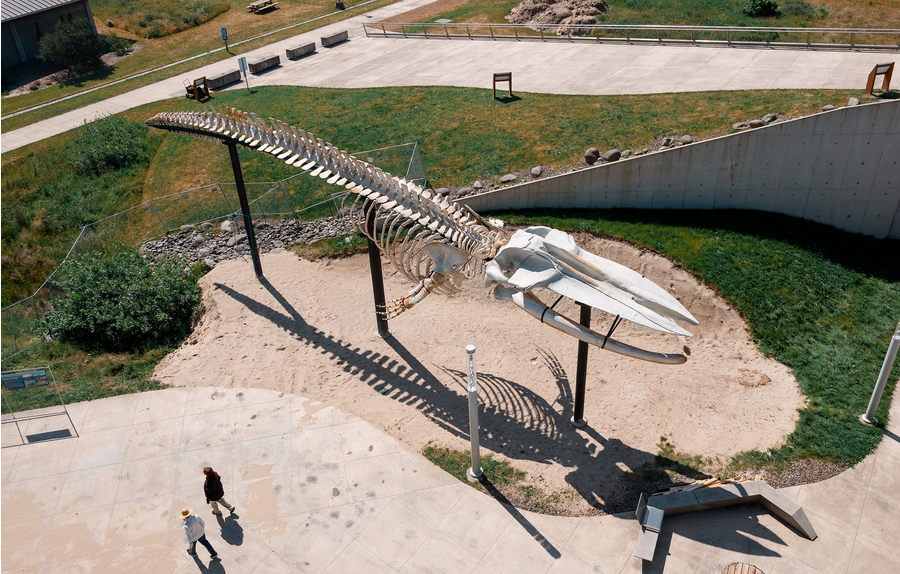
Equally important, and eminently more interesting for kids is the Blue Whale Installation Celebration at Hatfield Thursday, July 16.
The Marine Mammal Institute has just completed the installation of a 70-foot blue whale skeleton at the Hatfield Marine Science Center in Newport. Now, OSU is home to one of only five fully assembled blue whale skeletons in the country. |
|
| The 70-foot-long skeleton of a blue whale that washed ashore in 2015 on the southern Oregon coast is now installed and open for public viewing in the east courtyard of the Hatfield Marine Science Center. (Michelle Klampe/OSU) |
| Blue whales are, after all, the largest animals ever to populate the planet. They dwarf the biggest dinosaurs ever unearthed and continue to fascinate the citizens and the scientists drawn to study them.
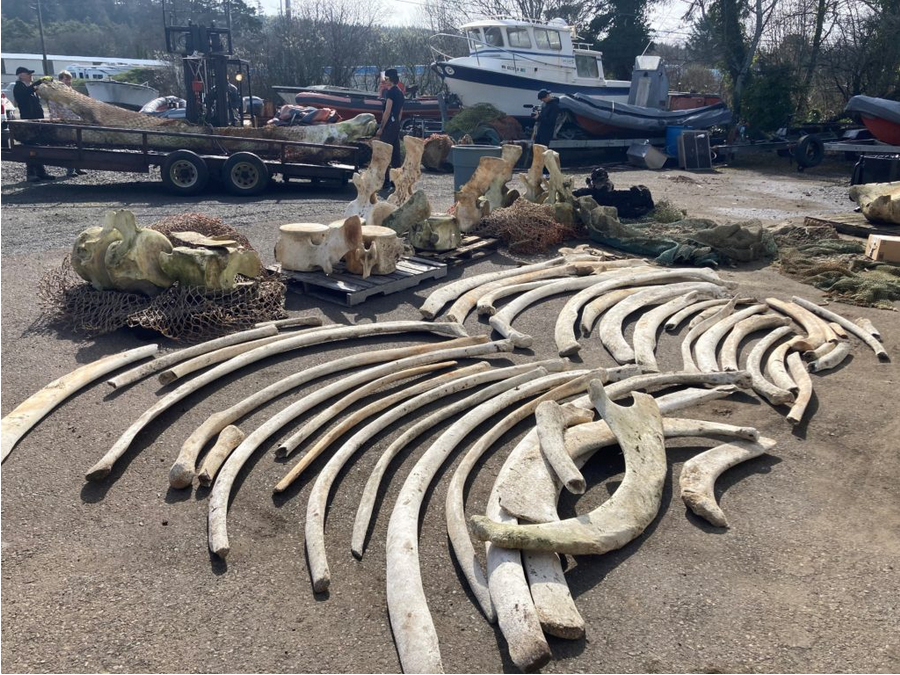
This blue whale washed ashore 11 years ago on the southern Oregon coast. Scientists from our Marine Mammal Institute studied the remains and eventually made a decision to preserve the skeleton. To do so, the whales’ bones needed to be removed from the beach, placed on flat-bed trailers and driven to Newport for initial cleaning.
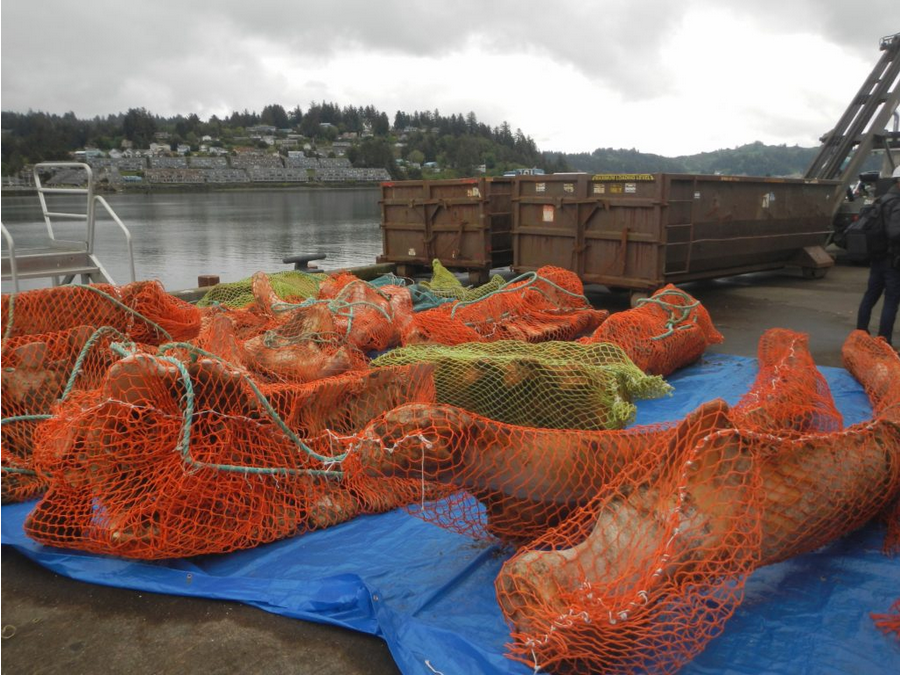
The bones were placed in large bags crafted from fishing nets, lowered into the waters of Yaquina Bay outside the Hatfield Center in April 2016. They remained there, tethered to the bottom by steel cables, for more than three years. That gave the briny water, along with crabs and other marine creatures, time to strip the bones of most of any remaining flesh. Amazing! |
|
| After three years of sitting on the bottom of Yaquina Bay being cleaned by scavengers, bones from the blue whale were hauled to a Newport dock in 2019 to enter the second phase of their preservation process. (OSU photo) |
|
| From there, dinosaur preservationists in Alberta, Canada helped with the thorough cleansing of its oil-infused bones and reassembled the entire frame for public display. It is now in the east courtyard of the Hatfield Center, its 70-foot long skeleton and 180 bones for all those who pass by to marvel at.
It is a remarkable sight and a remarkable story as well. As we read about the increasing number of whale beachings in Oregon (and as I work on legislation next session to help), this display helps us all better understand these remarkable animals. |
|
email: Rep.DavidGomberg@oregonlegislature.gov
phone: 503-986-1410
address: 900 Court St NE, H-480, Salem, OR, 97301
website: http://www.oregonlegislature.gov/gomberg