











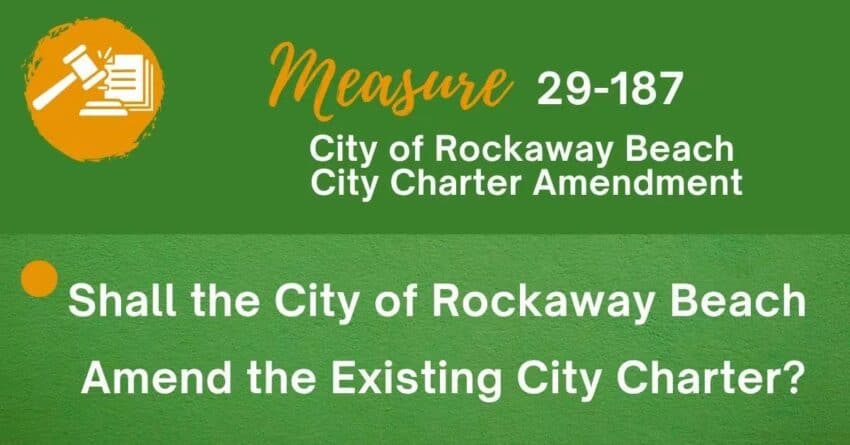
Here are some things to think about. My takeaway is these should be separate issues we vote on.
Measure 29-187 is not inherently a bad idea to put before voters—Oregon law requires voter approval for city charter amendments—but it is a fair criticism that it asks voters to make one all-or-nothing decision about several very different changes. The city itself describes the charter as Rockaway Beach’s “local constitution,” so bundling structural, election, and legal-authority changes into a single yes/no vote can make informed voting harder.
It bundles unrelated decisions. A voter might support cleaning up outdated language and clarifying vacancies, but oppose a four-year mayor term, staggered council terms, or expanded municipal-judge authority. With one measure, they cannot approve some parts and reject others; it is approve the whole package or reject the whole package.
Some items are policy choices, not mere “cleanup.” The measure is presented partly as housekeeping, but it also changes the mayor’s term from two years to four and shifts the city more firmly into a council-manager structure. Those are meaningful governance choices that deserve separate, visible debate rather than being folded into technical amendments.
The ballot title gives little guidance. The official question is simply: “Shall the City of Rockaway Beach amend the existing City Charter?” That does not tell a voter whether they are agreeing to a four-year mayor, changes to department oversight, or judicial bail/jail authority; they must locate and read the full redline and clean copy to understand the consequences.
It can favor the drafting body’s preferred package. Because the City Council referred the measure, voters are being asked to accept the council’s combined version rather than choose among alternatives. A resident who wants continuity in elected leadership, for example, has no way to vote for the other reforms while rejecting the longer mayoral term.
Charter language is hard for most voters to evaluate. Terms such as “home rule,” “council-manager alignment,” vacancies, and municipal-court commitment/bail authority require legal interpretation. A ballot measure can technically comply with the law while still leaving many voters reliant on summaries, staff explanations, or advocacy rather than a clear understanding of the actual text.
The effects are delayed and uneven. The four-year mayor term would not begin until the 2030 election, while other provisions would take effect sooner if approved. That makes it harder for voters to connect their vote to a concrete, near-term result.
The strongest objection
The core problem is lack of voter control over individual choices. A better process would have separated the measure into discrete questions—for example:
Technical/noncontroversial charter cleanup
Council-manager government and department oversight
Staggered terms and the mayor’s term length
Municipal judge’s jail/bail authority
That approach would let residents approve routine modernization without being required to accept every structural change. The city did hold workshops and accept public comment before referring the measure, which improves transparency, but it does not cure the all-or-nothing problem on the ballot itself.
Important balance
There are also reasons a city might bundle amendments: charter revisions often need to be internally consistent, and separating every cross-reference or wording fix could create a confusing, multi-question ballot. Still, for changes that affect who holds power, how long they hold it, and how residents can hold them accountable, separating the substantive choices would give Rockaway Beach voters a much clearer and more democratic decision
I understand that city leadership has an agenda, and this measure appears to be the vehicle for making that agenda happen. But is bundling so many significant changes into one ballot measure really the best way for Rockaway Beach citizens to make an informed decision? We value their leadership but not at the cost to our ability to make informed decisions.
Let me repeat this important point. Strong leadership is important, but it should not come at the expense of citizens’ right—and responsibility—to fully understand what they are voting on. Voters should be able to consider each major change separately, rather than being forced to accept or reject an entire package that mixes routine charter cleanup with substantial changes to how our city is governed
-It forces an all-or-nothing vote. Voters cannot approve the useful “cleanup” changes while rejecting more consequential changes, such as a four-year mayor term or changes to council and department responsibilities.
-It mixes technical edits with major policy decisions. Fixing repeated language and cross-references is different from changing the structure of city government, election terms, and municipal-court authority.
-The ballot title is too vague. “Shall the City of Rockaway Beach amend the existing City Charter?” does not tell voters what they are actually approving; they must read the full charter amendments to understand the impact.
-It bundles too many subjects into one question. Home-rule language, council-manager government, staggered terms, mayoral terms, vacancies, and municipal-court powers should each be easy for voters to consider separately.
-It reduces meaningful voter choice. A resident may support some reforms but oppose others, yet the measure gives no way to express that distinction.
-It can obscure the most consequential changes. Important governance changes may be perceived as routine “housekeeping” because they appear in the same measure as noncontroversial corrections.
-It makes public debate harder. Instead of discussing one clear issue at a time, residents must evaluate an entire legal document and multiple interlocking changes at once.
-It shifts power in ways voters may not immediately recognize. Moving away from elected officials serving as department heads, lengthening the mayor’s term, and clarifying judicial authority affect accountability and local control.
-Some effects are delayed, making the vote less transparent. The four-year mayoral term would not begin until the 2030 election, so voters may not clearly connect their decision to its future impact.
****
A better approach would split the measure. Separate ballots or clearly separated questions for technical cleanup, council-manager structure, election-term changes, and municipal-court authority would give voters genuine control.
Note: Perplexity assisted in this document
David (last name redacted)
Rockaway Beach, OR
