Tillamook County Pioneer

News & People of Tillamook County. Every Day.

Menu
  • Home
  • Feature
    • Breaking News
    • Arts
    • Astrology
    • Business
    • Community
    • Employment
    • Event Stories
    • From the Pioneer
    • Government
    • Letters to the Editor
    • Non Profit News
    • Obituary
    • Public Safety
    • Podcast Interview Articles
    • Pioneer Pulse Podcast: Politics, Palette, and Planet – the Playlist
  • Guest Column
    • Perspectives
    • Don Backman Photos
    • Ardent Gourmet
    • Kitchen Maven
    • I’ve been thinking
    • Jim Heffernan
    • The Littoral Life
    • Neal Lemery
    • View From Here
    • Virginia Carrell Prowell
    • Words of Wisdom
    • Chuck McLaughlin – 1928 to 2025
  • Weather
  • Post Submission
  • Things to do
    • Calendar
    • Tillamook County Parks
    • Tillamook County Hikes
    • Whale Watching
    • Tillamook County Library
    • SOS Community Calendar
  • About
    • Contribute
    • Advertise
    • Subscribe
    • Opt-out preferences
  • Search...
Menu

NEWS UPDATE FROM STATE REPRESENTATIVE DAVID GOMBERG: Tariffs in China; Tragedies at Home

Posted on October 19, 2026October 19, 2026 by Editor


10/19/2026

By Representative David Gomberg, House District 10

Dear Neighbors and Friends,

Last week, my phone lit up in the darkest middle of the night with news that made it even darker. Text messages were flying amongst legislative leaders during what was Thursday afternoon in Oregon.

Since then, I have struggled to find words for the tragedy that has occurred in Bend. I’m still struggling, as I’m sure many of you are also.

I mourn the loss of innocent lives. I wish speedy recovery to those injured physically and emotionally. I’m grateful to the first responders and those citizens who stepped forward in the most horrific of circumstances. And, I’m mindful of the parents across our state who are now struggling to explain all of this to their own children.

The safeguards we put in place to protect our schools forced the assailant to climb a fence and break a locked door. That drew the attention of bystanders who quickly intervened. I want to recognize the teacher and parent who confronted the attacker and certainly saved lives.

It doesn’t have to be this way. No child should ever have to go to school and worry if a gunman will walk through the door. This event will certainly have us all talking about how we can end this cycle. It’s been 10 years since the last school shooting in our state. It should never happen again.

Numerous resources are available to help us process.

My heart is with Bend and all of you.

One of the things I’m hearing about consistently here in China is tariffs. I view those concerns with an Oregon lens.

Recently, the United States and China released reciprocal lists of nonsensitive products worth about $30 billion each that will see tariff cuts, from American hair products to Chinese toys, in a deal expected to help bolster bilateral trade.

The lists included 1,619 items of U.S. goods entering China, ranging from agricultural commodities, hair and personal care products to timber and medical equipment. Coal from the U.S. will also be included. For Chinese goods exported to the U.S., 77 categories were covered, including fireworks, tableware, toys like dolls and puzzles, glass and wooden Christmas ornaments and soccer balls.

The details came days after Chinese President Xi Jinping met with President Donald Trump in Washington in his first state visit to the U.S. since 2015. The U.S. had already reduced tariffs against China after Trump’s tariffs reached as high as 145% at one point last year.

Sectors of strategic importance for both countries, such as chips, electric vehicles and batteries, were not covered under the agreement.

However, new China and global tariffs have not helped Oregon. Instead, state economic reports show they exacerbated an economic slowdown and cost Oregon importers nearly $3 billion in added federal taxes. Even after the deal, the overall average U.S. tariff rate on China is estimated to only drop from around 22% to roughly 20.5% and remain significantly higher than the roughly 11% before Trump’s return to the White House early last year.

President Trump’s tariffs contributed to a $442 million loss in Oregon’s 2025-27 budget cycle according to state economists from the Office of Economic Analysis, the Oregon Department of Employment, and Business Oregon.

Imports in Oregon in 2026 outpaced exports for the first time in years following Trump tariffs. (Photo courtesy of the Port of Portland)
Tariffs, taxes imposed on goods from other countries, are a key part of the President’s economic agenda. President Trump framed tariffs as a way to incentivize more American manufacturing, raise government revenue, and promote fair trade. Unlike the tariffs in his first term mostly targeting China, Trump in his second term imposed tariffs on nearly all of the country’s trading partners.

State economists estimate tariffs reduced consumer demand and spending, corporate profitability and labor income that would have gone toward the state’s general fund, lottery earnings, and corporate activity tax. Oregon importers paid nearly $3 billion in tariffs between March and December 2025, state economists estimate. Nearly 60% of that stemmed from new tariffs. That includes when Oregon importers paid an estimated $51.6 in tariffs in March 2025. They paid nearly 10 times as much in December as the administration ramped up its tariffs, according to the report.

Here’s a good video explaining how tariffs affect Oregon, produced by OPB:

Oregon ranks sixth in the country in exports per capita, with nearly three-quarters of all goods exported to Mexico, Canada, China, Hong Kong, Southeast Asia, Japan and Korea. But for the first time in recent years, imports in Oregon outpaced exports—a trend unique to only the Beaver State, according to the report. While exports grew on a national level by 5.7%, exports from Oregon dropped by 17% in 2025 as the state exported $5.8 billion less in goods than it did in 2024.

Here is a glance at who we exported goods to in 2025:

  • China: $5.4 billion
  • Mexico: $4.5 billion
  • Malaysia: $3.5 billion
  • Canada: $2.3 billion
  • Japan: $1.3 billion

Oregon received $30.7 billion in imports. State economists attributed the change to tariffs, saying the impending new taxes incentivized many Oregon businesses to stock up on as many international goods before the new rates took effect.

To understand the impact of tariffs on Oregon businesses, state economists analyzed a randomized survey sent to about 3,900 businesses.

Of the 870 Oregon businesses that responded, nearly 60% said the cost of the products they buy domestically went up. Another 45% of respondents said new tariffs increased the cost of international products. Additionally, 41% said they increased prices of the products they sold in the U.S. because of tariffs.

More than 77% of respondents reported no changes in wages paid, workweek hours, layoffs and hiring because of tariffs, though 12% reported a drop in workweek hours and 9% reported tariff-related layoffs.

Oregon importers paid $2.89 billion in tariffs between March and December 2025, according to a new report. Some of those imports came through the Port of Portland’s Terminal 6, shown in an undated handout photo. Port of Portland
Read more in the Oregonian and Capital Chronicle.
October is fire prevention month in Oregon.

Look around your home, and you’ll likely see dozens of devices powered by lithium-ion batteries. Cellphones, tablets, laptops, power tools, toys, e-bikes, and more rely on these compact, high‑energy batteries. But when they’re damaged, dropped, or charged incorrectly, that stored energy can turn into a fast‑moving fire that is extremely difficult to extinguish.

The growing risk is exactly why the Oregon State Fire Marshal is sounding the alarm. New data from the OSFM Center for Fire Analytics, Intelligence, and Research shows Oregon fire agencies responded to 649 lithium-ion battery–involved fires from 2020 to 2025, with incidents increasing an average of 19% every year. In 2025 alone, firefighters responded to 161 battery-related fires; more than double the number reported in 2020.

“As lithium-ion batteries become more common in homes and garages, we’re seeing a steady rise in fires linked to damaged or improperly charged devices,” said State Fire Marshal Mariana Ruiz‑Temple. “Lithium-ion batteries are safe when used correctly. This October, we’re asking Oregonians to take charge of fire safety by learning how to charge their devices the right way.”

To kick off Fire Prevention Month, the Oregon State Fire Marshal is partnering with the National Fire Protection Association (NFPA) to encourage Oregonians to “Charge into Fire Safety™.” The campaign focuses on everyday charging habits that can reduce the risk of lithium-ion battery fires and help keep homes and communities safer.

Here are a few simple steps every Oregonian should take to reduce the risk:

  • Use the charger and cord that came with your device or one approved by the manufacturer. The wrong charger can damage the battery and increase fire risk.
  • Charge devices on a hard, flat surface. Never charge devices on beds, couches, or under pillows, where heat can build up.
  • Stop using a device if it feels very hot, is swelling, smoking, or giving off a strange smell. These are signs the battery may be failing.
  • Unplug devices once fully charged to prevent excess heat and stress on the battery.
  • Charge larger items like e-bikes, scooters, and power tools outside and away from exits. These bigger batteries store more energy and can create larger fires.
  • When flying, keep devices where you can see them while charging. Never charge devices in overhead bins, and do not charge e-cigarettes or vapes on planes.

Find lithium-ion battery safety tips, downloadable resources, and Fire Prevention Month materials here.

Still on the fire topic, outdoor yard debris burning is currently prohibited across Lincoln County and some cities through October 15, 2026, due to seasonal fire restrictions. Benton County does not have a countywide emergency burn ban in effect, but daily burning status depends on local rules and the Benton Clean Air Agency.

The Lincoln County Fire Defense Board and Oregon Department of Forestry (ODF) put a seasonal yard debris burn ban in place from June 15 through October 15, 2026. Some cities prohibit backyard open burning of yard debris permanently year-round by city ordinance. Small recreational campfires, ODF-approved cooking fires, and propane/patio fireplaces are generally allowed unless high fire weather conditions trigger a total emergency ban.

If you plan to have a recreational fire on the sandy portion of state beaches regulated by the Oregon Parks and Recreation Department, keep fires small and contained—no larger than 2 feet by 2 feet. Build the fire on dry sand away from beach grass, driftwood, and dune access points, bring your own store-bought, clean firewood, not driftwood or beach logs, and put the fire completely out with water. Never bury it with sand—and ensure it is cold to the touch before leaving.

Finally, I wanted to share some wildlife and animal welfare developments that have attracted attention of ranchers, the forest products industry, conservationists, hunters, and animal advocates as we struggle to protect one species at the expense of another.

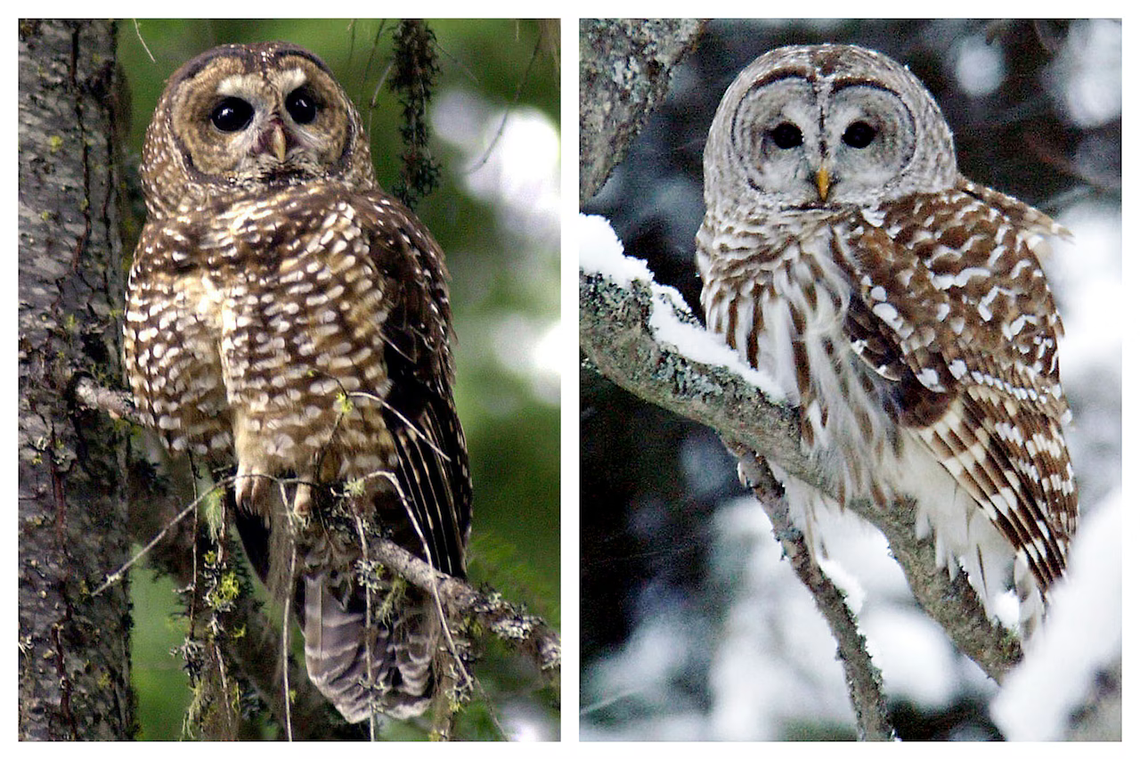
Last year, the U.S. Fish and Wildlife Service announced plans to kill more than 450,000 barred owls over 30 years in Oregon, Washington, and California. The agency says barred owls outcompete legally protected spotted owls for food and territory. Animal rights groups have called the killing cruel and unethical while some conservation groups support it as a way to save spotted owls.

Last week, the Oregon Department of State Lands says it will shoot and kill barred owls in the Coast Range starting on Thursday, becoming the first agency in the state to take part in this controversial federal effort to curb the invasive barred owls and boost dwindling northern spotted owl populations.

The agency said it has secured permits to kill up to 350 barred owls per year in the 83,000-acre Elliott State Research Forest in Coos and Douglas counties, northeast of Coos Bay. The culling will take place year-round for at least 15 years and cost as much as $1.2 million.

In addition to the Coast Range, barred owls are slated to be killed in the Oregon Klamath region, the Western Oregon Cascades, and Eastern Oregon Cascades, according to the federal plan.

These photos show a northern spotted owl on the left and a barred owl on the right. Starting Thursday, the Oregon Department of State Lands will start shooting hundreds of barred owls a year in the Elliott State Research Forest to save a dwindling population of spotted owls. Source: AP
The Elliott has been a flashpoint in Oregon’s timber wars for decades. Once managed for school-fund timber revenue, it was reborn as a research forest in 2022 after years of conflicts over endangered-species protections and a failed sale. Its new conservation plan allows timber harvest while requiring species recovery measures.

The goal is for spotted owls to return to vacant nesting territories, establish breeding pairs, and raise enough young to rebuild a self-sustaining population.

A similar matter unfolded before the Oregon Department of Fish and Wildlife at their recent meeting in LaGrande.

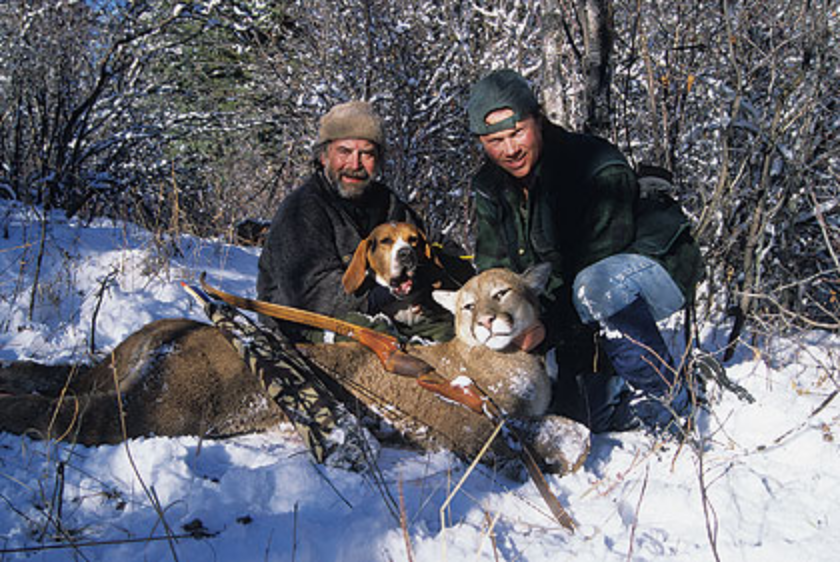
The Commission is working to augmented the Big Sheep population and genetic diversity in the Trout Creek Mountains. To do so, they have agreed to create a three-year cougar target area intended to temporarily reduce predation. This means they will allow hunters with dogs to track and kill the big cats.

Hunters show off their catch. Source: Bowhunter.com
ODFW will remove up to 18 cougars over three years in the Harney County zone to support the upcoming translocation. This short-term action is designed specifically to reduce predation on the new sheep, which are unfamiliar with the landscape and especially vulnerable in their first months after release. According to the Department, the measure is temporary and narrowly focused, reflecting evidence that cougar predation was the primary cause of mortality during the previous translocation effort for this herd.

Oregonians have twice voted to prohibit the hunting of cougars with dogs. We regularly face legislative proposals to change those laws. Cougars that threaten people or harm livestock and pets can be hunted—with dogs. Otherwise, the practice is prohibited. Hunting other cats with dogs is still permitted. Read about that here.

A hunter holds a mountain bobcat that he hunted in Central Oregon. His helpers, hound dogs, are seen behind him. States-Journal photo courtesy Dominic Aiello.
My Fact Finding Mission to China continues a few more days. The meetings, speeches, and exchanges are fascinating but exhausting. I’ll plan a full report for next Monday.

Thank you for your patience as we struggle to answer emails while far from home or our office.

Please consider supporting the Pioneer with a contribution. Independent journalism stays alive on the Coast. Click here to contribute!
Subscribe

Ads

  • 14 days
Keep the News Free to Read

Featured Video

Tillamook Weather

Tides

Tillamook Church Search

Cloverdale Baptist Church
Nestucca Valley Presbyterian
Tillamook Ecumenical Service

Tillamook County Pioneer Podcast Series

Archives

  • Home
  • EULA Privacy Policy
  • Contact
  • Opt-out preferences
  • Search...
Share on facebook
Facebook
Share on pinterest
Pinterest
Share on twitter
Twitter
Share on linkedin
Linkedin
Catherine

Recent Posts

  • IN GOOD HEALTH: The Sun Is Still Shining

    October 19, 2026
  • MANY THINGS CONSIDERED: Travel Journal: No. 4 - Battle of Bulge, Battle for Our Democracy

    October 19, 2026
  • Cyrus Javadi Listens

    October 19, 2026
©2026 Tillamook County Pioneer | Theme by SuperbThemes
Manage Cookie Consent
To provide the best experiences, we use technologies like cookies to store and/or access device information. Consenting to these technologies will allow us to process data such as browsing behavior or unique IDs on this site. Not consenting or withdrawing consent, may adversely affect certain features and functions.
Functional Always active
The technical storage or access is strictly necessary for the legitimate purpose of enabling the use of a specific service explicitly requested by the subscriber or user, or for the sole purpose of carrying out the transmission of a communication over an electronic communications network.
Preferences
The technical storage or access is necessary for the legitimate purpose of storing preferences that are not requested by the subscriber or user.
Statistics
The technical storage or access that is used exclusively for statistical purposes. The technical storage or access that is used exclusively for anonymous statistical purposes. Without a subpoena, voluntary compliance on the part of your Internet Service Provider, or additional records from a third party, information stored or retrieved for this purpose alone cannot usually be used to identify you.
Marketing
The technical storage or access is required to create user profiles to send advertising, or to track the user on a website or across several websites for similar marketing purposes.
  • Manage options
  • Manage services
  • Manage {vendor_count} vendors
  • Read more about these purposes
View preferences
  • {title}
  • {title}
  • {title}