


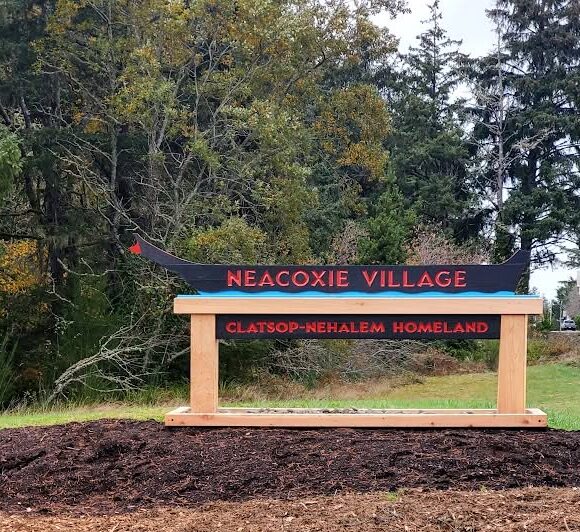
On Saturday, November 7th Clatsop-Nehalem tribal members and guests gathered at Neacoxie to celebrate the installation of the Neacoxie Village sign and the Welcome Pole.
Traditional Lands Committee Chairman Hugh Morrison introduced Ginger Erickson, Vice-Chairman, who shared an invocation.
Dee Zimmerlee, Treasurer, welcomed everyone and talked about the importance of the cedar tree to the tribe. The sign is in the image of our cedar dugout canoe, Dragonfly, and the Welcome Pole is carved from a cedar log. The cedar tree provided transportation and well as shelter for our people. In addition, the inner bark of the cedar tree is used for weaving.
Dave Stowe, Chairman, shared some of the history of Neacoxie.
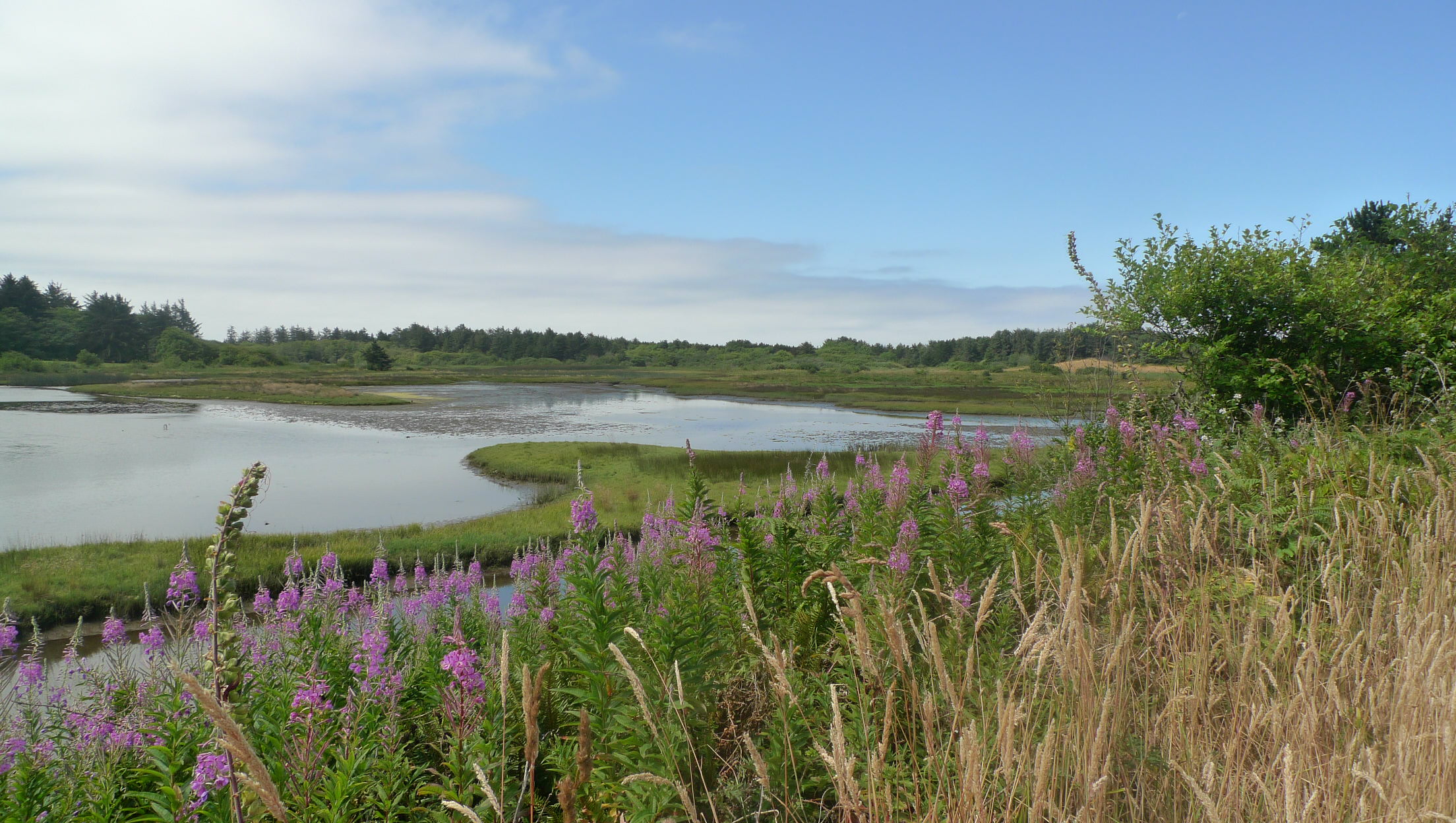
Neacoxie stands where Neacoxie Creek meets the Necanicum estuary, in the Clatsop-Nehalem homeland. Generations of families have known this as a place to live, fish, gather, and host visitors.
In Clatsop oral traditions recorded in the 19th century, the creek is formed by Coyote during his travels. That story cycle also describes Coyote building the first house at Neacoxie and establishing the tradition of fishing in this place.
Neacoxie is a Clatsop placename meaning “place of little pines,” recalling the shore pines along the estuary banks.
This Clatsop village was also a seasonal and permanent home to Nehalem-Tillamook families. Kinship, shared harvesting, and visiting connected the Seaside villages to other Clatsop villages along the coast and Columbia River.
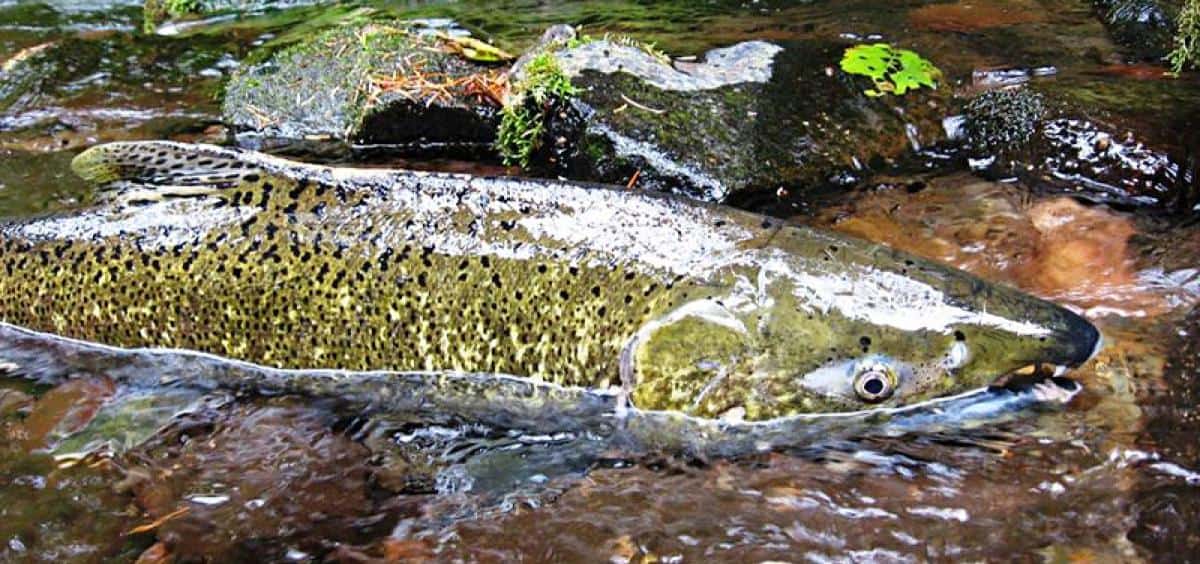
Neacoxie was especially important for its autumn coho fishery. Families came here after the Columbia River salmon season, combining fishing with social visits, berry harvests, and other resource gathering traditions.
Members of the Lewis and Clark expedition visited the Necanicum estuary villages in 1805–1806. Clark described Clatsop and Tillamook households living together on this waterway.
Celiast, daughter of Chief Coboway, and her husband Solomon Smith – who are ancestors to many Clatsop-Nehalem Confederated Tribes members – moved to Neacoxie in 1840. Their home also received missionaries and other travelers here through the 1840s.
The 1851 Tansy Point treaty with the Clatsop expressly reserved continued Clatsop fishing rights at Neacoxie as well as access along the beach to seasonally occupy this site. The U.S. Senate never ratified that treaty, leaving its promises unfulfilled.
By 1998 the NCLC had acquired Neacoxie and by the early 2000s, was inviting the Clatsop-Nehalem Confederated Tribes to return to this ancestral place as a venue for annual Tribal gatherings.
On May 5, 2020, North Coast Land Conservancy donated the 18.6 acres at Neacoxie to the Clatsop-Nehalem Confederated Tribes, returning the village site to Tribal ownership and stewardship.
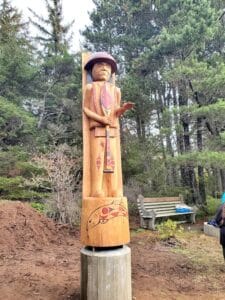 The new Neacoxie Village sign and carved Welcome Pole mark the Tribe’s continuing care for Neacoxie. This dedication honors the ancestors, thanks those who helped return and care for this place, and welcomes children and future generations to use this place as a venue for understanding and celebrating the heritage of Clatsop-Nehalem people.
Our paddle song was shared by tribal members and friends.
It is traditional to share a blanket with those have helped with the project. Susan Walsh built the sign from the Dragonfly design developed by Roberta Basch and Susan. They were both presented with Pendleton blankets. A blanket is a sign of projection and warmth.
Basket necklaces were gifted to those who had helped with the pole installation.
Everyone walked to the Welcome Pole for the unveiling. The Welcome Pole looks out to the estuary where visitors would come in from the water and ask permission to land. A tribal member would extend a hand in greeting.
To end the day, we returned to the sign and planted some pine trees.
