








By Leanna Coy, FNP-BC
On a recent trip to Savannah, Georgia, I set out on a walk to explore the beautiful park squares scattered throughout the city. As I turned a corner, a man in shorts and a T-shirt, looking a bit disheveled, came up to me. I braced for the expected request for a handout. Instead, he asked if I would be willing to talk to him. I recognized that I had just passed him less than a minute ago and had given him a “howdy” and a smile.
His name was Mike. He said he had approached a few other people, but they assumed he was homeless and ignored him. “I’m not homeless,” he said. “I’ve got a job and money in my pocket. I just need someone to talk to.” He said he was having a bad day and wanted to talk with someone who wasn’t just staring at their phone.
We’re all a little like the people who walked past Mike
I understand why others ignored Mike. It’s not often a stranger will approach you, and when they do, we often don’t stop and chat. This is an instinctual form of self-protection. We trust what we know and distrust what we don’t. But we run into people like Mike every day: the neighbor who talks for too long at the mailbox, the older woman in line at the grocery store chatting non-stop, the teenager who is constantly staring at their phone because texting is the only connection he has.
Mental health issues can look like this. Someone just wanting to talk. Like Mike, the person may not be in crisis but is struggling with depression, anxiety, or loneliness. Mike asking to speak to someone who wasn’t looking at their phone helped define his need to be heard and feel connected to another human being.
Lonely but not alone
Being alone is not the same as loneliness. When you’re alone, there is literally no one around you. Loneliness differs because it’s an unpleasant emotional response of feeling disconnected, alone, or isolated from the world around you. You can feel lonely even when you’re around others. Some people describe their loneliness as feeling invisible, alienated, or fearing no one would notice if they disappeared.
Loneliness impacts people of all ages. According to the U.S. Centers for Disease Control and Prevention (CDC), only 59% of teenagers in the U.S. feel they have the social and emotional support they need. Many adults also feel lonely: 35% of adults over age 45 and 43% of adults over age 60 report loneliness. These feelings can lead to social isolation, especially in older adults who have fewer social contacts and family members they interact with regularly.
The health impacts of loneliness
The need for human connection is strong for many people, and for good reason. Our brains are wired to expect other people nearby. During our early hunter-gatherer days, humans relied heavily on each other to survive. Today, we connect digitally in many ways. But since the social distancing days of the COVID-19 pandemic, more people have felt lonely as some of the isolation has carried over.
When we lack social connections and loneliness sets in, we start to see the effects this has on our health. According to the Surgeon General, a lack of social connections can increase your risk of premature death by 26%, which is the same risk as smoking up to 15 cigarettes a day. This is because loneliness can increase your risk of stroke, heart disease, and high blood pressure. Mental health is also impacted, with higher rates of dementia, cognitive decline, depression, and anxiety.
Rural areas like Tillamook County have a real risk of loneliness impacting the community. The geography has people spread out, with neighbors sometimes living acres apart. Public transit is limited, making it difficult for some people to access services and connect with others. The county also skews older, which is a risk factor for increased loneliness and social isolation. This is often because older adults don’t routinely have friends and family around them.
Looking out for our community
Reducing loneliness and isolation in our community isn’t difficult. Call a relative you haven’t checked on in a while. Visit the Tillamook County Senior Center, where you can join groups that will help boost your mental and physical health. Invite your neighbor over for coffee or go for a walk together. Have family dinners with your kids where you sit at a table and talk – keeping everyone’s phones off during the meal. Create real human connections.
Social connections are a fundamental human need, as important to survival as food and water. Human connections keep communities safe, prosperous, and healthy, and support your overall well-being. The cost of my connection with Mike was a small 20 minutes of my day, walking and having a friendly conversation. When we reached our destination, he took off in one direction to catch a ride, and I set off to take some pictures. But we both left healthier because of our brief connection.
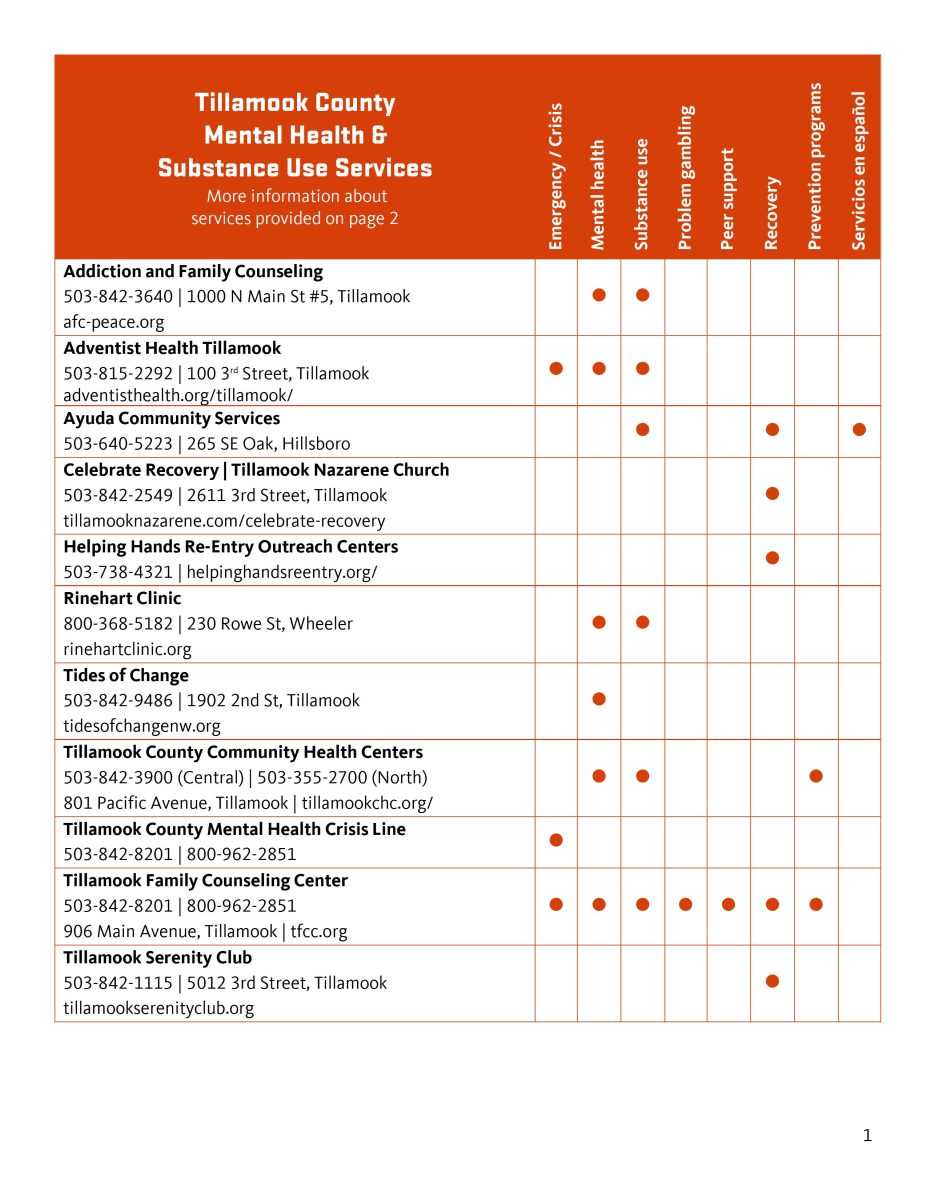
If you or someone you know needs to talk to someone, there is help and hope – dial 988 or any of these other Tillamook County mental health resources: