










By Kristin Koptiuch
Today Oregon celebrates Indigenous People’s Day, honoring the contributions that native peoples have made to the U.S., particularly contributions of Oregon’s nine federally recognized tribes to the history, culture, and environment of this state. This holiday also recognizes that Christopher Columbus’s so-called discovery of the Americas is historically inaccurate, as indigenous peoples had already been living throughout the Americas for over ten thousand years, creating vibrant cultures and stewarding the lands. Native peoples survived purposeful genocide, ruthless land expropriation, wholesale territorial displacement. Resiliently, they continue to be an integral part of Oregon’s communities.
The important historical reckoning that led to establishment of Indigenous People’s Day is part of recent national and worldwide efforts to confront and develop alternatives to monuments and memorials that stand as relics of a racist, colonialist past.
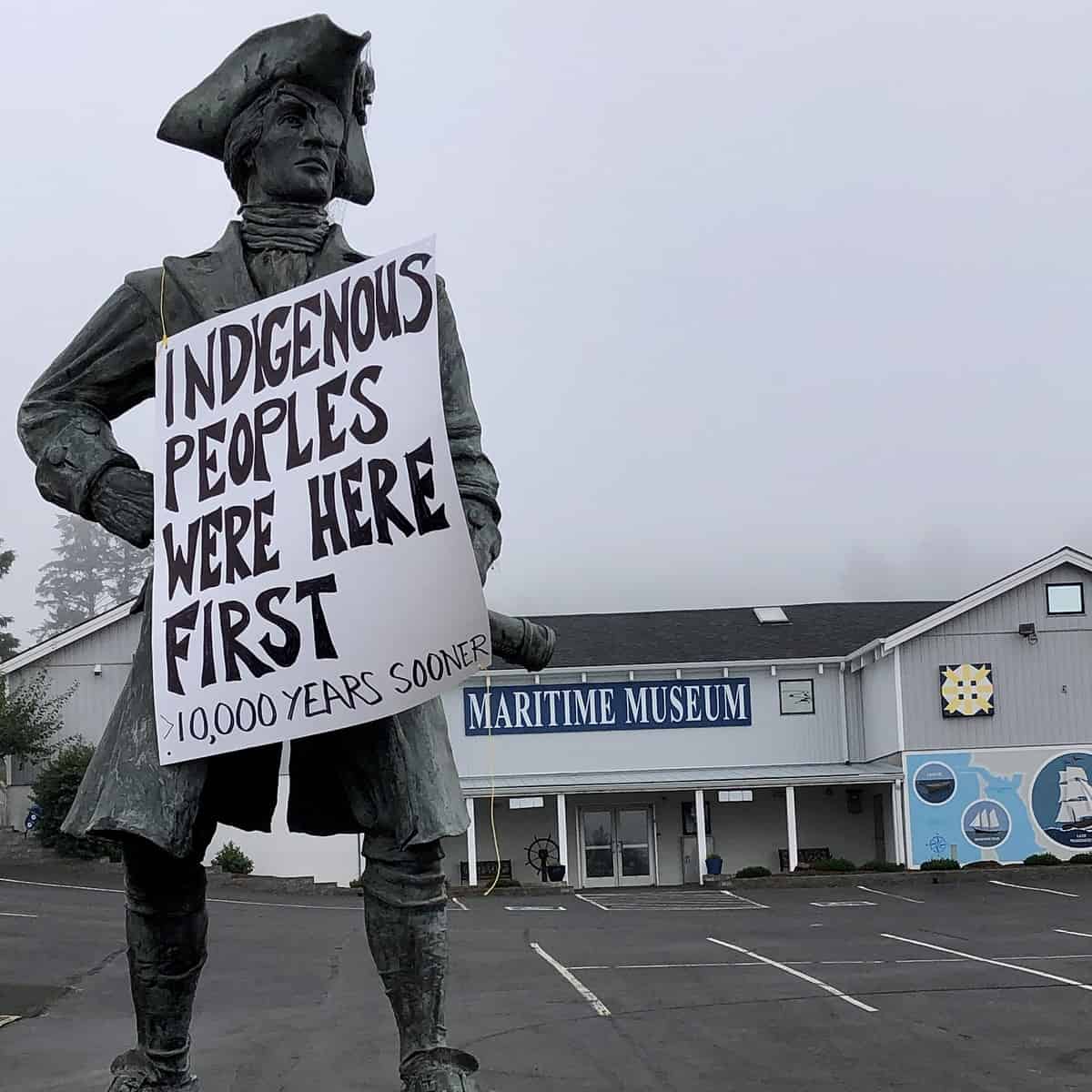
Such efforts to heal the wounds of history are lost on the Maritime Museum in Garibaldi. The museum’s board of directors recalcitrantly have refused appeals by several community groups to move the fraught colonialist statue of Captain Robert Gray, fur trader, merchant seaman, and yes, Indian killer, from its prominent place on Hwy 101 where it stands as a provocative validation of Oregon’s colonialist triumph over the region’s native peoples. Whether or not this was the intention of those who installed the statue, it is time to let go of retrograde colonialist images premised on ideas of white superiority and indigenous inferiority.
True, Captain Gray’s miscreant deeds were of a piece with the larger colonialist mission of white explorers and pioneers to expropriate these lands and displace their indigenous inhabitants to make this territory part of the United States. But that does not justify the museum’s perpetuation of uncritical perspectives on such abject historical actions.
On this Indigenous People’s Day, the Garibaldi Maritime Museum deserves to be challenged to adopt a more critical engagement with Captain Gray’s legacy beyond the historically inaccurate trope of “discovery.”
