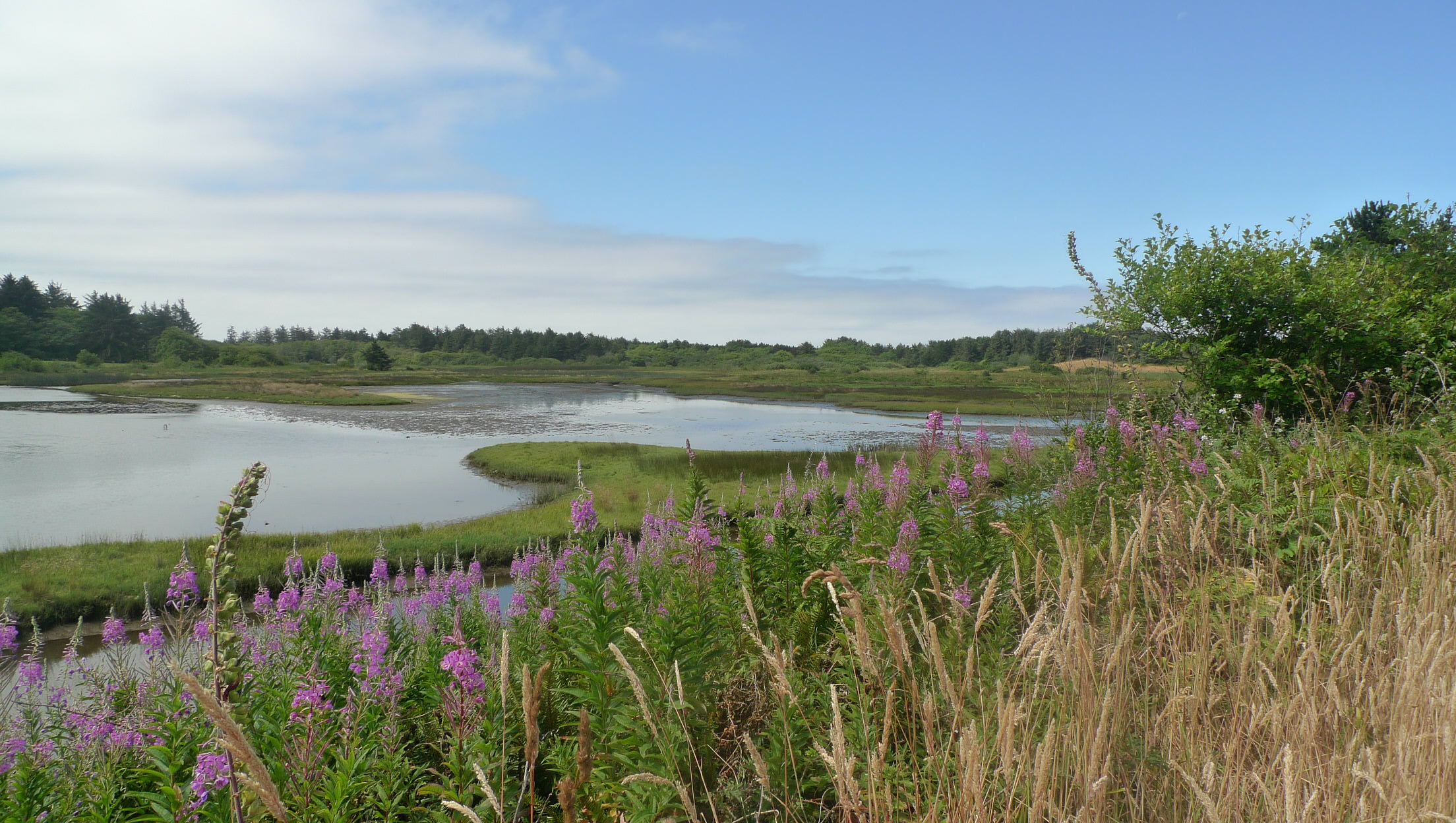



(Tillamook County, OR)– Restoration work has just begun in the Nehalem estuary, reconnecting nine acres of wetland north of Wheeler to natural tidal influence for the first time in nearly a century.
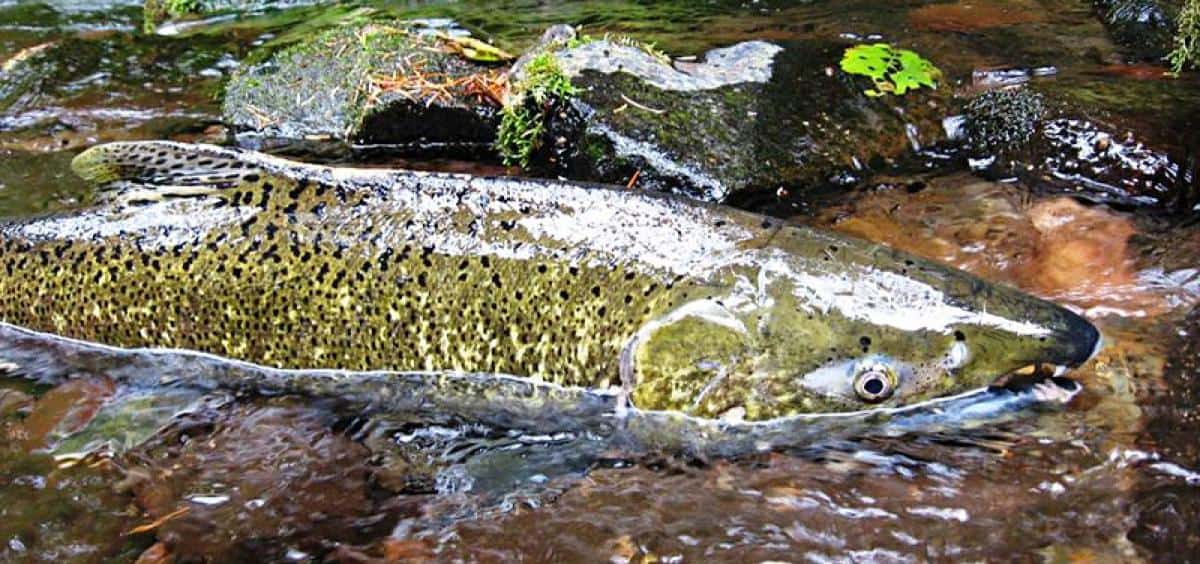
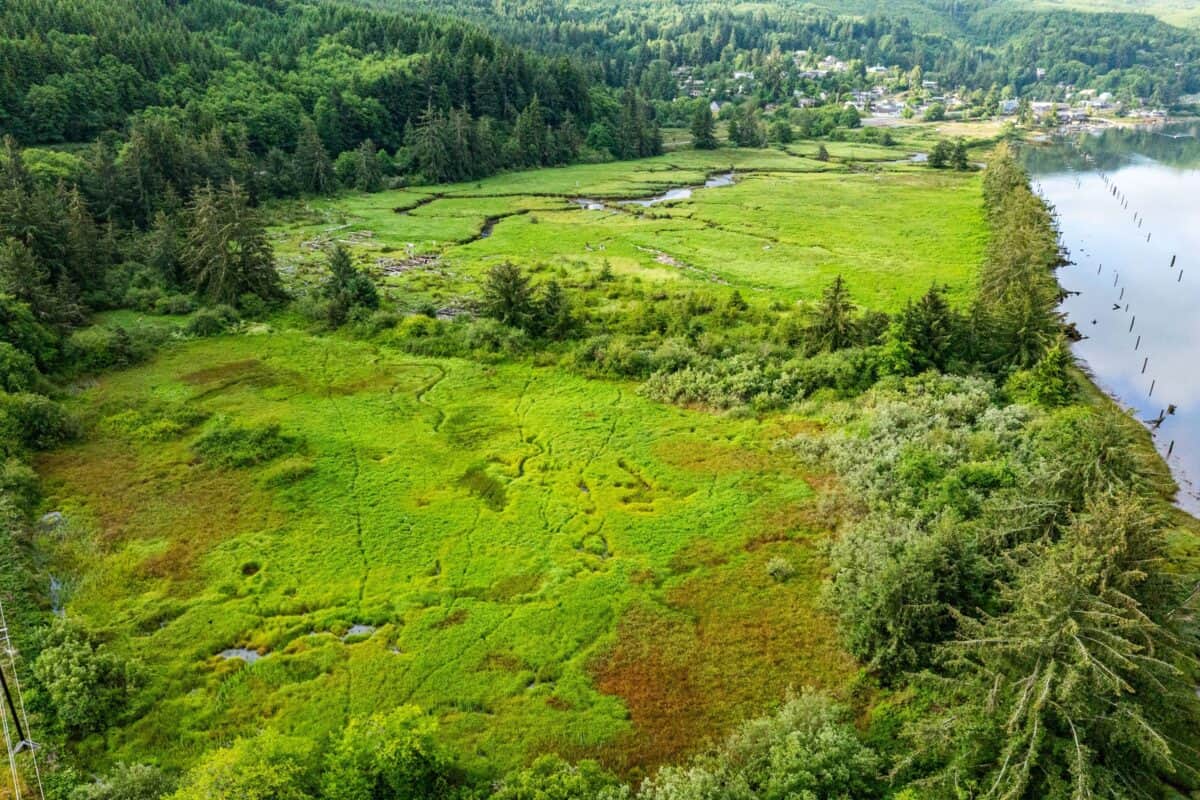
Once part of a much larger wetland complex, the fragmented McCoy marsh will be reconnected to the Nehalem River and to Botts Marsh, the 35-acre tidal wetland directly to the south. These wetlands provide habitat for more than 125 species of birds and critical rearing habitat for Chinook and Coho salmon. Both marshes are owned by the Lower Nehalem Community Trust (LNCT) and stewarded by the Trust with the help of community volunteers.
“Healthy estuary habitat is a limiting factor for salmon, particularly as they move through the critical transition between freshwater and the ocean,” says Emily Akdedian, LNCT Executive Director. “Connecting this marsh to the tide is an opportunity to bring back habitat that salmon need—creating more places for young fish to feed, grow and find refuge as they make their way through the estuary. While nine acres may represent a small piece of the Nehalem Bay, restoring this marsh is critical to building a healthier, more resilient watershed.”
 A robust Technical Advisory Team is guiding the project, including the Wild Salmon Center, Oregon Department of Fish and Wildlife, Tillamook Estuaries Partnership, and the Nehalem Bay Watershed Council. The project is supported by the Oregon Watershed Enhancement Board (OWEB) and the Wild Salmon Center, with funding from the National Oceanic and Atmospheric Administration (NOAA) and National Fish and Wildlife Foundation (NFWF).
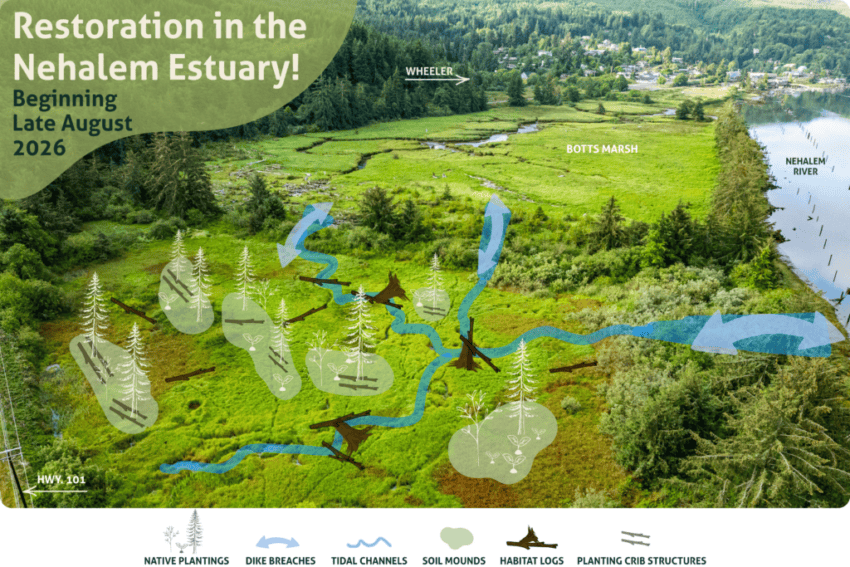
The project will breach perimeter dikes in three locations and excavate 1,465 feet of new tidal channel. Large natural wood structures will be placed within the new tidal channels and across the marsh surface to increase habitat complexity and encourage diverse scrub-shrub and Sitka spruce swamp plant communities.
An infographic showing the project design is available on the LNCT website.
Restoring Tidal Wetlands for Salmon and Community
The loss of tidal wetlands is identified as a major stressor for the Nehalem Coho salmon population. Estuarine habitats—the marshes, wetlands and channels where freshwater rivers meet the ocean—are essential to salmon as they transition between freshwater and saltwater environments. These habitats provide young salmon with food, shelter and areas where they can rest and grow before continuing their migration. The location of McCoy Marsh is an ideal stopover spot for juvenile salmon migrating downstream from the Nehalem River. The restored marsh will be the first opportunity for juveniles to find critical refuge habitat as they reach the open bay, which is especially critical during storm events.
At McCoy Marsh, tidal influence was cut off with the construction of the Oregon Coast Highway, which runs along the property’s northeastern border. An additional perimeter dike was constructed in the early to mid-1900s in an effort to drain the parcel for grazing. Nearly a century later, this project offers an opportunity to reverse some of those changes and reconnect the marsh to the natural processes that once shaped it.
“This project is a powerful example of what can happen when community partners come together around a shared vision for the future of the Nehalem,” says Cyndi Curtis, Wild Salmon Center Habitat Restoration Manager and LNCT board member. “Through years of planning, collaboration and support, we now have an opportunity to restore natural tidal processes, improve habitat for fish and wildlife, and strengthen this important part of the estuary for ours and future generations.”
The project reflects LNCT’s long-term commitment to protecting and stewarding the Nehalem Bay region. Through conservation, restoration and community stewardship, the Lower Nehalem Community Trust is working to protect a network of lands that provide important habitat and create a buffer between developed upland areas and the region’s critical estuary ecosystems.
“Restoration is not just about bringing back what was lost—it’s about investing in the future,” says LNCT stewardship lead, Shane Sjogren. “We’re grateful to the many partners, funders and community members whose support has made this work possible.”
Construction is scheduled to take place through the end of September with revegetation planting and monitoring continuing through the year and beyond. Project updates will be posted on LNCT’s website and social media channels.
About Lower Nehalem Community Trust
 The Lower Nehalem Community Trust is a community-supported and nationally accredited land trust dedicated to the conservation and stewardship in the Nehalem Bay region. LNCT protects and cares for lands and waters, engages communities in land and food stewardship, and promotes ecological health and resilience of the Nehalem watershed. Through partnerships, volunteer programs, and community engagement, LNCT is committed to safeguarding these special places for ours and future generations.
